
Four-letter bird codes are standardized abbreviations that compress a bird's common name into exactly four letters, and they show up in banding records, eBird entries, field notebooks, and scientific databases. The short answer: the code you're looking at almost certainly follows one of two main systems, IBP alpha codes or eBird Quick Find codes, and knowing which one tells you exactly how to decode it. Here's how to figure that out and what to do with the answer.
Four-letter Bird Codes: How to Decode and Verify Them

Maya Castellanos
19 Apr 2026
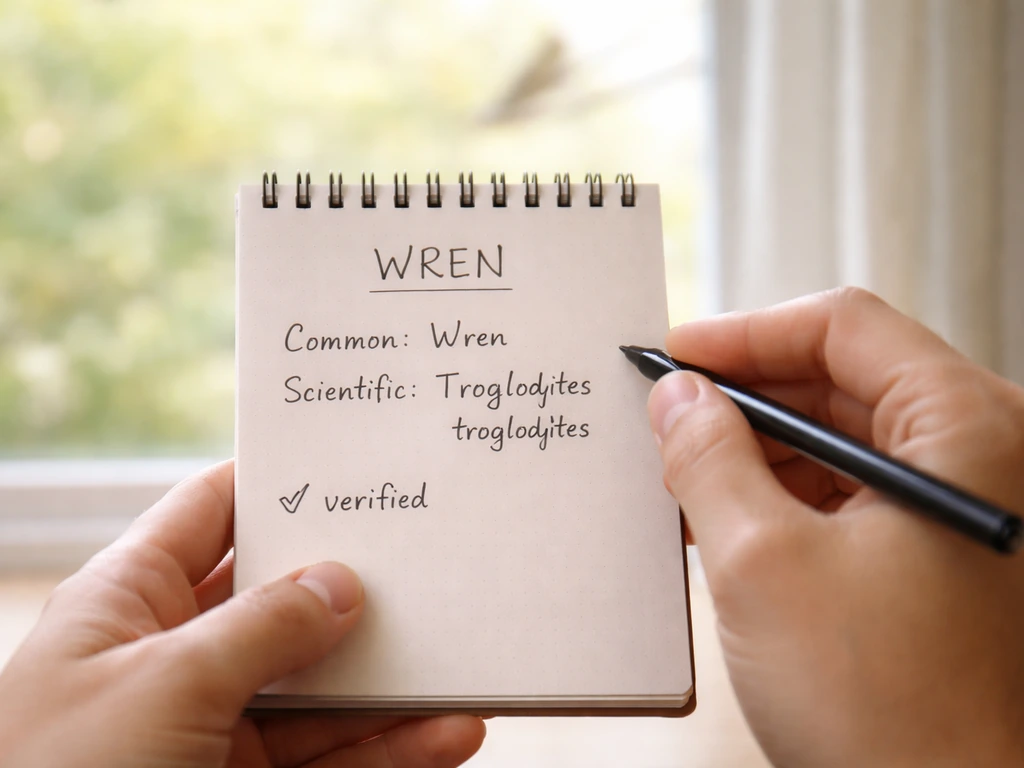
What four-letter bird codes actually mean (and why there's more than one system)
The core idea behind any four-letter bird code is simple: take the common English name of a bird and squeeze it into four letters using a predictable rule. That way, birders, banders, and database managers can log species quickly without writing out 'Yellow-rumped Warbler' every single time. The savings add up fast when you're marking hundreds of observations in a day.
The two systems you'll encounter most often are the IBP (Institute for Bird Populations) alpha codes and eBird's Quick Find codes. IBP's system has been the backbone of North American bird banding since it was formally developed in 2003 to align with AOU (now AOS) taxonomy. The Bird Banding Laboratory at USGS requires these alpha codes on all banding reports submitted in North America, so they carry real regulatory weight, not just field convenience. eBird's Quick Find codes follow a similar construction logic and extend worldwide, covering any species in the eBird taxonomy so that mobile users can pull up a bird in seconds without scrolling through a massive list.
There are also older or regional code lists floating around in field guides, state ornithological society databases, and banding station logbooks that predate standardization. If a code is coming from a source published before 2003, or from a regional list outside North America, it may follow a slightly different ruleset or reflect an outdated taxonomy. That's the main reason the same four letters can sometimes point to different birds depending on where you found the code.
How to tell which code system you're looking at
Context is your best diagnostic tool. Ask yourself where the code came from before you try to decode it.
- Banding records, BBL reports, or anything involving USGS: almost certainly IBP alpha codes. The BBL species table pairs every four-letter alpha code with its common name and scientific name, and those codes are mandatory for official reporting.
- eBird Mobile app, especially entered via Quick Entry: these use eBird's Quick Find code rules, which are very similar to IBP alpha codes but tied to eBird's own taxonomy rather than the AOS checklist.
- A field notebook or club checklist from North America, dated 2003 or later: very likely IBP alpha codes, especially if the source mentions AOU or AOS.
- An older field guide, regional publication, or international dataset: check the legend or abbreviation key in the document itself. If there's no key, the code may be bespoke to that publication.
- A crossword puzzle or word game: these four-letter codes are almost certainly casual abbreviations, not from any formal system. Fun, but not banding-accurate.
If you're still unsure after checking context, look at the code itself. A code like NOCA makes sense for Northern Cardinal under both IBP and eBird rules (first two letters of the first word, first two of the second). A code that breaks that pattern, like NOCAR, would be a five-letter code, not a four-letter one, which would immediately signal a different system or a typo.
The rules: how four-letter codes are actually built

Both IBP and eBird follow the same basic construction logic, which makes codes intuitive once you know the pattern.
| Name Type | Rule | Example Bird | Resulting Code |
|---|---|---|---|
| One-word name (one syllable) | All four letters from that word | Wren | WREN (usually needs disambiguation) |
| Two-word name | First two letters of word 1 + first two letters of word 2 | Northern Cardinal | NOCA |
| Three-word name | First letter of word 1 + first letter of word 2 + first two letters of word 3 | Great Blue Heron | GBHE |
| Four-word name | First letter of each word | Black-and-white Warbler | BAWW |
| Hyphenated name | Hyphenated parts usually treated as separate words | Ruby-throated Hummingbird | RTHU |
When two species would produce the same four-letter code under these rules, the system adds a number or modifies the letters to differentiate them. For example, if two birds would both resolve to YBFL, one gets YBFL and the other gets YBF2 or a similar variant. These collision fixes are tracked in the official IBP master list, which is why you always want to verify against the authoritative source rather than constructing a code purely from the rules.
Decoding a four-letter code to a real bird
The fastest and most reliable method is to look the code up directly in the IBP master list or the BBL species table. Both are freely available online. The BBL species table gives you the alpha code, the accepted common name, and the scientific name all in one row, which is exactly what you need to confirm an identification.
- Go to the IBP alpha codes page or the USGS BBL species list.
- Search or filter for the four-letter code you have.
- Read off the common name and scientific name in the same row.
- Cross-check the scientific name against a second source (eBird's species page, Cornell Lab's All About Birds, or the AOS checklist) to confirm the taxonomy is current.
- If the code doesn't appear in the list, check whether you might be looking at a collision variant (a number appended) or a code from an older taxonomy that has since been updated.
For eBird Quick Find codes specifically, the eBird Mobile app's Quick Entry field is the verification tool itself: type the four-letter code, and the app shows you exactly which species it resolves to under eBird's current taxonomy. For eBird Quick Find codes specifically, the eBird Mobile app's Quick Entry field uses the app to resolve the four-letter code under eBird's current taxonomy eBird Quick Entry field is the verification tool itself. That live lookup is faster than any static list and always reflects the most recent taxonomic changes.
Going the other direction: from bird name to code

If you know the bird and need its code, the same sources work in reverse. Search the BBL species table by common name or scientific name, and the alpha code column gives you what you need. For a quick manual check, apply the construction rules above to the common name, then verify your result against the official list to catch any collision modifications.
One practical tip: always use the current accepted common name as your starting point, not a regional nickname or an older name the species carried before a taxonomic split. American Cliff Swallow and Northern Rough-winged Swallow, for instance, have gone through name changes over the decades, and a code built from an outdated name won't match the current master list. IBP notes that it updates its alpha code list to track each annual AOS checklist supplement, including updates issued through 2025, so the list you use should be the most recent version.
Common pitfalls: where codes go wrong
The biggest source of confusion is using a code from one system in a context that expects another. An IBP alpha code built on the AOS North American checklist may differ from an eBird Quick Find code built on eBird's global taxonomy if the two databases have resolved a taxonomic split differently or use slightly different accepted names. In practice the codes agree most of the time, but for recently split or lumped species, mismatches happen.
- Regional subspecies codes: some state or regional banding stations assign codes to subspecies that don't exist in the national IBP list. If you're working with a regional dataset, get that region's specific code list.
- Taxonomy lag: a species split in the latest AOS supplement may not yet be reflected in every database. Always check the supplement year on the code list you're using.
- Collision variants with numbers: codes like YBF2 or BLT2 catch people off guard if they're expecting pure letters. These are legitimate codes, not typos.
- Non-English name sources: eBird supports many languages, and some international contributors use codes derived from non-English common names. A code that doesn't parse under English rules may be from a non-English dataset.
- Informal abbreviations: birding apps, personal notebooks, and local bird clubs sometimes invent their own shorthand. Always ask whether the code is from a formal standardized list or informal shorthand before trusting it in an official report.
What the code tells you about the bird's name and history
One thing I love about four-letter codes is that they're a compressed memory of the bird's common name, which itself often carries centuries of naming history. When you decode a code, you're not just finding a species, you're unlocking a name that might reflect the bird's color (RUBL for Rusty Blackbird), behavior (KILL for Killdeer, named for its call), habitat (MEWA for Mew Gull, from an Old English word for gull), or the person who first described it scientifically.
The scientific name that pairs with every four-letter code adds another layer. Take NOCA (Northern Cardinal): the scientific name is Cardinalis cardinalis, from the Latin for 'principal' or 'chief,' the same root that gives us Catholic cardinals in their red robes. The code, the common name, and the scientific name all point to the same striking red bird, but each layer of naming adds a different kind of meaning. Understanding that connection makes codes stick in memory far better than treating them as arbitrary strings of letters.
This is also why codes change when taxonomy changes. When the AOS splits one species into two, the original code has to be reassigned, and both new species get fresh codes. The IBP list tracks these updates precisely because a code is only useful if it unambiguously points to one accepted species name. If you're curious about the naming logic behind specific birds, the common name itself is always the starting point for etymology, and the four-letter code is just a compressed pointer back to that name.
For readers interested in bird names by length, it's worth noting that four-letter codes are a compression tool, not a reflection of the actual length of a bird's name. If you're instead looking for bird names that have 9 letters, you can use the same authoritative species list approach but filter by common-name length rather than code format. If you specifically want five-letter bird names, you can use the same idea of checking accepted bird-name spellings and lengths against an authoritative species list. If you want to find the exact bird name with five letters, compare accepted spellings and lengths against an authoritative species list five-letter bird names. A bird with a long, multi-word common name and a bird with a single short name might share a similar four-letter code structure. If you're exploring birds by the actual number of letters in their names rather than by codes, that's a genuinely different topic, though the naming logic overlaps in interesting ways.
Where to find authoritative code lists and how to use them today
Here are the resources you actually want to bookmark, in order of how often you'll use them.
- IBP Alpha Codes page: the definitive North American list, updated to reflect AOS taxonomy supplements. Download the spreadsheet version so you can search offline.
- USGS BBL Species Table: essential if you're doing any banding or submitting records to the Bird Banding Laboratory. The USGS also has an explanatory page (last updated September 2022) specifically about understanding BBL codes, which is worth reading if you're new to banding workflows.
- eBird Mobile Quick Entry: type any four-letter code into the Quick Find field to instantly see what species it resolves to in eBird's current global taxonomy. Fastest verification tool available.
- AOS Checklist Supplements: if a code seems off or a species name doesn't match what you expected, check the most recent AOS supplement to see whether a recent split or lump changed the accepted name and therefore the code.
- Cornell Lab's All About Birds: useful for confirming common names and getting the full common-name and scientific-name pairing once you've decoded a code.
For birdwatching and record-keeping, always log the four-letter code alongside the full common name and scientific name in any personal database. Codes compress efficiently, but taxonomy changes mean a code alone isn't a permanent identifier across decades. The scientific name is the stable anchor; the code is the shortcut. Use both.
If you're thinking about four-letter codes in the context of naming a pet bird, it's worth stepping back: alpha codes are built from existing species names, not invented as standalone names. A pet named NOCA would just be a confused Northern Cardinal reference. For pet naming, the more useful angle is the etymology behind common bird names, which often yields memorable, meaningful short names that feel intentional rather than borrowed from a banding database.
The bottom line: four-letter bird codes are a practical tool with a clear logic, and once you know which system you're working in, decoding and encoding them is straightforward. Always verify against the current IBP list or BBL species table, check the taxonomy year on any list you use, and remember that the code is just a shortcut to a name that carries its own history and meaning. If you meant the common question about which bird has a three letter name, that is a different kind of naming system than four-letter banding codes what bird has a 3 letter name.
FAQ
Can the same four-letter bird code show up from different systems, causing me to decode it wrong?
Yes. A code can appear in banding notes, eBird, and personal spreadsheets even though the underlying system is different. The quick check is to look for the source context (IBP/BBL banding paperwork versus eBird Mobile or eBird web taxonomy). If it came from a banding report or station log in North America, treat it as IBP alpha. If it came from eBird entry or Quick Find, treat it as eBird Quick Find.
What should I do if a four-letter code I have does not appear in the lookup list I’m using?
A code that does not resolve cleanly in the authoritative list (or returns multiple candidates) is usually one of three things: a typo, a code from an older or regional list, or a collision variant being used without the final digit/letter that disambiguates. In practice, the fix is to verify the exact character set (including any trailing digit) against the current IBP master list or the eBird Quick Entry lookup.
If I store just the four-letter code in my database, will it stay valid over time?
Treat the code as a shorthand label, not a permanent identifier. When taxonomy changes (splits, lumps, name updates), accepted common names and the code mapping can change too. That means your personal database should store the scientific name (as the stable anchor) plus the system and lookup date, not just the four letters.
Why do my manually decoded four-letter codes sometimes not match the official code list?
Use the accepted common name spelling from the authoritative list as your starting point, then apply the construction rule only as a preliminary guess. Hyphens, spacing differences, and older common names often produce a plausible-looking but incorrect four-letter result. The safest workflow is decode by rules, then confirm against the current IBP master list or the BBL species table.
What is the best way to confirm a four-letter code if I suspect it depends on taxonomy updates?
For eBird Quick Find, the most reliable place to resolve ambiguity is the live Quick Entry lookup in the eBird Mobile app, because it reflects the current eBird taxonomy. For non-eBird contexts, use the IBP master list or BBL species table instead, since those track banding-oriented accepted names and code assignments.
Does a four-letter bird code tell me anything about how long the bird’s common name is?
Not necessarily. The “four letters” format is a property of the code system, not of the bird’s common name length or structure. Some common names have multiple words or distinctive parts, but the code still compresses them into four letters using the system’s predictable extraction rule.
Can taxonomy splits or lumps change which bird a code refers to, even if the letters look the same?
Yes, especially for recently split or recently lumped taxa. When the taxonomy changes, codes may be reassigned and collision fixes might shift to new variants. If you are reconciling records from different years, check that both sources use the same taxonomy reference timing before comparing codes as if they were universal.
If I inherit a spreadsheet or old field notebook with four-letter codes, how do I reliably identify which system it uses?
If the source is unclear, start by identifying the system from the paperwork or app workflow. Then confirm with the appropriate authoritative tool. For banding materials, verify in the BBL species table or IBP master list. For eBird-origin entries, re-check using eBird Quick Entry (not a downloaded third-party list) to ensure you match current accepted taxonomy.
When I have the bird species, what’s a safe process to generate its four-letter code without getting a collision variant wrong?
For encoding from a known bird, it helps to reverse-verify: generate a candidate code from the accepted common name, then confirm the exact alpha code from the BBL species table. This catches collision adjustments (such as a final digit or modified letter) that you might miss if you rely on the basic pattern alone.
How do I handle four-letter code text that has weird formatting, like extra spaces, punctuation, or a missing character?
If you see something that looks like a four-letter code but includes extra characters, or the total characters are not exactly four, assume it is not a standard code as defined by the system in question. Before decoding, remove formatting artifacts only if you know the original system. Otherwise, verify the raw value against the lookup tool to determine whether the extra character is part of the code or a transcription error.
Next Article
Good Names for a Dodo Bird: Ideas and How to Pick
Cute, funny and elegant dodo bird names plus how to pick one, with language meanings for flightless island vibes.