The correct spelling is dodo, and when you add the species descriptor it becomes dodo bird. Two syllables, two o's on each end, nothing fancy. To pronounce the dodo bird, you say it as “DOH-doh,” with two short sounds for the two syllables. The bird is spelled the same way in every major English dictionary: Merriam-Webster, Britannica, Oxford, Cambridge, and Dictionary.com all use the lowercase form dodo as the standard common noun.
How Do You Spell Dodo Bird Correctly and Contextually

Maya Castellanos
3 May 2026
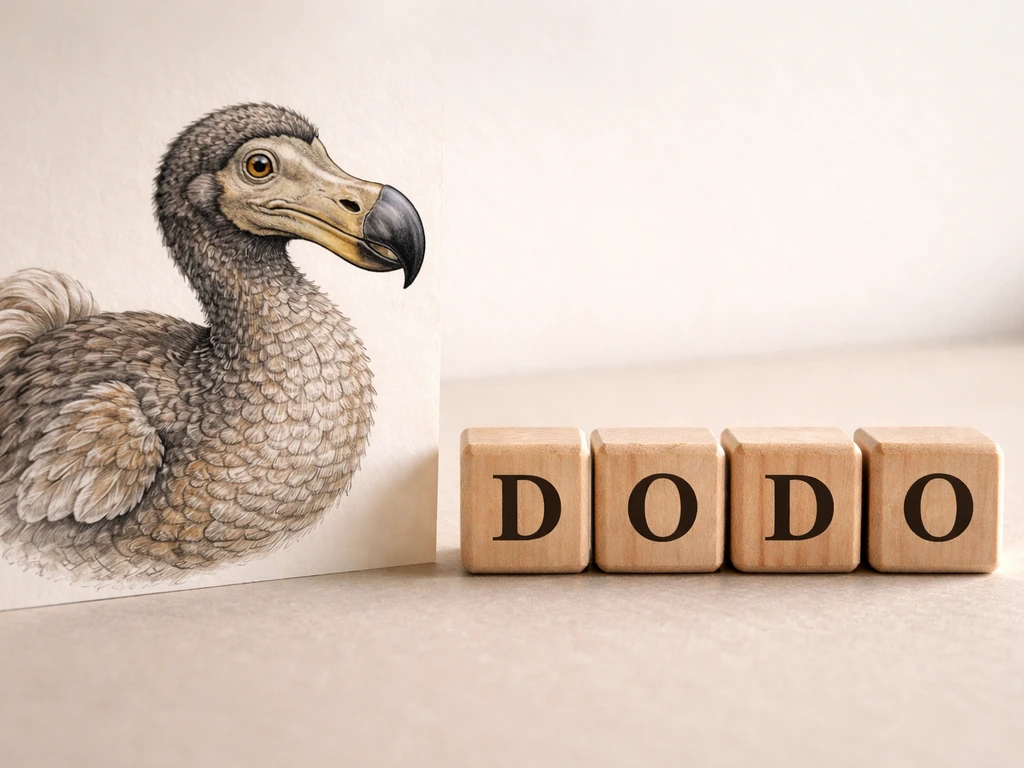
The spelling, plain and simple
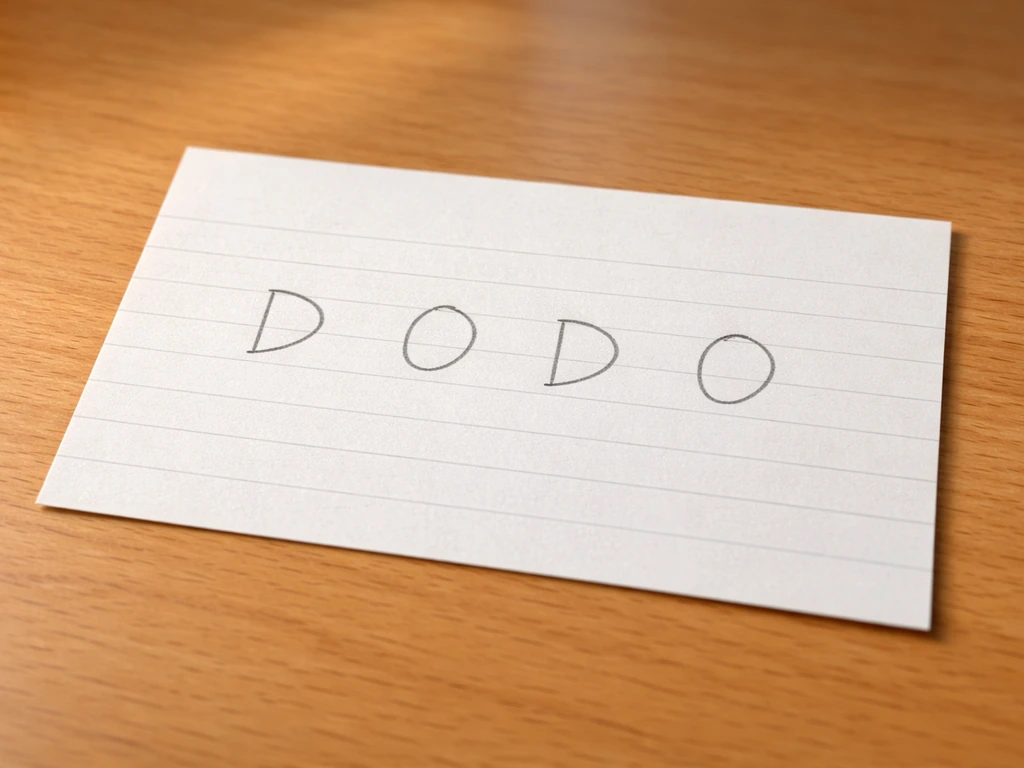
Dodo is a four-letter word: D-O-D-O. It follows a simple repeated pattern, which makes it one of the easier bird names to spell once you have it in front of you. The full phrase dodo bird is two words with no hyphen. That's it. There are no silent letters, no unusual consonant clusters, and no tricky vowel combinations. The scientific name is Raphus cucullatus, but in everyday writing and conversation you'll almost always use dodo or dodo bird.
| Form | Example | Correct? |
|---|---|---|
| dodo | The dodo was native to Mauritius. | Yes |
| dodo bird | I drew a dodo bird for my project. | Yes |
| Dodo (capitalized, standalone) | The Dodo went extinct in the 1680s. | Yes, when used as a proper name or title |
| Dodo Bird (both capitalized) | She named her character Dodo Bird. | Only in a proper name or title context |
| dodo-bird (hyphenated) | The dodo-bird fossils were found there. | No, no hyphen needed |
When to capitalize: "dodo" vs "Dodo"
As a common noun referring to the extinct bird species, dodo stays lowercase: "the dodo became extinct in the late 17th century." That's the default in dictionaries and encyclopedias, and it matches how you'd treat any other bird name used generically, like pigeon or parrot.
Capitalization kicks in when dodo is used as a proper noun. The U.S. Fish and Wildlife Service lists it as "Dodo (Raphus cucullatus)" in their species records, capitalizing it as an official name entry. The Smithsonian does the same on their specimen pages. So in a formal scientific or institutional context, you'll often see Dodo capitalized. If you're writing a story and your character is named Dodo, or you're referencing the animated Alice in Wonderland character, capitalize it. If you're writing a sentence about the bird in general, keep it lowercase.
The phrase dodo bird follows the same logic. Lowercase in general use, capitalized only when it functions as a name or title. You'd write "I love learning about the dodo bird" but "Her pet parrot's name was Dodo Bird" (if that's the name you've given it).
Why it's spelled d-o-d-o (the short etymology)
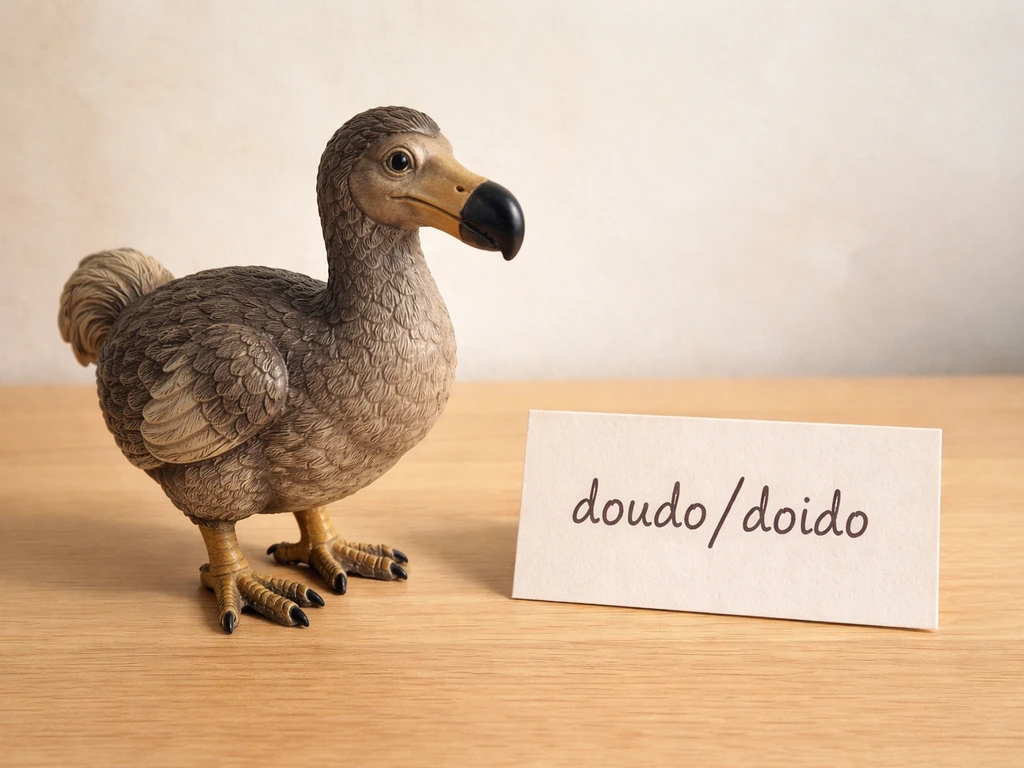
The spelling comes directly from the Portuguese word doudo (also written doido), meaning foolish or simpleton. Merriam-Webster similarly notes that the word dodo comes from Portuguese doudo, the name Portuguese sailors gave the bird blank" rel="noopener noreferrer">The spelling comes directly from the Portuguese word doudo. Dictionary.com’s dodo entry identifies the bird as any flightless bird, especially Raphus cucullatus, and gives its Portuguese origin as “doudo” (fool, mad) blank" rel="noopener noreferrer">Portuguese word doudo (also written doido), meaning foolish or simpleton.. Portuguese sailors encountered the bird on the island of Mauritius sometime in the late 16th century and, finding it completely unafraid of humans and easy to catch, apparently decided it deserved a name that meant slow-witted. First recorded in English around 1620 to 1630, the word was borrowed and simplified: doudo became dodo in English, dropping the u and keeping the doubled-o pattern that makes it so memorable.
It's worth noting that the etymology isn't 100% settled. The Oxford English Dictionary traces the word back to the Portuguese doudo, and the Oxford Learner's Dictionaries confirm this, but some researchers have suggested other possible origins. The consistent spelling in English, however, has never really been in dispute. It's been dodo in print since the early 1600s, and it hasn't changed.
If you're curious about how the bird got its name in more depth, that's a rabbit hole worth going down. The answer traces back to how Portuguese sailors and later record-keepers encountered the bird and started using the term in English how the bird got its name. The story of how dodo landed as this bird's official label is tied up in colonial-era naturalist records and some genuinely uncertain historical detective work.
Common misspellings to watch out for
Because dodo is mostly spelled the way it sounds, the misspellings tend to be phonetic guesses or simple typos. Here are the ones that come up most often and how to fix them fast:
| Misspelling | What went wrong | Fix |
|---|---|---|
| dodo bird (one word: dodobird) | Merged the two words | Always two words: dodo bird |
| doodoo bird | Over-extended the vowel sound | Each syllable has one o: do-do |
| dodu bird | Pulled from the Portuguese doudo | English spelling dropped the u: dodo |
| dado bird | Vowel swap: a for o | It's an o in both syllables: d-o-d-o |
| dodo berd / dodo burd | Phonetic spelling of bird | Standard English: b-i-r-d |
| Dodo Bird (capitalized in general use) | Treating it like a proper noun when it isn't | Lowercase unless it's a name or title: dodo bird |
The easiest memory trick: picture the word as a mirror image of itself. Do. Do. The second syllable is just the first syllable repeated. If you find yourself adding extra letters or swapping vowels, just reset to that simple two-syllable repeat.
How to verify the spelling quickly
If you ever want to double-check, here's exactly where to look and what you'll find:
- Merriam-Webster (merriam-webster.com): Search "dodo" and you'll get the entry with the definition, pronunciation, and the scientific name Raphus cucullatus. This is your fastest go-to for American English spelling.
- Britannica: Their entry reads "dodo, (Raphus cucullatus)" in lowercase, confirming both the common name spelling and the scientific name in one shot.
- Oxford Learner's Dictionaries: Spells it dodo with a word-origin note pointing back to the Portuguese doudo. Good for etymology context alongside the spelling.
- Cambridge Dictionary: Uses dodo (lowercase) and even includes the idiom "dead as a dodo," which is handy if you're checking usage in phrases.
- ITIS (Integrated Taxonomic Information System) or the IUCN Red List: If you want the scientific record, search Raphus cucullatus. The common name listed will be Dodo (capitalized as a formal name entry), which matches USFWS usage.
For a quick sanity check, any of the above four mainstream dictionaries will confirm dodo in under ten seconds. The scientific databases are more useful if you need the formal taxonomic spelling for a paper or report.
Using "dodo" in names, wordplay, and cultural references
Dodo punches way above its weight when it comes to wordplay and pop culture. The word itself is a palindrome-adjacent delight: it reads the same in both halves, making it naturally catchy and easy to remember. Cambridge's dictionary even enshrines its cultural staying power with the idiom "dead as a dodo," meaning something completely extinct or hopelessly outdated. If you need another example of an extinct bird with a similarly recognizable name, dodo is a go-to dead as a dodo. That phrase has been in common English use for centuries, and the spelling there is always lowercase dodo.
In literature, the most famous Dodo is the character in Lewis Carroll's Alice's Adventures in Wonderland, where it's capitalized because it functions as a character name. The Alice connection is one reason the word dodo has such strong cultural recognition even among people who couldn't tell you much about the actual bird.
If you're thinking about pet bird names inspired by dodo, the word works nicely as a nickname for a bird with a round, laid-back personality: a plump cockatiel, a chill African grey, or a particularly unbothered lovebird. Good names for a dodo bird can be playful, historically inspired, or just something that fits its famously slow, laid-back vibe. You might spell it Dodo as a proper pet name, or get creative with variants like Dodi, Doh-Doh, or even Raphus if you want to go full scientific deep-cut. There's a whole world of naming ideas for birds inspired by famous or extinct species, and dodo sits at a sweet spot: universally recognized, fun to say, and carrying just enough quirky historical weight to make it an interesting choice.
One more thing worth knowing: dodo is easy to use in crossword answers, puns, and trivia because it satisfies both spelling and phonetic simplicity. It's one of those words where everyone agrees on the spelling precisely because the word is so short and so symmetrical. If you're writing a quiz question, a bird-themed game, or even a school project, you can use dodo confidently without worrying about regional spelling variations. It's dodo everywhere in the English-speaking world.
FAQ
Should I capitalize “Dodo Bird” or keep it lowercase?
Use two lowercase words: dodo bird. Capitalize only when it is functioning as a proper name or title, for example “Her costume was a Dodo Bird.” If you are writing for a school worksheet that treats “dodo” as the common name, keep it lowercase throughout.
Do you say “the dodo,” “a dodo,” or “dodo bird” in a sentence?
For the common noun, write “the dodo” or “the dodo bird” (not “a dodo” unless you are intentionally inventing a fictional example). In standard references, the extinct species is typically discussed as a specific group, so “the dodo” is the safest default.
What are the most common spelling mistakes for dodo bird?
Yes, the usual misspelling is adding an extra vowel or breaking the doubled pattern, for example “dodoe,” “doido,” or “doodoo.” A quick fix is to count letters, it should be exactly D-O-D-O (four letters), then keep the phrase as two separate words (dodo bird) with no hyphen.
How do you write it correctly in a research or school report?
In formal writing, you can include the scientific name to remove ambiguity: Raphus cucullatus. If you do, still spell the English common names as “dodo” or “dodo bird” (lowercase) unless you are using a specific named character or title.
Is it hyphenated as “dodo-bird”?
Don’t hyphenate: it is “dodo bird,” not “dodo-bird.” Hyphenation can change how some style checkers interpret compound nouns, and it is unnecessary because “dodo” already functions cleanly as an adjective-like first word.
Does the pronunciation help confirm the spelling?
The pronunciation “DOH-doh” matches the spelled repetition (D-O-D-O), but if you are aiming for easier speaking guidance for beginners, you can also say it like “DOH, then DOH again” rather than stretching it into a longer rhythm.
Is “dead as a dodo” spelled with lowercase dodo?
Use “dead as a dodo” with lowercase dodo, since it is idiomatic and not a named character. If you write something like “Dead as a Dodo,” that reads as stylized text and likely incorrect for standard grammar.
When does “Dodo” become a proper name?
For a character name in a story or fandom reference, capitalize as you would any proper noun, for example “Dodo” (or “Dodo Bird” if that is the character’s name). For the actual extinct species being discussed generally, keep it lowercase.