Yes, there is a bird with "Tennessee" in its official English common name: the Tennessee Warbler, whose scientific name is Leiothlypis peregrina. If you are wondering whether there is a bird called "fancy," it is likely a nickname or a misremembered common name rather than an official species name. But no bird species has the single-word common name "Tennessee" on its own. If you've been searching for a bird simply called "Tennessee," you've almost certainly been thinking of the Tennessee Warbler, and the distinction matters more than you might expect.
Is There a Bird Called Tennessee? How to Verify

Maya Castellanos
21 May 2026
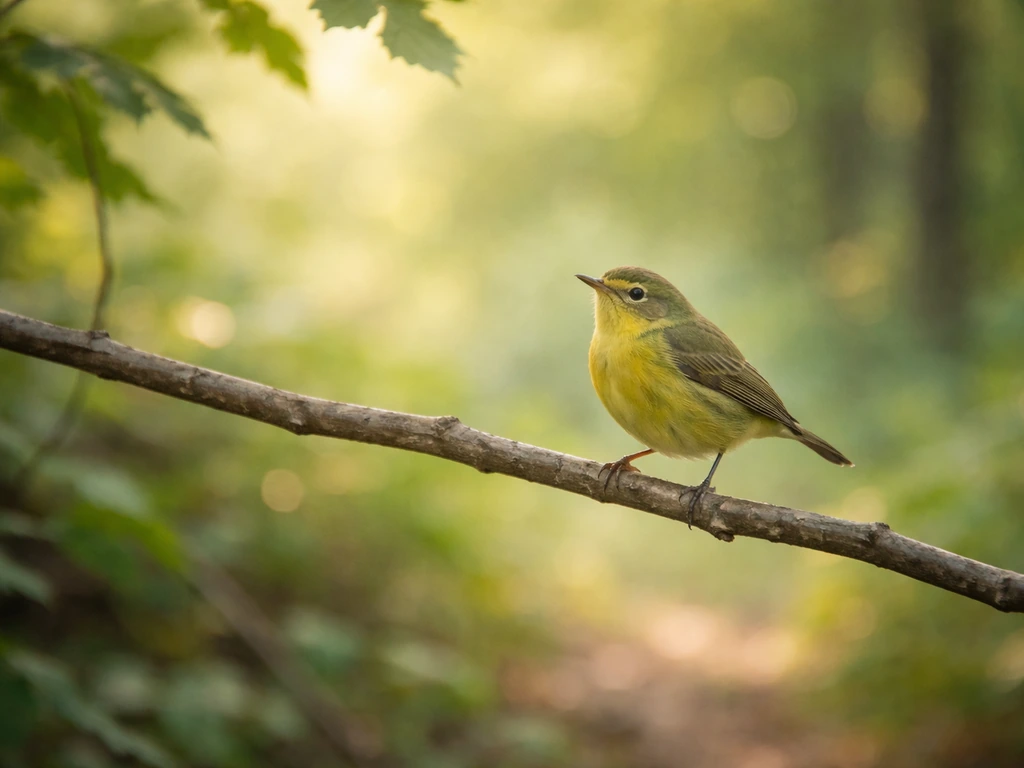
So What Exactly Is the Tennessee Warbler?
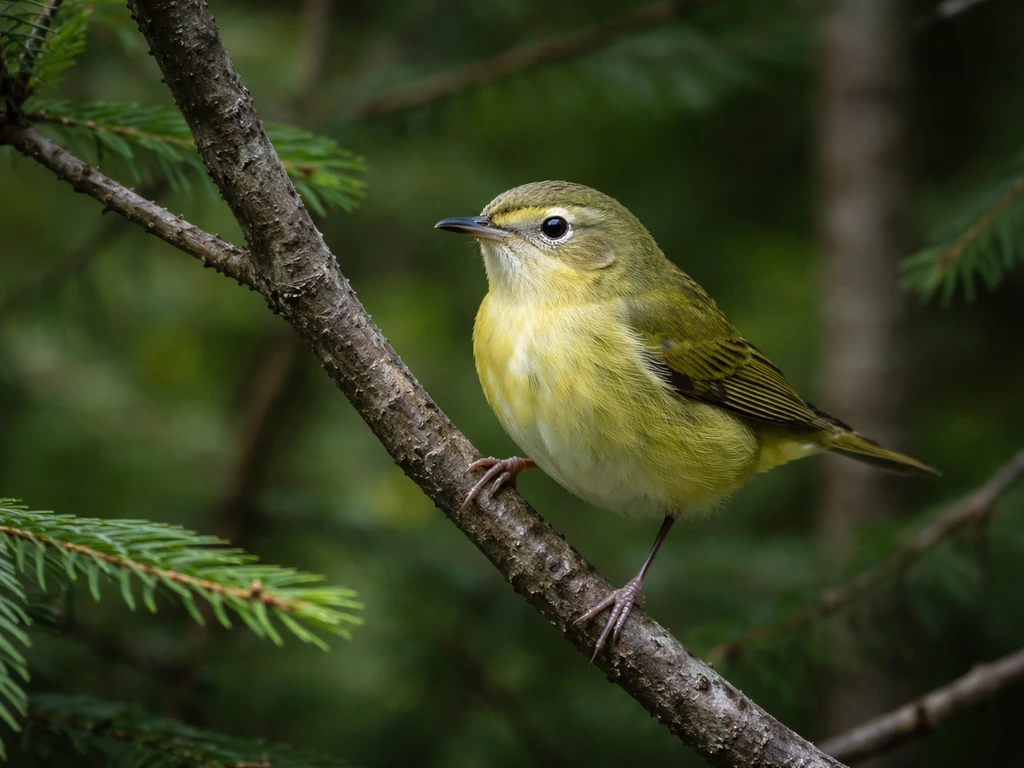
The Tennessee Warbler is a small New World warbler that breeds primarily in the boreal forests of Canada and the northern United States, then migrates south for winter. It got its name from the state of Tennessee simply because the naturalist Alexander Wilson first described the species from a specimen collected near the Cumberland River in Tennessee in 1811. Ironically, Tennessee is not its main habitat at all. It just happened to be passing through when Wilson caught it. That kind of coincidental naming happens more often than you'd think in ornithology.
The scientific name Leiothlypis peregrina tells you a lot once you unpack it. "Peregrina" is Latin for "wandering" or "traveler," which suits a bird that covers enormous migratory distances. The genus name Leiothlypis was updated from the older Oreothlypis after a taxonomic reclassification, so you may encounter both names depending on which source or field guide you're using. Tennessee Warbler is commonly listed under the English common name “Tennessee Warbler,” and the genus Leiothlypis reflects more recent reclassification on Tennessee’s official TWRA bird page “Tennessee Warbler”. The IOC World Bird List now officially lists it as Leiothlypis peregrina, and Cornell Lab's All About Birds uses the same updated name.
How to Verify a Bird's Name Yourself
Whenever you're trying to confirm whether a specific common name is real, a two-step verification process works consistently well. First, check the common name against a standardized taxonomy list. Second, cross-reference the scientific name to make sure you're looking at one species and not a regional nickname for something else entirely.
- Search the IOC World Bird List (iocworldbirdlist.org): it pairs every accepted English common name with its exact scientific name, making it easy to see whether "Tennessee" (or any word) appears as an official common name component.
- Check Cornell Lab's eBird taxonomy or All About Birds: eBird's help documentation specifically explains how to verify bird names by cross-checking the scientific name field, which removes ambiguity caused by regional nicknames.
- Look at the U.S. Fish & Wildlife Service species list: FWS entries use official English common names alongside scientific names and are a reliable North American authority.
- Compare entries across at least two sources: if a common name only appears in one database or on informal sites, it's likely a local nickname, a historical name, or a flat-out error.
The key thing to watch for is that common names are not standardized globally the way scientific names are. A bird called one thing in the United States may have a completely different common name in the United Kingdom. Scientific names (binomial nomenclature) are universal, which is why serious birders and ornithologists always anchor their research in the Latin name.
Birds People Associate With Tennessee
Beyond the Tennessee Warbler, a few other birds come up when people search for Tennessee-related bird names, and it helps to know exactly what you're looking at in each case.
The Northern Mockingbird: Tennessee's State Bird
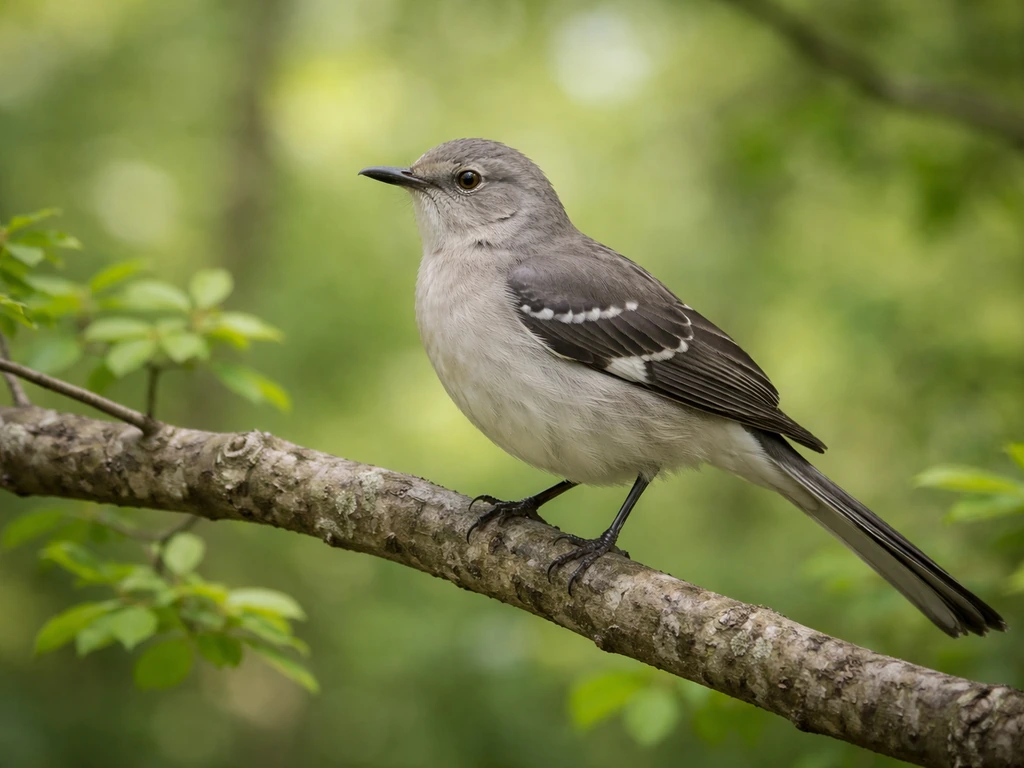
Tennessee's official state bird is the Northern Mockingbird (Mimus polyglottos), designated officially by the state government and recognized by sources including the Tennessee Wildlife Resources Agency and the U.S. Fish & Wildlife Service. The Northern Mockingbird is also the state bird of several other states, so it's not uniquely Tennessean, but it's the bird that officially represents the state. If someone asks "what's the Tennessee bird?" in a general trivia context, this is often the intended answer.
The Tennessee Warbler: The Eponym
The Tennessee Warbler is what ornithologists call an eponym, a species named after a place or person associated with its discovery rather than its primary habitat. It's a compact, olive-and-white bird, easy to overlook but widespread during migration. During peak migration in May, birders across eastern North America see good numbers of them, which is a little funny given the naming coincidence with the current month.
Other Birds With Tennessee Connections
Tennessee sits within a rich migratory corridor, so dozens of species pass through or breed there regularly. Some birders informally refer to local favorites by state-linked nicknames, but none of those nicknames constitute official common names. If you've heard someone call a particular bird "the Tennessee bird" in a local birding club, it's almost certainly informal usage rather than a named species.
Common Name vs. Scientific Name vs. Subspecies: Why It Gets Confusing
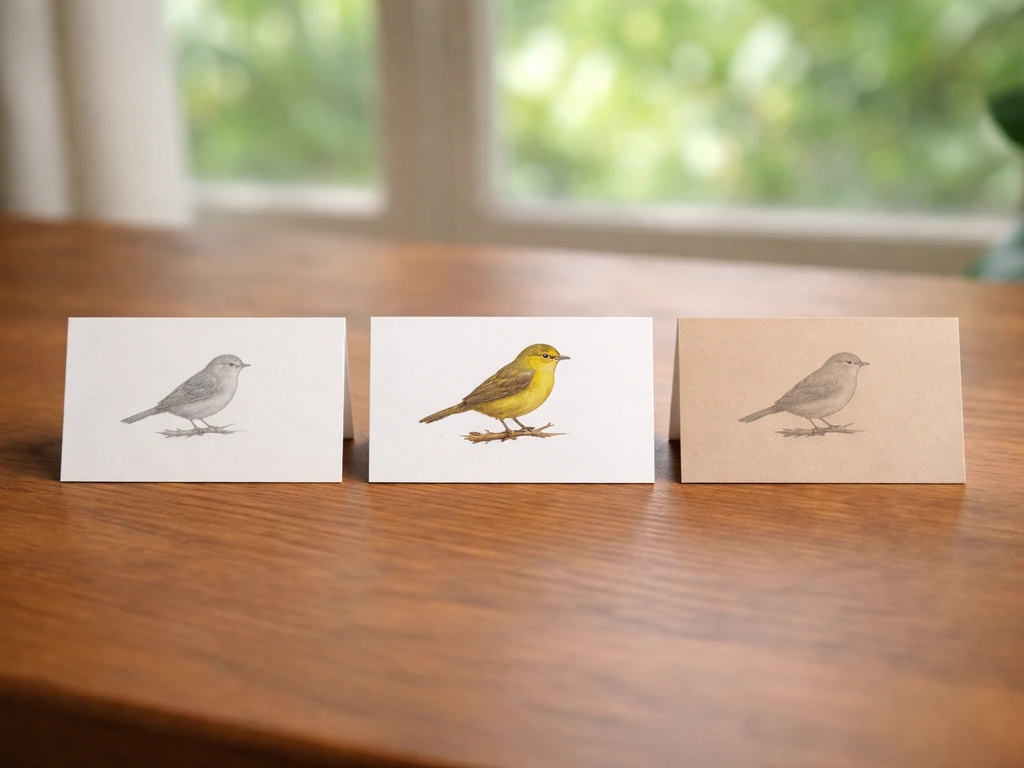
This is where most confusion originates when people search for bird names. There are three distinct naming layers, and they don't always line up cleanly.
| Name Type | What It Is | Example (Tennessee context) | Who Controls It |
|---|---|---|---|
| English Common Name | The informal English label, standardized by major taxonomic authorities | Tennessee Warbler | IOC, AOS, eBird taxonomy |
| Scientific Name | The universal Latin binomial, stable across languages | Leiothlypis peregrina | International Commission on Zoological Nomenclature |
| Subspecies Name | A third Latin term added when geographic variation is significant | No currently recognized subspecies for Tennessee Warbler | Same as scientific name authorities |
| State Association / Nickname | Informal or state-designated label, not a species name | Northern Mockingbird as "Tennessee's bird" | State government, local tradition |
The tricky part is that common names can change over time (note that the Tennessee Warbler's genus shifted from Oreothlypis to Leiothlypis in recent taxonomy updates), while the underlying species and its state-linked name stays stable. If you're using an older field guide, you might see the old genus name and think you're looking at a different bird. Always check the publication date and compare the scientific name to a current source to make sure you're aligned.
Subspecies add another layer. Some birds have a subspecies named after Tennessee or discovered there, even if the main species common name doesn't include the word. These almost never show up in casual Google searches, but if you're going deep into a field guide or range map, you might encounter a "ssp. tennesseensis" style notation. That's a subspecific designation, not a standalone species called Tennessee.
If You're Looking for a Bird Name (Not Just a Species)
There's a solid chance you landed here not because you're researching ornithology but because you want to name a pet bird "Tennessee" or you're curious whether the name works for a bird. That's a completely different question, and honestly a more interesting one.
"Tennessee" as a bird name has real character. It's a place name with Indigenous American roots, derived from a Cherokee word (likely "tanasi," the name of an old Cherokee village), so it carries a sense of geographic identity and historical weight. As a pet bird name it works especially well for a bird with a bold personality or a Southern-twang kind of charm. Think a confident African Grey, a loud and opinionated Cockatoo, or any bird that acts like it owns the room.
If you're looking for name ideas along this line, place-based bird names are a rich tradition. Some people go the state-bird route (naming a mockingbird after the state it represents), some go the eponym route (naming a bird after the species linked to that place, the way the Tennessee Warbler got its name), and some just like the sound of a name regardless of the species connection. All of these are valid.
The wordplay angle is fun too: "Tenny" as a nickname for a bird named Tennessee has a soft, friendly quality that works for smaller companion birds like parakeets or lovebirds. On a sibling note, questions like whether there's a bird called Venus or a bird called Herb follow the same logic: the answer usually comes down to whether the word appears as an official English common name or only as an association.
Choosing a Name That Fits the Bird
When picking a place-based name for a pet bird, it helps to think about what the place name actually means or evokes. Tennessee conjures rolling hills, migratory songbirds, country music, and rivers. That's a name with range. It sounds strong on a large bird but also surprisingly sweet on a small one. The three-syllable rhythm (Ten-nes-see) is easy to call out across a room, which matters more than people expect when you're trying to get a parrot's attention.
Where to Look Next
If you want to confirm the Tennessee Warbler details or dig deeper into bird nomenclature, these are the resources worth bookmarking.
- Cornell Lab All About Birds (allaboutbirds.org): comprehensive species accounts with the current accepted English common name and scientific name, plus range maps and photos to confirm you're looking at the right bird.
- IOC World Bird List (iocworldbirdlist.org): the global standard for English bird names, searchable by common name or scientific name, and updated regularly with taxonomy changes.
- eBird (ebird.org): useful for verifying names in the field and cross-checking taxonomy; the eBird help section explicitly explains how to use scientific names to resolve common-name ambiguity.
- U.S. Fish & Wildlife Service species profiles: authoritative for North American birds, with both common and scientific names listed clearly.
- State wildlife agency resources: Tennessee Wildlife Resources Agency (TWRA) maintains species pages including the official state bird and regional species accounts.
- Regional field guides (Sibley's, Peterson's, National Geographic): printed guides lock in the taxonomy of their publication year, so always check the edition date and cross-reference with a current online taxonomy if you need the latest genus or species name.
The bottom line: there is a real bird called the Tennessee Warbler, it has an official English common name and a stable scientific name, and it earned the Tennessee label through historical accident rather than geographic permanence. If you were looking for that bird, you found it. If you were looking for a bird to name Tennessee, you now have both the linguistic context and the naming logic to do it confidently. If you meant a different bird name, double-check the common name against a standardized list and confirm the scientific name.
FAQ
Is there any bird whose official common name is exactly “Tennessee,” one word only?
No. In standard English common-name listings, “Tennessee” appears as part of a longer name (most notably the Tennessee Warbler), but you generally will not find a species with a standalone common name of just “Tennessee.”
If I see “Tennessee Warbler” listed with a different genus in an older guide, does that mean it’s a different bird?
Usually not. A genus update changes the scientific label even though the species is the same, so you should compare the species epithet (the second part of the scientific name) and, ideally, verify the current scientific name in a modern taxonomy source.
Are there any subspecies that include “tennessee” even if the main bird name doesn’t?
Yes, subspecies can be named with a Tennessee-based epithet (for example, a “ssp.” form related to Tennessee discovery or association). That does not create a separate species called “Tennessee,” it just denotes a subdivision within a species.
What if I searched “bird called Tennessee” and got a state-related answer instead of a species?
That’s common. People often mean “the Tennessee bird” in trivia, which typically points to the Northern Mockingbird as the official state bird, even though it is unrelated to the Tennessee Warbler’s naming.
How can I tell whether “Tennessee” is an official common name versus an informal nickname in a community post?
Treat it as informal if it never appears in standardized common-name lists. Another clue is usage context, for example a local birding club using “Tennessee” as shorthand usually means a nickname, not an official species-level common name.
Is the Tennessee Warbler only a bird from Tennessee?
Not really. Tennessee was the location tied to the original description, but the species primarily breeds farther north in boreal forests and migrates through and beyond Tennessee, so the naming does not imply it mainly lives there year-round.
If I want to name a pet bird “Tennessee,” is it better to match the Tennessee Warbler or the state bird?
Depends on the vibe you want. Tennessee Warbler points to a “wanderer” migratory songbird theme, while the Northern Mockingbird points to a state-symbol, talkative, adaptable personality. Choose based on which meaning you want the name to suggest.
What’s the safest method to verify any “place-named” bird claim I find online?
Use a two-check approach: confirm the word appears as an official English common name in a standardized list, then match the scientific name to ensure it’s one species and not a regional nickname or a different taxon.
Next Article
Good Names for a Dodo Bird: Ideas and How to Pick
Cute, funny and elegant dodo bird names plus how to pick one, with language meanings for flightless island vibes.