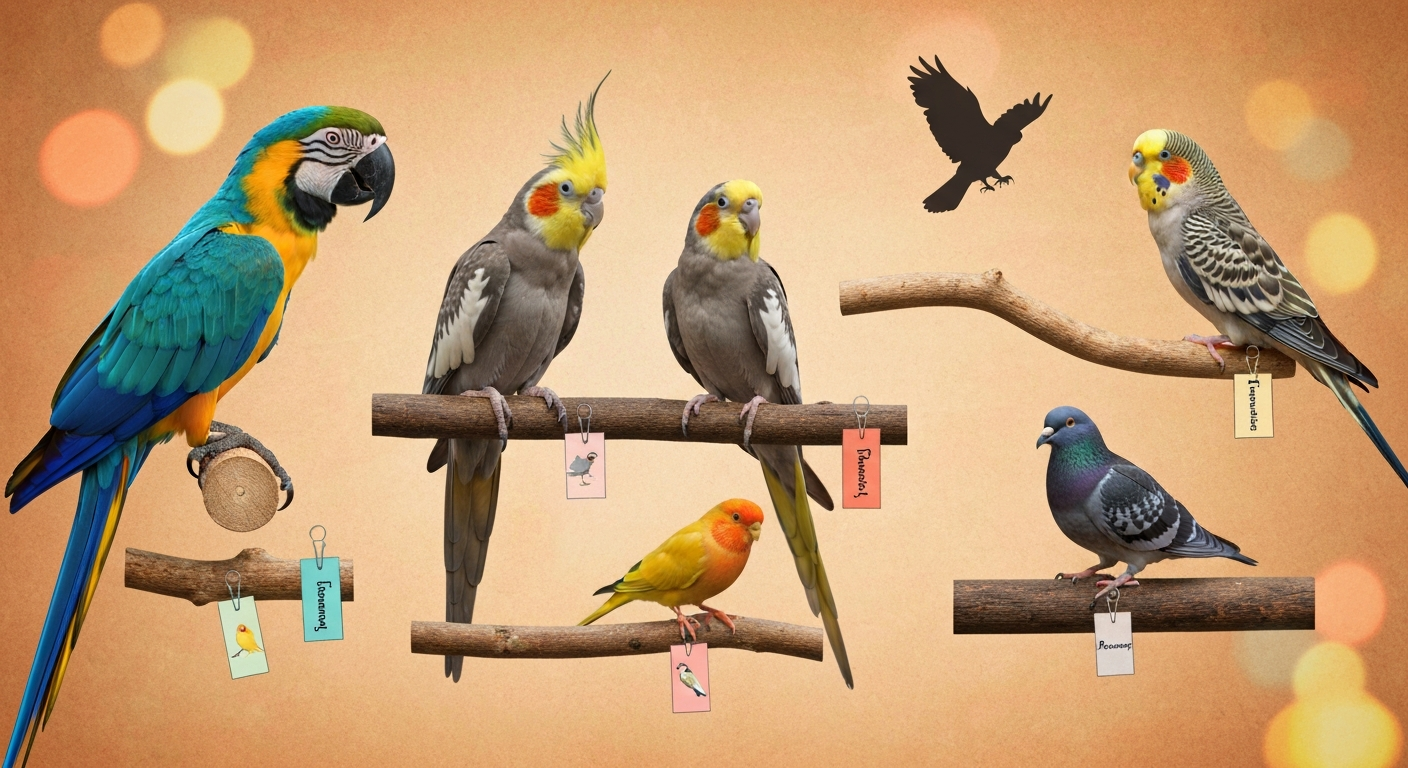
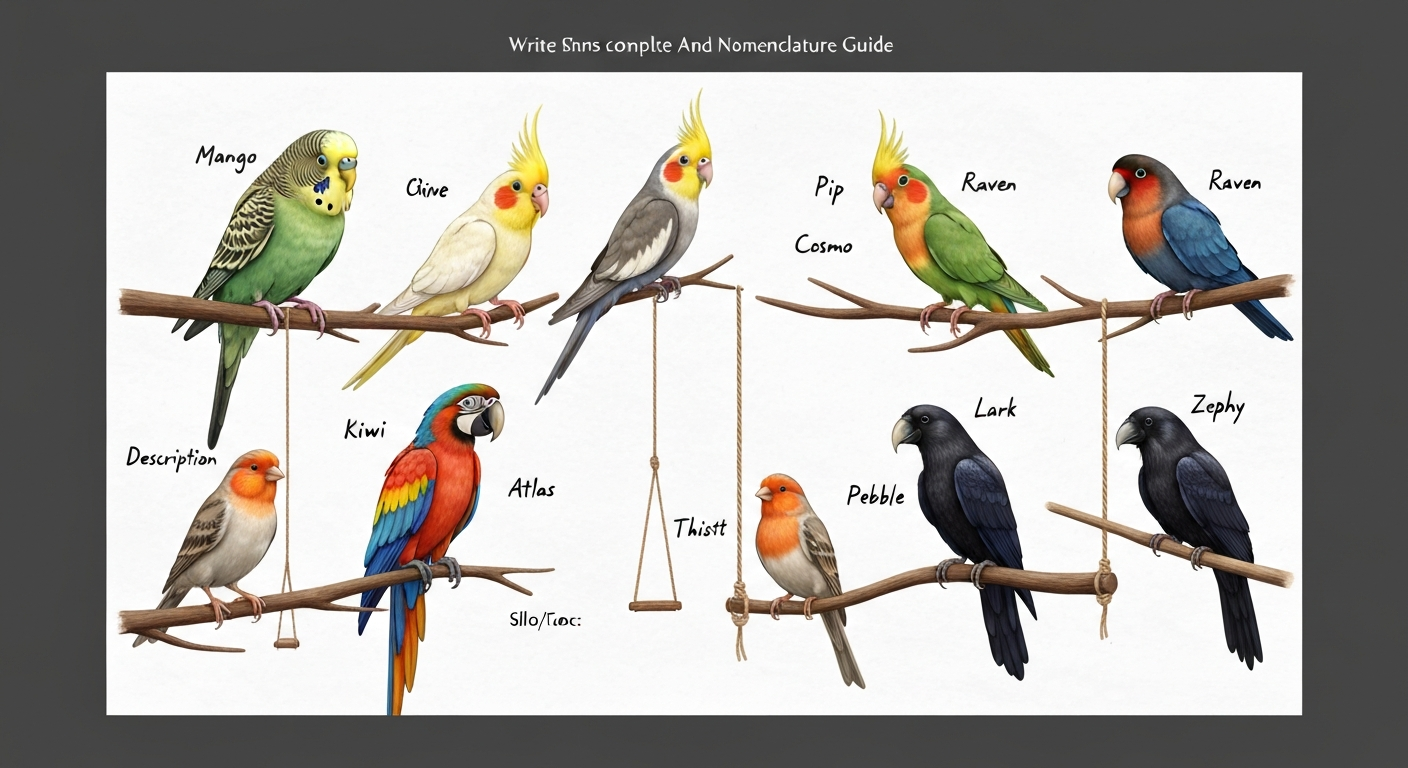
The best bird names ever are ones that feel true to the bird, roll off the tongue easily, and stick in your memory. Names like Mango, Pip, Cosmo, Raven, Kiwi, Atlas, Thistle, Pebble, Lark, and Zephyr consistently top the list because they balance personality, sound, and meaning in a way that works for real birds and real owners. Whether you are naming a pet budgie, a rescue cockatiel, or looking for inspiration from wild species names, this guide covers everything: curated lists by style, etymology, species-specific picks, multilingual equivalents, and practical advice on choosing a name your bird might actually learn to respond to.
Best Bird Names Ever: Cute, Cool, Unique & Classic Picks

Maya Castellanos
4 Aug 2026
Why great bird names actually matter
A name is not just a label. For a pet bird, it is a training tool, a daily greeting, and a signal that carries weight in how the bird responds to you. Parrots and budgerigars are particularly sensitive to the phonetics of names: short names ending in a bright vowel sound (like Kiwi or Coco) are easier for them to mimic and respond to than long, consonant-heavy names. For wild species, common names often encode centuries of observation, folklore, and linguistic history. The name 'Robin' traces back to the Old French diminutive of Robert, while 'Wren' comes from Old English 'wrenna,' a word whose origins are still debated among etymologists. Understanding where these names come from makes you a sharper observer of birds and a more confident namer of pets.
This guide is for pet bird owners looking for the right name before their new bird arrives, birders who want to understand why species are called what they are, language learners interested in avian etymology, and anyone who simply enjoys a well-chosen word. If you have ever spent twenty minutes staring at a cockatiel wondering whether to call it Nacho or Merlin, this is the resource you needed.
How to use this guide
This article is organized so you can jump straight to what you need. The quick picks section gives you ten names you can use immediately. After that, the curated lists break down options by style: cute, cool, unique, and classic. Species-specific tables cover parrots, canaries, finches, and ravens with short rationales for each name. There is a dedicated section on punny names (because bird wordplay deserves its own space), multilingual equivalents for people who want a name from another linguistic tradition, and a practical step-by-step guide to making the final decision. Throughout, you will find etymology sidebars that explain name meanings and origins, plus pronunciation notes for names that look harder than they sound. Think of the guide as a reference you can return to rather than a one-scroll read.
Quick picks: the top 10 best bird names ever
These ten names earned their spots by being widely loved, linguistically satisfying, and genuinely useful as pet names. Each one is short enough to call across a room, distinctive enough that your bird will not confuse it with everyday speech, and meaningful enough to feel intentional rather than throwaway.
- Mango: tropical, bright, and impossible to say without smiling. Works especially well for orange or yellow birds.
- Pip: from the Old English word for a small seed. One syllable, ends in a crisp consonant, and suits tiny birds perfectly.
- Cosmo: from the Greek 'kosmos,' meaning order or universe. Popular on Rover's platform and gives even a small bird an epic quality.
- Raven: from Old English 'hraefn,' related to the Proto-Germanic root meaning to croak. A name with genuine weight, perfect for dark-feathered or intelligent birds.
- Kiwi: the bird name borrowed from the Maori word for the flightless New Zealand species, itself probably imitative of the bird's call. Cheerful and globally recognized.
- Atlas: from Greek mythology, the Titan who held up the sky. Suits bold, confident birds and pairs well with larger species.
- Lark: directly from the Old English 'laewerce.' Associated with joy and morning song across European poetry for over a thousand years.
- Zephyr: the Greek god of the west wind. Airy, fluid, and distinctive enough that your bird will not confuse it with 'sit' or 'step up.'
- Pebble: unpretentious and tactile, this works beautifully for small ground-feeding birds or speckled species.
- Thistle: a plant name with a slight edge to it. Suits feisty, independent birds and has an appealing sound that many birds respond to readily.
Curated name lists by style
Cute bird names
Cute names tend to be short, soft in sound, and often inspired by food, small creatures, or gentle natural imagery. They suit birds with round shapes, bright colors, or particularly affectionate personalities. The following names are backed by genuine etymological roots and are not just invented strings of vowels.
- Biscuit: warm, familiar, and surprisingly good for a pale or cream-colored bird. Hard-k sounds are easy for parrots to mimic.
- Clover: from Old English 'clafre.' A soft three-syllable name that ends on a voiced consonant, making it easy to call out.
- Doodle: a playful reduplication that suits birds who are curious or a little chaotic in their movements.
- Peanut: one of the most popular small-bird names in the English-speaking world according to pet name platforms. Short, punchy, and affectionate.
- Sprout: fresh and lively. Works particularly well for young birds or those with a bright green coloring.
- Wren: from Old English 'wrenna.' A genuinely beautiful one-syllable name with deep historical roots in British bird culture.
- Peaches: sweet and warm, this suits rosy-cheeked or salmon-colored birds, especially peach-faced lovebirds.
- Button: soft, round in sound, and perfectly sized as a name for small companion birds like parrotlets or budgies.
- Fern: a quiet, natural name from Old English 'fearn.' Understated but distinctive, especially for green-toned birds.
- Noodle: loosely structured and playful, this suits birds with a relaxed, floppy, or comedic personality.
Cool bird names
Cool names carry a sense of edge, mythology, or cultural weight. They often come from classical languages, geographical references, or figures that project strength or mystery. These names work well for larger species, birds with striking markings, or owners who want a name that commands a little respect when said out loud. For more ideas and extended lists, see our guide on what are cool bird names.
- Onyx: from Greek 'onyx,' meaning claw or nail, later applied to the black gemstone. Perfect for dark-feathered birds.
- Cipher: an English word from Arabic 'sifr' (zero). Sleek, modern, and genuinely unusual in bird-naming contexts.
- Orion: the great hunter constellation, from Greek. The name projects scale and drama and is particularly fitting for raptors or large parrots.
- Falco: the Latin root behind 'falcon,' from 'falx' meaning sickle, a reference to the curved talons. A name that works at both the pet and genus level.
- Storm: a Germanic word related to Old Norse 'stormr.' Impactful in one syllable, best for birds with dramatic coloring or behavior.
- Vesper: from Latin 'vesper,' meaning evening star. Mysterious and elegant, suits nocturnal or twilight-associated birds.
- Indigo: from the Greek 'indikon,' meaning from India, the original source of the blue dye. Works brilliantly for any intensely blue-colored bird.
- Maverick: an American English word for an unbranded animal, from Texas cattle rancher Samuel Maverick. Suits independent, hard-to-train birds perfectly.
- Vega: the brightest star in the Lyra constellation, from Arabic 'al-nasr al-waqi,' the falling eagle. Cool, celestial, and sharp in one syllable.
- Talon: directly from Old French 'talon,' heel or claw. Boldly on-theme and instantly recognizable.
Unique bird names
Unique names stand apart from mainstream pet-name lists while still being pronounceable and memorable. Many of the best unique bird names come from mythology, linguistics, or the scientific names of real species. If you want a name that sparks a conversation at the vet clinic, this list is a good starting point. For even more ideas, the site's companion coverage of what are some unique bird names goes deeper into rare etymology and cross-cultural options.
- Corvus: the Latin genus name for crows and ravens, from the Latin word for raven itself. Using a genus name as a pet name is linguistically playful and ornithologically accurate.
- Sirocco: an Italian borrowing of the Arabic 'sharq,' meaning east wind. Also the name of a famous kakapo ambassador in New Zealand, making it both unique and culturally resonant.
- Nimbus: from Latin, meaning rain cloud or a luminous halo. Atmospheric and distinctive.
- Solstice: a name derived from Latin 'sol' (sun) and 'sistere' (to stand still). Works beautifully for birds with golden or amber coloring.
- Quill: a short English word from Low German 'quiele,' the hollow stem of a feather. On-theme without being obvious.
- Meridian: from Latin 'meridianus,' meaning midday or south. Geographical and elegant, suits birds with a confident, centered personality.
- Kairos: from ancient Greek, meaning the right or opportune moment. A philosophical name with a beautiful sound.
- Wisteria: the flowering vine named after American anatomist Caspar Wistar. Romantic and botanical, it suits pale purple or lavender-tinged birds.
- Halcyon: from Greek mythology, the bird (often identified as a kingfisher) said to nest on a calm sea. The name literally means calm or peaceful days.
- Fenwick: an Old English place name meaning fen village. Unusual without being invented, and has a gentle, grounded sound.
Classic bird names
Classic names have staying power precisely because they are not chasing trends. Many of them are simply the English or Anglicized names of real bird species, which gives them an inherent authenticity. Others are human names that have been used for birds so long they feel completely natural. These names will not date.
- Robin: from Old French 'Robin,' a diminutive of Robert meaning bright fame. The European robin has been associated with Christmas and goodwill in English culture for centuries.
- Coco: a reduplication that appears across multiple languages as an affectionate name. Warm, familiar, and enduringly popular for parrots.
- Charlie: from the Germanic 'Karl,' meaning free man. Charlie Parker, the jazz musician nicknamed Bird, gives this name an extra layer of avian credibility.
- Polly: the traditional parrot name in English-speaking culture since at least the 17th century. A variant of Mary or Molly, it became so associated with parrots that 'Polly wants a cracker' entered the language as a cultural fixture.
- Tweety: popularized by the Warner Bros. cartoon character, whose full name was Tweety Bird. Derived from 'tweet,' the Old English imitative word for a bird's thin high sound.
- Jack: from the Middle English 'Jakke.' Jackdaws, Blackjacks, and numerous other birds have historically shared this name, giving it genuine avian tradition.
- Sky: a Middle English borrowing from Old Norse 'sky,' meaning cloud. Simple, direct, and endlessly appropriate for any bird.
- Blue: the Old English 'blaw,' via Old French 'bleu.' Used as both a descriptive name and a proper name for birds, it remains one of the most common bird pet names on record.
- Oliver: from Old French 'Olivier,' possibly connected to Latin 'oliva,' olive tree. A refined classic that suits well-mannered, dignified birds.
- Sunny: a straightforward English adjective name used warmly for cheerful, bright-colored birds. Popular across multiple decades of pet naming records.
Species-specific name picks
Some names work especially well when matched to a specific species because they reflect the bird's behavior, appearance, origin, or scientific name. Cornell Lab of Ornithology’s All About Birds is an authoritative resource with species pages documenting behavior, appearance, and common names, which you can use to justify species-specific naming choices All About Birds — Cornell Lab of Ornithology. The table below gives quick-reference suggestions for five popular species, with a short note on why each name fits.
| Species | Suggested Name | Why It Works |
|---|---|---|
| Parrot (general) | Cosmo | Greek 'kosmos' (universe) suits the parrot's wide-ranging intelligence and personality. |
| Parrot (general) | Mango | Tropical origin matches the parrot's habitat; bright vowel sound aids mimicry training. |
| Budgerigar | Pip | One syllable, crisp ending; budgies respond well to short bright names. |
| Budgerigar | Kiwi | Light and cheerful; the Maori root adds cultural depth to a simple-sounding name. |
| Canary | Sunny | Direct reference to the canary's famously bright yellow plumage and cheerful song. |
| Canary | Lark | Old English 'laewerce'; evokes joyful song and morning brightness. |
| Finch | Pebble | Suits the speckled, rounded appearance of many finch species. |
| Finch | Fern | Quiet and natural; finches are often associated with hedgerow and woodland habitats. |
| Raven | Corvus | The actual Latin genus name for ravens; linguistically layered and species-accurate. |
| Raven | Onyx | From Greek for the black gemstone; matches the raven's glossy, near-black plumage exactly. |
| Cockatiel | Thistle | Feisty and textural; suits the cockatiel's spiky crest and independent personality. |
| Cockatiel | Biscuit | Warm and soft; matches the cockatiel's typical grey-and-yellow coloring perfectly. |
Punny bird names worth using
Bird puns land differently when they are attached to a real bird. The best punny names are ones that work on two levels simultaneously: they sound like a normal name, and they reveal the joke only when you say them aloud or see them written. If you enjoy this territory, the site's dedicated coverage of best bird puns goes much further into wordplay across species and cultural contexts.
- Tweethart: a play on 'sweetheart' that works especially well for a particularly affectionate bird.
- Birdie Sanders: a political pun that became widely shared after a bird famously landed on a campaign podium in 2016.
- Flap Jackman: a pun on actor Hugh Jackman. Best for a dramatic bird with a flair for the theatrical.
- Robin Hood: perfect for a Robin, obviously, but also for any bird with a habit of stealing shiny objects.
- Edgar Allan Crow: for a crow, raven, or any dark-feathered bird with a brooding temperament.
- Wing Crosby: a pun on Bing Crosby that works for any bird with a strong singing voice.
- Beaker: the Muppet scientist, but also a direct reference to a bird's beak. Works on both levels.
- Attila the Hen: for a bossy, territory-defending bird of any species.
- Macawroni: for macaws specifically. Slightly absurd, but that is entirely the point.
- Chirp Eastwood: for a tough, no-nonsense bird who watches you from across the room without blinking.
Alternative and regional bird names worth knowing
Many birds carry completely different common names depending on where you are in the world. The Common Starling is called just 'starling' in Britain and much of Europe, but in parts of the United States it sometimes goes by 'European Starling' to distinguish it from native species. The Northern Flicker, a North American woodpecker, has been recorded under at least 132 different regional names including Yellowhammer, Harry-wicket, and Gawker Bird. These alternative bird names are not errors or outdated terms: they reflect local observation traditions, and they often make excellent pet names precisely because they are unfamiliar in everyday conversation. A bird named Yellowhammer or Gawker is going to generate questions, which is its own kind of pleasure.
For pet owners specifically, exploring regional and alternative names for a species can surface something that feels more personal than the standard suggestions. The IOC World Bird List, which is updated multiple times per year, maintains the current globally accepted English names for all recognized bird species, and cross-referencing that against older regional lists is a genuinely rewarding exercise. It is also a practical one: knowing that a Eurasian Jay was once widely called a Jay-pie in English, or that the Eurasian Curlew was sometimes called a Whaup in Scotland, gives you a richer set of historically grounded options than any generic pet-name blog can offer.
Bird names across languages
One of the most reliable ways to find a genuinely distinctive bird name is to look at what the same species is called in another language. The resulting names are often more evocative than their English equivalents, partly because you are hearing the word fresh without centuries of familiarity dulling its impact.
| Bird | English Name | Multilingual Equivalent | Language | Notes |
|---|---|---|---|---|
| Kingfisher | Kingfisher | Martin-pêcheur | French | Literally 'fishing martin,' a reference to the swift Saint Martin. |
| Swallow | Swallow | Golondrina | Spanish | From Latin 'hirundo'; 'golondrina' has a musical quality ideal for a pet name. |
| Owl | Owl | Eule | German | Direct descendant of Proto-Germanic 'uwwalon,' imitative of the hoot. |
| Robin | Robin | Petirrojo | Spanish | Literally 'little red breast'; a beautiful descriptive compound that works as a name. |
| Sparrow | Sparrow | Moineau | French | From Old French 'moignon,' stump; also slang for a quick, nimble person. |
| Wren | Wren | Troglodyte | French | From the scientific genus Troglodytes, meaning cave-dweller; the wren loves dense undergrowth. |
| Raven | Raven | Kolravn | Old Norse | Literally 'coal-raven.' The raven had enormous cultural weight in Norse mythology. |
| Crane | Crane | Tsuru | Japanese | A symbol of longevity and good fortune in Japanese culture; an elegant one-syllable name. |
A quick guide to scientific name etymology
Scientific names follow the binomial system established by Carl Linnaeus in the 18th century. Every species gets a two-part Latin or Latinized name: the genus first, then the specific epithet. Understanding what those names mean can turn them into genuinely poetic name options for pets. For authoritative taxonomic details and accepted scientific names consult the Integrated Taxonomic Information System (ITIS). 'Cyanistes caeruleus,' the Blue Tit, breaks down to Greek 'kyanos' (dark blue) plus Latin 'caeruleus' (sky blue): a double reference to blueness that is more committed to its theme than most human names. 'Sturnus vulgaris,' the Common Starling, means 'common starling' in almost pure Latin, which is wonderfully unambiguous. 'Parus major,' the Great Tit, is simply 'big titmouse' in Latin. These underlying meanings are often the best evidence of what the people who first formally named a species thought was most important about it.
For pet names, genus names in particular are worth plundering. Corvus (ravens and crows), Falco (falcons), Ara (macaws), Psittacus (African grey parrots), and Amazona (Amazon parrots) are all genus names that double as crisp, historically grounded pet names. They carry scientific weight without requiring any Latin fluency to pronounce or remember.
Gender-neutral bird names
Many bird owners either cannot or do not want to determine the sex of their bird before naming it, which makes gender-neutral names a practical necessity. The good news is that most of the best bird names are already gender-neutral: natural world names, plant names, celestial names, and color names do not carry strong gendered associations in English.
- Sky: elemental, open, and universally applicable.
- Sage: from Latin 'salvia,' the herb name carries connotations of both color and wisdom.
- River: fluid and natural; suits birds that move constantly and purposefully.
- Cedar: a tree name with a grounded, resinous quality that suits calm and confident birds.
- Quinn: from Irish 'conn,' meaning intelligence or chief. Decisively gender-neutral in modern use.
- Ash: from Old English 'aesc,' the ash tree. Also a color reference for grey-toned birds.
- Briar: a plant name suggesting something slightly wild and independent.
- Ember: warm and glowing; suits birds with any hint of orange, red, or amber in their plumage.
- Rook: the chess piece and the corvid bird. One syllable, completely unambiguous.
- Wren: Old English 'wrenna.' Gender-neutral in practice despite occasional use as a specifically feminine human name.
How to choose the right name for your bird: a practical guide
Choosing a bird's name involves more practical constraints than most people realize before they sit down to do it. Here is a step-by-step approach that accounts for training, veterinary records, and long-term use.
- Start with sound, not meaning. Birds, especially parrots and budgies, respond to the acoustic properties of names before they respond to meaning. Names with one or two syllables ending in a vowel (Kiwi, Coco, Mango) or a crisp consonant (Pip, Rook, Finch) are the easiest for birds to learn and mimic.
- Avoid names that sound like training commands. Names that rhyme with 'no,' 'go,' 'stay,' 'wait,' or 'down' create genuine confusion during training. A bird named Flo or Joe is going to struggle with 'no' as a correction.
- Test the name out loud twenty times. If it feels natural to call across a room, it will work. If it feels awkward or embarrassing to say in public, you will gradually stop using it, which is bad for training consistency.
- Keep vet records in mind. Veterinary clinics need to use the name to identify your bird in records and appointments. Extremely long punny names (Attila the Hen is fine; Sir Reginald Flapsworth the Third gets unwieldy) can cause minor complications. Use a shorter working name for vet visits if needed.
- Consider the bird's personality and appearance before committing. Spend at least a few days with a new bird before naming it. A bird you thought was going to be a Mango might turn out to be an Onyx in personality.
- Check that the name is distinctive enough. If you already have a cat named Coco and a dog named Mango, your new bird needs a name that will not be confused with the others in a multi-pet household.
- Look at the species' scientific name and natural history. As covered above, the genus and species names often contain descriptive gold. A five-minute check of a species page on Cornell Lab's All About Birds can surface a genuinely fitting name from the bird's own biology.
Why some bird names stay popular and others fade
Pet name trends shift in ways that roughly mirror human baby name trends: names spike when a famous bird carries them into public consciousness, then gradually become either classics or dated. Tweety remained in constant use for decades after the Looney Tunes character debuted in 1942. Polly has been in continuous use as a parrot name since at least the 1600s. More recently, Sirocco, the kakapo featured in wildlife documentaries, pushed that name onto lists it would never have appeared on otherwise. Names connected to pop culture often date themselves: a name that references a specific film or TV character can start to feel like a timestamp within ten years. Names connected to natural phenomena, mythology, or species biology age much better, which is why Raven, Lark, and Atlas continue to appear on best-of lists year after year while more topical choices cycle out.
If you want a name that sits in the sweet spot between distinctive and enduring, the safest approach is to choose something rooted in natural language or classical mythology rather than current pop culture. That is not a rule, just an observation from looking at which names keep appearing across different decades of pet-naming data. The names that stick around are almost always the ones that meant something before they were used as pet names.
A note on naming conventions for registered and show birds
If you are registering a bird with a national avicultural society or entering it in shows, the naming conventions differ from everyday pet naming. Many breed societies require a breeder prefix or suffix to be incorporated into the registered name, which is separate from the bird's everyday call name. The registered name might be something like Silverbell Aviary's Cosmo, while the bird is known simply as Cosmo at home. Scientific names, when used in formal contexts, follow the International Code of Zoological Nomenclature (ICZN), which governs how species names are assigned, corrected, and prioritized. For pet owners this level of formality rarely matters, but for competitive aviculture it is worth checking the specific requirements of your regional society before registering a bird under a name that may later need to be amended.
Finding your own best bird name
After covering this much ground, the honest conclusion is that the best bird name is almost always the one that felt right when you were not overthinking it. The lists in this guide are starting points, not prescriptions. Use the etymology sections to check whether a name you love actually means what you think it means. Use the species tables to cross-reference whether a name has a natural connection to your specific bird. Use the practical guide to make sure the name you love will actually function in daily life. And if you end up going with something none of these lists suggested because it just suits your particular bird perfectly, that is exactly how the best bird names have always been chosen.
FAQ
What primary SEO tools and keyword data are required to validate demand for “best bird names ever” and related queries?
Use Google Keyword Planner for search-volume estimates and CPC; Google Trends for seasonality and rising queries; Ahrefs and Semrush for semantic clusters, long‑tail opportunities, keyword difficulty, and competitor gap analysis; and Google Search Console to audit your site’s current query performance and prioritize pages to update.
Which authoritative sources should I cite for species biology, common names, and scientific nomenclature when creating species‑specific name lists and etymologies?
Cite Cornell Lab of Ornithology’s All About Birds for species biology and behavior; IOC World Bird List, Clements/eBird checklist, ITIS, and GBIF for accepted scientific names and taxonomic authorities. Use these to justify species‑based name rationales and to avoid outdated common or scientific names.
What references are best for compiling accurate etymologies, meanings, and pronunciation notes for personal and word‑derived names?
Use Behind the Name and Etymonline for personal‑name histories and English lexical etymologies. For Latin/Greek roots in scientific names, consult taxonomic authorities (IOC, ITIS) and classical dictionaries or academic morphological analyses. Where available, include IPA pronunciations sourced from reputable name dictionaries or pronunciation guides.
What commercial or editorial sources help justify popularity claims and stylistic lists (cute, cool, classic, punky/punny) for pet bird names?
Rover’s editorial lists and their press releases on top pet names provide platform‑derived popularity signals. Baby‑name and curated hobby sites (Nameberry, Behind the Name) help assemble stylistic clusters and provenance for usage trends. Use these as descriptive benchmarks and label popularity claims clearly (e.g., “platform‑derived” or “editorial”).
How should I research multilingual equivalents and cross‑cultural naming notes to be culturally sensitive and accurate?
Consult bilingual name resources, native‑speaker sources (language forums, reputable dictionaries), and academic onomastics publications. Verify translations with native speakers or linguists and avoid uncontextualized appropriation; flag names with cultural significance and provide usage notes. Use ISO language codes and phonetic guidance to help readers pronounce names correctly.
What content and structural SEO best practices and authoritative guidance should shape the title, meta description, and on‑page snippets?
Follow Google Search Central guidance on titles and snippets and use Moz/Yoast heuristics for character/pixel length. Create a natural, search‑oriented title containing the primary keyword and a concise meta description under 160 characters. Expect Google to sometimes rewrite snippets and prioritize clear H1/H2 structure and schema where appropriate.
Next Article
What Are Cool Bird Names: Top Picks & Creative Ideas
Cool bird names for parrots, finches & more, curated lists, meanings, pronunciations, etymologies and a namingChecklist