Calling someone a 'bird' can be offensive, neutral, or even affectionate, and the difference comes down almost entirely to context, tone, relationship, and whether the person on the receiving end actually likes it. When it's directed at a woman in a workplace setting, courts have called it 'plainly sexist.' When it's a playful nickname between friends or partners, it might land just fine. There's no single verdict that covers every situation, but this guide will help you figure out exactly which situation you're in and what to do about it.
Is Calling Someone a Bird Offensive? Meaning and Guidance
Maya Castellanos
6 May 2026
When calling someone a bird crosses the line

The clearest case where 'bird' is offensive is in professional or formal settings, particularly when it's used to refer to women as a group. In a real UK employment tribunal, a Barclays banker successfully argued that her manager repeatedly calling female employees 'birds' was 'plainly sexist,' and the judge agreed. That ruling drew on the UK Equality Act 2010, and ACAS guidance confirms that gendered language used in the workplace, even when framed as banter, can qualify as sex-based harassment. In the US, the EEOC sets a similar bar: conduct that a reasonable person would find abusive, when frequent or severe enough, creates a hostile work environment regardless of whether the speaker meant it as a joke.
Outside of work, the offensiveness of 'bird' scales with repetition, power dynamics, and whether the person has asked you to stop. The Barclays case is instructive here too: the employee told her manager it made her uncomfortable, he kept going, and that pattern of ignoring her objection was part of what made it harassment. That principle holds in everyday life as well. A one-off comment is different from a repeated pattern that someone has already flagged as unwelcome.
Gender and context: why it hits differently when directed at a woman
Dictionary.com lists 'bird' as a slang term for 'a girl or young woman, especially one's girlfriend.' That framing is part of the problem. When a word is routinely used to categorize women specifically, it stops being a neutral descriptor and starts carrying the weight of how women are perceived in the culture that uses it. Linguistics researchers who study animal metaphors applied to women describe this as semantic derogation: animal-derived words applied to women tend to carry a belittling force that the same words don't carry when applied to men. Studies from Lund University and similar institutions have found that female animal-term versions are primarily used as insults, while male equivalents more often function as compliments or neutral labels.
This is why the same word can feel gendered and dismissive even when no insult is consciously intended. Calling a woman a 'bird' in a professional context signals, consciously or not, that you're categorizing her by gender rather than by her role or competence. A Guardian survey found that a majority of British women wanted 'bird' retired from use alongside 'doll,' 'chick,' and 'babe,' describing these terms as infantilising.
These aren't fringe opinions; they reflect a consistent pattern of how the word lands for the people it's most often directed at. The related term 'chick' is flagged as 'often offensive' in Dictionary. com's own entry, and Cambridge Dictionary includes it as slang for 'young woman,' making it a close linguistic cousin of 'bird' in both usage and reception.
Slang roots and figurative meaning: why the word carries baggage

British English has used 'bird' to mean a girl or woman since at least the mid-20th century, and it became a widespread colloquialism in the UK in a way that never quite transferred to American English. It also has a separate prison slang meaning (as in 'doing bird,' meaning serving time), which adds another layer of baggage depending on how it's used. In everyday British slang, 'bird' used to reference someone's girlfriend carried a casual, almost affectionate tone in some circles. But casual isn't the same as harmless, especially when the person being called a 'bird' wasn't asked whether she liked it.
The underlying issue is that figurative animal names applied to people almost never feel neutral. The cognitive and social force of animal metaphor, as language researchers put it, shapes how a person is understood and evaluated. Calling someone a bird, even playfully, frames them through an animal lens, and when that framing is consistently applied to one gender, it functions as a subtle diminishment whether or not that's the speaker's intent. It's worth noting that this site covers a lot of bird-related wordplay and naming culture, and even within that enthusiast context, the difference between a charming ornithological nickname and a dismissive gendered label comes down to consent, tone, and relationship.
Reading the room: joke, flirt, insult, or harassment?
Tone and intent don't tell the whole story, but they do matter. Here's how to break down the most common situations:
| Situation | Likely intent | How it usually lands | Key signal |
|---|---|---|---|
| Close friend uses it as a nickname both parties have used before | Affectionate/playful | Fine in most cases | Mutual familiarity, no discomfort expressed |
| Partner uses it as a relationship caption or nickname | Affectionate | Generally fine; even TikTok trends have embraced 'you're my bird' as a cute term | Both people are into it |
| Stranger or acquaintance uses it to a woman they've just met | Flirty or casual, but presumptuous | Often uncomfortable; presumes familiarity that doesn't exist | Unsolicited; no established dynamic |
| Manager or colleague uses it to refer to women employees | May feel casual to the speaker | Can constitute sexist conduct or harassment | Workplace context; power imbalance; gender targeting |
| Used repeatedly after being told it's unwanted | Irrelevant once person has objected | Harassment, potentially actionable under law | Objection was ignored |
The clearest signal that something has moved from playful to problematic is when the target has said they don't like it and the speaker continues anyway. ACAS is explicit that blank" rel="noopener noreferrer">joking doesn't excuse gendered language under harassment law, and the EEOC applies the same logic in the US. ACAS lists examples of harassment and explains that it can include spoken or written words, including jokes, depending on the context blank" rel="noopener noreferrer">ACAS is explicit that joking doesn't excuse gendered language under harassment law. Intent matters less than impact once the impact has been clearly communicated.
What to do right now: respond, de-escalate, or draw a line

If someone just called you a bird and you're not sure how to respond, here are three practical approaches depending on what you want to achieve:
- If you want to address it calmly in the moment: A simple, direct statement works best. Something like 'I'd prefer you not call me that' or 'That's not a term I like' is clear without escalating. You don't owe anyone an explanation.
- If you want to de-escalate a misunderstanding: If the person seems genuinely surprised by your reaction, you can say 'I know you probably didn't mean it badly, but that term bothers me, so I'd rather you not use it.' This gives them room to adjust without a confrontation.
- If it's a workplace situation and you want to set a firm boundary: Document what was said, when, and who was present. If it continues after you've asked the person to stop, that's when you involve HR or a manager, or in the UK, consult ACAS. One incident is usually not enough for formal action unless it's severe, but a pattern absolutely is.
If you were the one who used the term and you're now reading this because someone reacted negatively, the best move is to stop using it immediately and offer a genuine acknowledgment, not a defensive explanation. 'I hadn't thought about how that lands, and I won't use it again' goes a long way. What doesn't help is insisting you meant it kindly or that it's just a word.
Safer alternatives: bird-inspired compliments that don't sting
If you genuinely love birds and want to use bird-related language as a term of affection or a nickname, there are options that don't carry the same gendered baggage. For racist bird names examples and why they can be harmful, it helps to see common cases and patterns in context bird-related language. The key difference is that these work because they reference specific birds or bird qualities rather than using 'bird' as a catch-all label for a woman.
- Specific bird names as nicknames: 'Robin,' 'Wren,' 'Jay,' or 'Finch' work as affectionate nicknames without implying anything about gender. They feel personal and specific rather than categorical.
- Quality-based references: Describing someone as having 'the focus of a hawk' or 'the curiosity of a magpie' is playful and complimentary rather than reductive.
- Shared enthusiasm framing: If you're both into birdwatching or bird culture, references like 'fellow birder' or even joking about a person's 'spirit bird' feel inclusive rather than dismissive.
- Direct compliments: If you're trying to say someone is attractive, clever, or fun, just say that. It's clearer and much less likely to land awkwardly.
- Consent-based nicknames: Any nickname, bird-related or otherwise, is fine if the person has explicitly said they like it. The problem with 'bird' isn't the word itself in isolation but the presumption that someone will enjoy being labeled with it.
It's also worth knowing that this site covers a lot of ground on bird names with figurative or cultural meanings, including terms that have become derogatory when applied to humans and the linguistic patterns behind why that happens. Many bird-based slurs become derogatory specifically when they are aimed at humans, especially in gendered ways bird names that are derogatory when applied to humans.
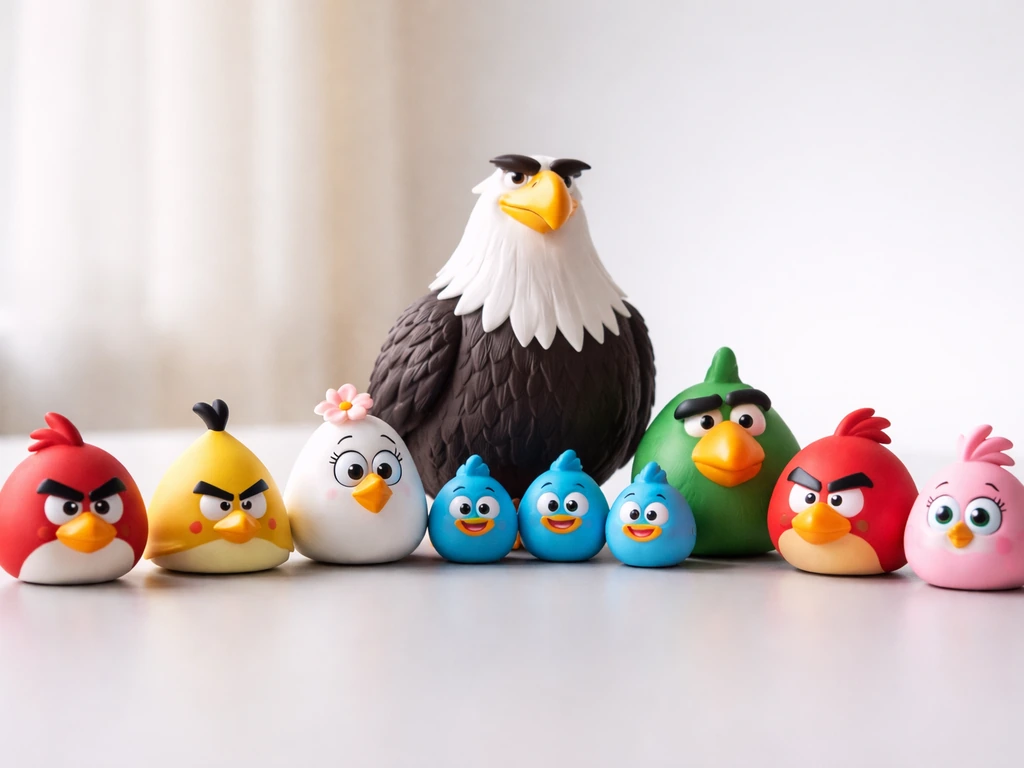
Understanding derogatory bird names when applied to humans can help you recognize when a seemingly playful label becomes harmful derogatory when applied to humans. If you want the playful Angry Birds character names, that is a separate topic, and you can look it up by the specific character list bird names. Understanding why certain bird-related labels carry negative charge can help you avoid the ones that sting and lean into the ones that genuinely delight.
If it's already caused harm: how to apologize and move forward
If your use of 'bird' has caused a real problem, whether in a personal relationship, a social setting, or a workplace, the path forward is straightforward but requires following through on all three steps.
- Acknowledge specifically what you said and why it was a problem. Vague apologies ('I'm sorry if you were offended') don't work because they shift responsibility onto the other person's reaction. A specific acknowledgment ('I called you a bird and I can see why that felt dismissive or sexist') is far more effective.
- Commit to the change. Say clearly that you won't use the term again. If it's a workplace situation, this may also involve HR agreeing on updated conduct expectations.
- Follow through in practice. Don't use it again, not with that person and ideally not in the professional or social context where it caused the problem. One genuine change in behavior matters more than multiple apologies.
If you're on the receiving end of harm and the person has apologized, you get to decide at your own pace whether that apology is satisfying. In a workplace, you also retain the right to report the behavior regardless of whether an apology was offered. An apology doesn't reset the record; documentation and formal reporting are still available to you if the situation warrants it. In personal relationships, the same principle applies: an apology is a starting point, not a finish line.
The bottom line is that 'bird' sits in a genuinely ambiguous zone of the English language. It has affectionate uses and a real slang history, but it also has a documented pattern of being used dismissively toward women, and courts have backed that up. Knowing the linguistic and cultural weight behind the term puts you in a much better position to use it thoughtfully, respond to it confidently, or choose something better altogether. If you're looking for something lighter, this guide also breaks down some of the worst bird names people use for insults and why they land so badly.
FAQ
If I call someone a bird as a joke, is it still offensive if they laugh at first?
Yes, it can still be offensive even if you never meant it sexually or as an insult. Once someone tells you it bothers them, continuing is the common mistake, because the impact and disregard for consent becomes the main issue rather than your intent.
Does it matter whether I’m a coworker versus a manager when deciding if calling someone a bird is offensive?
Check the setting and the power relationship. In a workplace, especially if you manage, supervise, or recruit, even “casual” gendered nicknames can be treated as harassment if they create an intimidating or hostile environment.
What’s the difference between a one-time slip and a pattern that could be considered harassment?
Look for patterns, not single moments. One-off use that’s immediately corrected after feedback is very different from repeated use, escalating language, or ignoring a clear request to stop.
Someone told me to stop calling them a bird, what should I say or do next?
If the person told you they dislike it, the safest approach is to stop using it and switch to a neutral alternative (their name, role, or a nickname they choose). “Explaining what I meant” often backfires because it centers you, not their comfort.
If I think “bird” just means girlfriend, does that make it okay to use?
Avoid arguing about whether it is “technically a term for girlfriend” or “just slang.” Terms that rely on gendered categorization can still be received as dismissive, even when they come from a supposed affectionate dictionary meaning.
If the person apologizes at work, do I still have the right to complain?
Yes. In workplace contexts, you can still report the behavior even if the other person apologizes later. Documentation helps, write down dates, witnesses, and what was said, and consider speaking to HR or a relevant reporting channel if you feel unsafe.
If my partner used to like it but stopped, should I assume they changed their mind?
In personal relationships, a useful decision aid is to ask for a preference and treat it as ongoing consent. If they say they do not like it, stop completely, and don’t “test” whether they might tolerate it again.
What if I say “sweet bird” or “pretty bird,” does the tone make it harmless?
Be cautious. Animal metaphors can still reduce someone to a stereotype, and when the language is used mainly for women, it can carry a belittling effect even if the bird itself is positive (for example, “sweet bird”).
How do legal and workplace guidelines generally assess offensive “bird” language?
For UK workplaces, courts and regulators may treat repeated gendered language directed at women as sex-based harassment, and for the US, EEOC-style analysis focuses on whether a reasonable person would find the conduct abusive and frequent or severe enough. In both places, context and repetition are key.
What are safer alternatives if I want to keep a bird-themed nickname without being gendered?
A good fallback is to use language that does not categorize by gender, such as their name, a role-based title, or a nickname they choose. If you want a bird theme, pick a specific bird or quality they enjoy, and confirm it lands well with them.
Next Article
What Are the Angry Bird Names? Main Characters List
Find the Angry Birds character names with main roster count, plus optional pig cast variants and clear character who’s w