
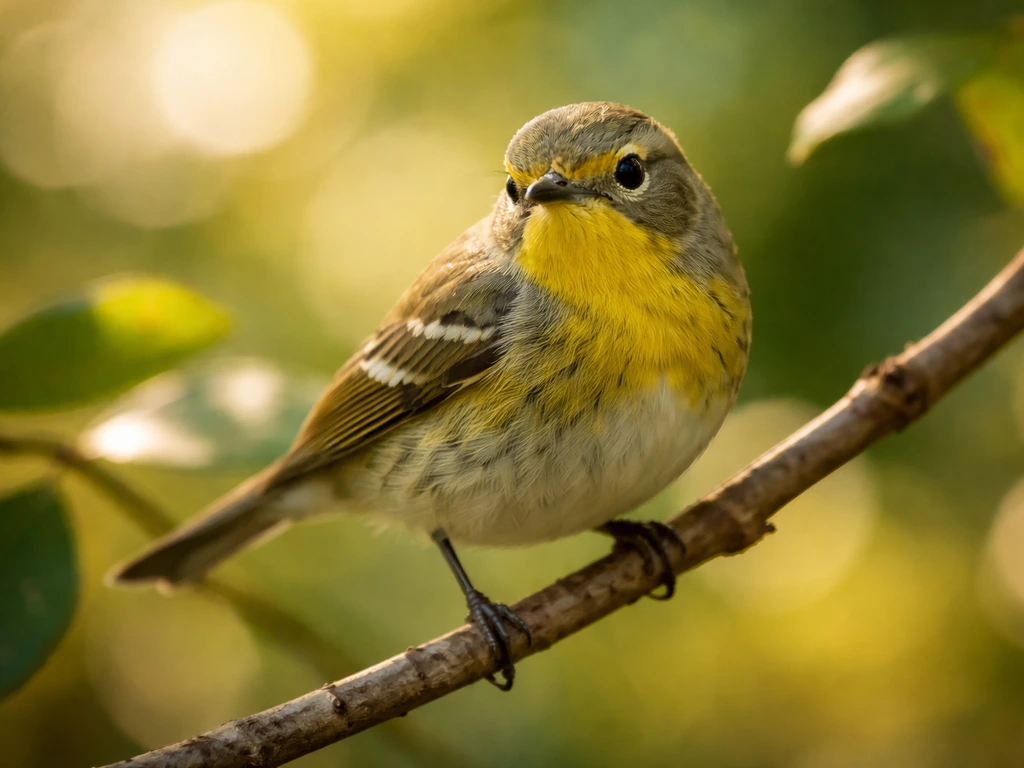
The bird whose name can mean 'sudden' is the Barbuda Warbler, with the scientific name Setophaga subita. That species epithet, subita, is the feminine form of the Latin adjective subitus, which means exactly what you're looking for: sudden, unexpected, or rash. If you hit this clue in a puzzle, a trivia question, or a bird-name lookup, Setophaga subita is your answer.
Bird Whose Name Means Sudden: Find the Real Match

Maya Castellanos
13 May 2026
What the clue 'bird whose name can mean sudden' is really asking

When a clue says a bird's name 'can mean' something, it's almost never the common English name doing the work. Common names like 'warbler' or 'finch' rarely hide a secret etymology. What the clue is pointing to is the scientific name, specifically the species epithet, the second half of the Latin binomial. In this case, the word subita in Setophaga subita is a direct Latin adjective meaning 'sudden.' The clue could also point to a folk-name or a name borrowed from another language, but for this particular puzzle, it's the Latin epithet that seals it.
It's worth knowing the two ways 'sudden' can show up in a bird name. First, as a literal root in the scientific name (that's what's happening here with subita). Second, as a behavioral description that inspired a folk name, where a bird's habit of bursting into sudden flight got baked into a vernacular label over time. The Barbuda Warbler's case is the clean, direct first type: the Latin root and the English gloss are a straight match.
Bird names that genuinely encode 'sudden'
The standout candidate here is Setophaga subita, the Barbuda Warbler, a small New World warbler found on the Caribbean island of Barbuda. It's recognized by eBird, the U.S. Fish & Wildlife Service, and Avibase under that exact binomial, so the taxonomy is stable and verified. The species epithet subita is the feminine form of the Latin subitus, and its meaning is documented in Latin dictionaries as 'sudden, rash, unexpected.' This isn't a stretch or a folk interpretation. It's a textbook Latin adjective applied as a species name.
Beyond the Barbuda Warbler, the Latin word repens is occasionally cited as meaning 'sudden' or 'unexpected' (it appears with both that meaning and the more botanical 'creeping/trailing' meaning). So if you ever see a bird with repens in its scientific name, be careful: that could signal 'sudden/unexpected' or simply 'creeping along the ground.' Context from the bird's behavior and habitat matters. The moral is that one Latin word can carry multiple senses, and you have to check which sense the describer intended.
The etymology: how Latin built the word 'sudden'

The word 'sudden' has a tidy Latin family tree. The root is the verb subire, meaning to go up to, approach, or come upon stealthily. From that verb, Latin formed the past participle subitus, meaning something that came upon you without warning, which is exactly 'sudden' or 'unexpected.' That past participle then generated the adjective subitaneus, which Wiktionary glosses directly as 'sudden, unexpected.' Old French borrowed the concept, Middle English adopted it, and the modern English 'sudden' arrived carrying that original sense of something that crept up on you unannounced.
The species epithet subita is simply the feminine form of subitus, matched to agree grammatically with the feminine genus name Setophaga. The genus name itself, by the way, means 'moth eater' from Greek (sēs for moth, phágos for eater), so the full name roughly translates to 'the moth-eating sudden one.' That's a pleasingly odd combination, but scientific names are built one piece at a time and don't always tell a unified story.
For completeness, the Latin word subito (the adverb form, meaning 'suddenly') also exists and is still used in Spanish and Italian today with the same meaning. If you see súbito in a Spanish-language bird reference, that's the same root family at work.
How to verify a bird name from clues you have
If you're working from a clue and want to confirm you've got the right bird, here's the process that works every time. A scholarly thesis on British bird vernacular name motivations describes using etymology, context, and external testimony to verify name-motivation claims, as a best-practice way not to trust gloss alone verify a bird name from clues. If you're confirming this kind of clue, see the bird-name verification steps for how to verify a bird name from clues you have bird whose name means sudden.
- Start with the meaning clue. Look up the target word ('sudden,' 'unexpected,' 'rapid') in a Latin dictionary or Wiktionary to find the Latin adjective form. For 'sudden,' that's subitus/subita.
- Search eBird or Avibase using the Latin epithet as a keyword. Type 'subita' into eBird's species search and Setophaga subita comes straight up.
- Cross-check the common name against a trusted taxonomic source like the U.S. Fish & Wildlife Service or IOC World Bird List to confirm the common name (Barbuda Warbler) matches the scientific name you found.
- Verify the morphology. If the genus name is feminine (which Setophaga is), the epithet should be feminine too. Subita ends in -a, which is correct Latin feminine agreement. A mismatch here would be a red flag.
- Double-check the meaning hasn't shifted. Look up the epithet in a botanical or zoological Latin dictionary to see if it has secondary meanings that might be more relevant to the bird's actual behavior or appearance.
This process takes about five minutes and it's reliable. The hardest part is step one, knowing where to look for the Latin root, but Wiktionary's etymology sections are genuinely excellent for this and free to use.
Watch out for lookalikes and false positives
A few traps are worth naming explicitly. First, 'rapid' sounds like it should relate to 'sudden,' and colloquially they're close. But rapid comes from Latin rapidus, which traces back to rapere (to snatch or seize), so 'rapid' is about speed and violence of motion, not the unexpectedness of arrival. A bird with rapidus in its name isn't 'sudden,' it's 'swift.' Those are different concepts etymologically even if they feel similar in English.
Second, repens is genuinely tricky. It can mean 'sudden or unexpected' in classical Latin prose, but in botanical Latin it almost always means 'creeping,' as in a plant or animal that stays low to the ground. In botanical Latin, MOBOT’s repens entry explains that repens is “sudden, hasty, unexpected, unlooked for,” while also noting senses like “creeping,” which shows how the wrong sense can lead to incorrect claims. If a bird's name includes repens and someone tells you it means 'sudden,' ask them for a citation. It might be right, but it might be the wrong sense entirely.
Third, be aware that descriptive passages about birds often use 'sudden' to describe behavior, like a bird making sudden bursts into flight. That kind of phrasing in field guides or old ornithology texts doesn't mean the bird's name means 'sudden.' Always trace the meaning claim back to the actual Latin or Greek root, not a secondary description of how the bird moves.
If you enjoy this kind of linguistic digging, other birds in this space are worth exploring. If you want a more pop-culture flavored option, you could also look up the bird whose name sounds like a hip-hop dance move and compare how its etymology is explained. There's a sibling topic about a bird whose name means 'golden,' and another about a bird whose Latin root means 'dog,' both of which follow the same verification logic: find the root, check the morphology, confirm the taxonomy. If you're looking for a similar example, there is also a bird whose Latin root means dog, and the same verification logic applies. The approach scales to any bird-name etymology puzzle.
Using 'Subita' (or Barbuda Warbler names) for a pet bird
If you're here not just to solve a puzzle but also to find a name for a pet bird, the 'sudden' connection gives you a genuinely interesting naming pool. Here's how the main options stack up.
| Name | Pronunciation | Vibe | Best for |
|---|---|---|---|
| Subita | SOO-bee-tah | Elegant, classical, slightly exotic | A bird with a quick, unpredictable personality |
| Subito | SOO-bee-toh | Snappy, musical (used in Italian/Spanish) | A lively, fast-moving bird; works for either sex |
| Barbuda | bar-BYOO-dah | Geographic, warm, island feel | A bird with a laid-back or tropical look |
| Súbito (Spanish) | SOO-bee-toh | Same as Subito but feels more current | Owner who wants a name with multilingual flair |
Subita is my personal favorite from this list. It's three syllables, ends in a vowel so it's easy to call out, and the meaning is a genuine conversation starter. 'Her name means sudden in Latin' lands well at a vet's office or a dinner party. If you're curious about the analogous “golden” bird-name clue, there is a separate guide that breaks it down the same way bird whose name means golden. Her name can also mean belief, depending on which etymology you’re using Her name means sudden in Latin. It suits a bird that darts around unpredictably, takes you by surprise with its vocalizations, or just has that slightly chaotic energy that small birds often do.
Subito (the adverbial form) works especially well if you want a name that doubles as a musical reference, since subito is a real Italian musical term meaning 'suddenly,' as in subito piano (suddenly quiet). If your bird is a loud-then-silent type, that's a layered joke of a name and it's entirely defensible linguistically.
If the Latin feels too formal, consider pulling from the concept rather than the root directly. Names like Flash, Dart, or Zap capture the 'sudden' vibe in plain English without requiring anyone to know their Roman history. But if you want the etymology to be part of the name's story, Subita is hard to beat: short, pronounceable, accurate, and genuinely tied to a real bird species.
FAQ
If a clue says “the bird’s name means sudden,” should I always assume it refers to the scientific species epithet like subita?
Not always, but it is the most reliable default. If the clue author gives only one word for the meaning, they usually mean the Latin species epithet, the second part of the binomial. If they mention genus, family, or “common name meaning,” then you should check those parts too, because common names sometimes come from behavior or places rather than Latin roots.
How can I tell whether “subita” is being treated as a feminine form correctly?
Look at the genus ending and grammar: Setophaga is treated as feminine in this naming context, so “subita” matches the feminine adjective form of subitus. If you see a different form like “subitus” or “subitaneus” used with the wrong grammatical pairing, it may be a secondary retelling rather than the formal epithet.
What’s the fastest way to avoid confusing “sudden” with “rapid” when solving bird-name etymology clues?
Check whether the proposed root traces to a meaning about unexpected arrival (subitus family) versus a meaning about snatching or speed (rapidus family). If the etymology explanation mentions “snatch/seize” or “movement speed,” it is pointing to rapid, not sudden.
I saw a bird with “repens” in its scientific name. Does that automatically mean sudden or unexpected?
No. Repens is ambiguous, and in many usages its dominant botanical sense is “creeping/trailing.” If the bird-name source does not specify which Latin sense they mean, treat “creeping” as the safer interpretation until you can confirm context from an authoritative dictionary entry or the source’s stated rationale.
Can “sudden” refer to how the bird behaves rather than what its name means?
Yes. Field guide language often uses “sudden” to describe behavior like bursting into flight, but that does not prove the etymology of the name itself. For clue solving, you must trace the claimed meaning back to the Latin or Greek root explicitly connected to the bird’s name.
When naming a pet bird, is “Subita” legally safe as a name, or could it create confusion at a vet?
It is generally safe as a human-facing nickname, but vets and staff may not recognize the language reference. To reduce confusion, keep a simple descriptive option you use consistently in appointments, for example “Subita (short for Subito)”, so records are clear even if etymology details are unknown.
If I want an etymology-accurate pet name, should I prefer an epithet-like form such as “Subita” over “Subito”?
Usually yes for “name equals sudden.” Subita functions as an adjective form matching the bird-naming grammar context, while Subito is an adverb form meaning “suddenly” in Italian and is better suited when you want the name to mean an action or timing rather than a noun-like “sudden one.” Using Subita tends to keep the story aligned with the specific Latin family described.
What should I do if a bird-name lookup site gives a different meaning for the same epithet “subita”?
Compare the explanation format. Sites sometimes mix up Latin adjectival meanings, folk etymologies, or behavior descriptions. If the site does not mention the specific adjective root family (subitus from subire, with the feminine agreement), treat the result as unverified and cross-check the sense with a Latin dictionary entry for subitus and subita.