What this Wordle clue is pointing to
If you've landed here searching for a "bird whose name is an excellent starting guess" in Wordle, the clue is pointing at a specific sweet spot: a five-letter bird name that covers high-frequency English letters, ideally spread across common vowels and consonants with no repeats. Wordle's secret sauce isn't just knowing a lot of words; it's knowing which words give you the most information on the very first guess. A bird name that hits multiple common letters in a single shot is genuinely valuable here. The clue isn't asking for a rare species you'd find only in a field guide: it wants a bird name that doubles as a Wordle-optimal word. Think common, think five letters, think letter diversity.
This type of puzzle clue shows up in crosswords and trivia games alike. In fact, if you've seen a bird whose name rhymes with 7 across, you'll recognize the format: a clue that uses the bird's name as the answer hinge, not its biology. Here, the hinge is Wordle strategy. So let's get into the actual birds.
Best starting guess: likely bird names and why they fit
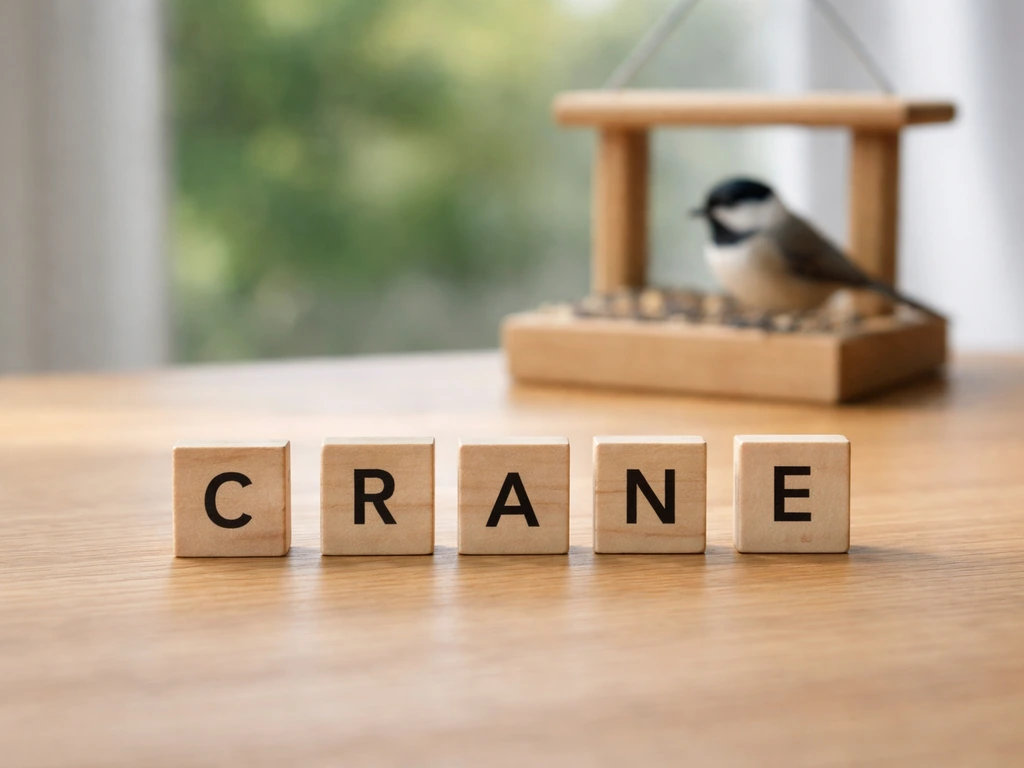
The gold standard starting guess in Wordle covers as many high-frequency letters as possible without repeating any. Linguists and Wordle enthusiasts have converged on words that include several of the letters E, A, R, O, T, I, S, L, N, and U. A bird name that checks several of those boxes is a genuine starting weapon. Here are the top contenders:
- CRANE: C, R, A, N, E. Hits four high-frequency letters (R, A, N, E) and no repeats. Elegant opener.
- STORK: S, T, O, R, K. Five distinct consonant-heavy letters covering S, T, O, and R. Great for testing a consonant-rich answer.
- EGRET: E, G, R, E, T. Contains a repeated E, which slightly reduces information yield, but R and T are valuable.
- SNIPE: S, N, I, P, E. Five unique letters, hits S, N, I, and E. Solid mid-range opener.
- GROUSE: Six letters, so it's out for standard Wordle (which uses five-letter words only).
- ROBIN: R, O, B, I, N. Five unique letters, all common. Friendly opener and one of the most recognized bird names in the English-speaking world.
- RAVEN: R, A, V, E, N. Covers R, A, V, E, N. Five unique letters with excellent vowel and consonant balance.
CRANE and RAVEN are the strongest all-around picks. CRANE gives you A, R, N, and E in one shot: four of the most common letters in five-letter English words. RAVEN adds V to the mix, which is a bit rarer but helps rule it in or out quickly. If you're playing on hard mode (where any revealed green or yellow letter must be used in subsequent guesses), CRANE is slightly more flexible because it doesn't lock you into V if that comes back gray.
ROBIN deserves a mention too. It's the kind of word that feels almost too simple, but R, O, B, I, and N are all common letters with no overlaps. It won't win any Wordle strategy awards over CRANE, but it's a legitimate opener and very much in the spirit of what this clue is driving at. For a deeper look at the phrasing around this clue type, the article on a bird whose name is an excellent starting point for wordplay puzzles gives useful context on how bird names get recruited into this kind of game.
How to validate your guess with Wordle feedback (letter patterns)
Wordle's feedback is simple but dense with information. Green means the letter is correct and in exactly the right position. Yellow means the letter is in the answer but sitting in the wrong spot. Gray means the letter isn't in the answer at all. One important nuance: Wordle handles repeated letters carefully. If you guess a word with two E's but the answer only has one, only one of your E's will be marked green or yellow. The other comes back gray. This matters for EGRET, where the double-E can mislead you if you're not paying attention.
Here's how to read the feedback after your first bird-name guess:
- All gray: None of your letters appear in the answer. That's actually great news: you've eliminated five letters in one go. Move to a second guess that covers five entirely new high-frequency letters.
- One or two greens: You've nailed the position of those letters. Build your next guess around keeping those letters in place and testing new letters in the remaining spots.
- Yellow letters: The letter exists in the answer but not where you put it. Do not place it in the same position again. Try shifting it left or right in your next guess.
- Mix of yellow and gray: You know which letters are in the answer and which aren't. Use both pieces of information together to narrow the field fast.
- All green on guess one: Extremely rare, but congratulations, you've solved it in one. Buy a lottery ticket.
If you guessed CRANE and got R and A as yellow (in the answer, wrong position) with C, N, and E as gray, you know the answer contains R and A but not C, N, or E. Your next guess should place R and A in new positions and introduce three fresh letters. A word like BROIL or TRAIL would move you quickly toward the answer.
Common candidate list: bird names that share patterns with typical solutions
Wordle pulls from a list of common English words, and while it occasionally surprises solvers, it generally avoids highly obscure vocabulary. That means the bird names most likely to appear as actual Wordle answers are the ones non-birders would recognize. Here's a practical table comparing the strongest five-letter bird name candidates by letter coverage and Wordle-friendliness:
| Bird Name | Letters Covered | Unique Letters | High-Freq Letters Hit | Wordle-Friendly? |
|---|
| CRANE | C, R, A, N, E | 5 | R, A, N, E | Yes, strong opener |
| RAVEN | R, A, V, E, N | 5 | R, A, E, N | Yes, strong opener |
| ROBIN | R, O, B, I, N | 5 | R, O, I, N | Yes, solid opener |
| SNIPE | S, N, I, P, E | 5 | S, N, I, E | Yes, good opener |
| STORK | S, T, O, R, K | 5 | S, T, O, R | Yes, consonant-heavy |
| EGRET | E, G, R, E, T | 4 unique | R, E, T | Weaker, repeated E |
| HERON | H, E, R, O, N | 5 | E, R, O, N | Yes, solid opener |
| FINCH | F, I, N, C, H | 5 | I, N | Weaker, low-freq letters |
HERON is an underrated pick. H, E, R, O, and N are all distinct, and E, R, O, and N are among the more common letters in five-letter Wordle answers. It doesn't get as much love as CRANE in Wordle strategy circles, but it's genuinely competitive. FINCH, by contrast, loads up on less common letters (F, C, H) and gives you less to work with as a first move.
If the puzzle you're solving is a crossword rather than Wordle, the framing shifts slightly. The article covering the bird whose name is an excellent starting guess in crossword contexts explores how these same bird names show up as recurring fill in American crossword grids, which is a useful parallel if you're toggling between game types.
Etymology + naming notes (common vs scientific names, variants)
Understanding where these bird names come from can actually help you avoid spelling traps in Wordle. Wikipedia’s “Raven” entry includes etymology notes that connect the modern English word blank" rel="noopener noreferrer">raven to Old Norse forms, which can help with bird-name origin references. Wikipedia’s entry for “blank" rel="noopener noreferrer">Hrafn” notes that it is connected to the English name Raven, supporting the historical linguistic link used in etymology notes. Wordle follows American English spelling conventions, so British variants won't work. A few things worth knowing:
- CRANE comes from Old English 'cran,' related to Proto-Germanic roots. The name has been stable in English for over a thousand years, so no spelling surprises there.
- RAVEN traces back to Old Norse 'hrafn' and Old English 'hraefn.' The modern spelling is firmly fixed in both American and British English.
- ROBIN is a medieval diminutive of Robert, applied to the bird because of its familiar, friendly character. In America, ROBIN almost always refers to the American Robin (Turdus migratorius), a different species from the European Robin. Either way, the five-letter spelling is universal.
- HERON comes from Old French 'hairon,' ultimately from Frankish. It's spelled the same in American and British English, no variant traps.
- SNIPE has a Scandinavian origin, related to Old Norse 'snipa.' Its use as a verb (to snipe) came later from military sharpshooter terminology, inspired by the difficulty of hunting snipe in the field.
- EGRET derives from Old French 'aigrette,' a diminutive of 'aigron' (heron). The double-E spelling is fixed in English, which is why it's a slightly riskier Wordle guess.
Scientific names (like Grus grus for the Common Crane or Corvus corax for the Raven) never appear in Wordle since they're Latin and not part of everyday English vocabulary. But knowing the common name is stable and consistent across American English is what matters for the game. One small trap: CRANE can refer to both the bird and the construction machine, which means Wordle is just as likely to use it in its mechanical sense. That's actually a feature for your guessing strategy: if CRANE comes back all green, the puzzle might not even be a bird clue at all.
Speaking of names rooted in place and nature, if you've ever wondered about bird names derived from geographical features like bodies of water, the piece on the bird whose name means sea crossword clue is worth a look for related etymology deep-dives.
Next steps: refine quickly, avoid common dead-end birds

Once you've played your first bird-name guess, your path forward depends entirely on the feedback. Here's the clearest set of next steps based on the most likely outcomes if you opened with CRANE:
- C gray, R yellow, A green, N gray, E yellow: The answer has A in position 3, plus R and E somewhere else. Try RACER, BRAVE, or LASER next, adjusting for what you know.
- All five gray (C, R, A, N, E all gray): You've eliminated five very common letters. Pivot immediately to a guess like LOTUS or THUMP to cover fresh territory.
- R and A both green (positions 2 and 3, as in _RA__): You're looking at RA_ pattern words. Think BRAWL, DRAFT, GRACE, GRABS, PRANK. Pick whichever tests the most new letters.
- Mixed greens and yellows: Prioritize using green letters in their confirmed spots and yellow letters in new positions. Don't waste a guess moving a green letter.
- E green at position 5 (___NE or similar): Work forward from that anchor. STONE, PRONE, CRANE derivatives, PHONE are all worth considering depending on other feedback.
The birds to avoid as first guesses are the ones loaded with repeated letters or uncommon letters: FINCH (too many low-frequency letters), EGRET (repeated E), SWIFT (W and F burn two rare letters), and any six-letter bird (THRUSH, GROUSE, PARROT) that simply doesn't fit Wordle's five-letter format. PARROT is worth flagging specifically because it has two R's and two T's, which makes it a terrible opener even if you shorten it in your mind.
The bottom line: CRANE is your best practical bird-name starting guess for Wordle. RAVEN is a close second. HERON and ROBIN are solid backups. All four are common English words, spelled consistently in American English, with five unique letters that cover high-frequency territory. Open with one of those, read the feedback carefully (especially noting which yellows to reposition and which grays to retire), and you'll converge on the answer well within the six-guess limit.