Pronounce it DOH-doh, with the stress on the first syllable. Both syllables sound identical: each one rhymes with "go" or "show." The full phrase "dodo bird" is just DOH-doh BURD, three syllables total, stress on DOH and BURD. That's it. You already know how to say it.
How to Pronounce Dodo Bird Correctly in English

Maya Castellanos
9 Jun 2026
The most common pronunciation at a glance
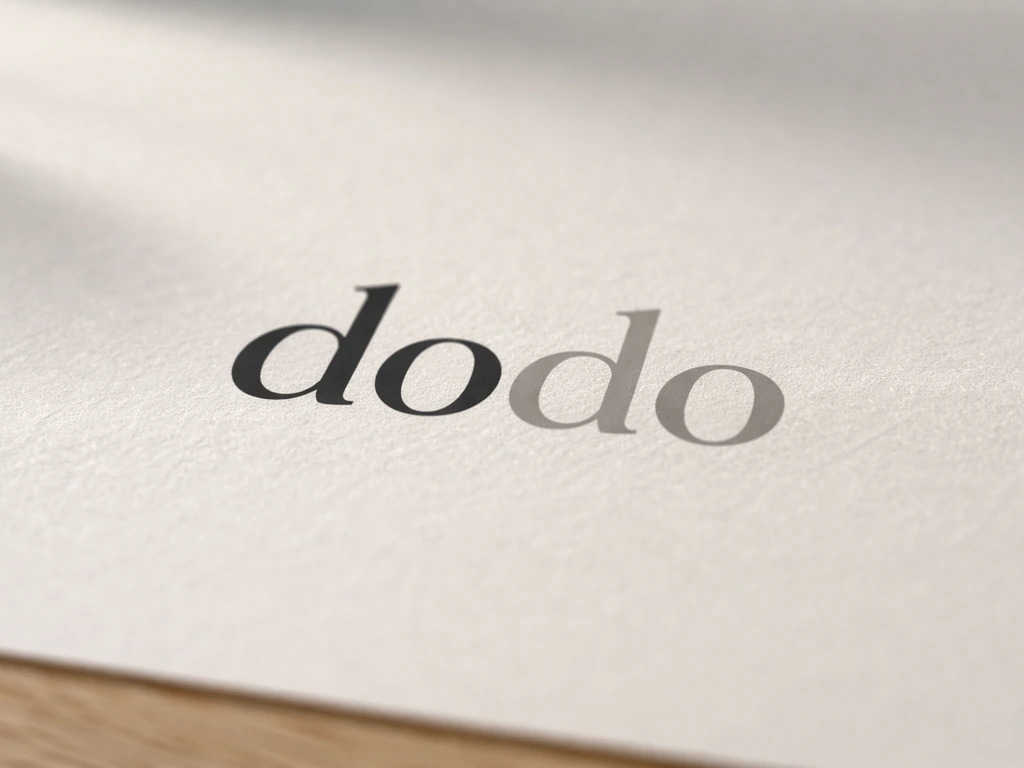
In standard English, "dodo" is a two-syllable word: DOH-doh. The first syllable carries the primary stress. Both vowels are the same long "oh" sound, like the word "go" repeated twice: GO-go, DOH-doh. Cambridge Dictionary confirms the standard US pronunciation as /ˈdoʊ. In Cambridge Dictionary, the UK transcription for “dodo” is /ˈdəʊ.dəʊ/ /ˈdoʊ/ and the UK pronunciation as. doʊ/ and the UK pronunciation as /ˈdəʊ.dəʊ/. The difference between those two is subtle enough that in casual conversation nobody will bat an eye either way. When you add "bird" to make the full phrase, just tag it on naturally: DOH-doh BURD.
Syllable breakdown and where the stress falls
Breaking it down phonetically makes this even easier to lock in. "Dodo" splits into exactly two syllables: DO + DO. Here is how each piece works:
- Syllable 1: DOH (stressed) — rhymes with "go," "show," "know"
- Syllable 2: doh (unstressed) — identical sound, just said softer
- Full word stress pattern: STRESS-unstress (trochaic, if you like linguistics)
- Full phrase: DOH-doh BURD — three syllables, primary stress on the first
The stress never shifts to the second syllable. You would not say doh-DOH, the way some learners try when they see a repeated word and overthink it. It stays firmly on syllable one, every single time, in every variety of English.
How it sounds across different English accents
The good news here is that "dodo" is remarkably consistent across English accents. The stress pattern never changes. The only real variation is in the exact quality of that "oh" vowel, and the differences are minor.
| Accent | Phonetic transcription | How the vowel sounds | Notes |
|---|---|---|---|
| American English (General US) | /ˈdoʊ.doʊ/ | A diphthong: starts at "oh" and glides slightly toward "oo" | Most common in US media and dictionaries |
| British English (RP) | /ˈdəʊ.dəʊ/ | Similar diphthong but starts from a more central vowel position | The "əʊ" vs "oʊ" gap is tiny in practice |
| Australian English | Close to /ˈdəʊ.dəʊ/ | Vowel is slightly more rounded than RP | No meaningful difference for casual speakers |
| South African English | Close to /ˈdɔː.dɔː/ in some speakers | Can sound slightly more open | Rare variation; still clearly recognizable |
For practical purposes: if you say DOH-doh cleanly, anyone speaking any variety of English will understand you immediately. The accent-level differences are the kind of thing a phonetician notices, not the kind of thing that causes confusion at a dinner table.
"Dodo" vs "dodo bird" and the scientific name
"Dodo" alone is completely sufficient and is the standard term. "Dodo bird" is used for emphasis or clarity, usually when the speaker wants to make absolutely sure the listener knows they mean the bird and not, say, a person they are affectionately calling a dodo. In writing and formal contexts, just "dodo" is the norm. In conversation, "dodo bird" is perfectly natural and widely understood, especially in North American English.
The dodo's scientific name is Raphus cucullatus, and if you have ever frozen up trying to pronounce a Latin binomial, here is how it breaks down. Raphus is pronounced RAY-fus (two syllables, stress on the first). Cucullatus is pronounced kyoo-kyoo-LAH-tus (four syllables, stress on the third). So the full scientific name sounds like: RAY-fus kyoo-kyoo-LAH-tus. Cucullatus comes from the Latin for "hooded" or "wearing a cowl," referring to the feather arrangement around the dodo's head and neck. Once you know that, it is much easier to remember.
The word's origin, and why it helps you remember the pronunciation
Knowing where a word comes from is one of the best memory anchors for pronunciation. "Dodo" entered English in the early 17th century, borrowed from the Portuguese word "doudo" (sometimes spelled "doido"), which meant "simpleton" or "fool." Portuguese sailors who encountered the birds on Mauritius apparently thought the large, fearless, flightless birds were, to put it charitably, not the sharpest beaks in the flock. The word "doudo" in Portuguese is itself pronounced roughly DOH-doo, which maps almost perfectly onto the English DOH-doh.
This Portuguese origin is the reason both syllables carry the same open "oh" sound in English. There was no vowel shift or anglicization that changed the sound dramatically. The word slid into English and kept its shape. So if you remember "Portuguese sailor calling a bird a fool," you remember DOH-doh.
If you are curious about the fuller story of how the dodo got its name, that is a fascinating rabbit hole (or should I say dodo tunnel) connecting bird nomenclature, colonial-era natural history, and the etymology of insults.
If you are curious about the fuller story of how the dodo got its name, that is a fascinating rabbit hole (or should I say dodo tunnel) connecting bird nomenclature, colonial-era natural history, and the etymology of insults how did the dodo bird get its name.
Practice drills and mistakes to avoid

Common mispronunciations
- doh-DOH (stress on the second syllable) — wrong; keep the stress on the first
- DAH-dah (using an "ah" vowel) — wrong; the vowel is "oh" not "ah"
- DOO-doo (using a pure "oo" vowel like in "food") — wrong; it's the "oh" in "go," not the "oo" in "glue"
- Pronouncing the double-O in "dodo" as a long "oo" sound (like in "moon") — this is the most common learner error and stems from over-applying English spelling rules
Simple drills to nail it
- Say "go" out loud three times. That exact vowel is the only sound in both syllables of "dodo." Go, go, go. Now: DOH-doh.
- Try the rhyme chain: go, show, know, doh. Then double it: DOH-doh.
- Say it in a sentence: "The dodo bird went extinct in the 1600s." Say it out loud three times, at normal conversational speed.
- Record yourself saying "dodo bird" on your phone, then play it back. Compare it to the audio on Cambridge Dictionary's free pronunciation tool online. The difference (if any) will be obvious and easy to correct.
- Slip it into a sentence naturally: "As dead as a dodo" is a common English idiom. Practice the idiom rather than the isolated word, since natural sentence rhythm makes pronunciation easier.
Once you have the pronunciation solid, you might find yourself curious about related questions: how the word is spelled (it trips people up more than you might expect), where the name originally came from in more detail, or even what you might name a pet dodo if the de-extinction scientists ever come through on their promises. If you are brainstorming, there are good names for a dodo bird you can use for pets, characters, or quizzes. You can even name an extinct bird whose name starts with D, such as the dodo. Those threads are all worth pulling on, and they all connect back to the same fascinating intersection of bird biology, language history, and human creativity that makes bird names so much fun to dig into.
FAQ
Do I pronounce “dodo bird” differently than “dodo” by itself?
No, keep the core as DOH-doh, then add BURD smoothly with the normal English “bird” sound. The key is that the stress stays on DOH (the first syllable of dodo), not on the second syllable or on “bird.”
Is it acceptable to say “doh-DOH” instead of “DOH-doh”?
It may sound slightly off to careful listeners. “Dodo” uses primary stress on the first syllable, so “DOH-doh” is the safer choice, especially in formal speech or presentations.
How should I handle the vowel sound in “dodo,” for example “doe” versus “doh”?
Aim for the open “oh” vowel that matches the “go” sound pattern in English (so it rhymes with “go” or “show”). In practice, small differences between American and British “oh” qualities are usually not enough to cause confusion.
Do I need to stress “bird” when I say “dodo bird”?
Usually you do not add extra stress. Say it as a phrase where “dodo” carries the main stress, then “bird” follows naturally: DOH-doh BURD, with “bird” sounding like the usual “bird” in everyday speech.
What if I’m saying it quickly, like in casual conversation?
You can reduce spacing between syllables, but don’t drop the second “do” entirely. In quick speech, it often comes out as DOH-doh (continuous), rather than turning into a single syllable.
How do I pronounce the plural, like “dodo birds”?
Pronounce “dodo” the same (DOH-doh) and use the normal plural “birds” pronunciation: DOH-doh BURDZ. The stress pattern should not shift just because it is plural.
How do I avoid sounding like I’m calling someone a “dodo” (the insult meaning)?
Use the full phrase “dodo bird” with clear separation, DOH-doh BURD. If the context could be ambiguous, you can also say “the dodo bird” or “that dodo bird,” which signals the animal more strongly.
If I’m learning for spelling too, how do I remember the order of the letters in “dodo”?
Think of it as two identical chunks: DO + DO, matching the two syllables. People often expect a different vowel order, but the word keeps the repeated “do” pattern, which pairs well with the pronunciation DOH-doh.
Does the pronunciation change in other English accents (Australian, Irish, etc.)?
The stress pattern is the stable part, it remains on the first syllable. Accent differences mostly affect the exact shade of the “oh” vowel, but most speakers will still recognize DOH-doh immediately.