Bird-based insults are everywhere in everyday English, from calling someone a "birdbrain" for a dumb mistake to using "chicken" when someone backs out of a dare. Some of these terms are mild and almost affectionate; others carry real dehumanizing weight, especially when they're tied to race, gender, or repeated targeting. If you're trying to figure out whether a specific bird-name insult is just banter or something you should actually document and report, this guide will walk you through exactly that, with the etymology, the context rules, and the practical steps you need right now.
Derogatory Bird Names When Applied to Humans: How to Handle It

Maya Castellanos
19 May 2026

Why bird name-calling happens in human language at all
Humans have been calling each other animals for as long as language has existed, and birds get a surprisingly heavy share of the action. The basic mechanism is what linguists call an "animal epithet": you take a quality people associate with a bird (stupidity, cowardice, flightiness, noise) and apply it to a person either as a direct metaphor or through a simile. Once enough people use it that way, the animal meaning fades and the insult meaning sticks.
Research on intergroup language shows something important here: the same bird-based term can land very differently depending on whether it's being used within a group (in-group banter) or aimed across group lines (out-group targeting). When it crosses that line, it stops being playful and starts functioning as what researchers call "animalistic dehumanization," literally framing a person as less than human. That's the moment the term becomes genuinely harmful, regardless of how innocent the word sounds on paper.
The other reason birds specifically show up so often is the sheer variety of associations the English-speaking world has loaded onto them. Owls mean wisdom but can also mean night-dwelling weirdness. Chickens mean cowardice. Parrots mean mindless repetition. Vultures mean predatory opportunism. Those cultural scripts are baked so deep into the language that the insult pathway is almost automatic.
The most common derogatory bird-based terms, and where they actually come from
Here are the ones you're most likely to encounter, in the wild or online, with a plain-language take on what each one means and how offensive it tends to run. If you are wondering which phrases are typically the harshest, start with the worst bird names and what makes them so damaging.
| Term | Primary meaning when applied to a person | Rough offense level | Notes |
|---|---|---|---|
| Birdbrain | Stupid or scatter-brained person | Mild | First recorded as human slang around 1920–1936; purely cognitive insult |
| Chicken | Coward | Mild to moderate | Merriam-Webster documents the slang sense as deeply established in modern English; widely understood across generations |
| Chickenshit | Coward (ruder, more emphatic form) | Moderate to strong | Marked as US slang and rude in Cambridge Dictionary; same root concept as 'chicken' but significantly sharper in register |
| Bufflehead | Stupid or foolish person | Mild (archaic) | Etymonline traces this to the 1650s as a human insult, making it one of the oldest bird-name slurs on record; rarely used today but historically significant |
| Bird (UK/Irish slang) | A woman or girl (can be diminutive/dismissive) | Mild to moderate depending on context | Originally Cockney rhyming slang from 'bird-lime,' shortened over time; now contested as gendered and reductive in many settings |
| Bird (US slang / TikTok) | A disloyal, untrustworthy, or superficial person in dating contexts | Moderate | Usage has surged recently in online and dating discourse, particularly on short-form video platforms |
| Vulture | Predatory, opportunistic person exploiting others' misfortune | Moderate | Metaphorical; rarely rises to slur territory but can be targeted and cutting |
| Parrot | Someone who mindlessly repeats others without independent thought | Mild | More mocking than harmful in most contexts |
| Crow / Old crow | Unattractive older woman | Moderate to strong | Age- and gender-targeted; more pointed than it sounds |
| Goose | Silly or foolish person | Mild | Long-standing in English idiom; low offense ceiling in most uses |
| Stool pigeon / Pigeon | Informant; also a naive person easily deceived | Moderate | Strong negative social connotation, especially in communities where informing carries serious consequences |
A note on spelling and regional variants: "birdbrain" appears as both one word and hyphenated depending on the source and era; "chickenshit" is sometimes written as two words online; and "bird" as a dating insult has spawned variations like "birdie" in certain online communities. If you're seeing a term you don't recognize, the core question is always the same: is this term being used to reduce a person to an animal quality in a way that demeans them? If yes, the specific spelling matters less than what's actually happening.
The linguistic patterns behind bird-name insults (the etymology rabbit hole)
If you love word origins (and if you're on a bird-name site, I'm guessing you might), this is where it gets genuinely interesting. There are a few clear pathways by which a bird name becomes a human insult, and they're worth knowing because they help you spot new ones when they emerge.
Direct metaphor: the bird quality becomes the human quality

This is the most common route. A cultural association with a bird (chickens run from threats, therefore a cowardly person is a "chicken") gets applied directly to a human. The metaphor becomes so repeated that it stabilizes as a standalone insult. Merriam-Webster documents this stabilization process well for "chicken," where the cowardice sense is now a fully recognized definition, not just a colloquial stretch. "Birdbrain" followed the same path: the idea that a bird has a tiny brain got applied to human intelligence, first recorded in slang around 1920 to 1936, and it stuck.
Archaic animal-to-insult shift: bufflehead and older forms
"Bufflehead" is a fascinating case. Today most birders know it as a small diving duck, but the word appears in the historical record as early as the 1650s meaning a stupid person. The root "buffle" is a doublet of "buffalo" and carried connotations of a dull, thick-headed creature. The duck actually got named after the insult (because of its oversized-looking head), not the other way around. This is a genuine case of a human insult giving its name to a bird, which is the reverse of what most people assume.
Rhyming slang and shortening: how 'bird' became a word for a woman
Cockney rhyming slang works by replacing a word with a phrase that rhymes with it, then (crucially) dropping the rhyming word so the connection becomes obscured. "Bird-lime" rhymes with "time," so "bird-lime" came to mean "time" in prison slang. From there, "bird" on its own picked up the prison sense. Separately, and through mechanisms that linguists still debate, "bird" also developed as a colloquial word for a girl or woman in UK and Irish English.
It's recorded in Wiktionary as Cockney rhyming slang shortened from "bird-lime," though the exact pathway to the gender sense is tangled. What's clear is that rhyming slang created a linguistic shadow life for the word "bird" that has nothing to do with actual birds, and that shadow life is now contested as dismissive or demeaning toward women in many modern contexts.
Online compression and subculture drift
The newest wave of bird insults spreads differently: short-form video platforms compress language into tags and captions, and a term can shift meaning rapidly within a subculture before the wider public even knows the new sense exists. The recent rise of "bird" as a dating insult (meaning someone disloyal, flaky, or untrustworthy) is a good example. The term circulated in specific online communities before breaking into mainstream visibility. The mechanism here isn't classic metaphor but more of an insider-code drift, where a word accumulates negative social meaning through association with negative social behavior in a particular context.
How to recognize actual harm: context, intent, and severity

This is the part that matters most practically. Not every bird-name insult is equally harmful, and treating a clumsy joke and a targeted harassment campaign the same way doesn't help you or anyone else. Here's how I'd think through it.
Is it a one-off or a pattern?
A single "stop being such a chicken" between friends who use that kind of banter is not the same thing as a coworker repeatedly calling a colleague a "bird" in meetings. Pattern and repetition are probably the single most important factors in moving something from "mildly annoying" to "actual hostile environment. " The EEOC's definition of workplace harassment specifically requires that conduct be severe or pervasive enough that a reasonable person would find the environment intimidating or abusive.
Under EEOC guidance, workplace harassment under Title VII requires unwelcome conduct that is sufficiently severe or pervasive to alter the terms, conditions, or privileges of employment from the perspective of a reasonable person. One bird joke almost never clears that bar.
A sustained campaign almost always does.
Is it targeting a protected characteristic?
Some bird-based slurs are insults first and nothing more; others are vehicles for discrimination based on gender, race, or age. Proxying a protected characteristic with bird-name insults is part of why some bird slurs can be treated as hate or discriminatory harassment bird-based slurs. "Old crow" aimed at a woman carries age- and gender-based targeting. A racially charged animal epithet (some of which are discussed separately in the context of racist bird names) activates civil-rights frameworks in a way that a garden-variety stupidity insult does not. If the bird-based term is functioning as a proxy for a protected characteristic, the severity assessment changes significantly, and so do your legal options.
Joking vs. targeted: the in-group/out-group test
Research on animal metaphor offensiveness consistently shows that the same word lands differently depending on whether it's used within a group (where shared identity and consent soften it) or directed across group lines in a conflict or power context (where it dehumanizes). Ask yourself: would the person using this term describe it as a joke if challenged? And more importantly, does the target feel it as a joke? Both matter. If the person using it claims "just kidding" but the target is genuinely distressed and it keeps happening, that's not a joke, it's a cover.
A quick severity framework
- Low concern: Single use, clearly joking tone, mutual relationship, no protected characteristic targeted, no power imbalance between parties
- Medium concern: Repeated use, one-sided (one person targeting another), mildly dismissive or gendered, creates discomfort but not fear
- High concern: Sustained pattern, targets a protected characteristic, involves power imbalance (boss/employee, older student/younger), target reports distress or fear
- Escalate immediately: Physical threats attached to the language, harassment that follows someone across platforms or spaces, organized group targeting one individual
What to do instead: rephrasing and setting boundaries
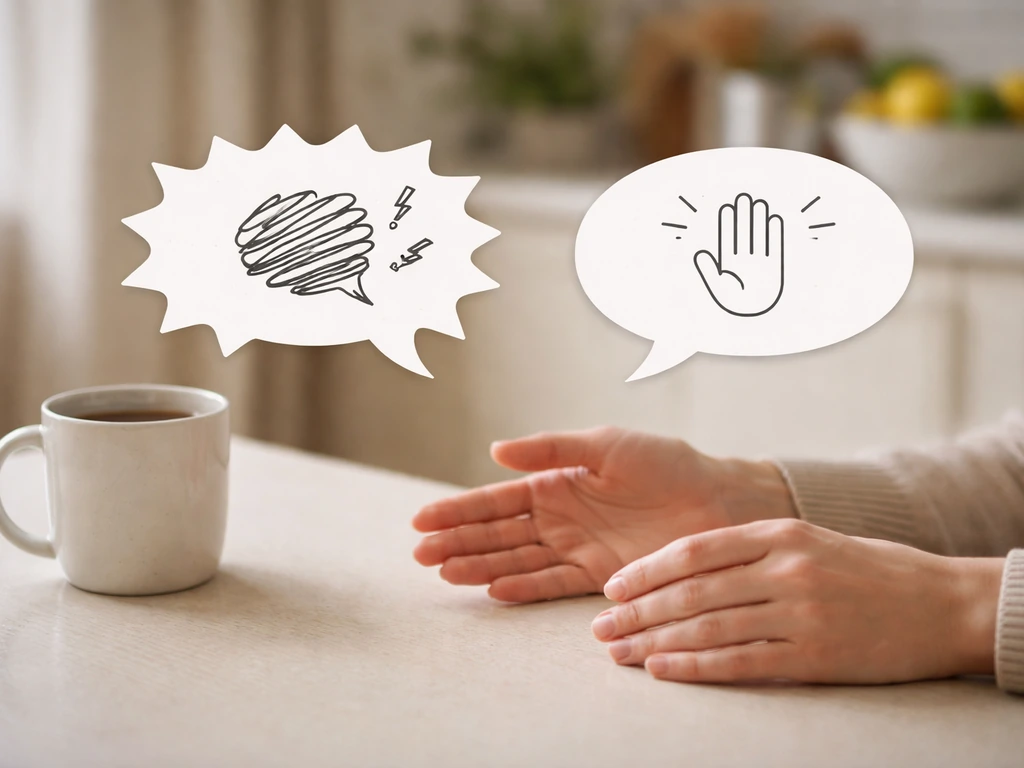
If you're the one who has been using bird-based insults casually and you're now wondering whether that's okay, the honest answer is: it depends, and when in doubt, cut it. It costs you nothing to say "I think that was a bad call" instead of "that was such a birdbrain move." The cognitive insult lands the same, minus the animal-dehumanization baggage.
If you're on the receiving end and want to set a boundary, direct and low-drama usually works best in one-off situations. Something like "Hey, I'd rather you not call me that, even as a joke" is enough. You don't need to deliver a lecture on animal epithets. Most people who use this kind of language casually will drop it the moment someone names it explicitly.
For group or classroom settings, naming the behavior publicly but calmly ("Can we not use that kind of language here?") is more effective than pulling someone aside if the term is being used openly in front of others. It changes the group norm, not just the individual behavior.
Alternatives that actually communicate what you mean
| Instead of... | Try... |
|---|---|
| Birdbrain (they made a mistake) | "That was a careless call" or "They weren't thinking it through" |
| Chicken (they backed out) | "They weren't ready for that" or "They changed their mind at the last minute" |
| Bird (dismissive term for a woman) | Use her name, or a neutral descriptor relevant to the situation |
| Old crow (older woman, unkindly) | Just... don't. If there's something specific you're actually criticizing, say that instead |
| Vulture (opportunistic person) | "They moved in quickly when they saw an opening" (descriptive, not animal-reductive) |
When it crosses into harassment: reporting, documenting, and next steps

If you've reached the "high concern" or "escalate immediately" level from the framework above, here's the practical plan. Document first, report second, escalate third if needed.
Step 1: Document everything before you do anything else
Write down what happened, who said it, when, where, and who else witnessed it. Keep screenshots if it happened online; do not delete them even if the content is upsetting to look at. StopBullying.gov specifically advises keeping evidence with dates, times, and descriptions because documentation is what makes a report credible and actionable. StopBullying.gov advises adults to respond quickly and consistently on the spot to help send the message that bullying is not acceptable and to keep kids safe StopBullying.gov advises keeping evidence with dates, times, and descriptions. PACER's guidance for school situations recommends keeping a running written timeline of incidents and any conversations you have about them with staff. This timeline becomes your paper trail.
Step 2: Report to the right authority for your setting
- At school: Tell a teacher, counselor, or administrator. In the US, if the harassment is tied to race, sex, national origin, or disability, it may trigger civil-rights obligations under Title VI or Title IX, and you can file a complaint with the U.S. Department of Education's Office for Civil Rights (OCR) if the school doesn't respond adequately.
- At work: Report to HR using whatever formal complaint procedure your employer has. If the conduct is based on a protected characteristic and severe or pervasive enough to create a hostile work environment, it may violate Title VII, and you can file a charge with the EEOC.
- Online (social media): Use the platform's reporting tools. TikTok, YouTube, and X all have specific harassment and hate speech reporting flows. Report the specific content, not just the account, and include your documentation in any appeals if the first report is dismissed.
- Cyberbullying: Report to the platform first, then to your internet service provider if the behavior continues. If it involves threats, contact local law enforcement.
Step 3: Know when to escalate beyond the first responder
If a school or employer receives your complaint and does nothing, or retaliates against you for making it, that's when outside agencies become relevant. The EEOC handles workplace discrimination complaints (you generally have 180 to 300 days from the discriminatory act to file, depending on your state). The Department of Education's OCR handles school-based complaints. Both agencies have online complaint portals and don't require a lawyer to initiate a complaint, though legal advice is useful if things escalate further.
One last thing worth saying: whether you're a parent, a student, a coworker, or someone who just stumbled across a weird bird-based insult online, you don't have to decide alone whether something crossed a line. Write down what happened, show it to someone you trust, and go from there. The language around bird names is genuinely fascinating from an etymology standpoint (as any reader here knows), but when those names are being used to diminish a person rather than identify a species, they deserve exactly this kind of careful, clear-eyed attention.
FAQ
How can I tell whether a bird-name insult is just rude banter or something that needs formal reporting?
If you want to judge the impact quickly, look for repeated use plus a power imbalance or targeting context (work, school, dating coercion, large group settings). One insult can be rude, but repeated “same term, same target” is what most often shifts it into severe or pervasive conduct, especially when it is tied to gender, race, age, or disability as a proxy.
What should I do if the insult shows up in a weird spelling or slang version I have never seen before?
Yes. Spelling variations, intentional misspellings, and abbreviations often change over time, so focus on the meaning and how it’s used, not whether you recognize an exact dictionary spelling. When documenting, write both what the person said and what it appears to mean in context, including surrounding words (for example, “bird” as untrustworthy or “chicken” as coward).
I saw the insult online, but it was deleted fast. What evidence should I collect so it is still useful?
Screenshots are best, but also capture where it happened (account name, group or channel, thread title), and include the date, time, and any visible usernames. If the platform allows it, export or save the post text directly, since images alone can lose metadata. For workplace or school complaints, a chronological timeline is usually more persuasive than isolated posts.
What boundary-setting wording works best if someone uses a bird-name insult around me?
Set the boundary early with “behavior not debate.” Try a sentence that states the impact and the rule, for example, “Don’t call me that. I’m not okay with being compared to animals.” If they escalate or continue after you object, that ongoing conduct matters more than their later claim that it was “just a joke.”
If it happens only once, can it still count as harassment or discrimination?
In many places, the key legal question is whether conduct is severe or pervasive and whether it is tied to discrimination (or creates a hostile environment). “I got called one animal nickname once” usually is not enough, but a pattern plus distress to the target, humiliation in front of others, or discriminatory targeting can change the analysis.
How do I avoid confusing a mild bird insult with a discriminatory one?
Don’t treat “animal” language as automatically harmless or automatically hate. Some bird insults are primarily about perceived intelligence or cowardice, while others function as proxies for protected characteristics. A good decision aid is to ask, “Would this same person target other people similarly, and do they treat the target differently because of gender, race, or age?”
What should I include in my written timeline so it stays credible and not subjective?
If you are documenting for a complaint, keep your notes factual and specific: exact wording, what was happening right before and after, witnesses, and your own response (for example, “I asked them to stop” or “I left the meeting”). Avoid adding assumptions like “they meant hate,” and instead record what you experienced and what others observed.
In group settings, should I pull the person aside or address it publicly?
If you hear it from a peer in a shared space, try a calm public boundary that resets group norms, such as “Please don’t use that language here.” If you address only the person privately while others keep using it, the environment may not change. For classrooms or teams, short consistency tends to work better than a one-time confrontation.
What should I do when they respond with “relax, it’s a joke” after I object?
If the person claims you are “too sensitive” or insists it is “banter,” your safest next step is to restate the boundary and stop engaging on interpretation. For example, “Whether you meant it as a joke, I’m asking you to stop.” If the behavior continues, that refusal after notice is often the turning point.
What if the bird-name insult comes with threats, coercion, or escalating behavior?
Yes, and it matters for safety. If the harassment includes threats, stalking, or coercive behavior, treat it as urgent and consider contacting local support or workplace/school safety channels immediately. For immediate danger, documenting should happen alongside seeking help, not instead of it.
Next Article
Is Calling Someone a Bird Offensive? Meaning and Guidance
Learn if calling someone a bird is offensive, how context and intent change meaning, and what to say to de-escalate.