Golf uses bird names in scoring because the tradition started with a single slang term, 'birdie,' and the rest of the sequence grew by analogy. If you’re looking for more variety beyond golf’s system, a list of popular bird names can be a fun way to discover what people love to hear top bird names. Once golfers decided that one stroke under par deserved a name borrowed from American slang for something excellent (a 'bird'), the logical next step was to give bigger achievements bigger birds. Eagle, albatross, condor: each one is a grander, rarer creature than the last, mirroring how rare those scores are on a real golf course. It's a wonderfully tidy system that turned out to be both memorable and deeply satisfying to say out loud.
Why Does Golf Use Bird Names and What They Mean
Maya Castellanos
12 May 2026
Golf's bird terms in scoring: what they actually mean

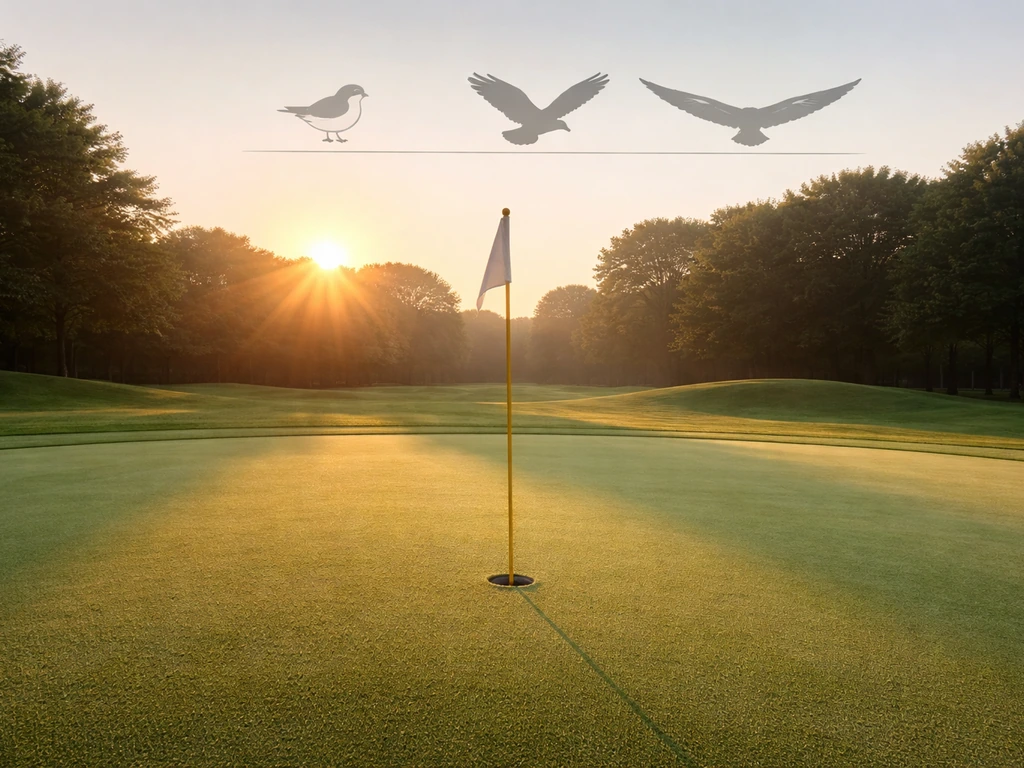
Every bird term in golf refers to how many strokes you took on a hole relative to par, the expected number of shots. Par itself isn't a bird name, but everything better than par has one. Here's how the scale works:
| Term | Score Relative to Par | Example |
|---|---|---|
| Birdie | 1 stroke under par | Score a 3 on a par-4 hole |
| Eagle | 2 strokes under par | Score a 3 on a par-5 hole |
| Albatross (Double Eagle) | 3 strokes under par | Score a 2 on a par-5 hole |
| Condor | 4 strokes under par | Score a 1 on a par-5 hole (a hole-in-one on a par-5) |
Notice how the birds get progressively rarer and more dramatic as the scores get harder to achieve. A birdie is a common bird, something you might see every day. An eagle is majestic and far less common. An albatross is a giant oceanic wanderer most people will never see in their lifetime. And a condor? Critically endangered and almost mythical. That parallel to score rarity is no accident.
Which bird names you'll actually hear on a golf course
In everyday recreational golf, 'birdie' is by far the most common bird term you'll hear. Most amateur golfers will score a birdie a handful of times per round at most, and it always earns a small celebration. 'Eagle' gets called out with genuine excitement, maybe a few times a season for a solid club-level player. 'Albatross' is rare enough that many golfers play for decades without ever making one. And 'condor' is so vanishingly rare that only a handful of verified condors have ever been recorded in the history of the sport, typically a hole-in-one on a very short par-5 hole.
There's also one regional variation worth knowing: Americans tend to say 'double eagle' for a score of 3 under par, while British and many international golfers say 'albatross.' Both terms are correct, but if you're watching a UK broadcast or playing a round with European friends, 'albatross' is the expected word. You'll rarely hear confusion over 'birdie' or 'eagle' since those terms are universal in the golf world regardless of where you're playing.
Where the tradition actually started

The story that golf historians point to most often traces back to Atlantic City Country Club in the United States, sometime in the late 1890s or around 1903. Wikipedia’s Atlantic City Country Club entry notes that the term “blank" rel="noopener noreferrer">birdie” was coined at the club in 1903. The USGA's own records connect 'birdie' to this club and to early American golf slang. At the time, 'bird' was a popular American slang expression meaning something excellent, clever, or first-rate. So when a golfer pulled off a stroke under par, calling it a 'bird' (and later 'birdie') was a way of saying 'that was a cracking good shot.' The diminutive 'birdie' stuck, and etymological records show it was being used in print by at least 1908.
From there, the analogy took over. As the USGA explains it: once 'birdie' was established, 'eagle' followed naturally as something one better than a bird. And since an eagle is a bigger, more powerful bird than a generic songbird, the escalation felt intuitive. Then came 'albatross' for one better than an eagle, again scaling up to a more extraordinary creature. The condor followed the same logic at the extreme end of the scale. None of these subsequent terms have the same documented origin story as 'birdie.' They emerged organically, through analogy and golfer conversation, which is exactly how sports slang tends to work.
Why bird names caught on and stayed in the sport
Golf has a long history of colorful, informal language layered on top of its formal rules, and the bird naming system hit a sweet spot. It's memorable, scalable, and carries genuine emotional weight. When you say 'I made a birdie on the 7th,' it sounds better than 'I scored one under par on the 7th.' The bird names give golfers a shared vocabulary that works across skill levels and nationalities. A beginner and a scratch player both know what 'eagle' means without needing a rulebook.
There's also a social and psychological element at play. Golf is a sport played largely in silence and concentration, but scoring moments are genuinely social. Calling out 'birdie!' carries a charge that 'minus one' simply doesn't. The bird names became part of the ritual of celebrating good play, which is exactly the kind of thing that spreads through any community quickly and permanently. It's worth noting that golf isn't alone in using bird names this way. NFL and MLB team names, for instance, lean heavily on birds as symbols of power and pride, and there's a long tradition of birds representing achievement in competitive culture broadly. How many MLB teams have bird names is a quick way to see how common this theme is in sports branding NFL and MLB team names. If you're also wondering about funny options beyond golf, a guide to the best bird names can help spark ideas for usernames, pets, or characters birds representing achievement. If you are curious, you can also count how many NFL teams have bird names and compare that to other leagues NFL and MLB team names.
Learn the bird-to-score mapping fast
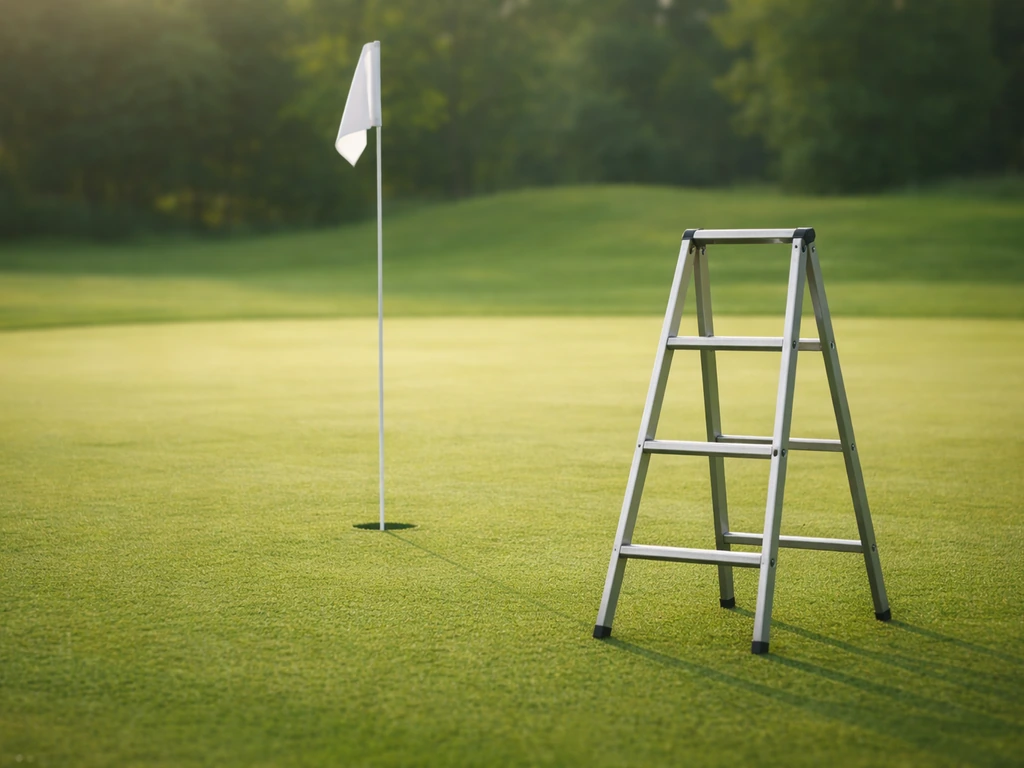
If you're new to golf or just want a reliable mental shortcut, here's the fastest way to lock in the scoring sequence. Think of it as a ladder of bird size and rarity, climbing alongside score difficulty.
- Start with par as your baseline: the expected score for any hole.
- One under par is a birdie. Think: a bird you see every day, a small win.
- Two under par is an eagle. Think: bigger and rarer, a real achievement.
- Three under par is an albatross (or double eagle in the US). Think: a massive seabird almost nobody ever sees. Very rare in golf too.
- Four under par is a condor. Think: nearly extinct in real life, and nearly as rare on the course.
- Practice saying 'birdie, eagle, albatross, condor' in order. Each bird is progressively larger and rarer, just like the score.
- When in doubt, count the birds from smallest to largest and match them to strokes under par: 1, 2, 3, 4.
If you want to cement this in memory, try associating each bird with a real image. A backyard sparrow for birdie (common, everyday). A soaring eagle for eagle (impressive, not everyday). An albatross gliding over open ocean for albatross (rare, dramatic). A condor perched on a California cliff for condor (almost mythical). Those mental images make the scale stick much faster than rote memorization. Best bird dog names can be just as fun and memorable, especially when you match the name to your dog’s personality.
The etymology and meaning behind each bird name
From a bird-naming perspective, it's worth pausing on what each of these birds actually is and what the name means linguistically, since that context makes the golf connection feel even more deliberate.
Birdie
The word 'birdie' is simply an affectionate diminutive of 'bird,' a word with deep Germanic roots (Old English 'bridd,' meaning a young bird or fledgling). In golf, though, the etymological chain runs through American slang. By the late 19th century, 'bird' in American English meant something first-rate or excellent, similar to how British English used 'corker' or 'cracker.' The golf sense of 'birdie' is recorded by 1908, derived from that slang meaning rather than from ornithology directly. So technically, the first golf bird name wasn't really about birds at all. It was about being great at something.
Eagle
Eagle comes from Old French 'aigle,' itself from Latin 'aquila,' the eagle, which was also the name of a Roman standard carried into battle. Eagles have symbolized power, vision, and supremacy across dozens of cultures for millennia. In golf, the eagle name arrived by analogy after 'birdie' was established, representing something even more impressive. The bald eagle and golden eagle are the species most people picture, both genuinely rare sights in the wild and appropriately dramatic stand-ins for a 2-under score.
Albatross
Albatross is a fascinating word etymologically. It likely derives from the Portuguese 'alcatraz,' meaning a large seabird (the same root that gave Alcatraz Island its name). Portuguese sailors borrowed it from Arabic 'al-qadus,' referring to a bucket or water-lifting device, which was applied to pelicans by association with their pouched bills. Over time the word shifted to describe the great ocean-wandering birds we know today. An albatross can fly for years without touching land, so using it as golf's name for a near-impossible score of 3 under par is genuinely apt. The birds themselves are extraordinary, and so is the score.
Condor
Condor comes from the Quechua word 'kuntur,' the name indigenous peoples of the Andes gave to the Andean condor, one of the world's largest flying birds with a wingspan that can reach over 10 feet. The California condor, critically endangered, is the North American counterpart. In golf, 'condor' for a 4-under score is an informal term that evolved naturally from the bird-size escalation pattern, and it fits perfectly: condors are among the rarest large birds on Earth, just as a 4-under hole is among the rarest scores in golf.
Common confusions and how to avoid them
The biggest mix-up people run into is between 'double eagle' and 'albatross.' They mean exactly the same thing: 3 strokes under par on a single hole. American golfers and broadcasters tend to default to 'double eagle,' while British, European, and Australian golfers almost always say 'albatross.' Neither is wrong, but using 'double eagle' with a British audience or 'albatross' with an older American golfer can sometimes cause a half-second of confusion before everyone's on the same page. Just know both terms and you're covered everywhere.
Another common error is confusing the terms with total round scores rather than individual hole scores. These bird terms all refer to a single hole, not an entire round. Merriam-Webster defines a birdie as a golf score of one stroke less than par on a hole (−1 relative to par) single hole, not an entire round. Scoring 'eagle' on your round doesn't mean you finished 2 under par for 18 holes. It means on one specific hole, you were 2 under that hole's par. This distinction trips up beginners fairly often, especially when they hear commentary about a player 'making an eagle on 15' and assume it's a cumulative round reference.
Finally, some people wonder whether 'par' itself is a bird name. It isn't. 'Par' comes from the Latin 'par,' meaning equal or on level terms. It was adopted into golf in the late 19th century to describe the expected score a competent player should achieve. The bird names only apply to scores better than par, which is why you'll never hear someone say 'I got a penguin' after making par on a hole. Though honestly, that would be a fun addition to the system.
If you enjoy this kind of naming pattern, it's worth knowing that birds show up throughout competitive sports culture in ways that go well beyond scoring terms. If you want, you can also explore the wider world of best bird species names beyond golf slang birds show up throughout competitive sports culture. Plenty of NFL and MLB teams carry bird names as their identity, and the question of which bird names dominate those leagues is a genuinely interesting comparison to how golf uses birds. Golf's approach is unique, though, because the birds aren't team symbols but personal achievement markers, which gives them a different kind of meaning entirely.
FAQ
Do birdie, eagle, and albatross refer to my total round score or a single hole?
Golf bird terms apply only to a single hole, and they always describe how many strokes you took versus that hole’s par. If you are 2 under par through 18 holes but you never made a single hole “eagle,” you still do not “make an eagle” on a specific hole.
What do you call a hole where you score exactly par?
If you shoot exactly par, there is no bird name in the standard system. You would typically just say you “made par” (or “took par”) on that hole, because the bird sequence starts only when you are below par.
Why do some golfers say “double eagle” and others say “albatross” for the same shot?
“Double eagle” and “albatross” are interchangeable for 3 under par on one hole. The confusion usually happens because the same achievement is labeled differently by region, so the safest move is to remember both words mean the same score.
Can you make an eagle or albatross on a par-3 or par-4, or only on par-5 holes?
The bird terms do not require the hole to be par-5 or any specific par. You can make an eagle or better on a par-3 or par-4 if you hit the required number of strokes relative to that hole’s par.
How can I avoid mistakes when I hear different terms from commentators or scorekeepers?
Broadcasts and scorecards can abbreviate or spell things differently, but the score relationship stays the same: birdie is 1 under par, eagle is 2 under par, albatross is 3 under par, condor is 4 under par. When in doubt, map the word to the strokes-under-par value.
Is there a bird-name system for bogeys or scores above par?
There is no commonly accepted “official” bird term for scores worse than par. If you are over par, you usually hear plain “bogey,” “double bogey,” and so on, not birds.
If I get a hole-in-one, does that automatically mean I made a birdie or something bigger?
A hole-in-one is counted as a specific result regardless of whether it is also under par. For example, a hole-in-one on a short par-3 could be a birdie or better, but golfers generally still call it a hole-in-one first, then mention how many strokes under par it was.
Do bird names depend on my handicap or “expected” score, or only the hole’s par?
The terms are based on strokes relative to the hole’s par, not your handicap or your expected performance. A player with a high handicap can make a birdie by playing a specific hole at 1 under par, even if their round overall is not impressive.
Next Article
Best Bird Dog Names: Pick Yours by Personality and Color
Choose the best bird dog names by personality and coat, with bird-inspired meanings and short, call-ready options.