If you are staring at a crossword clue that reads something like 'bird whose name is an excellent starting guess,' the answer you are looking for is almost certainly CRANE. That five-letter bird name was WordleBot's top recommended opening guess for a long stretch, which is exactly the wordplay the clue is built on. But there is more to this than just writing in C-R-A-N-E and moving on, especially if you want to understand why that name works so well linguistically, or if you are hunting for alternative contenders.
Bird Whose Name Is an Excellent Starting Guess: How to Solve It

Maya Castellanos
22 Apr 2026
Quick clarification: what the puzzle phrase could mean

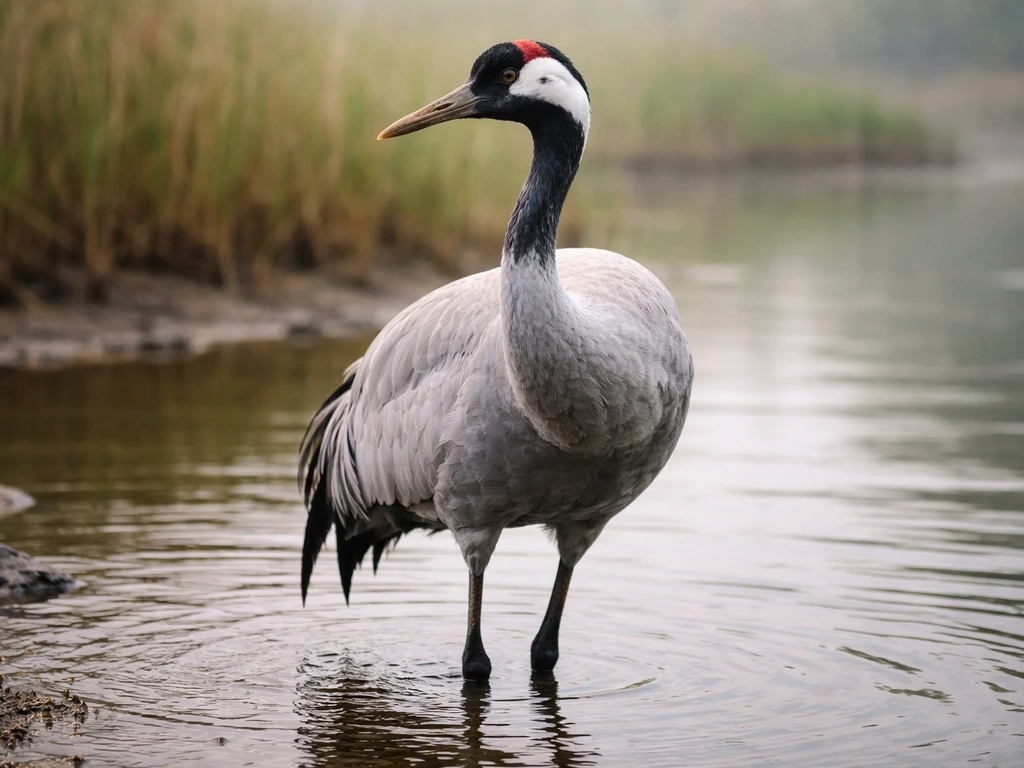
The phrase 'bird whose name is an excellent starting guess' is almost always a crossword clue referencing Wordle, specifically the advice given by the New York Times' WordleBot tool. WordleBot analyzes opening moves and scores them for efficiency, and for a long period it rated CRANE as the single best starting word in the game. So the riddle has a double layer: you need to know (1) which word-guessing game is being referenced, and (2) which bird name that game's analyzer endorsed. The answer collapses neatly into CRANE.
That said, the phrase can show up in slightly different forms. You might see 'bird whose name is an excellent starting guess in Wordle' as a longer clue, or just the shortened version without the game named at all. If you are working through a crossword where the clue does not mention Wordle explicitly, the bird connection is still the key. Some readers may also be looking for a bird-name answer that rhymes with another solution, which is why the clue can point in multiple directions bird connection. The clue is pointing you toward a real bird whose five-letter common name happens to double as elite Wordle strategy. If the puzzle you are solving is related to the clue 'bird whose name means sea' or a clue that rhymes with another answer, those are different bird-name riddles worth exploring separately. If the clue instead says “bird whose name means sea,” follow that wording because it points to a different kind of bird-name riddle.
Best candidate birds for 'excellent starting guess'
CRANE is the primary answer, confirmed across multiple crossword databases including NYT Mini crossword solutions for July 13, 2025, and corroborated by Parade's hint that the answer starts with C. But it is worth knowing the full shortlist of words WordleBot has championed, because some crossword constructors get creative with the framing.
| Word | Is a bird name? | WordleBot endorsement | Notes |
|---|---|---|---|
| CRANE | Yes (Gruidae family) | Top pick for extended period | The primary crossword answer |
| SLATE | No (a rock) | Also rated highly | Not a bird, unlikely crossword answer for this clue |
| CRATE | No | Top-tier opener | Not a bird |
| TRACE | No | Top-tier opener | Not a bird |
| CARTE | No | Top-tier opener | Not a bird |
| STARE | No | Frequently recommended | Not a bird |
| HERON | Yes (Ardeidae family) | Not a top WordleBot pick | Five letters, but not endorsed for this clue |
| ROBIN | Yes (Turdidae family) | Not a top WordleBot pick | Five letters, wrong Wordle logic |
The table makes it obvious: among all the words WordleBot rated as excellent starting guesses, CRANE is the only one that is also unambiguously a bird name. That uniqueness is exactly what crossword constructors exploit. If you ever see this clue with a different letter count (say, a six-letter grid entry), re-examine the phrasing carefully, because five letters is baked into the premise.
Common vs scientific names: how to verify the right match
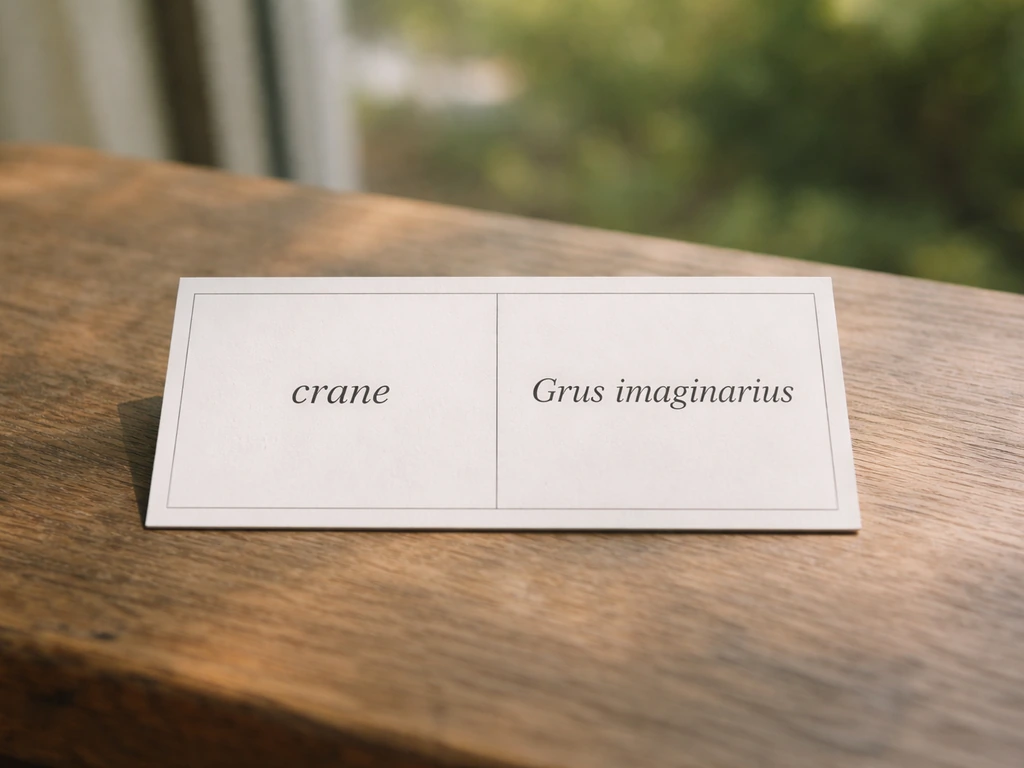
When a crossword clue invokes a bird name, it almost always means the common English name, not the scientific binomial. CRANE as a crossword answer refers to the everyday word, not Grus grus (the Common Crane) or Antigone canadensis (the Sandhill Crane). This distinction matters because if you start down a rabbit hole of checking scientific names first, you will waste time and confuse yourself.
To verify you have the right bird for any clue like this, run a two-step check. First, confirm the common name fits the letter count and any revealed letters in the grid. CRANE is five letters: C, R, A, N, E. Second, confirm the bird is real and widely recognized under that name in English. Cranes are among the most iconic wading birds on the planet, represented by around 15 species globally, so the common name 'crane' is unambiguous and universally accepted. If a crossword clue asks for a scientific name specifically, it will usually say so explicitly.
For anyone who wants to go deeper, the genus name Grus comes from the Latin and Greek words for crane, and the International Ornithological Committee (IOC) World Bird List is the gold standard for confirming both common and scientific names. But for this particular clue, you simply do not need to go that far. CRANE, the common English word, is your answer.
Etymology and meaning of 'crane' (and why it fits so well)
The word 'crane' is one of the oldest bird names in the English language. It traces back to Old English 'cran,' which itself comes from Proto-Germanic 'kranaz,' a root that linguists believe was onomatopoeic: it echoed the bird's loud, trumpeting call. The same root gave rise to similar words across Germanic and Celtic languages. German has 'Kranich,' Welsh has 'garan,' and Old Norse had 'trani.' The shared root across multiple language families tells you this bird has been named, and recognized, by humans for a very long time.
Now here is where the Wordle angle becomes linguistically interesting. WordleBot rates starting words based on how efficiently they eliminate possible answers, using letter frequency and position. CRANE scores exceptionally well because it contains five of the most statistically common letters in five-letter English words: C, R, A, N, and E. The letter E alone appears in roughly 11 percent of all English words, and R and A are similarly high-frequency. So the crane's name is not just a bird name that happened to get lucky. Its phonological shape, built from high-frequency consonants and the most common vowels, reflects the deep Anglo-Saxon and Proto-Germanic roots of everyday English. An ancient bird name that survived largely unchanged for over a thousand years turns out to be the perfect modern word-game opener. That is a genuinely satisfying linguistic coincidence.
Naming conventions: cultural and linguistic patterns behind bird names
Bird names in English generally fall into a handful of categories, and understanding those categories helps you spot strong puzzle candidates quickly. CRANE belongs to the oldest and most organic category: names derived from the bird's sound or behavior, passed down through oral tradition and baked into the language before writing even standardized spelling.
- Onomatopoeic names: Words that imitate the bird's call or sound. CRANE, CUCKOO, and CROW all fall here. These tend to be short, phonetically dense, and cross-linguistically consistent.
- Descriptive names: Names based on appearance or habitat. ROBIN (from the French personal name 'Robin,' later applied to the red-breasted bird), BLUEJAY, GOLDFINCH. These are often compound or modified words.
- Latinized or Greco-Latin names: Formal scientific names like Grus grus or Ardea herodias. Used in ornithology and taxonomy but rarely in casual crosswords.
- Borrowed or adapted names: Names adopted from other languages, like FLAMINGO (from Portuguese 'flamingo,' derived from Latin 'flamma' for flame, referencing the pink color).
- Honorific or eponymous names: Named after people, like Audubon's Warbler or Bullock's Oriole. These are common in North American ornithology.
CRANE sits squarely in the first category, which is exactly why it has such a clean, unambiguous five-letter form. Onomatopoeic bird names tend to be short because they are approximations of sounds, not constructed descriptions. That brevity is a big reason they keep showing up in word puzzles, crosswords, and games like Wordle. If you ever need to brainstorm other bird names that might serve as puzzle answers, starting with short onomatopoeic names (WREN, CROW, SWIFT) is a reliable strategy.
Using the right naming format to find more candidates (pets vs wild)

If your interest in 'bird whose name is an excellent starting guess' goes beyond the crossword and into actually naming a pet bird, the same linguistic logic applies in a practical way. Common names that are short, phonetically clear, and built from high-frequency sounds tend to make excellent pet names too: the bird learns to recognize them faster, and they are easy for humans to repeat consistently. CRANE as a pet name for a tall, elegant bird (say, a Blue and Gold Macaw or a large parrot) actually works beautifully on both levels.
To find more candidates using naming conventions, try these approaches depending on whether you are solving a puzzle or naming a pet:
- For crossword or word-game contexts: Start with five-letter bird common names built from high-frequency English letters (E, A, R, I, O, T, N, S, L, C). Cross-reference with WordleBot's rated top openers if the clue mentions Wordle explicitly.
- For pet-naming contexts: Focus on one or two syllable bird names with clear consonants (B, K, T, R, CR) that a bird can distinguish from background noise. Short onomatopoeic names or common Anglo-Saxon bird words work well.
- For scientific name verification: Use the IOC World Bird List or the Clements Checklist to confirm whether a common name maps to a single species or a genus. 'Crane' maps to the family Gruidae, with around 15 species, but in everyday English usage it is specific enough to be unambiguous.
- For riddle or clue disambiguation: If the clue does not specify Wordle or another game, check the letter count in the grid first, then work backward from real bird common names that fit. Five letters pointing to a 'guessing game' context almost always means CRANE.
The broader takeaway is that bird names and word puzzles overlap more than most people realize. The same qualities that make a bird name ancient, phonetically simple, and cross-linguistically robust are exactly what make it a powerhouse in letter-based games. If you are exploring related puzzles, like a clue that asks for a bird name that rhymes with another answer or a bird whose name means something specific in another language, the same methodology works: start with the common name, verify the letter pattern, then dig into the etymology. The linguistic roots almost always explain why the constructor chose that bird and no other.
FAQ
What if the crossword entry length is not five, but the clue still sounds like it’s pointing to an excellent starting guess?
Look at the entry length and letter pattern first. If the grid requires anything other than 5 letters, do not force CRANE, because many constructors use a similar “word-game strength” phrasing with a different bird name that matches the required length.
Could the clue be referring to Wordle guesses after the opening, or is it always about the first move?
Yes, but only if the clue explicitly limits you to a specific Wordle-related output. The phrase in the clue typically points to WordleBot’s opening-word recommendation, not the later guess list, so “excellent starting guess” is usually about the first move.
How can I tell whether the crossword wants the common bird name (CRANE) versus a scientific name?
If the clue says “common name” it is almost certainly CRANE as the everyday bird. If it instead says “scientific name,” “binomial,” or uses a Latin-looking format, then you should switch to a scientific name, even if the clue otherwise sounds like the Wordle angle.
If the clue mentions Wordle or WordleBot directly, do I still rely on the bird name clue, or should I follow Wordle strategy alone?
Treat the bird connection as the primary key. If the clue includes wording like “in Wordle” or “WordleBot,” you still use the common bird name that matches the letter constraints, because puzzles usually rely on CRANE’s uniqueness as the only obvious bird that is also a top opener.
What common mistake do solvers make when they see this clue and assume CRANE immediately?
Many solvers miss that letter constraints can override Wordle logic. Even if CRANE would be the best Wordle starter, you must confirm the grid letters (and any crossings) match C-R-A-N-E before locking it in.
I only have a couple crossing letters, what is a good method to confirm or reject CRANE quickly?
If you have only one or two letters from the grid, do not search etymologies first. Instead, list short bird names that fit the length and letter slots, then check whether any of those also align with the Wordle opener idea the clue is hinting at.
If the clue rhymes with something or has a variation, how do I know whether it’s the same answer (CRANE) or a different bird-word?
For alternate puzzles that rhyme or use near variants, the “excellent starting guess” theme might still point to a different top WordleBot word that is also a bird name. Your decision aid should be: confirm required length and crossings, then see whether the resulting bird name is a well-known English bird term.
How do I avoid getting derailed by “crane” scientific-name lookups in a crossword?
Scientific-name confusion usually comes from focusing on Latin first. The fast check is to ask whether the clue format looks like typical crossword bird vocabulary (common English) versus specialized taxonomy wording (scientific). When in doubt, common-name bird answers are the default unless the clue explicitly requests taxonomy.
Does CRANE make a good pet-bird name in practice, or is it only good for word puzzles?
If you’re trying this as a pet-bird name, CRANE is often better suited to birds with long, elegant silhouettes or “wading bird” vibes, and it tends to work well because it’s two syllables with clear consonants. That said, choose based on what your specific bird responds to, and keep names short for training consistency.
Next Articles
Bird Whose Name Means Excellent: How to Decode It
Decode the riddle bird whose name is an excellent clue by mapping synonyms, language roots, and bird-name etymology.
Bird Wordle Starting Guess: Best Bird Name and Next Steps
Best bird-name first guess for Wordle, candidate shortlist, spelling variants, and quick next steps from green yellow gr
Bird Whose Name Rhymes With 7 Across Crossword Solver
Solve the crossword clue bird rhyming with 7 across using length, phonetics, and cross letters to pick the right species