A young bird is most commonly called a <strong>chick</strong>. That's the safe, universally understood answer, and Merriam-Webster backs it up by defining "chick" as simply "the young of any bird." But here's the thing: if you want to sound genuinely accurate (and not accidentally alarm a wildlife rehabber or confuse a birding enthusiast), there are two more terms you really should know: <strong>nestling</strong> and <strong>fledgling</strong>. Which word is correct depends entirely on where the bird is in its development and, literally, whether it's still sitting in its nest.
Young Bird Is Called What: Chick, Nestling, Fledgling

Maya Castellanos
12 Apr 2026
The basic answer: chick, nestling, fledgling
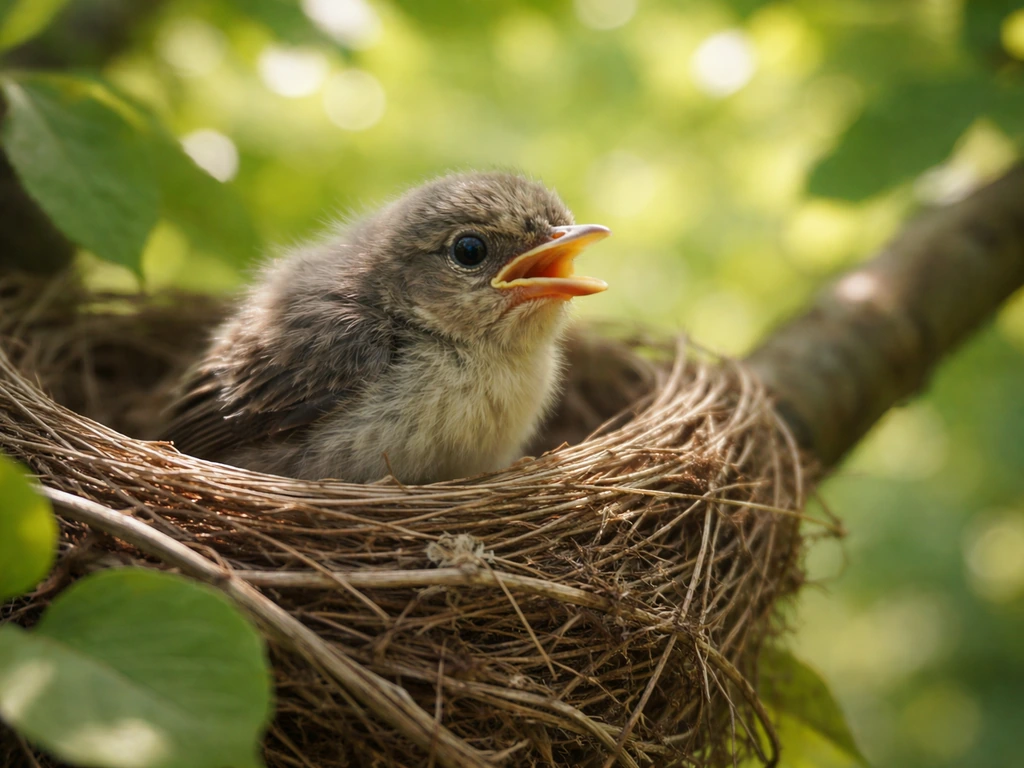
"Chick" is the everyday umbrella term, the one you'd use in conversation without sounding odd. Cambridge Dictionary calls it "a baby bird, especially a young chicken," and in casual speech it covers every fluffy, helpless, wide-mouthed baby bird you could picture. But in ornithology and wildlife care, two more specific terms carve up that broad category into meaningful stages.
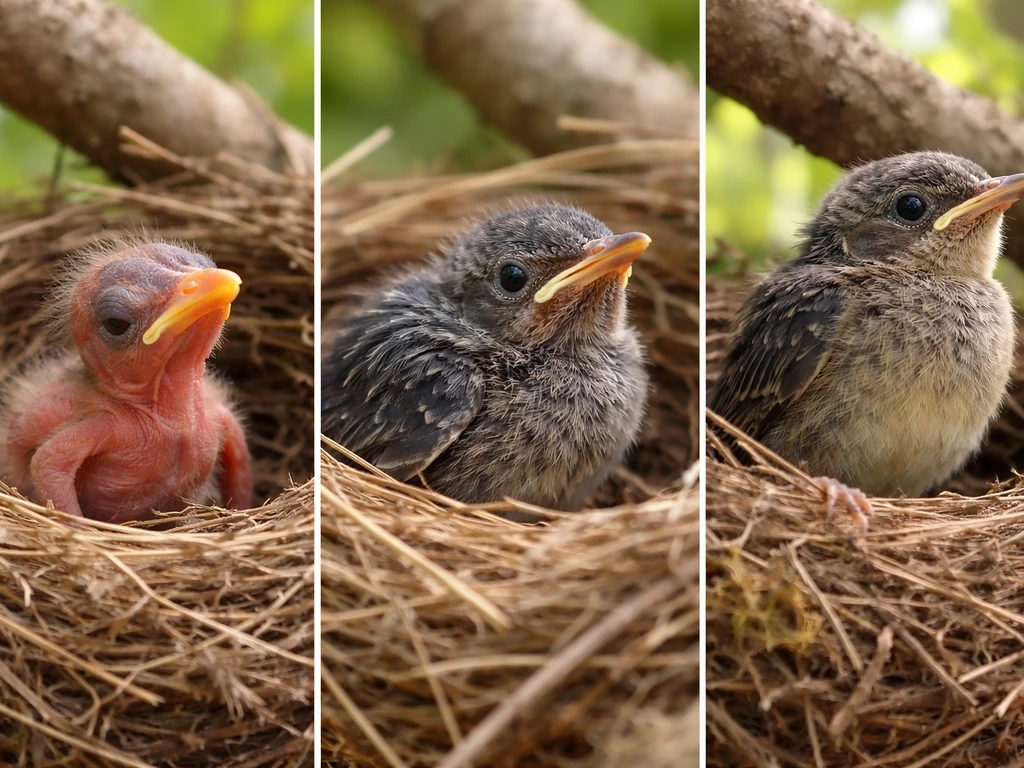
A <strong>nestling</strong> is exactly what it sounds like: a young bird that has not yet left the nest. Nestlings are typically pink-skinned with very little or no feathers, eyes often still closed, and completely dependent on their parents for warmth and food. According to Wisconsin DNR research, featherless nestlings typically spend about two weeks in the nest before developing enough to move on. If you're wondering about terminology for other life stages, understanding what a bird is called at each stage of life maps closely to these same developmental milestones.
A <strong>fledgling</strong> is a young bird that has left (or just left) the nest, has visible feathers, and is in the process of learning to survive independently, even if it still can't fly well yet. MassWildlife describes a fledgling simply as a "young, fully feathered bird" found outside the nest. Both nestlings and fledglings are technically chicks, but knowing which stage you're dealing with changes what you do next.
Why the right word changes with the stage
The reason bird people insist on these distinctions isn't pedantry. It's practical. NestWatch, one of the most widely used citizen science platforms for nest monitoring, specifically advises that when you find a bird outside its nest, the very first thing you should do is figure out whether you're looking at a nestling or a fledgling, because the correct response is completely different for each. Accidentally treating a healthy fledgling like a fallen nestling can disrupt parental care and do more harm than good.
The naming distinction also reflects genuine biology. Wisconsin DNR notes that young songbirds leave the nest before their flight feathers are fully developed, meaning fledglings spend several days on the ground or on low branches before they can actually fly. Washington DFW even uses the term "branchers" for this stage, since the birds move about on branches and the ground for a few days under the watchful eye of their parents. The word "fledgling" itself comes from the Old English root relating to feathers, which is a nice bit of etymology that lines up with the biological reality.
For raptors specifically, the terminology gets even more granular. The National Park Service defines a <strong>hatchling</strong> as a raptor just out of the egg (1 to 5 days old, not yet capable of flying), and <strong>eyass</strong> as a young or nestling raptor still in the nest and not yet fledged. "Eyass" is one of those wonderfully specific words that falconers have been using for centuries, though you won't hear it on a casual birdwatching walk. It's the same kind of species-specific naming convention that makes bird terminology so rich, similar to how what a small bird is called can shift depending on the regional tradition or the specific species being discussed.
How to figure out what stage you're actually looking at
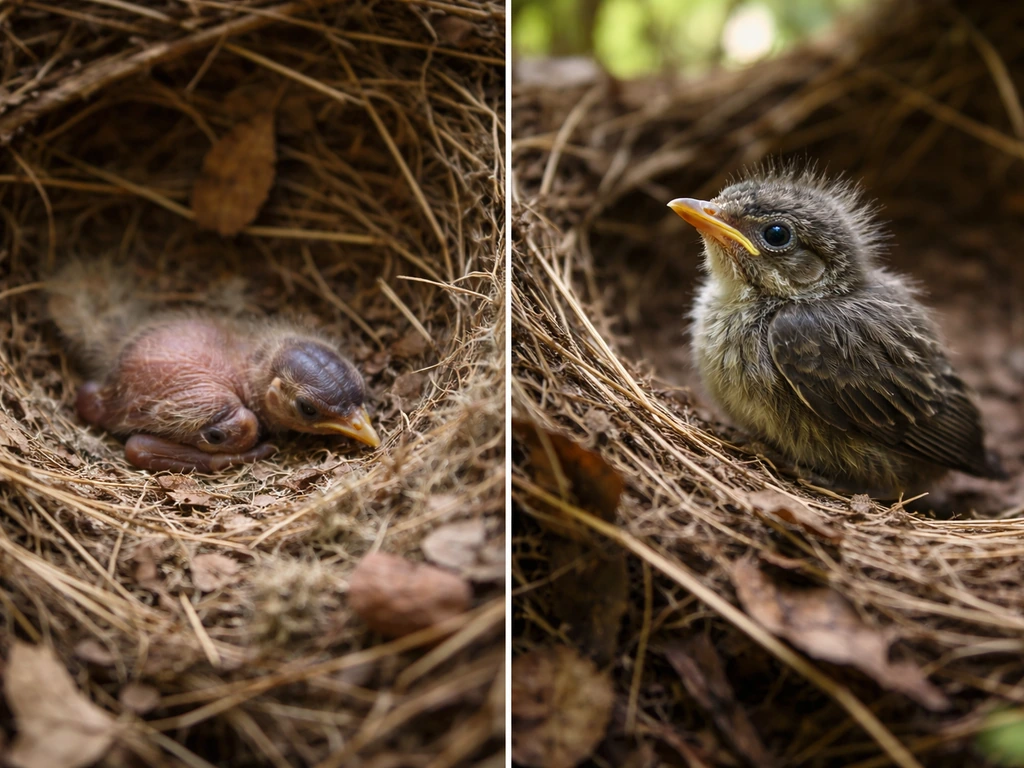
If you've found a baby bird and you're trying to figure out what term applies (and what to do), the simplest way is to look at two things: feathers and location. If you can locate the nest nearby, the best thing to do is to place the nestling back in the nest, according to the U.S. Fish & Wildlife Service.
- No feathers or very sparse feathers, pink or bare skin visible, eyes possibly closed: this is a nestling. U.S. Fish & Wildlife Service guidance says these birds, especially featherless ones with eyes closed, are the ones most likely to need help. If you can find the nest nearby, the best option is to gently place the nestling back in it.
- Feathers visible (even if patchy or fluffy), hopping or perching on low branches or the ground, alert and mobile: this is a fledgling. Washington DFW and MassWildlife both advise leaving fledglings where they are unless they are visibly injured, since the parents are almost certainly still feeding them.
- A bird of any age being discussed in casual, non-emergency conversation: "chick" is completely appropriate and universally understood.
The American Wildlife Law Associates put it plainly: a nestling is a baby bird that is pink with very little or no feathers. That single visual cue is genuinely the fastest way to sort out the terminology in the field. If you see feathers, you're probably past the nestling stage.
How bird people actually phrase it: common vs scientific naming
In everyday speech and popular media, "chick" dominates because it needs no explanation. Scientists and ornithologists use "nestling" and "fledgling" when precision matters, and those terms appear in peer-reviewed papers, field guides, and wildlife management documents. In formal scientific writing, you might also see "juvenile" used for birds past the fledgling stage but not yet in adult plumage, though that's typically a step beyond what most people need.
There's also a gendered naming layer worth knowing about. Just as what a female bird is called varies by species (a hen, a pen, a reeve, depending on the bird), and what a male bird is called has its own species-specific vocabulary (cock, cob, gander, and so on), the terms for young birds can also vary by species. A young swan is a cygnet. A young goose is a gosling. A young hawk, as noted above, is an eyass. A young pigeon is a squab. These species-specific terms exist alongside the general-purpose "chick" and are worth knowing if you're talking about a particular bird rather than baby birds in general.
Naming young birds in everyday conversation and for pet birds
For most conversational purposes, "chick" is your go-to word, and nobody will raise an eyebrow. If you're posting about a bird nest you found in your garden, "chick" or "baby bird" will always be understood. If you're talking to a wildlife rehabilitator or a birder, using "nestling" or "fledgling" correctly will earn you instant credibility.
For pet bird owners, the terminology gets used a bit differently. Breeders and aviculturists often refer to newly hatched birds as "chicks" regardless of species, from budgerigars to cockatoos to macaws. You'll hear things like "the clutch produced four chicks" or "the chick fledged at six weeks." The word "fledge" is used as a verb here too, meaning the moment the young bird becomes capable of flight, which is a milestone breeders track carefully. When people are also thinking about what the home of a bird is called, the nest or aviary context shapes which terminology feels natural: nestlings live in nests, fledglings have left them.
If you're naming a pet bird that's still young, "chick" is the practical label you'll see on health records, purchase receipts, and breeder documentation. Once the bird is past fledging age, you'll more likely see "juvenile" on veterinary paperwork, especially for parrots, which have notably long developmental timelines compared to wild songbirds.
Quick reference: nestling vs fledgling vs chick
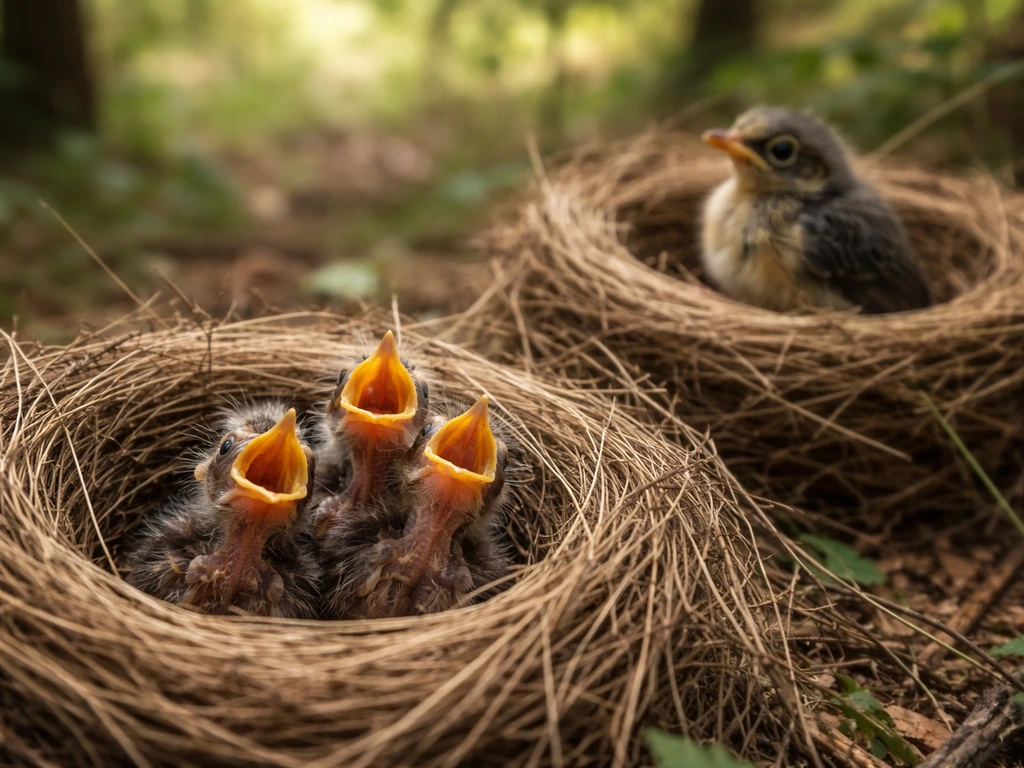
Here's a simple breakdown for choosing the right term based on what you're actually seeing or discussing.
| Term | What it looks like | Where it is | What to do if found outside |
|---|---|---|---|
| Chick | Any young bird, any appearance | Anywhere (general term) | Depends on stage below |
| Nestling | Pink skin, sparse or no feathers, eyes possibly closed | Should be in the nest; if found on ground, it fell | Return to nest if locatable; contact a rehabber if not |
| Fledgling | Fully or mostly feathered, alert, mobile | On the ground or low branches near nest area | Leave it alone; parents are likely nearby |
| Hatchling (raptors) | Just hatched, 1-5 days old, no flight capability | In the nest | Do not disturb; contact raptor specialist if injured |
| Eyass (raptors) | Young raptor still in nest, not yet fledged | In the nest | Do not disturb; specialist territory |
| Species-specific (cygnet, gosling, squab, etc.) | Varies by species | Varies | Follow species-appropriate guidance |
The short version: say "chick" and everyone understands you. Say "nestling" when the bird is featherless and nest-bound. Say "fledgling" when the bird is feathered and has recently left the nest. If you're talking about a hawk or eagle, "eyass" and "hatchling" are the precise terms used by raptor specialists and the NPS alike. Getting these right doesn't just make you sound sharp; in a wildlife situation, using the correct term can actually help the person you're talking to give you the right advice faster.
FAQ
I found a baby bird outside the nest but it cannot fly. Is it still a nestling?
If the bird has visible feathers but is still on the ground or low branches, it is usually a fledgling, not a nestling. The key question is whether it is inside the nest (nestling) or outside the nest even if it cannot fly well yet (fledgling).
What should I do if I am not sure whether it is a nestling or a fledgling?
If you cannot tell whether the bird is inside the nest, treat it as a fledgling unless you can clearly see it is nest-bound and mostly featherless. When in doubt, avoid handling and contact a local wildlife rehab center for guidance, because well-meaning interference is a common problem with fledglings on the ground.
Is it ever better to avoid the word “chick” and use “nestling” or “fledgling”?
“Chick” is an all-purpose label, but in many wildlife situations “chick” can be too vague for the right advice. If you are reporting what you found to a rehabber, use the more specific term, and include two details (feathers present, and inside versus outside the nest) to remove ambiguity.
Do “chick,” “nestling,” and “fledgling” mean the same thing for pet birds as they do in the wild?
Yes. In pet-breeding contexts, “chick” can refer to newly hatched birds of many species regardless of whether they are featherless or not fully developed. Veterinary or breeder records may still use “chick” as a stage label even when wild-life terms would say “nestling” or “fledgling.”
How do the young-bird terms change if the bird is a hawk or eagle?
Raptors have their own terminology, so the usual chick/nestling/fledgling shortcut can be misleading. For example, a very newly hatched raptor is “hatchling,” and a young raptor still in the nest is “eyass.” If the bird is a hawk, eagle, or falcon, use these terms when you report what you found.
Is “brancher” the same as “fledgling”?
A “brancher” is essentially a functional description of the fledgling period for some songbirds, not a replacement for “fledgling.” If you are choosing a single correct word, “fledgling” is safest, and “brancher” can be mentioned if you know the bird is moving around on branches or the ground under parental care.
When does a fledgling become a juvenile, and what word should I use?
“Juvenile” is typically used for birds that are past fledging but not yet fully adult in plumage. If the bird just recently left the nest or is still learning basic survival, “fledgling” is usually the better fit than “juvenile,” because timing and appearance matter.
Can I use male or female terms when I am talking about a baby bird?
Gender-specific terms apply to adult roles more often than to general “young bird” labels. For chicks, nestling, and fledgling, the stage words are usually more useful than gender terms, unless you know the species and sex and you are using specialized vocabulary.
If I know the species, should I use a species-specific name instead of “chick”?
Species-specific baby-bird names (like gosling, cygnet, squab) can be more precise than “chick,” but they require knowing the species. If you cannot confidently identify the species, stick with chick, or choose nestling versus fledgling based on location and feathers.