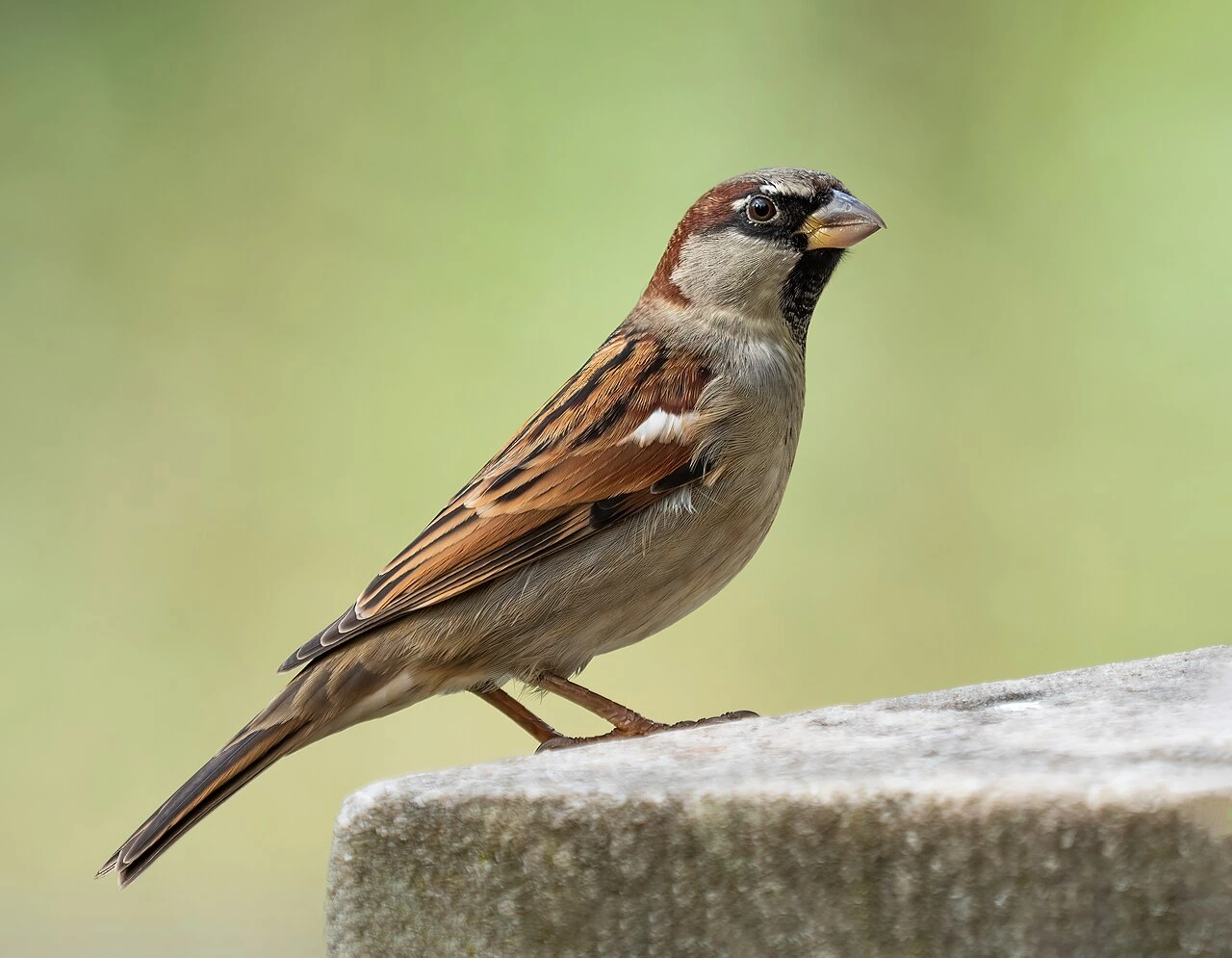
To find the name of a bird, start with three quick observations: roughly how big is it (sparrow-sized, robin-sized, crow-sized, hawk-sized?), what color patterns stand out, and what shape is the bill. Feed those details plus your location and today's date into the free Merlin Bird ID app, and in most cases you'll have a solid candidate name within 60 seconds. From there you can confirm using a field guide, eBird, or iNaturalist, and then dig into whether you want the common name, the scientific (Latin) binomial, or both. If the bird is a pet and you're actually searching for a name to give it rather than identify it, skip ahead to the pet-naming section below.
How to Find the Name of a Bird: Step by Step ID

Maya Castellanos
9 Jul 2026
Start with what you already know about the bird
Before you open any app or book, pause for 30 seconds and take stock of what you can actually see. Ornithologists call these details "field marks," and they're the core vocabulary of any bird identification: overall size and body shape, bill structure (long and thin? short and thick? hooked?), plumage markings on the head, breast, and wings, and what the bird is doing. A bird that's hammering into bark is almost certainly a woodpecker. A bird running along a beach waterline is almost certainly a sandpiper or plover. Behavior narrows the list fast, even before color enters the picture.
If you can, jot a few notes or snap a photo right then. Memory is surprisingly unreliable once a bird flies off and you're staring at your phone trying to reconstruct it. Even a blurry phone photo is worth taking. Write down: approximate size compared to a bird you know, dominant body color, any contrasting patches (wing bars, eye rings, colored tail tips), bill shape, leg color, and where exactly it was (on the ground, in a tree canopy, on open water, in a marsh). That's your raw material.
Identify using visual and location clues
Location does a huge amount of work in narrowing down a bird's identity. A small gray bird in coastal Maine in July is working from a very different candidate list than the same-looking bird in Arizona in December. This is exactly why Merlin Bird ID asks for both your location and the current date before it asks anything else. The app pulls from eBird sighting data to predict which species are actually likely where you are right now, which immediately trims hundreds of possibilities down to a manageable handful.
Habitat within your location matters just as much. The same patch of woods contains different birds than the meadow next to it, the pond edge beyond that, or the suburban feeder you left at home. When you enter your observations, think about the microhabitat: open water, dense shrub, forest understory, forest canopy, open grassland, rocky shoreline, backyard feeder. That context, combined with size and color, usually gets you to a short list very quickly.
One caution worth noting: most birds stay within their expected geographic range, but vagrants (birds that wander well outside their normal territory) do show up. If your identification result seems wildly unlikely for your area, don't immediately dismiss it. Save your notes and any photos, because an out-of-range bird is exactly the kind of sighting that expert birders in your area would want to know about and help confirm.
Using Merlin's Step-by-step ID

Merlin's Step-by-step ID wizard walks you through selecting size, dominant colors, and behavior in sequence. If the results don't look right, don't give up. The app explicitly recommends adjusting your selections: maybe you estimated the size too large, or the bird's real dominant color is something you initially overlooked. Play with the inputs. Merlin isn't magic; it's a very well-designed probability engine built on millions of eBird sightings, and it responds well when you tweak your inputs thoughtfully.
Using Merlin Photo ID
If you managed to get a photo, Merlin's Photo ID feature uses machine learning to analyze the image directly. If you have the photo, you can also use Merlin Photo ID to help with how to find bird name by image. It draws boxes around each bird in the frame, assigns a species ID, and gives a confidence score. This is often faster than the Step-by-step wizard when you have a decent photo. For photos uploaded to eBird checklists, the same Photo ID model runs and can pull in suggestions from the Macaulay Library for comparison. If you want a second opinion, iNaturalist's community identification process is another strong option: upload your photo and the iNaturalist community, plus an AI suggestion, will weigh in with identifications that build toward a consensus.
Use sound and behavior (calls, songs, flight style)
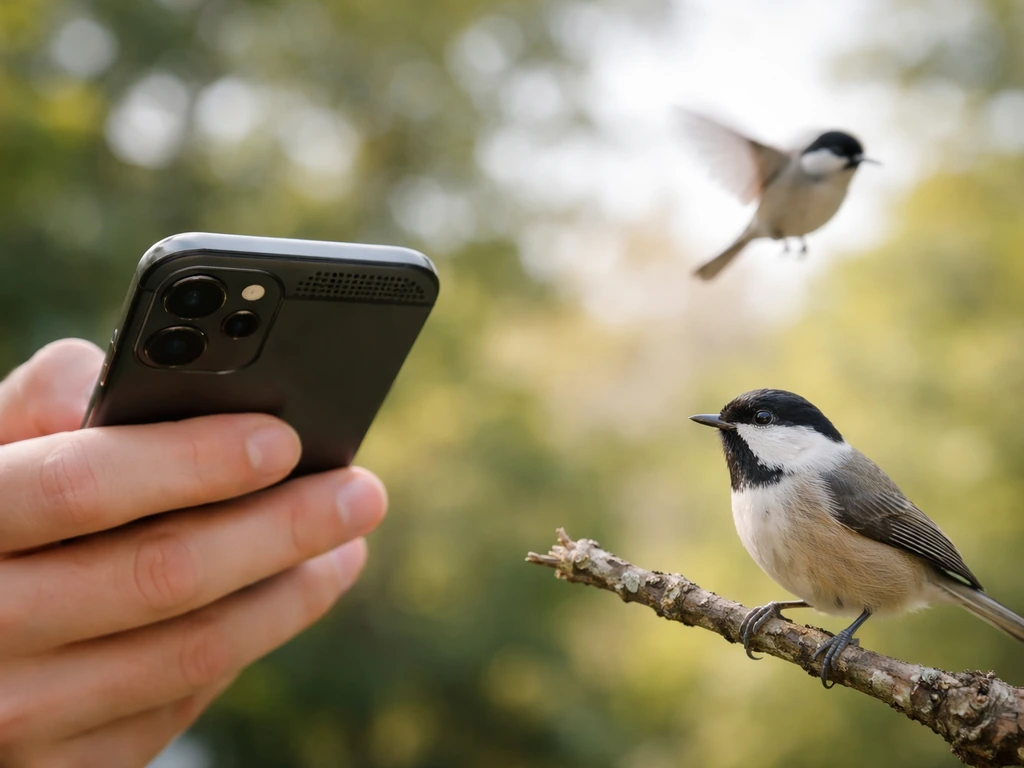
Sound is genuinely one of the most powerful identification tools available, and it's underused by beginners. blank" rel="noopener noreferrer">Merlin's Sound ID feature listens in real time through your phone's microphone and suggests species based on what birds are actually singing around you. When you add media to an eBird checklist, you can upload photos and sounds, and the audio recordings are sent to processing queues and can appear in eBird checklists and Macaulay Library search results blank" rel="noopener noreferrer">Merlin's Sound ID feature listens in real time through your phone's microphone. Turn it on when you're in the field and watch the suggestions roll in live. It's particularly useful in dense vegetation where you can hear birds but can't see them.
It helps to understand the difference between a bird's song and its call. Songs are typically longer and more complex vocalizations, usually produced by males during breeding season for territory or mate attraction. Calls are shorter, simpler sounds used for alarm, contact, or flock coordination, and they're heard year-round from both sexes. When you're trying to identify by sound, both song and call can point you to a species, but they'll match different audio recordings in a reference library.
For deep audio reference beyond Merlin, Xeno-canto is a dedicated repository of annotated bird sound recordings from around the world. You can search by species name, region, and recording type to compare what you heard against verified recordings. iNaturalist also accepts audio uploads under its "Animal Sign and Song" observation field, which means you can record the sound, upload it, and have the community help with identification the same way they'd help with a photo.
Flight style is another underrated clue. Woodpeckers have a distinctive undulating flight (flap-flap-glide). Raptors soar on thermals with minimal wingbeats. Swallows arc and twist continuously. Shorebirds often fly in tight synchronized flocks. Even if you only catch a bird in flight, these patterns can confirm or rule out large groups of species quickly.
Confirm with reliable bird name resources (common vs scientific)
Once you have a candidate name from Merlin or another ID tool, it's worth double-checking through a structured reference. The distinction between a common name and a scientific name matters here, because they work very differently.
A common name is the everyday name used in a particular language or region. The problem is that common names aren't standardized globally and can vary enormously. What North Americans call a "Robin" (Turdus migratorius, a thrush) is a completely different bird from the British Robin (Erithacus rubecula). The same species can also have multiple valid common names: the bird North Americans call a "Common Loon" is the "Great Northern Diver" in the UK. For this reason, common names alone can create real confusion when talking across regions or comparing books.
Scientific names are the internationally standardized solution. Every species has exactly one accepted scientific name, written as a two-part Latin binomial under the system formalized by Carl Linnaeus. The first part (capitalized) is the genus; the second (lowercase) is the specific epithet. The Common Loon is Gavia immer regardless of whether you're in Canada, Finland, or Chile. When you need to be certain you're talking about the same bird, the scientific name is the definitive answer. ITIS (the Integrated Taxonomic Information System) is a reliable database for looking up accepted scientific names and checking whether a name you've found is current or has been synonymized.
Match the bird to common names, scientific names, and naming origins
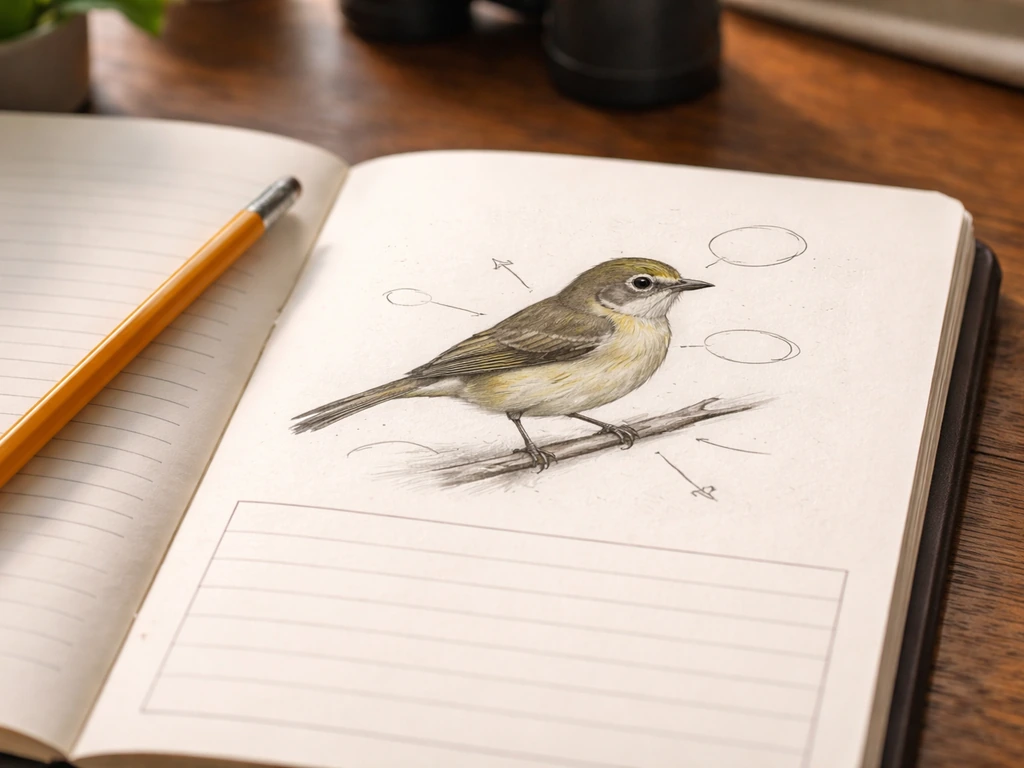
Once you have both names, the etymology is often surprisingly interesting and can help the name stick in your memory. Scientific bird names are built from Latin and Greek roots, and many of them are descriptive: Cyanocitta cristata (Blue Jay) breaks down as "blue" (cyan) + "jay/chatterer" (kitta) + "crested" (cristata). Others are eponyms honoring naturalists, explorers, or patrons: Wilson's Warbler (Cardellina pusilla) is named for the ornithologist Alexander Wilson. Still others reference geography, behavior, or the bird's call rendered in Latin.
The definitive resource for this kind of deep dive is the "Key to Scientific Names" from Birds of the World, produced by Cornell Lab. It aligns with the Clements Checklist taxonomy and provides etymology for both genera and specific epithets, including the origins of eponyms and the classical roots of descriptive names. If you want to understand not just what a bird is called but why it was named that way, this is your reference.
Common names also have their own etymological stories. "Osprey" traces through Medieval French from the Latin ossifragus ("bone breaker," though ironically that name was originally applied to a different bird). "Wheatear" comes not from wheat or ears of grain but from a polite 18th-century bowdlerization of a much earthier Old English description of the bird's white rump. These kinds of stories make bird names genuinely memorable rather than arbitrary labels.
If it's a pet bird: choose an appropriate name and naming conventions
If your search for "how to find the name of a bird" is actually about naming a pet bird rather than identifying a wild species, the approach shifts entirely. In Minecraft, you can also give a bird a custom name by using the in-game naming item and choosing a name through the anvil or command give a bird a custom name in Minecraft. You're not looking up a classification; you're choosing an identity for a companion animal. The good news is that bird-naming conventions give you a rich set of frameworks to work from.
The most natural starting point is the bird's species or physical appearance. Names inspired by color are perennially popular and work well: Mango, Kiwi, or Saffron for colorful parrots; Ash, Slate, or Pearl for gray cockatiels; Ember or Scarlet for red birds. These names feel right because they're doing what scientific namers do instinctively: they describe the creature. The name Cyanocitta (Blue Jay) is essentially doing the same thing a pet owner does when they name their blue parakeet "Azure."
Species-specific naming conventions also matter. Larger, longer-lived parrots like African Greys, Amazons, and macaws often get names that feel weighty enough for a bird that may outlive you: historical figures, mythological names (Apollo, Athena, Hermes), or place names with a grand sound. Smaller birds like budgies, cockatiels, and finches tend to get playful, short names that are easy to say quickly and repeatedly during training, since the bird may learn to respond to it. Two syllables with a hard consonant and a bright vowel work particularly well.
- Keep it to one or two syllables for training purposes: birds learn short, distinct sounds more easily than long names
- Avoid names that sound like common commands ("No," "Go," "Shh") to prevent confusion during training
- Names ending in a vowel sound (Kiwi, Mango, Rio, Coco) tend to be easier for parrots to mimic back
- Consider the bird's personality before settling on a name: a timid bird named "Blaze" creates a small daily irony
- Species-rooted names (naming a macaw "Ara" after its genus, or a cockatiel "Nymphicus" after its scientific name) are a fun nod to the bird's identity if you enjoy that kind of thing
One common mistake is choosing a name that's very human and very common, which can create real confusion in a household. Naming your parrot "Mike" works fine until there's an actual Mike in the room and the bird starts shouting the name at inopportune moments. Similarly, avoid names that sound like the names of other pets in the house, for everyone's sanity.
Troubleshooting when you can't identify the species confidently
Sometimes the bird just won't cooperate. It was too far away, the light was bad, it flew before you could get a good look, or every app you've tried is giving you three different answers with similar confidence scores. This happens to experienced birders constantly. Here's how to handle it without giving up. If you're stuck on a name and need an adjacent idea, you can also check how to put twitter bird in name for inspiration when choosing a distinctive label.
- Document everything you observed, even partial details. Audubon specifically recommends saving notes, photos, and video so that expert volunteers can review your evidence after the fact. A partial field sketch with notes like "yellow eye ring, brownish-gray back, about robin-sized, found in dense shrubs at marsh edge" is genuinely useful to an expert.
- Upload to eBird with your best-guess ID and mark it as needing review. eBird's volunteer reviewer network is designed to handle unusual or uncertain sightings, especially for rare or out-of-range birds.
- Post to iNaturalist. The community identification process works well for uncertain cases because multiple identifiers can add their own IDs and the system reaches a consensus. You can also search iNaturalist's observation database filtered by location, date, and similar traits to find comparable sightings other people have confirmed.
- Compare your photo against the Macaulay Library through eBird or Cornell Lab's website. It holds one of the largest collections of verified bird photos and audio recordings in the world, and browsing similar species visually often resolves confusion that an AI ID tool can't.
- Adjust your Merlin inputs and try again. If the size you entered seems slightly off, or you selected the wrong dominant color, change one variable at a time and see how the results shift. Merlin's suggestions are only as good as the inputs you gave it.
- Accept that some birds remain unidentified. Listing a bird as "unidentified flycatcher" or "unidentified warbler sp." is honest and valid data. Professional ornithologists do this routinely.
The broader point is that finding a bird's name is almost always a process of convergent evidence: field marks plus location plus date plus sound plus behavior, all pointing toward one species. When the evidence genuinely pulls in multiple directions, the right answer is sometimes "probably this, but uncertain," and that's fine. The tools and community resources available today (Merlin, eBird, iNaturalist, Xeno-canto, Birds of the World) make it easier than it has ever been to get from "I saw a bird" to a specific, correctly spelled, properly understood name, whether that's the common name you'll use in conversation or the Latin binomial you'll use to look it up in a scientific reference.
FAQ
What if the bird is too far away to see the bill shape or wing markings clearly?
Lean harder on overall silhouette and behavior first (flight style, feeding method, and posture). Then use location, habitat, and time of day to constrain the list, and treat the ID result as “probable” until you get a closer look or a clearer photo. If you can only record audio, Sound ID and sound-based libraries can still get you to the right species even when visuals are limited.
How do I choose between two similar-looking species that both seem plausible in Merlin?
Compare the “field mark” that each species typically differs on, such as a specific head pattern, wing bar presence, tail shape, or bill thickness. Re-check your photo for that one feature specifically, and adjust only one input at a time (for example, size estimate) to see whether the top suggestion meaningfully changes. If the split is still there, prefer confirmation from another source like a community ID rather than forcing the earliest guess.
Does “approximate size compared to a bird I know” need to be exact for accurate results?
No, but you should avoid large directional errors. If you can tell the bird is clearly smaller than a sparrow or clearly larger than a crow, that’s usually enough. If you are unsure, use a known reference like a nearby feeder bird, a tree height, or your distance to common landmarks, then revisit size after you get a better view.
What if I’m in the wrong location, like using the app while traveling or on vacation?
Use the GPS location where the bird was actually seen, not where you are standing in general. Date and location strongly affect probability outputs, so being off by even a region can make a rare species look artificially likely or hide a likely one. If you suspect the bird moved (for example, it flew from a different area), base the entry on the first moment you clearly observed it.
How reliable are the confidence scores in Merlin and other ID tools?
They help rank possibilities, but they do not guarantee correctness. Confidence can be high even when photos miss the one key field mark that separates look-alikes. Treat high-confidence results as a strong candidate, then verify with at least one other evidence type (sound, behavior, or a second ID tool) when possible.
What should I do if the bird is a juvenile and the plumage looks “off” for the adult photos?
Many ID workflows default to adult field marks, so juveniles can confuse shortcuts based on color alone. Focus on molt-stage cues and structural traits that stay more consistent (bill shape, leg color, overall body pattern). If needed, check identification references for “immature” or “first-year” plumage and keep your notes about whether the bird looked patchy, dull, or transitional.
Can I identify a bird from sound if I only heard it for a few seconds?
Yes, but increase accuracy by recording the exact context. Note whether it was calling or singing, time of day, and the habitat (woodland, marsh, open water). If the sound is brief, don’t rely on it alone, use it to choose between two top visual candidates. When possible, capture a longer clip or multiple calls so the pattern matches a specific species.
How do I tell song versus call in the moment?
Songs are usually longer and more structured, often repeated as a sequence, while calls are shorter and used more frequently for contact or alarm. In practice, if the sound is a quick repeated note burst, treat it as a call; if it’s a sustained series with noticeable transitions, treat it as a song. Either way, record both, because some species have distinctive contact calls even outside breeding season.
What if a “vagrant” result appears for my area, should I trust it?
Keep it as plausible but verify before sharing it as a certainty. Save your evidence (notes, exact time, photos, and audio if any), and look for supporting cues like matching behavior and habitat use. If you can, cross-check with a community platform to see whether local birders independently converge on the same species.
How should I document a sighting so others can confirm my bird name?
Write the observation time, precise location (at least the town or nearest landmark), habitat micro-type (feeder, edge of marsh, canopy, open grassland), and the top 3 field marks you relied on. Include one note about behavior (feeding, perched posture, flight pattern) and upload the best photo or audio you have. This structured checklist makes it much easier for others to validate the ID.
When should I choose common name versus scientific name for my notes?
Use the common name for everyday conversations, but always record the scientific binomial when the bird matters for comparison across regions or when you might consult a different reference later. If you ever need certainty across books or countries, the scientific name avoids confusion caused by regional common-name differences.
Can I use bird ID tools for backyard feeder birds that are frequent visitors?
Yes, but still confirm with field marks. Feeder birds can look “familiar,” and common species often have look-alikes with subtle differences (like similar finches or sparrows). If the bird visits repeatedly, you can wait for a moment when the bill and wing pattern are visible, rather than forcing an ID from a partial view.
What if my photo shows multiple birds, and the boxes or suggestions only label one?
Confirm each bird separately. Crop the image mentally or physically into sections so you can ensure the ID tool is analyzing each individual subject, not the busiest area of the scene. If one bird is in the foreground and another is partly obscured, treat the partially obscured bird as uncertain until you get a clearer frame.
I’m trying to name a pet bird, how do I avoid choosing a confusing name at home?
Pick a short, distinctive sound pattern that won’t be triggered by common human names or other pets. Check whether the bird’s name rhymes or sounds similar to household commands or frequent names, because you’ll hear confusion immediately. Two syllables with a hard consonant and bright vowel often work well for quick learning and clear recall.
Next Article
How to Find Bird Name by Image: Step-by-Step Guide
Learn how to find a bird name by image using reverse search and bird apps, verify results, then get common and scientifi