If you want a name that means "bird of prey," you have a genuinely rich pool to draw from: eagle names, hawk names, falcon names, osprey and kite references, and even owl-rooted options from a dozen different languages. The short answer is that names like Aquila, Ari, Falco, Accipiter, Haukr, Zephon, and Kestrel all carry verifiable raptor meanings, and there are dozens more once you dig into Arabic, Hebrew, Norse, Greek, and Latin roots. But not every name that a baby-name website labels "eagle" or "falcon" actually checks out etymologically, so this guide covers both the curated list and the verification steps you need before you commit.
Names Meaning Bird of Prey: Eagles, Hawks, Falcons and More

Maya Castellanos
22 Mar 2026

What "bird of prey" actually covers (and why it matters for name hunting)
Ornithologists use "bird of prey" as a close synonym for blank" rel="noopener noreferrer">raptor, which comes from the Latin rapere, meaning "to seize or take by force." The label covers eagles, hawks, falcons, ospreys, kites, harriers, buzzards, sparrowhawks, goshawks, kestrels, and vultures. Owls are biologically raptors too (order Strigiformes), though they're nocturnal and sometimes grouped separately in casual conversation. What the term does not cover is any bird that just happens to eat meat occasionally or hunts insects, so a name rooted in "wren" or "swallow" would not qualify even if those birds sometimes catch bugs.
Why does the definition matter when you're hunting for names? Because baby-name websites routinely stretch meanings. You'll see names tagged "eagle" that actually mean "noble" or "swift," and names tagged "hunter" that have nothing to do with raptors at all. Knowing the biological scope of "bird of prey" gives you a lens to verify claims rather than just accepting a site's label at face value. When a name's meaning is genuinely tied to a raptor, you'll almost always find the connection traceable through Old English, Latin, Greek, Arabic, Hebrew, or Norse roots, not through a romantic story someone invented in the 2000s.
Names rooted in eagle meanings

Eagle names are probably the most internationally distributed raptor names, showing up in Latin, Greek, Hebrew, Arabic, Germanic, and Celtic traditions. Here are the strongest verified options.
| Name | Language/Origin | Core Meaning | Gender Usage | Notes |
|---|---|---|---|---|
| Aquila | Latin | Eagle | Historically masculine; now used for any gender | Direct Latin word for eagle; New Testament figure Aquila; strong and pronounceable in English (AK-wih-lah) |
| Ari | Hebrew / Old Norse | Eagle (Hebrew: ari = lion, but Ariel/Arni roots also link to eagle in Norse) | Both | In Hebrew, Ari means 'lion,' but in Old Norse, Ari (from örn) means 'eagle.' Verify the cultural tradition you want. |
| Arni / Arne | Old Norse | Eagle | Masculine | From Old Norse örn (eagle); common in Scandinavian countries; clean and simple |
| Arnav | Sanskrit | Ocean, but eagle-adjacent via 'arna' root in some usages | Masculine | Often cited as 'eagle' on name sites; primary Sanskrit meaning is 'ocean/wave,' so verify carefully |
| Arnulf | Germanic | Eagle + wolf | Masculine | Compound name: arn (eagle) + wulf (wolf); strong medieval Germanic name |
| Aquilino | Latin/Spanish/Italian | Little eagle | Masculine | Diminutive of Aquila; used in Spanish- and Italian-speaking cultures |
| Baz | Arabic | Hawk or falcon | Masculine | Arabic word for a type of hawk/falcon; short and punchy |
| Efron | Hebrew | Bird (sometimes glossed as eagle-like) | Masculine | Biblical; appears in Genesis; usually glossed as a bird name rather than specifically eagle |
| Garnett / Garnoc | Welsh/Old English | Eagle river / eagle place-name roots | Both | Place-name derived; weaker etymological tie to eagle specifically |
| Gwawr | Welsh | Dawn; sometimes associated with eagle imagery in poetry | Feminine | Indirect association; not a reliable 'eagle' meaning |
| Hern / Hearn | Old English | Eagle or heron (debated) | Masculine | Often cited as eagle; heron is equally plausible; use with caution |
| Orinthia | Greek | Of the eagle / bird-like | Feminine | Poetic Greek-derived; not a classical attested name but based on ornis (bird) |
| Thorvald | Old Norse | Thunder eagle | Masculine | From þórr (Thor) + valdr (ruler), but also interpreted with örn (eagle) variant in some compound forms |
The clearest picks from this group are Aquila (bulletproof Latin etymology, widely recognized), Arne or Arni (clean Norse eagle root), and Arnulf if you want something more unusual and historically grounded. If you're drawn to Arabic traditions, Baz is short and directly tied to a bird of prey. Just double-check Ari: it's a gorgeous name, but you need to decide whether you're pulling from Hebrew (where it means lion) or Norse (where it points to eagle), because those are two very different cultural stories.
Names rooted in hawk, falcon, and kite meanings
This is arguably the richest category for names, because hawk and falcon words traveled through so many European and Middle Eastern languages that you have real options across gender, style, and syllable count.
Hawk-rooted names

The English word "hawk" traces back to Old English heafoc/hafoc, from Proto-Germanic habukaz, which is itself linked to the Proto-Indo-European root kap-, meaning "to grasp." That grasping root is appropriate: a hawk quite literally seizes its prey. Old English personal names based on hafoc were genuinely used in Anglo-Saxon England, so Hawk as a given name has legitimate historical grounding, not just modern invention.
| Name | Language/Origin | Core Meaning | Gender Usage | Notes |
|---|---|---|---|---|
| Hawk | Old English | Hawk (the bird) | Masculine (primarily) | Direct, no-frills English name; used as a given name and surname; Old English Hafoc is the root |
| Haukr | Old Norse | Hawk | Masculine | Norse variant of hawk; strong and distinctive; pronounced roughly HOW-kr |
| Falco | Latin/Italian | Falcon | Masculine | Scientific genus name for true falcons; used as a given name in Italian tradition; etymology via Late Latin falco(n) |
| Falcon | English/French | Falcon | Masculine (primarily) | Middle English from Old French faucon; the sickle-shaped claw theory (Latin falx) is an interesting alternative etymology |
| Faulkner / Falconer | Middle English | Falconer (one who trains falcons) | Masculine | Occupational surname used as a given name; tied to falcon tradition rather than the bird directly |
| Falk | German/Norse | Falcon or hawk | Masculine | German and Norse given name meaning falcon; common in Scandinavian and German contexts |
| Palila | Hawaiian | Bird (specific honeycreeper); not a raptor | Feminine | Often mistagged as hawk-related; actually a non-raptor bird; skip if you want a true bird-of-prey meaning |
| Kestrel | Middle English/Old French | Kestrel (a small falcon) | Feminine (primarily in modern use) | From Old French crecelle, referencing the bird's rattling cry; Behind the Name confirms the bird-of-prey etymology; distinctive and literary-feeling |
| Gawain | Welsh/Arthurian | White hawk (popular interpretation) | Masculine | The 'white hawk' reading is debated; other scholars trace it to 'white' or 'battle hawk'; it's not a clean single etymology |
| Gavril / Gabriel | Hebrew | God is my strength (not hawk-related) | Both | Sometimes tagged 'hawk of God' on name sites; that is folk etymology; skip if raptor meaning matters to you |
Kite-rooted names
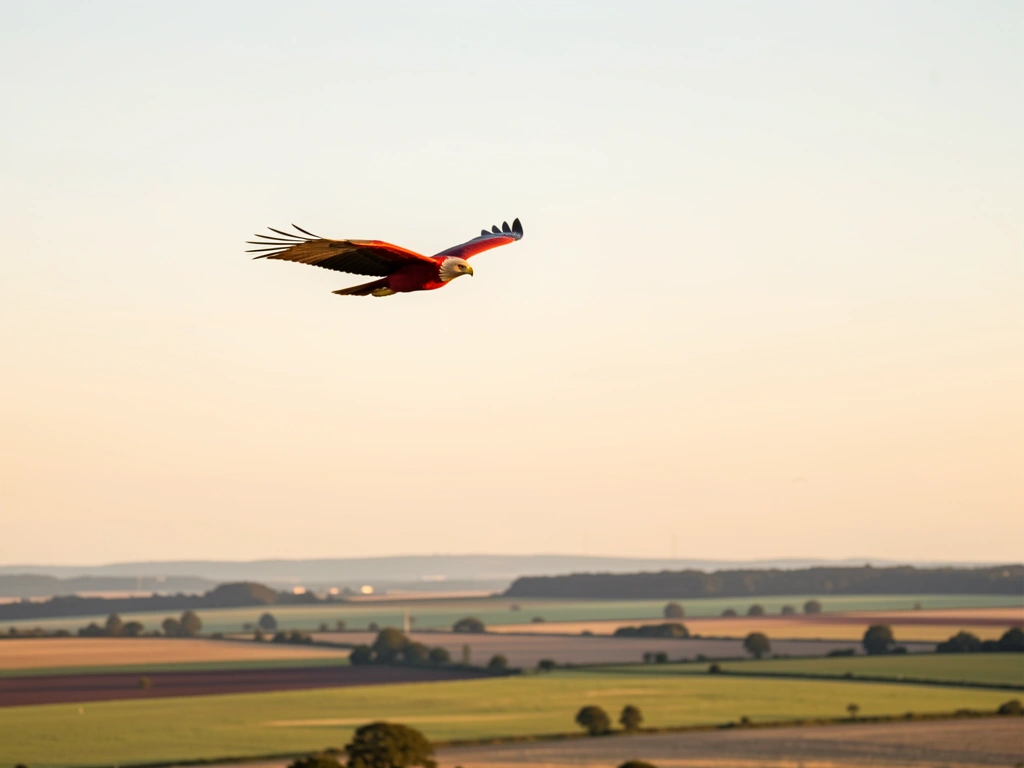
The bird called a kite (family Accipitridae) gets its English name from Old English cyta, which is thought to be imitative of its call, similar to the way "cuckoo" imitates a bird's sound. There aren't many widely used personal names built directly on "kite," but the bird itself shows up in some place-name-derived surnames that have crossed into given-name use. Cyta or Kyta as a given name is unusual but etymologically honest. Cyta or Kyta can also be a starting point if you specifically want a small-bird style meaning. More practically, the Welsh name Milvus (from the Latin genus name for red kites) is occasionally used but sits firmly in the eccentric column.
Other raptor names: osprey, vulture, owl, and hunter terms
Beyond eagles, hawks, and falcons, several other raptors and raptor-adjacent concepts have generated usable names. This section covers the less obvious options, which are often the most interesting for parents or pet owners who want something genuinely unusual.
| Name | Language/Origin | Core Meaning | Gender Usage | Notes |
|---|---|---|---|---|
| Pandion | Greek/Latin | Osprey (scientific genus name) | Masculine | Pandion haliaetus is the scientific name for osprey; Pandion is a figure from Greek mythology; strong, unusual, classical |
| Ossian / Osprey | Various | Osprey: from Old French ospriet, Latin avis praedae (bird of prey) | Masculine (Ossian) | Osprey as a given name is unusual but etymologically on-the-nose; Ossian is a Celtic name sometimes associated but not directly derived from osprey |
| Ulula / Ululani | Latin / Hawaiian blend | Owl (Latin ulula) | Feminine | Latin ulula is the root of 'owl' family words; the root is imitative (like the hoot); biologically owls are raptors (Strigiformes) |
| Strix | Greek/Latin | Owl (specifically a screech owl) | Feminine (modern usage) | Genus name for owls; ancient Greek/Latin word; uncommon as a personal name but striking |
| Accipiter | Latin | Hawk / bird of prey | Rare; either gender | Genus name covering many hawks and sparrowhawks; directly from Latin 'hawk'; unusual as a personal name but deeply literal |
| Zephon | Hebrew | Watchman / hawk-like (interpreted in some traditions) | Masculine | Appears in Milton's Paradise Lost as an angelic name; sometimes glossed as 'hawk'; etymology is debated but the raptor association exists in literary tradition |
| Saker | Middle English/Arabic | Saker falcon (a large falcon species) | Both | From Arabic saqr (hawk/falcon); Saker falcon is a real species; the name is used occasionally in Middle Eastern contexts |
| Saqr | Arabic | Falcon / hawk | Masculine | Direct Arabic word for falcon or hawk; used as a given name in Arabic-speaking cultures; pronounced roughly SAH-kr |
| Bazett / Baze | Arabic-derived | Falconer / related to baz (hawk) | Masculine | Variant forms of the Arabic hawk-root name |
| Hafoc | Old English | Hawk | Masculine | The original Old English word; historically used as a given name in Anglo-Saxon England; archaic but authentic |
A note on owl names specifically: owls are genuine raptors (blank" rel="noopener noreferrer">order Strigiformes), and their English name traces back through Old English ule and Proto-Germanic to a root that imitates the hoot sound, comparable to Latin ulula. So owl-rooted names carry a real biological raptor connection, even if owls aren't typically what people picture when they say "bird of prey." If you're looking for something more unusual that still falls within the raptor family, Strix or Ulula are genuinely distinctive options. If you're also interested in general bird naming traditions, that connects naturally to the broader territory of names meaning bird.
How to check whether a name actually means bird of prey
This is where most people go wrong: they see a baby-name site say "means eagle" and take it at face value. Baby-name sites vary wildly in accuracy. Some are carefully researched; many are not. Folk etymology (a plausible-sounding but invented story about a name's origin) is everywhere in this space. Here's how to actually verify a claim.
- Start with an etymology dictionary, not a baby-name site. Etymonline (for English-rooted names), the Oxford Latin Dictionary (for Latin/Greek), and Hans Wehr's Arabic-English Dictionary are the right starting points. These are the sources that linguists and lexicographers use.
- Cross-check against the scientific genus or species name. Raptor taxonomy is anchored by internationally agreed scientific names. If someone claims a name means 'osprey,' look up Pandion haliaetus. If the name has no traceable connection to the taxonomy or the historical word for that bird, be skeptical.
- Look for the word in a pre-1900 source. If a name meaning only appears on sites built after 2000, that's a red flag. The 1911 Encyclopaedia Britannica's hawk entry, for example, documents the Old English hafoc root before the age of SEO-optimized name pages.
- Ask: is the meaning attached to the root word or to the name itself? 'Hawk' as a given name means hawk because it literally is the word hawk. 'Gabriel' does not mean hawk regardless of what a name site says, because no credible etymology dictionary connects its roots to any raptor word.
- Check Behind the Name (behindthename.com) as a secondary source. It's not a primary academic source, but it's more carefully maintained than most name sites, and it flags folk-etymology claims more honestly. For Kestrel, for example, it correctly traces the meaning to Old French crecelle (the bird's rattling cry) rather than inventing something.
- For names from non-English traditions (Arabic, Hebrew, Sanskrit, Norse), look for a speaker or scholar of that language to confirm pronunciation and meaning. Machine translations and romanizations on name sites are often approximate at best.
The single most useful habit is to ask yourself: what is the actual root word, in the actual source language, and what does that root word mean in a dictionary from that language? If you can answer that question with a source in hand, you have a real etymology. If you can only cite a name website, you have a guess.
How to pick the right name: pronunciation, spelling, gender, vibe, and uniqueness
Having a list of etymologically solid options is step one. Narrowing that list to the right name for your situation is step two. Here are the practical filters worth running every candidate through.
Pronunciation
Will the name be mispronounced constantly? Aquila is three clean syllables (AK-wih-lah) that most English speakers handle fine. Accipiter is five syllables (ak-SIP-ih-ter) and will need explaining for a lifetime. Haukr is phonetically intuitive for Norse enthusiasts but looks baffling on paper to most English readers. Be honest with yourself about whether you want a name that requires a standing explanation or one that moves through the world quietly. For pet names, the rule is even simpler: shorter names (one or two syllables) are easier to use in training and everyday calling.
Spelling variants
Falco is spelled consistently and recognized internationally. Faulkner has an established spelling as a surname. Kestrel has essentially one spelling in English. These are low-friction choices. Names like Saqr or Hafoc are authentic but will be respelled by schools, doctors, and everyone else who encounters them in English-speaking contexts. If that doesn't bother you, go for it. If you want something that travels without friction, lean toward names with established English or Latinate spellings.
Gender usage
Most raptor-derived names skew masculine in their historical usage: Hawk, Falco, Aquila, Arnulf, Haukr, Baz, Saqr. Kestrel is the strongest option for a feminine name with a verified bird-of-prey meaning. Strix and Ulula are feminine in Latin. Aquilino works as a softer, potentially more gender-flexible option in Romance-language contexts. If you want a gender-neutral option, Falcon, Kestrel, and Ari (in the Norse sense) all work reasonably well in contemporary naming conventions.
Vibe and cultural fit
Raptor names have strong, predatory associations, which is part of their appeal, but the vibe varies considerably. Aquila feels classical and literary. Hawk feels rugged and outdoorsy. Falco has an Italian pop-culture resonance (the 1980s musician) alongside its historical roots. Kestrel feels bookish and a little British (it's a beloved character name in Barry Hines's novel "A Kestrel for a Knave"). Pandion is the choice for someone who wants mythology without the name being immediately decoded. Think about the personality and setting the name needs to work in, and whether the raptor associations feel empowering or just odd in that context.
Cultural sensitivity and appropriateness
If you're drawn to a name from a culture other than your own, it's worth doing a little extra research. Arabic names like Saqr or Baz are perfectly usable and are common in Arabic-speaking communities, but pronouncing them correctly matters, and using them in contexts where they'll be mangled constantly is worth considering. Hebrew names like Efron or Zephon come with religious and cultural weight. Norse names like Haukr or Arni are less fraught for non-Scandinavian users but may feel affected without some genuine connection to that tradition. None of this is a hard rule, but it's worth thinking through.
Uniqueness
Aquila and Falcon are distinctive without being shocking. Hawk is uncommon but immediately understood. Kestrel is rare enough to turn heads but recognizable as a word. Pandion or Accipiter will stop conversations, for better or worse. If you're also considering names in adjacent territory, like names meaning flight, you'll find some overlap in the "unusual but usable" space. The sweet spot for most people is a name that's rare enough to feel individual but not so obscure that the person carrying it spends their life spelling it out.
Your shortlist and next steps
Based on etymological strength, usability, and range of style, here is a practical shortlist to start from.
| Name | Best For | Vibe | Verification Confidence |
|---|---|---|---|
| Aquila | Baby name, any gender; literary or classical feel | Classical, strong, international | High (direct Latin word for eagle) |
| Falco | Baby name, masculine; Italian or pan-European feel | Sleek, European, slightly retro | High (Late Latin falco, scientific genus name) |
| Kestrel | Baby name, feminine or gender-neutral; literary feel | Poetic, British, bookish | High (Old French crecelle, confirmed bird of prey) |
| Hawk | Baby or pet name, masculine; outdoorsy/rugged feel | Direct, Anglo, no-nonsense | High (Old English hafoc, Proto-Germanic *habukaz) |
| Arne / Arni | Baby name, masculine; Scandinavian heritage | Nordic, clean, simple | High (Old Norse örn, eagle) |
| Saqr | Baby name, masculine; Arabic heritage or influence | Distinctive, strong, Arabic | High (direct Arabic word for falcon/hawk) |
| Pandion | Baby name or pet name; mythology enthusiast | Unusual, classical, mythological | High (Greek/Latin via osprey taxonomy) |
| Arnulf | Baby name, masculine; Germanic or medieval history feel | Medieval, strong, layered | High (arn = eagle + wulf = wolf, Old Germanic) |
| Falk | Baby name, masculine; German or Scandinavian feel | Crisp, Northern European | High (German/Norse word for falcon/hawk) |
| Strix | Baby or pet name; owl-focused; feminine | Striking, ancient, unusual | High (Greek/Latin for owl, a true raptor) |
Here is how to move from this shortlist to a final decision. First, say each name out loud ten times in different contexts: calling a child at a park, introducing them at a doctor's office, saying it with your surname. If it trips you up or sounds wrong with your family name, cross it off. Second, look up the etymology yourself in at least one primary source (Etymonline for English-rooted names, Merriam-Webster for Latin/scientific names, a language-specific dictionary for Arabic or Hebrew options) to confirm the meaning holds up. Third, check the spelling: Google the name as you intend to spell it and see what comes up. This tells you how commonly it's used, whether there are famous or infamous people sharing it, and whether the spelling is the established one. Fourth, run it by a few people whose opinion you trust, not for approval, but to catch anything you've gone name-blind to after too much research.
If you end up wanting to expand your search into names with bird meanings more broadly, or names tied specifically to fire birds or flight, those adjacent categories share some of the same etymological tools and verification steps. But for a name that genuinely, verifiably means bird of prey, you now have a solid list to work from and the framework to confirm any new candidate you encounter. The etymology is there. Trust the dictionaries, not the name sites.
FAQ
Can a name website label a name “bird of prey” even if the etymology is wrong?
Yes, but only if the name traces to a word for a specific raptor group or genus, or to a historically used raptor-related root. A name tagged as “eagle” might actually mean “noble” or “swift” if its earliest recorded root is unrelated, so check the earliest attested form in the claimed source language and verify that root’s dictionary meaning.
Which raptor labels are most reliable to trust when screening candidates?
A practical rule is that “falcon,” “hawk,” “eagle,” and “kestrel” are usually safer than a broad tag like “raptor” or “hunter.” Broad marketing labels often mix unrelated ideas, while the tighter the historical word is to the bird type, the easier it is to verify using a dictionary entry for the root word.
What names are easiest to use day to day in English-speaking settings?
If you want a name that stays readable in school and with healthcare staff, prioritize names with established English or Latinate spellings (for example Aquila, Falco, Hawk, Kestrel). Names that come from other alphabets or that are spelled to match a non-English pronunciation (like Saqr-style spellings) are more likely to be respelled and misread, even when you provide a pronunciation guide.
How do I choose between raptor etymology and the later cultural vibe of the name?
For “bird of prey” names, you can often find two different layers: the biological raptor meaning (the root word) and the later cultural association (mythology, literature, modern pop references). Decide which layer you prefer, because a name can be etymologically solid but still carry an unintended modern vibe depending on who or what it is associated with.
Could pronunciation vary enough to change how the name feels or sounds?
Commonly, yes. Even when a name’s origin is correct, the stress pattern and vowel sounds may shift by region (for example, Aquila-style pronunciations vs more Italian-leaning versions). The fastest way to avoid surprises is to listen to how people actually pronounce the name in your target country, then test it with your surname using the sentence-introductions you plan to use.
What’s the best way to verify the raptor meaning without relying on guesswork?
To verify responsibly, don’t stop at a single summary site. Look for the root word’s earliest attested form in a reputable dictionary (or an etymology database that cites sources), and confirm that the root meaning matches the bird category, not a loosely related trait like “grasping” or “swift.” This also helps catch folk etymologies that sound plausible but don’t match the documented root.
How do I handle names that have different meanings in different traditions?
It can be, especially with names that cross cultures, because a name can mean one animal in one tradition and an entirely different meaning in another. Ari is the classic example in the article’s framing, so if a candidate has multiple plausible origins, decide which culture you want to align with (and whether that alignment matches how you will explain the name).
Should I prioritize short raptor names or can longer ones still work?
If you plan to call your child frequently, shorten the distance between how you write the name and how you say it. One or two syllables generally reduce corrections, but you can also keep a longer, verified name if you have a natural nickname that is easy for other people to use without coaching.
What should I do if I worry the name will lead to constant questions or corrections?
Yes, especially if the name is rare enough to “turn heads.” If you expect frequent questions, pick a name where you already have a one-sentence explanation ready, and consider whether the explanation would feel comfortable in classrooms, workplaces, and everyday introductions. This is different from approval seeking, it’s about minimizing awkwardness.
Are bird-of-prey names inherently gendered, or can they be gender-neutral in practice?
Not always, and gender patterns can vary by culture and era. If gender expectations matter to you, check how the name is actually used today (not only its historical usage), and consider alternatives with clearer modern conventions, like Kestrel for a more feminine-leaning option or Strix and Ulula for Latin feminine forms as the article notes.
Next Article
Name Meaning Little Bird: Meanings, Origins, and How to Verify
Meaning of name little bird, its common name candidates worldwide, and steps to verify the exact origin and spelling.