
No, Catholic cardinals were not named after the bird. It's the other way around: the Northern Cardinal got its common name because early European observers thought its brilliant red plumage looked like the red robes worn by Catholic cardinals. The Church title "cardinal" is actually far older, traced back to medieval Latin long before anyone in Europe had laid eyes on a scarlet North American songbird.
Are Cardinals Named After the Bird? Etymology Explained

Maya Castellanos
29 Apr 2026
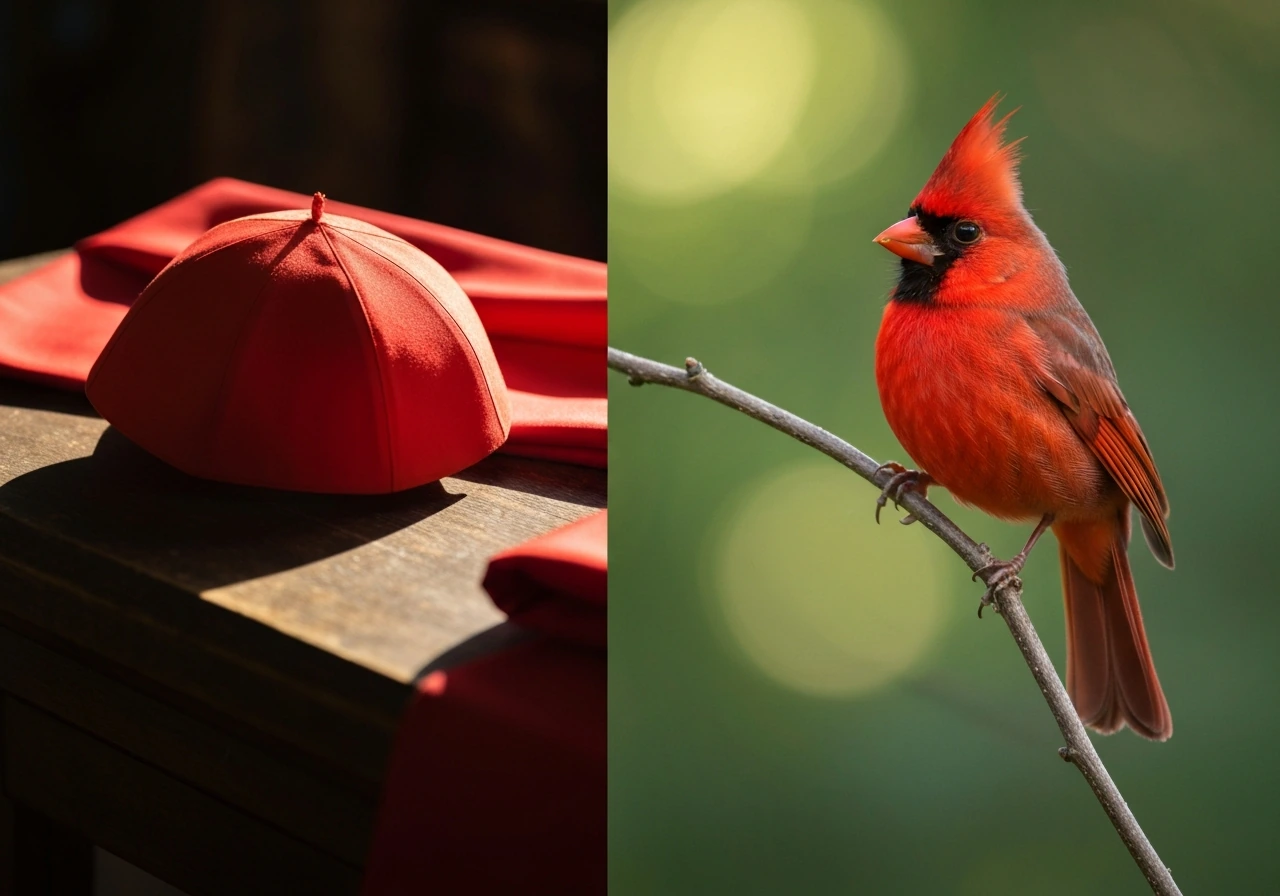
Two very different uses of one word
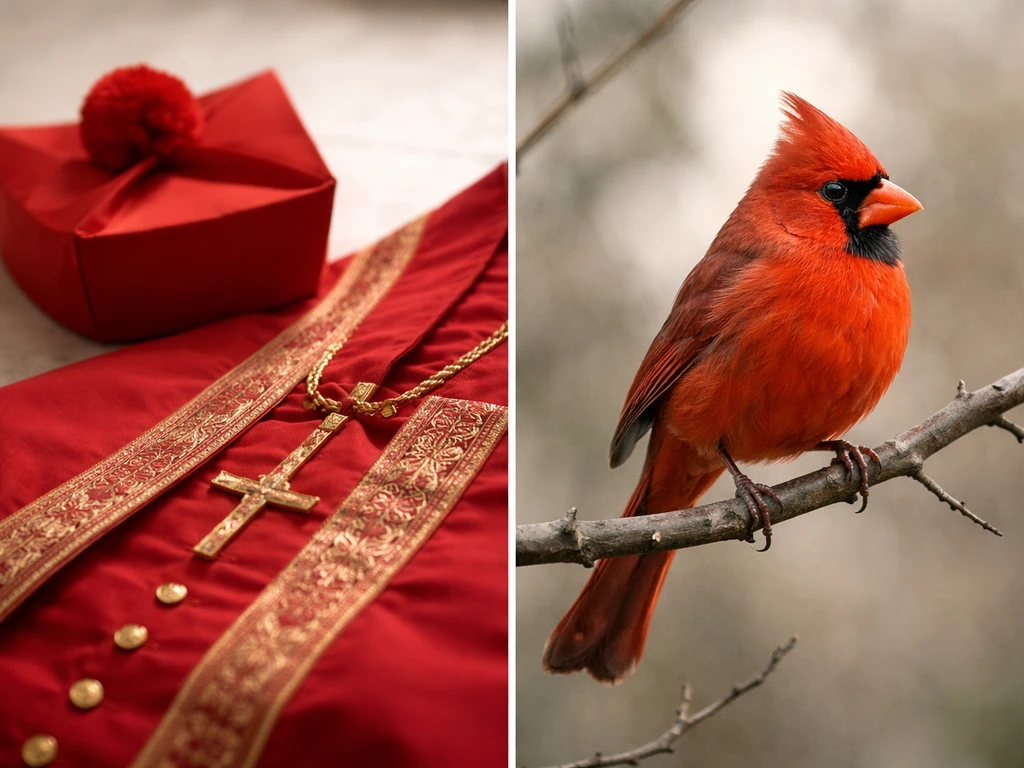
When people search "are cardinals named after the bird," they're usually trying to untangle a circular-sounding question. It feels like a chicken-and-egg puzzle, but it really isn't. The word "cardinal" covers at least three distinct things: a Church office, a bird, and a color. The confusion usually comes from the fact that all three are red-adjacent and share the same word.
In Catholic usage, a cardinal is a senior member of the clergy appointed by the Pope, who holds a seat in the College of Cardinals. They advise the Pope, and when the papacy is vacant, the cardinals elect the next one. The title has been in formal use since at least the 9th century, and it was codified into church law long before the 1600s. In bird usage, a "cardinal" is the common name for several species, most famously the Northern Cardinal (Cardinalis cardinalis), a striking North American bird where the male sports head-to-tail red plumage. English naturalists were giving it that nickname in the 1670s.
Where the word "cardinal" actually comes from
Both uses trace back to the same Latin root: cardo, meaning "hinge" or "pivot." The adjective cardinalis meant "principal" or "chief" in classical and medieval Latin, in the sense of something being the hinge point everything else turns on. You can still hear this in phrases like "cardinal sin" (a foundational sin) or "cardinal directions" (the four pivotal points of the compass).
The Church title took that meaning literally. Clergy who were "incardinated" into the major churches of Rome were described as cardinalis, marking them as pivotal figures in the Church's structure. Pope Francis himself, at a 2015 consistory for new cardinals, reminded the assembled crowd that "cardinal" comes from cardo, a hinge, because cardinals are meant to be the hinges connecting the Church of Rome to its broader mission. That's a beautifully direct primary source confirmation of the etymology.
By the early 12th century, the word cardinalis had settled firmly into ecclesiastical Latin as the label for the presbyters and bishops of Rome's chief churches. From there it spread into French, English, Italian, and Spanish with roughly the same meaning. The church rank did not come from a bird. It came from a Latin word for a door hinge.
Why red matters: how the bird got its name
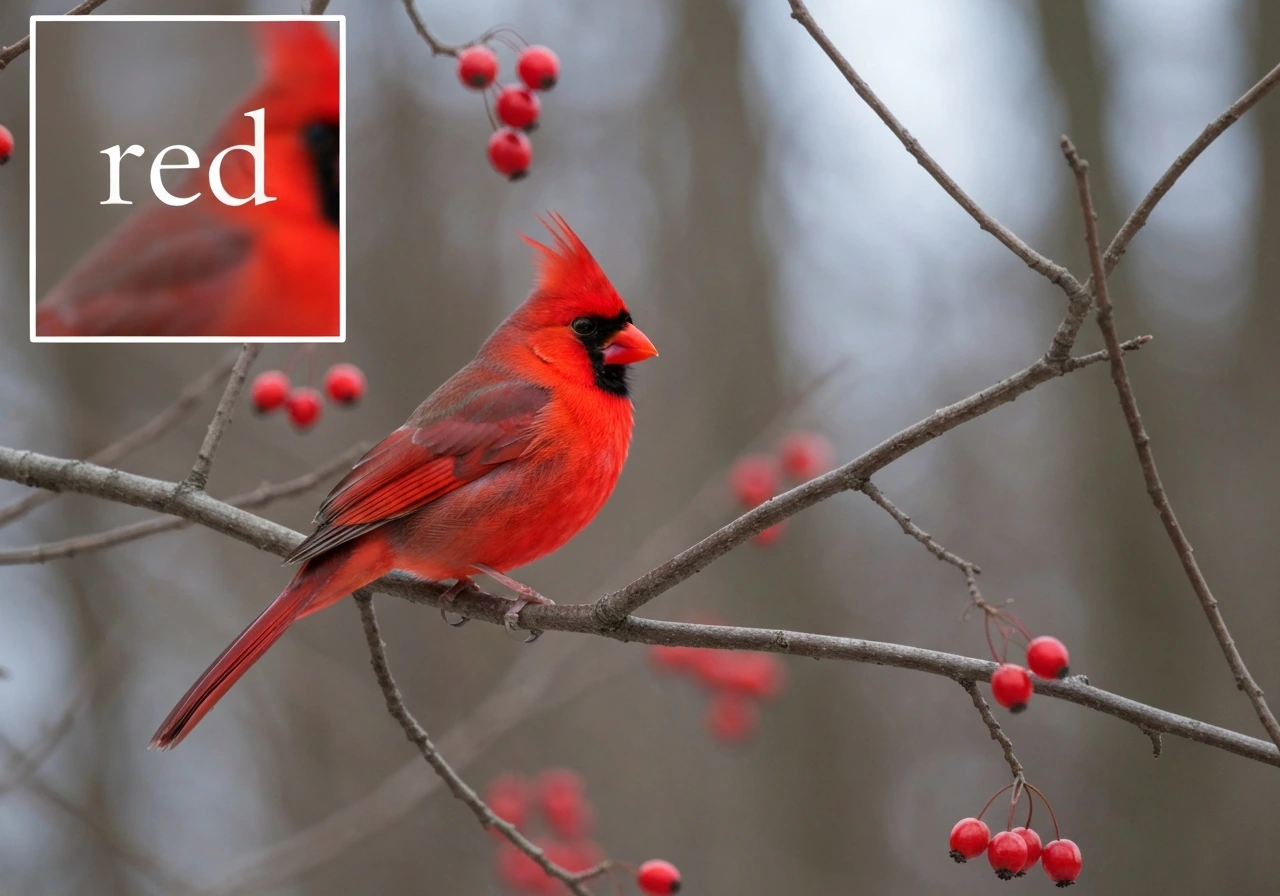
Catholic cardinals have worn red (scarlet, specifically) as their signature color for centuries. Red vestments, red caps, red capes. When English and European naturalists encountered the brilliant crimson bird of eastern North America in the 17th century, the color association was immediate and obvious. Francis Willughby described the bird in 1676, and John Ray followed in 1678 with the vernacular name "Cardinal bird" or "Virginian Nightingale." An early description put it plainly: the bird was "commonly called the Cardinal bird, because it is of a scarlet colour." Etymonline dates the bird name to the 1670s and confirms it was "so named for its fine red color, resembling the cardinals in their red robes."
Merriam-Webster's definition of the bird also makes this explicit: the name comes "from its color, resembling that of the cardinal's robes." So the naming logic runs in one direction only: Church title came first, the scarlet robes became iconic, and European naturalists used that color comparison to name the bird. The red connection is real, but it flows from Church to bird, not the reverse.
There's an interesting side note here about the color "cardinal" itself. According to Wikipedia, the first recorded use of "cardinal" as a standalone color name in English appeared in 1698, right on the heels of the bird name entering the language. The color term was almost certainly drawn from those same red robes, reinforcing just how deeply the Church visual identity shaped the vocabulary around this word.
The timeline, laid out clearly
The gap in dates is what settles this question for good. Here's a quick comparison of how the key terms developed:
| Term / Event | Approximate Date | Source / Note |
|---|---|---|
| Latin cardo (hinge/pivot) used in church context | Late antiquity / 9th century CE | Britannica, Wikipedia (Catholic Church) |
| Cardinalis as formal Church title | Early 12th century | Etymonline, 1911 Britannica |
| Red vestments become standard for cardinals | Medieval period (well before 1600s) | Church tradition |
| Willughby names the bird in ornithological literature | 1676 | Helm Dictionary / ornithology records |
| "Cardinal bird" in English vernacular (Ray) | 1678 | Oxford Academic, WorldBirdNames |
| Etymonline's earliest English attestation of bird name | 1670s | Etymonline |
| "Cardinal" as a color name in English | 1698 | Wikipedia (cardinal color) |
The Church title predates the bird name by at least five centuries, probably more. There is no credible scenario in which the Catholic title was inspired by a North American bird that Europeans hadn't seen yet.
How to verify this yourself
If you want to double-check any etymology claim like this, the method matters as much as the answer. Here's what I'd look for in a reliable source:
- Check Etymonline (etymonline.com) first. It separates the ecclesiastical and bird senses into distinct entries, gives first attestation dates, and traces the Latin/medieval Latin pathway. For "cardinal," it explicitly dates the bird name to the 1670s and ties the Church title to early 12th-century Latin.
- Cross-reference with Merriam-Webster. A good dictionary will tell you not just what a word means but where it came from. Merriam-Webster's entry for the bird version says plainly that the name comes from the resemblance to a cardinal's robes.
- Look for first-use dates. A source that gives you "attested from X date" or "first recorded in X century" is far more useful than one that just explains meaning. The date gap here is the clearest proof.
- Seek primary ecclesiastical sources. The Vatican's own documents and papal homilies confirm the cardo etymology. When an institution traces its own title's roots to a Latin word for a door hinge, that's a reliable primary source.
- Check ornithological records. Early bird treatises like those of Willughby (1676) and Ray (1678) are cited in academic ornithology histories. If a source can tie a bird common name to a specific naturalist's publication, the timeline becomes verifiable.
One red flag to watch for: sources that say the names are "related" without specifying which came first. That kind of vague framing is technically true but practically misleading. The direction of the naming matters.
A note on bird-name capitalization
While we're here, it's worth mentioning that in formal ornithological writing, "Northern Cardinal" is typically capitalized as a proper common name, following the conventions recommended by most modern bird-naming authorities. The Catholic title "Cardinal" is also capitalized as a formal title. This overlap can make written sentences genuinely ambiguous at a glance, which is one more reason the context around the word matters. If you're also wondering about formatting, you may want to review whether bird names are capitalized context around the word matters. If you're curious about when and why bird names get capitalized, that's a related question with its own interesting answer involving checklists, linguistic conventions, and a fair bit of debate among birders. That includes whether bird names like cardinal should be treated as proper nouns in writing. Do you capitalize robin the bird? In many birding contexts, capitalization depends on whether it's being used as a formal common name or part of a species name bird names get capitalized.
Using "Cardinal" as a pet bird name or common name
If you keep birds or are looking for a name for a red or bright-colored pet bird, "Cardinal" works well and has an obvious, satisfying logic to it. This is especially relevant when you are trying to understand how bird common names form and why capitalization can vary red or bright-colored pet bird. It signals boldness, vivid color, and a certain regal quality, all of which come from that same chain of associations: Latin pivot/hinge, Church title, red robes, red bird. The word carries centuries of layered meaning.
A few practical notes for bird-lovers using this name:
- "Cardinal" as a standalone common name almost always refers to the Northern Cardinal (Cardinalis cardinalis) in North American English. Outside that context, "cardinal" appears in the common names of several other species across different families, including the Red-cowled Cardinal and others, so specifying the full name avoids ambiguity.
- As a pet name, "Cardinal" suits any vividly red bird well: red canaries, scarlet macaws, or even a red-phase parrot. It's distinctive, easy to say, and has an elegant backstory you can share when people ask.
- If someone asks you whether cardinals (the Church officials) were named after the bird, you can now give a confident, direct answer: no. The bird was named after the color of the Church official's robes. Both the title and the bird name trace back to the same Latin root (cardo), but through entirely different paths separated by centuries.
The short version you can actually use
Catholic cardinals were not named after the bird. The Church title comes from the Latin cardo (hinge/pivot), meaning a pivotal role in the Church, and it dates to at least the 9th century. The bird got its common name in the 1670s because European naturalists thought its brilliant red plumage looked like the scarlet robes worn by those same Catholic officials. In English, “cardinal” as the bird name functions as a common noun, not a proper noun bird got its common name. The word is shared because of a color comparison, not because either one was named after the other in a circular way. It's a one-way street: Church title first, bird name second.
FAQ
Are the church cardinals and the bird called “cardinal” related in any real way?
Yes, but only in the sense that the bird name borrows a color association from the robes, not because the Church title was coined from the bird. The direction is Church, then robes becoming a cultural visual shorthand for “cardinal,” then European naturalists applying that shorthand to the Northern Cardinal’s red plumage.
Why does “Cardinal” sometimes look capitalized for birds and other times it does not?
In most contexts, “cardinal” used as the bird common name is lowercased unless it is part of the formal species common name, like “Northern Cardinal.” For the Church rank, “Cardinal” is capitalized as a title when used as a rank or office. When you write a sentence, pay attention to whether the word is doing the job of a title versus a species label.
What is the relationship between Latin “cardinalis” and the modern words for the bird and the office?
“Cardinalis” appears as Latin in different roles, including the general Latin adjective meaning “principal” or “chief,” and it later feeds into the ecclesiastical meaning connected to “hinge” or “pivot.” But for everyday understanding, the key point is the English word “cardinal” ultimately traces to Latin cardo, and the bird name then uses the same word because Europeans saw a vivid red resemblance.
How can I tell whether an etymology explanation is sloppy when it says the names are “related”?
Some sources claim the bird, church office, and even the color are “related,” which can sound like a circular story. A practical way to evaluate it is to check which term is attested first in each language, and whether the explanation identifies a mechanism (for example, “named for its red color resembling the robes”). If the source does not specify chronology or mechanism, treat it as incomplete.
Could the bird have influenced the Church title at some point in history?
The Church title is not a modern nickname for clergy, it is an inherited rank within the Church hierarchy whose vocabulary goes back many centuries. So even if you see a claim that “cardinals” got their name from appearance, that would contradict the established timeline that places the Latin ecclesiastical use well before the North American bird was described by Europeans.
If I name my bird “Cardinal,” will people assume I mean the Catholic rank or the bird?
If you are naming a pet bird or a character and want a clean, culturally grounded rationale, “Cardinal” works best because its meaning is transparent as a red-robed association that then became a bird common name. If you want to avoid ambiguity with the Catholic rank, use “Northern Cardinal” or add a clarifier like “bird” in the sentence.
What capitalization should I use in birding notes or casual writing?
For bird names, capitalization rules can vary by style guide and by whether the term is being used as a formal common name or a generic descriptor. A safe approach is to follow the capitalization pattern used in standard species listings, for example “Northern Cardinal,” and otherwise keep “cardinal” lowercase when you mean the type of bird in general.