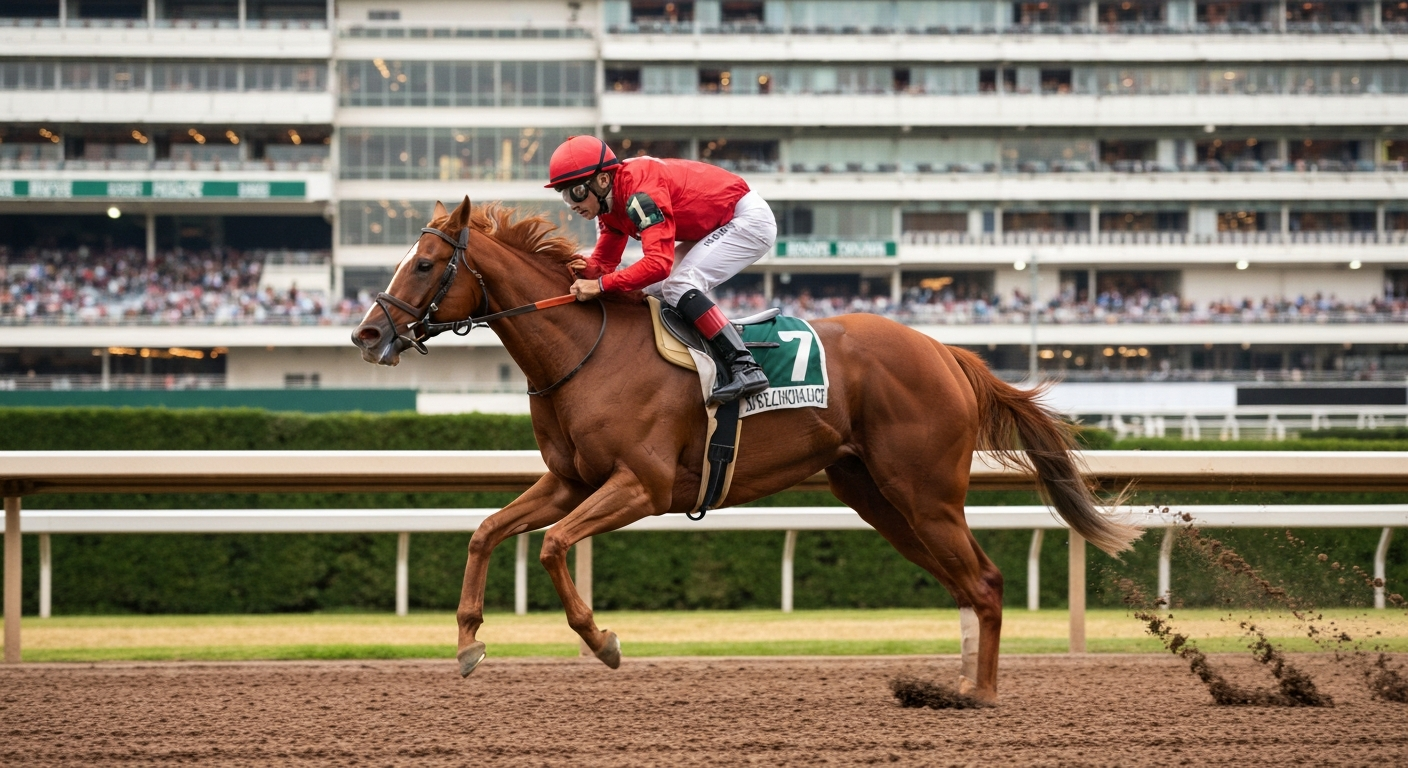
Mine That Bird got his name the way most racehorses do: by blending the names of his parents. His sire was Birdstone and his dam was Mining My Own, so the owners took 'Mine' from Mining My Own and 'Bird' from Birdstone and stitched them together into Mine That Bird. The Los Angeles Times spelled it out plainly in 2009: 'his daddy was Birdstone and his momma Mining My Own.' That's it. No deeper mystery, no avian folklore, just a very clever, very common naming trick in Thoroughbred racing.
How Did Mine That Bird Get His Name? Origins Explained

Maya Castellanos
7 Aug 2026
Wait, are you asking about the racehorse or an actual bird's name?
Before we go further, it's worth pausing because this question attracts two very different readers. The first reader wants the story of Mine That Bird, the 2009 Kentucky Derby winner who went off as a 50-to-1 longshot and produced one of the most shocking Derby results in modern history. That's the answer above. The second reader may have encountered the phrase 'mine that bird' somewhere, a crossword clue, a quirky pet name, or even a play on words, and is wondering what it means in an avian naming context. Related usage is discussed under the entry titled 'stupid bird is known as'. If that's you, hang on, because we'll get to bird naming conventions in depth shortly. Both questions are genuinely interesting, and this article covers both.
The racehorse Mine That Bird: the full naming story
Mine That Bird was a Thoroughbred foaled on May 10, 2006. He won the 135th Kentucky Derby on May 2, 2009, finished second in the Preakness, and third in the Belmont that same year. His breeding was recorded clearly in official race charts: sire Birdstone, dam Mining My Own. From those two names, his registered name was constructed as Mine That Bird, a neat portmanteau that captures both parents and happens to sound like an enthusiastic imperative ('mine that bird!'), which gives it a bit of punchy personality on the racetrack.
The horse's story is almost implausibly cinematic. He was purchased as a yearling for around US$9,500 by Canadian trainer Dave Cotey through Dominion Bloodstock, a remarkably low price for what would become a Derby winner. He was later sold privately for a reported US$400,000 to New Mexico owners Mark Allen of Double Eagle Ranch and Leonard 'Doc' Blach of Buena Suerte Equine. The gap between those two figures tells the whole story of what one Derby win means for a horse's valuation. A feature film, 50 to 1, was later made dramatizing the Mine That Bird Derby story, which gives you some sense of just how extraordinary the result was perceived to be.
On the administrative side, Mine That Bird's name had to be approved by The Jockey Club, which governs Thoroughbred naming in North America under Rule 6 of the American Stud Book. The 6th Circuit's opinion in Redmond v. Jockey Club (No. 05-6607) summarizes Rule 6 of the American Stud Book and affirms the Jockey Club's authority to approve and restrict Thoroughbred names Redmond v. Jockey Club (6th Cir. 2007) summarizes Rule 6 and the Jockey Club’s authority.. Rule 6 sets strict eligibility criteria: names cannot exceed 18 characters (including spaces), cannot duplicate the names of famous horses still active in racing memory, cannot be commercially suggestive, and so on. The blended sire/dam naming convention fits neatly within these rules and is actually one of the most popular strategies owners use precisely because it tends to produce unique, approvable names.
What 'Mine That Bird' could mean if you're thinking about bird names
If you arrived here thinking about bird naming rather than horse racing, the phrase 'mine that bird' is an interesting lens through which to look at avian nomenclature. 'Mining' a name, digging into a bird's characteristics to extract something descriptive, is actually a decent metaphor for how English common names for birds work. Every word in a bird's common name is usually doing something: pointing to color, behavior, habitat, size, sound, or geographic origin. So in a loose sense, every bird name was 'mined' from observation. Let's dig into how that actually works.
How common English bird names are formed
Common bird names in English follow a small set of reliable patterns. Once you know them, you can often decode an unfamiliar name on the spot, and you start noticing just how much information is packed into two or three words.
Appearance-based names
This is the largest single category. Think Redstart (red tail that flickers), Yellowthroat (yellow patch on the throat), Blue-footed Booby (startlingly blue feet), or Blackcap (black crown). The name is essentially a field-guide note compressed into a single compound word. Colors, patterns, size comparisons, and physical features all feed into this category. The Ruddy Turnstone is ruddy (reddish-brown) and it literally turns stones to find food. Two facts, one name.
Behavior-based names
Some birds are named for what they do. The Oystercatcher catches oysters (and mussels, and clams). The Treecreeper creeps up trees. The Dipper dips, it bobs repeatedly while standing on rocks in fast streams, one of the most distinctive behaviors in British birding. The Wheatear is trickier: the name is a polite alteration of the Old English 'hwit ears,' meaning 'white arse,' which is exactly what you see when the bird flies away from you.
Song and call-based names (onomatopoeia)
Many of the most satisfying bird names are just phonetic transcriptions of the bird's own voice. The Cuckoo calls 'cuck-oo.' The Chiffchaff says 'chiff-chaff' insistently from April onwards. The Kittiwake cries 'kitti-waaake' from coastal cliffs. The Bobwhite quail says 'bob-WHITE.' These names practically teach you the identification call at the same time as telling you what the bird is called, nature's most efficient labeling system.
Habitat and range names
Where a bird lives often makes it into the name. Marsh Warbler, Cliff Swallow, Arctic Tern, Grasshopper Sparrow, and Woodland Kingfisher all embed their preferred habitat. Range names work similarly: the American Robin distinguishes it from the European Robin, even though the two birds are not closely related (the naming was a case of homesick colonists attaching a familiar name to a new bird with a similarly orange-red front).
How scientific bird names work
Scientific names follow the binomial system established by Carl Linnaeus in the 18th century. Every species gets a two-part Latin or Latinized name: genus first, then species epithet. These names are governed internationally by the International Code of Zoological Nomenclature (ICZN), meaning the same name applies everywhere on Earth regardless of language. That's genuinely useful when you're talking to a birder in Brazil or Japan.
The species epithet usually does one of a few things. It may describe the bird's appearance (e.g., Parus major, the Great Tit, where 'major' means large). It may reference behavior or ecology (Riparia riparia, the Sand Martin, from 'ripa,' bank or shore). It may honor a person (an honorific or eponym, covered below). Or it may encode a geographic reference. Latin and ancient Greek are the source languages for most roots, and knowing a few dozen of those roots gives you surprising decoding power. 'Albi-' means white, 'niger/nigra' means black, 'rufus' means red or reddish, 'macro-' means large, 'micro-' means small. The Albatross genus Diomedea takes its name from the Greek hero Diomedes, whose companions were transformed into birds in mythology.
Place-names and eponyms: birds named for locations and people
A large slice of the bird-name catalog honors people and places, and this is where things get historically interesting, and occasionally uncomfortable.
Place-name birds are widespread. The Connecticut Warbler doesn't breed in Connecticut (it just happened to be first collected there). The Nashville Warbler was named from a Nashville specimen. The Canary takes its name from the Canary Islands, which themselves were named not for the birds but for large dogs ('Canariae Insulae', Islands of Dogs in Latin). The birds got their name from the islands, and the islands got their name from dogs. The birds are the innocent bystanders in that etymological chain.
Eponyms, birds named for people, are one of the most debated areas in modern ornithological nomenclature. Historically, naming a bird for someone was a mark of honor, and collectors and expeditions would name new species for patrons, colleagues, or notable figures. Wilson's Warbler honors Alexander Wilson, the Scottish-American 'father of American ornithology.' Steller's Jay honors Georg Wilhelm Steller, the German naturalist on Vitus Bering's 18th-century Pacific expeditions. The American Ornithological Society has, in recent years, begun reviewing eponyms associated with figures whose records on race or ethics are troubling, with a commitment to renaming where warranted. McCown's Longspur, for example, was renamed Thick-billed Longspur in 2020, as John P. McCown was a Confederate general.
| Bird Name | Origin / Etymology | Category |
|---|---|---|
| Mine That Bird (racehorse) | Blended from sire Birdstone + dam Mining My Own | Portmanteau / pedigree blend |
| Chiffchaff | Onomatopoeia of the bird's two-note song | Vocalization |
| Wheatear | Polite form of Old English 'hwit ears' (white arse) | Appearance (euphemized) |
| Booby | Spanish 'bobo' (fool/clown) — bird appeared tame and easily caught | Behavior perceived by humans |
| Canary | From the Canary Islands (named for Latin 'canis,' dog) | Place-name (indirect) |
| Wilson's Warbler | Honors ornithologist Alexander Wilson | Eponym (honorific) |
| Oystercatcher | Describes foraging behavior: catches bivalves | Behavior |
| Arctic Tern | Breeds in the Arctic; widest migration of any bird | Range / habitat |
| Diomedea (albatross genus) | From Greek hero Diomedes, whose men became birds in myth | Mythological honorific |
| Steller's Jay | Honors Georg Wilhelm Steller, naturalist on Bering expeditions | Eponym (honorific) |
Cross-linguistic roots and onomatopoeia: how other languages shape bird names
Bird names don't respect national borders, and neither do the languages that shaped them. English bird names have been borrowed from Old Norse (Gannet, Auk), Old French (Mallard, Pheasant), Spanish (Booby, from 'bobo' meaning fool or clown, because the birds were so unafraid of sailors they could be picked up by hand), Portuguese (Albatross, likely from 'alcatraz,' meaning pelican or large seabird), and Arabic via Portuguese (the 'alca-' root traces back to Arabic 'al-qadus,' a water wheel bucket, referencing the bird's diving motion).
Onomatopoeia crosses linguistic borders in particularly fascinating ways because different cultures 'hear' the same bird call differently. The Cuckoo is 'cuckoo' in English, 'kuckuck' in German, 'cucù' in Italian, and 'kakku' in Japanese, all phonetic interpretations of the same two-note call, each inflected by the phonological habits of the listener's language. The Hoopoe gets its name from the Latin 'upupa,' itself an imitation of its low, three-note 'oop-oop-oop' call. In Hebrew, the Hoopoe is 'duchifat,' a completely different word with no onomatopoeic resemblance, same bird, different auditory experience encoded in the name.
Some English names preserve etymological fossils from surprising sources. 'Penguin' may derive from Welsh 'pen gwyn' (white head), though this is debated, as early 'penguins' referred to what we now call Great Auks, not the Southern Hemisphere birds we know today. The name transferred to the Southern birds later. The word 'Robin' comes from the French personal name 'Robin,' a diminutive of Robert, reflecting the medieval European habit of giving small, familiar animals human nicknames.
When names carry awkward or pejorative connotations
A few bird names that look offensive to modern eyes are simply old words that have shifted in cultural weight. 'Cock' (as in Woodcock, Cock Robin, Cock-of-the-rock) simply meant 'male bird' and predates any other connotation by centuries. 'Shag' (a British cormorant) comes from Old Norse 'skegg,' meaning shaggy crest. 'Booby' (as covered above) meant fool or dolt, and the sexual slang is a far later, separate development. None of these names were intended provocatively; language just moved around them over time. That said, the fact that several common bird names now read as inadvertently funny is a topic that deserves its own deeper look. For a look at how some birds acquire pejorative nicknames, such as why the duck is sometimes called 'stupid bird', see why the duck is sometimes called 'stupid bird' (internal link). For a focused look at why some bird names sound sexual and how language change and cultural shifts create those associations, see why are bird names so sexual.
Birds in idioms and place-names: how those phrases got their names
Bird imagery permeates English idioms and place-names in ways that most people don't notice until someone points them out. 'A bird in the hand is worth two in the bush' is probably the most famous bird idiom in the English language. It refers directly to falconry: the bird in the hand is the trained hawk you already possess, which is more certain and valuable than two wild birds sitting in a bush that you may or may not catch. The proverb appears in English as early as the 15th century, though similar sentiments appear in Latin, Greek, and medieval European literature. Several English villages and pubs named 'Bird in Hand' take their name directly from this proverb, and the place-name carries a meaning rooted in that falconry metaphor.
Other bird idioms are similarly grounded in observation. 'Eating crow' (accepting humiliation) likely comes from the unpalatability of crow as food. 'Albatross around your neck' comes directly from Coleridge's 'The Rime of the Ancient Mariner,' in which killing an albatross brings a curse, an invented literary origin that became a genuine idiom within a generation of the poem's publication in 1798. 'Stool pigeon' comes from the practice of tying a pigeon to a stool as a decoy to lure other birds. These phrases carry entire histories of how humans have interacted with birds, as hunters, farmers, falconers, and sailors.
Place-names tell similar stories. Cranbourne in Dorset contains 'cran,' an old word for crane (as in the bird), marking a stream where cranes once gathered. Earnley in West Sussex means 'eagle's clearing.' Finchley in London is 'finch wood.' Herongate in Essex is exactly what it sounds like. These names are centuries-old field notes, encoding observations about which birds lived where long before anyone was writing formal ornithological records. The same phenomenon exists across European languages: the French 'aigrette' (egret) shows up in village names, and Dutch town names often contain 'reiger' (heron) or 'kraai' (crow).
Naming your own bird: practical guidance
If all of this etymology has you thinking about what to name a pet bird, the same principles apply in miniature. The best pet bird names usually do one of the things that the best species names do: they describe something real and specific about the individual bird. A parrot with an orange patch might earn a name rooted in color etymology. A bird with an unusually loud call might get an onomatopoeic name. A bird acquired in an interesting place might carry a place-name as a nod to its origin story. And a bird with a strong personality might simply get a human name in the tradition of Robin, Martin, or Jay, all of which are themselves bird names that became personal names.
- Observe before naming: spend a few days watching behavior, color, and personality before committing to a name
- Descriptive compound names age well: something like 'Goldenback' or 'Noisy' is always accurate, whereas trend-based names date quickly
- Onomatopoeic names are easier for the bird to recognize: shorter, sharp sounds with hard consonants tend to get a clearer response
- Avoid names that sound like common commands: a bird named 'Joe' may get confused every time you say 'go'
- If you want an etymology-based name, Latin color roots give you good options: Alba (white), Rufus/Rufa (reddish), Nigel/Nigella (black), Flava (yellow)
- A name that means something to you personally — a place, a person, a memory — gives the bird's name a story worth telling
Mine That Bird's name, when you think about it, is a good model for pet naming too: it's memorable, it has a story behind it, and it sounds like something you'd actually say with enthusiasm. Not every pet bird needs a pedigree-blending origin, but every good name should have something behind it, even if that something is just 'it suited them perfectly from day one.'
FAQ
How did "Mine That Bird" get his name?
Mine That Bird is the registered name of the Thoroughbred foaled May 10, 2006, best known for winning the 2009 Kentucky Derby. His name was formed from his parents’ registered names: sire Birdstone and dam Mining My Own. Racing press and Derby coverage cite that owners commonly combine or reference sire/dam names when naming foals; official race records and contemporary reports confirm this derivation (see Racing Post, Daily Racing Form, Los Angeles Times).
Am I asking about the racehorse or about how bird species get named?
If you typed the exact phrase, most sources and popular usage point to the racehorse Mine That Bird (2009 Kentucky Derby winner). If instead you mean how a bird species or an individual bird gets its name, see the separate sections below: short primers on common (vernacular) names, scientific (binomial) names, and personal/pet bird naming etiquette.
Who officially approves Thoroughbred names like Mine That Bird?
The Jockey Club (American Stud Book) administers Thoroughbred naming in the U.S. and enforces rules about duplicates, profanity, length and commercial names (Rule 6 and related provisions). Owners submit proposed names for approval before registration; legal and industry summaries describe that process (see Jockey Club rules and related case law summaries).
How are common (everyday) bird names formed?
Common or vernacular bird names are usually based on: appearance (e.g., 'redstart'), behavior ('flycatcher'), vocalization ('chiffchaff'), habitat/location ('marsh wren'), or association with people/places (eponyms, e.g., Audubon's warbler). Names can be literal translations, onomatopoeia, or traditional/local terms that persist across generations.
How do scientific (binomial) bird names work and how are they chosen?
Scientific names follow Linnaean binomial rules: genus + species, usually Latin or Latinized Greek. Describers (taxonomists) coin names based on morphology, geography, behavior, or to honor people (eponyms). Names must be published with a description in an accepted scientific outlet and follow the International Code of Zoological Nomenclature (ICZN).
What role do eponyms and place-names play in bird names?
Eponyms honor people (Collectors, describers, patrons)—for example, Audubon's shearwater—or sometimes commemorate places (e.g., Galápagos finch species). This tradition is longstanding in taxonomy but has become subject to debate when honorees are controversial.
Next Articles
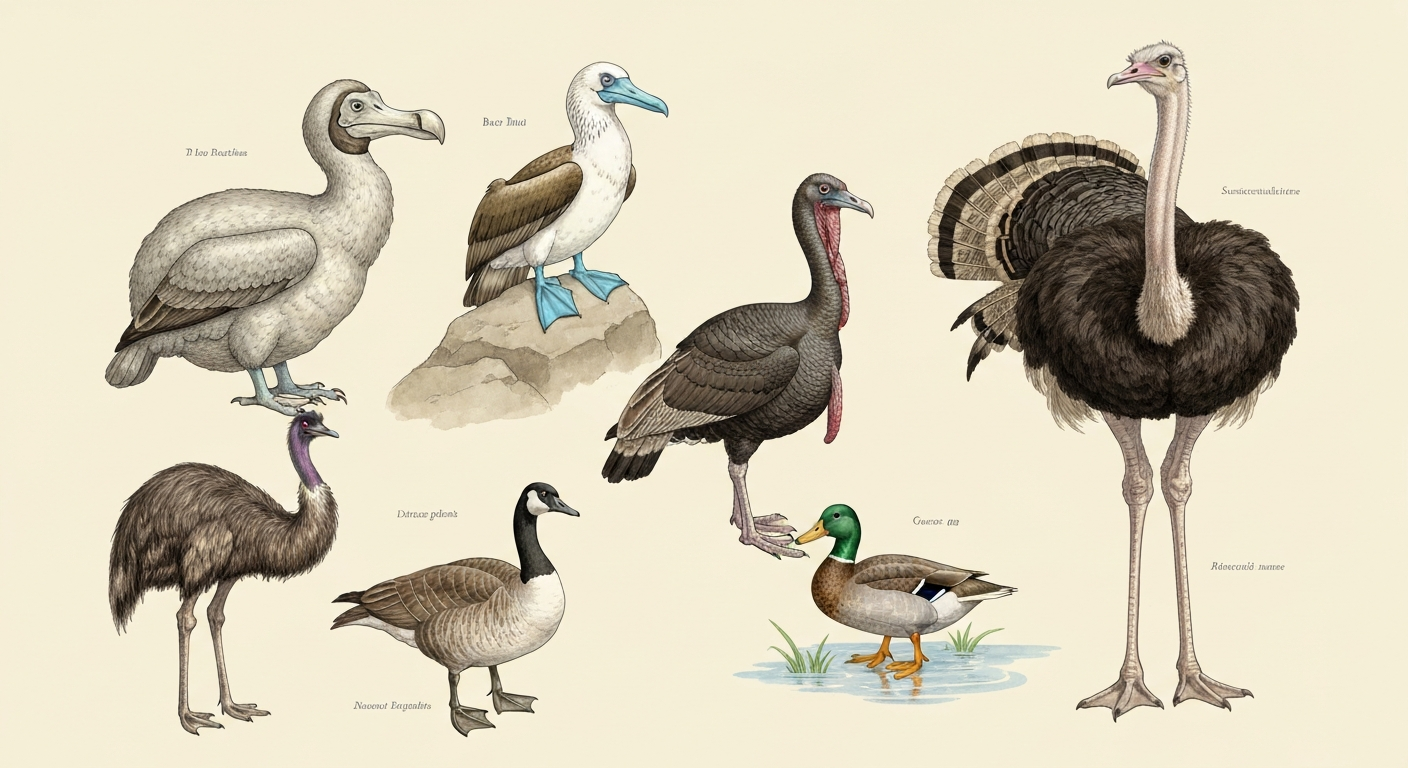
Which 'Stupid Bird Is Known As', Species, Names & Guide Now
Which “stupid bird is known as”, dodo, emu, ostrich, turkey, booby, goose: causes, etymologies, and pet-naming tips
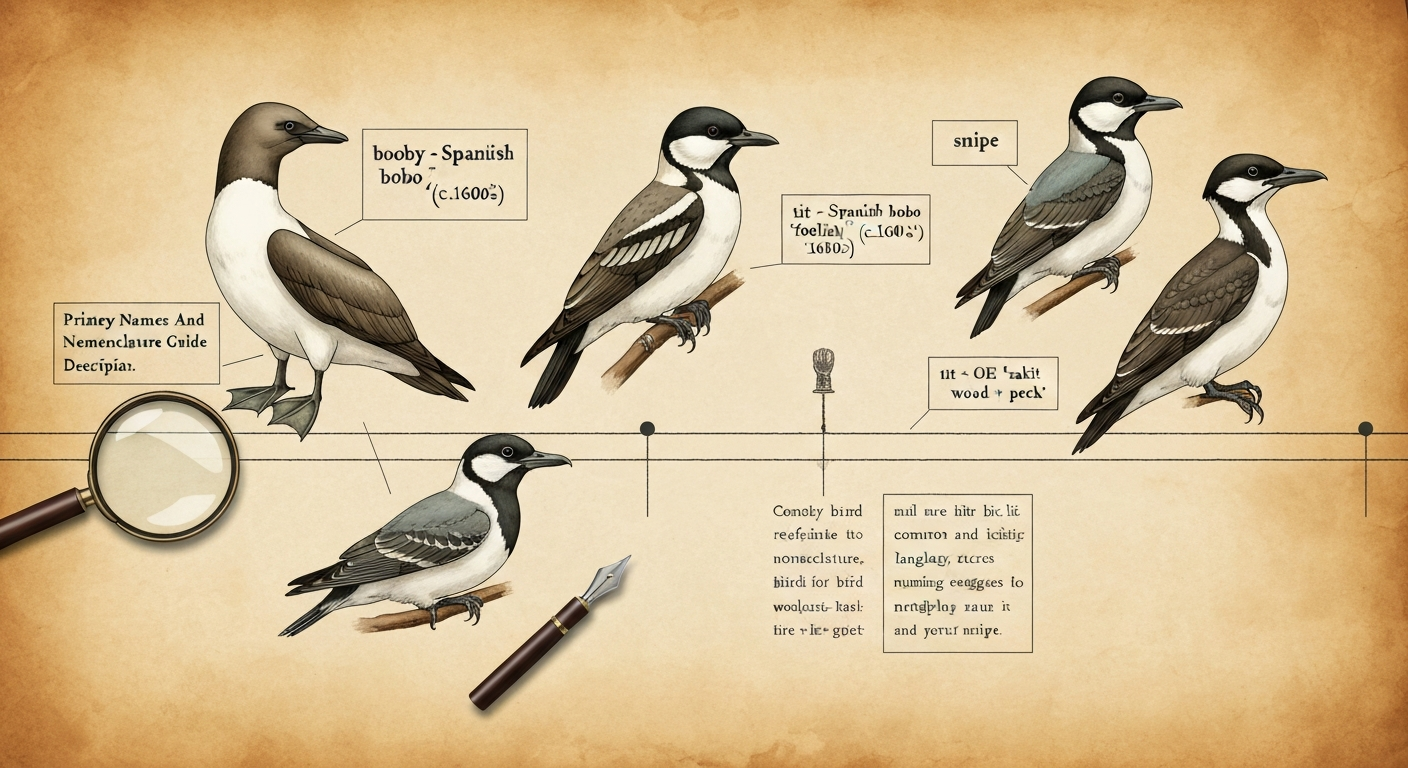
Why Are Bird Names So Sexual? Origins, Examples & Guidance
Why do bird names sound sexual? History, etymologies (booby, tit, cock, pecker), semantic shifts, and pet-naming tips.
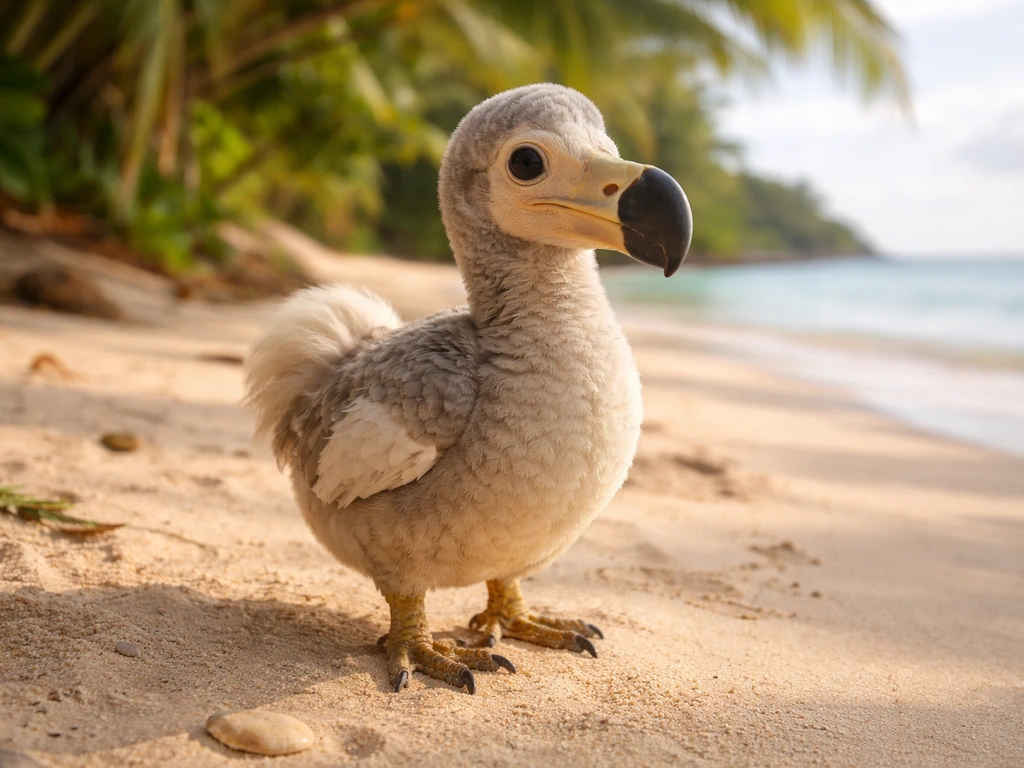
Good Names for a Dodo Bird: Ideas and How to Pick
Cute, funny and elegant dodo bird names plus how to pick one, with language meanings for flightless island vibes.