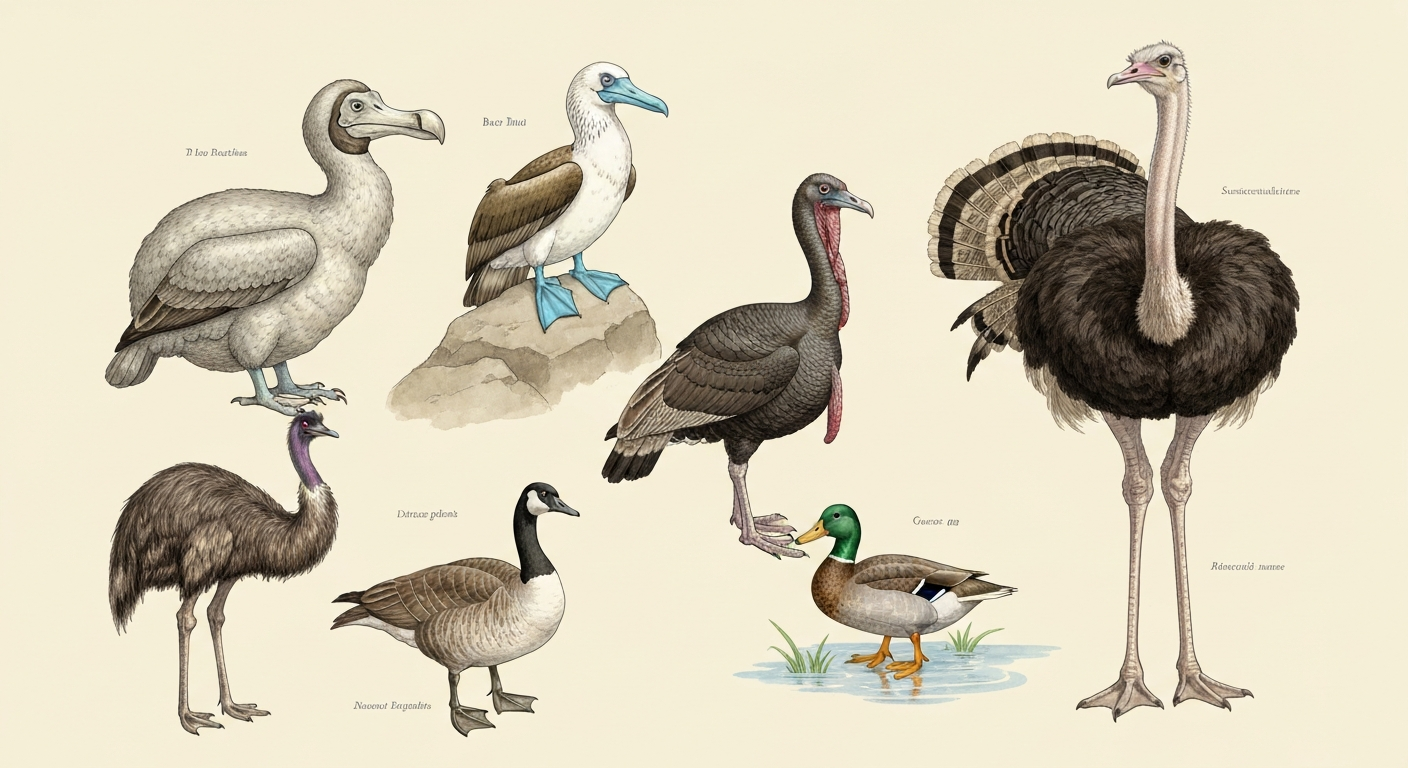
The bird most consistently called "stupid" is the dodo, whose very name comes from the Portuguese word doudo, meaning foolish or simpleton. But the dodo has plenty of company: the booby (named from the Spanish bobo, meaning stupid), the turkey (now English slang for a failure or fool), the ostrich (blamed for burying its head in sand, which it never actually does), the emu, the goose, and the duck all carry reputations for dimness that are, when you look at the evidence, mostly undeserved. Language and ecology, not genuine cognitive deficiency, are doing most of the heavy lifting here.
Which 'Stupid Bird Is Known As', Species, Names & Guide Now

Maya Castellanos
5 Aug 2026
Why some birds get the "stupid" label
I find it genuinely fascinating how a handful of species ended up carrying the weight of human ideas about foolishness. The pattern is almost always the same: sailors, colonists, or hunters encountered birds that had never learned to fear people, found them absurdly easy to catch, and concluded the birds must be dim. What they were actually observing was ecological naïveté, a perfectly rational evolutionary state for animals that had never coexisted with large terrestrial predators. Combine that misreading with a healthy dose of figurative language, a few memorable idioms, and centuries of popular culture, and you get a class of birds permanently associated with stupidity. This article unpacks exactly why that happened, which species are most affected, what the science actually says about their intelligence, and how those same ideas bled into the names we give birds, the insults we hurl at each other, and the names we sometimes give our pets.
The species most often called stupid
If you ask around, seven birds come up again and again as candidates for the avian dunce cap. Here they are, roughly in order of how deeply the "stupid" label has been baked into language and culture:
- Dodo (Raphus cucullatus): the species most completely lexicalized as stupidity itself
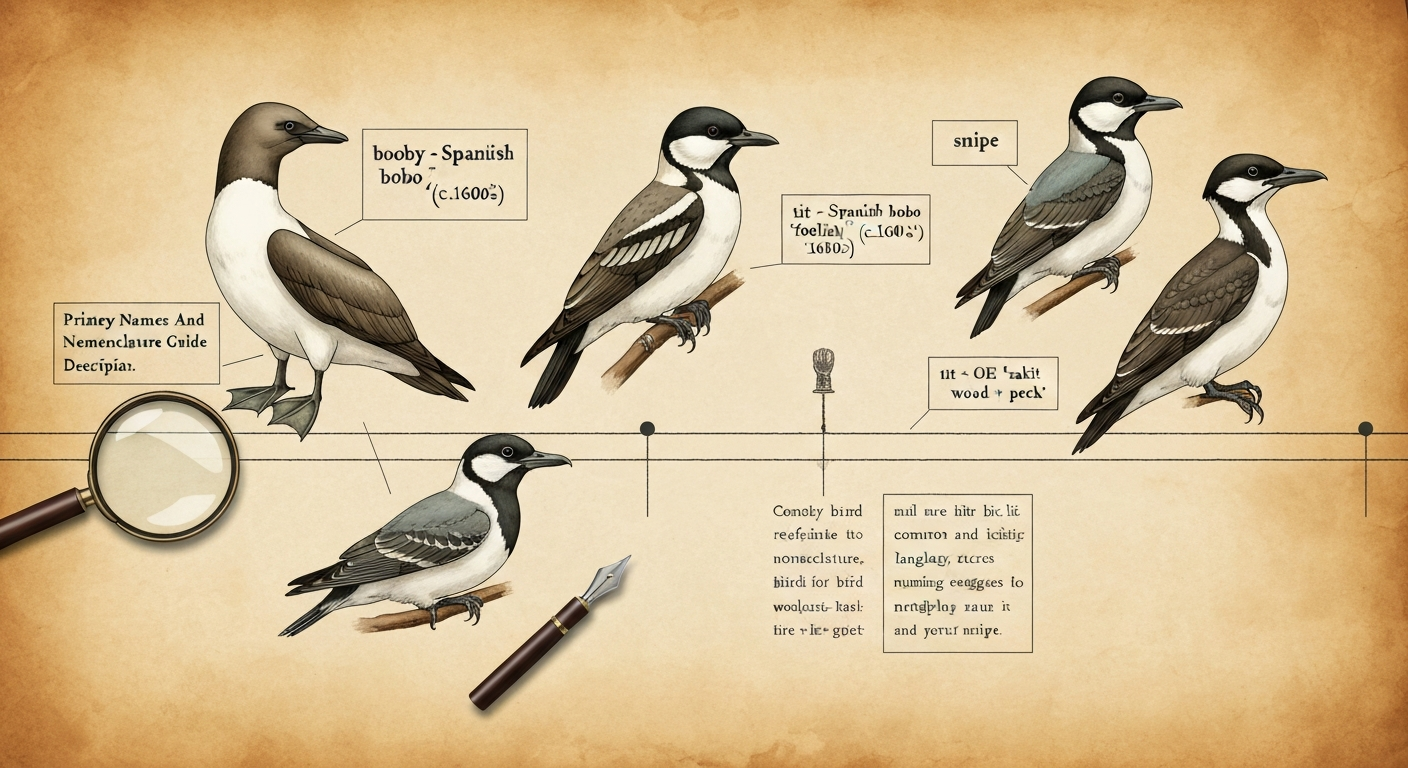
- Booby (genus Sula, several species): the name literally means "stupid" in Spanish
- Turkey (Meleagris gallopavo): English slang for a fool or a flop since at least theatrical usage in the 20th century
- Ostrich (Struthio camelus): permanently linked to the myth of burying its head in sand
- Goose (Anser/Branta spp.): "silly goose" and related phrases are embedded in everyday English
- Duck (Anas platyrhynchos and relatives): colloquially mocked for waddling, quacking, and apparent obliviousness
- Emu (Dromaius novaehollandiae): the losing side of a famous 1932 military operation known as the "Emu War"
Species profiles: where the reputations actually come from
Dodo
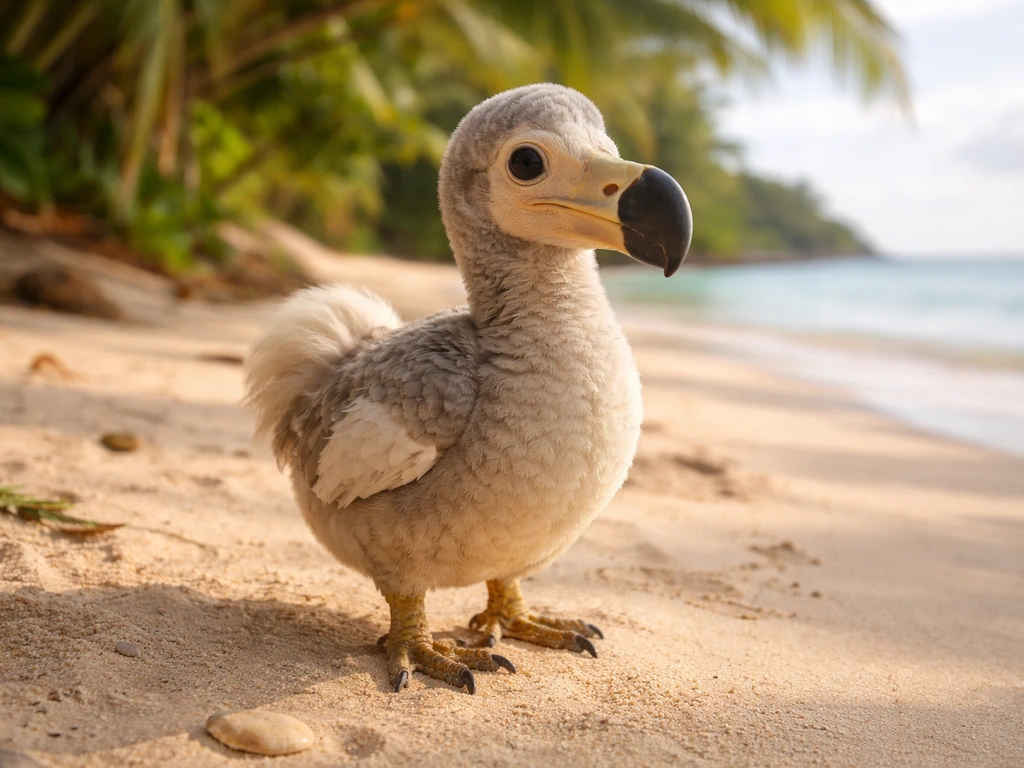
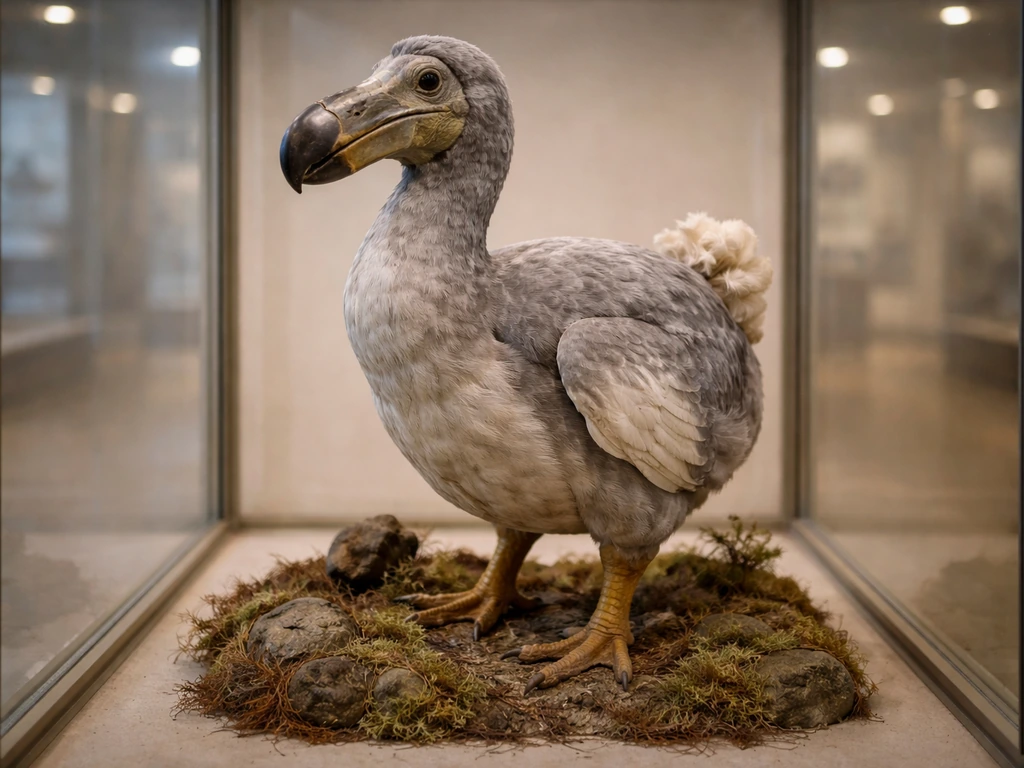
The dodo lived on Mauritius, an island with no mammalian predators before humans arrived. When Dutch and Portuguese sailors landed in the late 1500s and early 1600s, the birds walked right up to them. The sailors killed them by the thousands and concluded the animals were stupid for not running away. In reality the dodo had never needed a fear response, so it had never evolved one. Modern paleontological and taxonomic scholarship is clear that the dodo's extinction was driven by human hunting, habitat destruction, and introduced mammals like rats and pigs, not by any cognitive failing on the bird's part. Harvard Museum of Natural History researchers have also flagged that early illustrations and specimens were wildly inaccurate, so even the physical image of the dodo as a fat, clumsy oaf is partly a colonial-era fabrication. Harvard Museum of Natural History highlights uncertainty about the English name's origin and notes that sailors’ impressions and early inaccurate specimens and illustrations helped shape the dodo's reputation (Dodo | What's in a Name? (Harvard Museum of Natural History)).
Booby
Boobies are seabirds in the genus Sula, and they behave around ships in exactly the way the dodo behaved around sailors on land: they land on deck, show no fear, and allow themselves to be grabbed. Sailors, who needed protein on long ocean crossings, thought this was spectacularly unintelligent and named the birds accordingly, borrowing the Spanish bobo. The word crossed into English via maritime contact, and from the bird it was a short hop to using "booby" as a general insult for a foolish person, then to compound terms like booby trap and booby prize. The behavior that got boobies labeled stupid, fearlessness of humans far out at sea, is actually an efficient evolutionary strategy in environments with no human presence.
Turkey
Wild turkeys have a genuinely complex social life: they form dominance hierarchies, maintain seasonal flocking patterns, and deploy sophisticated reproductive strategies. Peer-reviewed field research documents these behaviors in detail. Domestic turkeys are a different story, bred heavily for meat production in ways that prioritize body mass over everything else, and that selective breeding has produced animals with genuine physical vulnerabilities. The "stupid turkey" meme largely traces to domestic birds, combined with theatrical slang from the early 20th century where a "turkey" was a failed show or a contemptible person. Merriam-Webster records both the bird's trade-route name origin and these later figurative senses.
Ostrich
The head-in-the-sand myth almost certainly traces back to Pliny the Elder, who described ostriches hiding their heads behind bushes and assuming they were invisible. What ostriches actually do is periodically lower their heads and necks to the ground to tend their ground-level nests, ingest grit and sand to aid digestion, or simply rest. From a distance, any of these behaviors can look like head-burying. The "ostrich" metaphor for willful ignorance is so culturally embedded that it functions independently of the actual bird, but the original behavior it supposedly captures never happened.
Goose
Geese, especially Canada geese in suburban North America, have a reputation that hovers somewhere between "stupid" and "terrifying." The wildlife management literature explains this well: geese that grow up around humans lose their wariness, become habituated, and then defend nesting territories with genuine aggression. What people interpret as senseless aggression or dim obliviousness to social norms is actually territorial behavior in an animal that has simply stopped fearing humans because there are no consequences for not doing so. "Silly goose" as a term of mild affection or light mockery is centuries old in English, showing that the association predates modern suburban goose conflicts.
Duck
Ducks get called stupid mainly for cosmetic reasons: they waddle, they make a noise that sounds vaguely comedic, and they seem indifferent to observers. Research on domestic ducks (Anas platyrhynchos) has documented well-developed somatosensory systems with sophisticated cutaneous mechanoreceptors in the bill, which is actually a precision foraging instrument. There is a broader question about why ducks specifically attract the "stupid bird" label, and that linguistic and cultural angle gets its own dedicated treatment elsewhere on this site. For a fuller explanation, see the dedicated page on why duck is called stupid bird.
Emu
The emu's reputation for stupidity rests heavily on the 1932 Australian "Emu War," in which a military operation using Lewis guns failed to significantly reduce emu populations in Western Australia. Emus, it turned out, were hard to kill efficiently in the field and scattered when shot at, making them tactically difficult targets. Whether this makes them smart or simply robust and mobile is a matter of perspective. More recent experimental work on palaeognath birds (the group that includes emus, ostriches, and rheas) has found genuine problem-solving ability and feeding innovation, directly challenging the idea that large flightless birds are cognitively simple.
How ecology and behaviour create the illusion of stupidity
There are four ecological and behavioral patterns that reliably make birds look stupid to human observers, even when they are doing something entirely rational.
- Predator naïveté: Birds that evolved on predator-free islands (dodo, many seabirds including boobies) have no learned fear of large animals. They are not failing to be afraid; they have no evolved reason to be afraid. When humans arrived, the behavior that had been neutral or adaptive became fatal.
- Habituation to humans: Species that live in human-modified environments (geese, urban ducks) lose wariness over generations of coexistence without negative consequences. The resulting boldness looks like obliviousness but is actually a learned or evolved response to a predictable environment.
- Exaggerated social displays: Turkeys, during breeding season, perform elaborate strutting and vocalization that looks absurd out of context. These are finely tuned signals within a specific communication system, not random silliness.
- Unconventional foraging strategies: Ostriches swallowing grit, ducks probing with their bills, emus tearing up agricultural fields—these behaviors make sense within each species' feeding ecology but look bizarre or destructive to human observers.
What cognition research actually shows
Avian neuroscience has come a long way from simply comparing brain-to-body ratios. Current research in comparative neuroanatomy cautions explicitly that whole-brain size is a blunt and often misleading proxy for intelligence. What matters more are the proportions of specific telencephalic subregions, neuron density, and how an animal's life-history and ecology shape cognitive demands. By those measures, labeling any of the species in this article as generically "stupid" is biologically unsupported.
A 2025 study in Scientific Reports specifically tested problem-solving in palaeognath birds (the group including emus, ostriches, and rheas) and found that individuals could solve novel foraging problems, demonstrating innovation that had previously been assumed absent in large flightless birds. Wild turkey research documents seasonal social associations and reproductive strategies that require tracking individual relationships over time. Duck research points to sophisticated sensory processing. The gap between popular perception and peer-reviewed evidence is, frankly, enormous.
How bird names became insults: etymology and naming history
The pathway from bird name to human insult is well-worn, and a few species have traveled it more completely than others. Understanding how this works tells you a lot about how language and culture interact.
Booby: from bobo to fool
Spanish bobo meant stupid or foolish long before it was applied to seabirds. When Spanish and later English sailors started using it for the tame Sula seabirds they encountered in tropical waters, the word came loaded with that existing meaning. In English, "booby" then developed a parallel life as a standalone insult for a stupid person, and from there it spawned a small family of compound words. A booby trap originally meant a prank designed to catch a foolish person (the fool being the "booby"). A booby prize is the prize given to the person who comes last. A booby hatch was slang for a psychiatric facility. The bird named the insult, and the insult generated an entire vocabulary of fool-related compounds.
Dodo: the word that became a metaphor
The English word "dodo" most likely comes from Portuguese doudo or doido, meaning foolish. There is some uncertainty (the Dutch word dodaers, meaning fat-arse, has also been proposed), but the Portuguese connection is the most widely accepted. Regardless of origin, by the 19th century "dodo" had passed into English as a term for an out-of-touch, old-fashioned, or stupid person, and "dead as a dodo" became one of the most durable phrases in the language. The Cambridge Core essay tracing the cultural and lexical history of the dodo shows how thoroughly the species became a metaphor for obsolescence and foolishness, independent of any biological reality.
Turkey: trade routes and theatrical flops
The bird's name itself is a geographic accident. Early English traders assumed the bird came from Turkey (via the Ottoman trade network), even though it is a North American species. The confusion stuck. The figurative sense of "turkey" as a foolish person or a failed enterprise developed later, largely through American theatrical slang where a "turkey" was a show that flopped. Merriam-Webster documents this trajectory clearly. The word traveled from trade-route confusion to barnyard animal to cultural insult through entirely separate channels.
"A bird in the hand": falconry and proverb history
The proverb "a bird in the hand is worth two in the bush" has its roots in falconry, where the falcon on the falconer's gloved hand was a known, controlled asset, and birds in the surrounding vegetation were uncertain prospects. Proverb scholar Wolfgang Mieder's Dictionary of Modern Proverbs traces it through early modern English collections (John Ray's 1670 collection is a key milestone) and notes antecedents in earlier English and European sources. The falconry metaphor makes immediate practical sense: a trained bird you are holding is worth far more than theoretical prey you might or might not catch. The phrase migrated from a literal falconry observation to a general principle about certainty versus speculation.
Sexualized and offensive bird names: how meanings develop and why they matter
Some bird names have acquired sexual or offensive meanings entirely through the mechanics of how language changes over time, rather than through any inherent impropriety in the original name. The booby is the clearest example on this page: the bird's name is old and legitimate, its etymology is clean (Spanish bobo), and its collision with modern English slang for breasts is a coincidence of sound rather than etymology. The two meanings developed through completely different linguistic channels. Similar patterns apply to other species and their names in various languages. For a concise history of how these meanings developed, see the site's explainer on why are bird names so sexual.
The tit family (Paridae and related families) offers another well-known example: the word simply means small in historical English, cognate with similar words in Scandinavian languages, and was applied straightforwardly to small birds. The modern collision with anatomical slang is an accident of semantic drift. The same is true of the shag (a cormorant species in the genus Gulosus), the woodcock, and several others. Historical development of these double meanings matters because it determines whether a name is genuinely problematic (was it coined as an insult, was it designed to demean?) or simply unlucky in how language evolved around it.
Where things get more genuinely problematic is when bird names were coined as explicit insults or when names carry racial, colonial, or cultural baggage. Several bird species around the world were named by European naturalists using terms that were pejorative toward the Indigenous peoples of the regions where the birds lived, and ornithological naming bodies including the American Ornithological Society have been actively reviewing and revising those names. This is a live and evolving area of bird nomenclature, and it intersects directly with questions about why some bird names feel offensive today even when they have long historical use.
A quick comparison: how the "stupid" label breaks down across species
| Bird | Source of "stupid" reputation | Name etymology | What research shows |
|---|---|---|---|
| Dodo | Tameness with humans; ease of capture | Portuguese doudo (foolish) | Ecological naïveté, not cognitive deficiency; extinction driven by humans and introduced mammals |
| Booby | Landing on ships; ease of capture | Spanish bobo (stupid, foolish) | Tameness is predator-naïveté; perfectly effective strategy in natural range |
| Turkey | Domestic breed vulnerability; theatrical slang | Geographic error (Ottoman trade routes) | Wild turkeys show complex social behaviour and dominance hierarchies |
| Ostrich | Head-in-sand myth | Latin/Greek via multiple routes (struthio, camelus) | Myth traces to Pliny; the behavior described does not occur |
| Goose | Boldness and aggression near humans | Germanic origin, goose/goos | Habituation explains bold behavior; territorial defense is adaptive |
| Duck | Waddling; vocalizations | Germanic, related to diving/ducking motion | Sophisticated bill mechanoreception; sensory system well-developed |
| Emu | "Emu War"; general ratite dismissal | Likely from Portuguese ema (large bird) | 2025 research shows problem-solving ability in palaeognaths |
Naming your pet bird: practical guidance for doing it well
If you are naming a pet bird, the first thing I would tell you is that names shape perception, including your own. Calling a bird Dummy or Doofus or Bimbo might seem like affectionate irony, but these names carry genuinely negative associations that can subtly color how you and others interact with the animal. This matters more than people expect. Animal shelter and adoption research increasingly notes that names influence the way handlers and adopters perceive and treat animals, and that principle applies just as much to birds you keep at home.
There is also a linguistic sensitivity dimension. Some bird-derived insults have cultural or ethnic baggage that makes them inappropriate as pet names even when used affectionately within a household. Names that were colonial-era slurs, names that mock other cultures' languages or appearances, and names that transfer human stereotypes onto animals all fall into this category.
Practically speaking, here is what I recommend:
- Choose names that reflect the bird's actual personality, appearance, or species characteristics in neutral or positive terms: Copper for a bird with warm plumage, Bolt for a fast-moving species, Archie because it suits him.
- Avoid names that are direct insults in any language, even if the connection seems funny at first. The joke fades; the name stays.
- Be cautious with names borrowed from other languages or cultures if you do not know what they mean. Bobo, for instance, means stupid in Spanish. Using it ironically on a parrot in front of Spanish-speaking guests creates an awkward moment.
- For species that already carry "stupid" cultural baggage (ducks, geese, turkeys kept as pets or in small flocks), a well-chosen name actively counteracts lazy stereotypes. People treat animals better when the animals seem like individuals.
- If you want a name with linguistic depth or etymology behind it, choose one with a positive or neutral origin. Many beautiful bird names come from Latin, Greek, indigenous languages, and regional dialects and carry meanings like swift, brilliant, river-dweller, or sky-voice.
Common name-origin questions answered
Several questions about bird names, idioms, and insults come up repeatedly, so here are the direct answers, collected in one place.
Why is duck called a stupid bird?
The "stupid duck" reputation is mostly a product of appearance and sound rather than any documented behavioral failing. Ducks waddle because their legs are positioned far back on the body for efficient swimming, not because of poor motor function. Their vocalizations, especially the quack, have become culturally associated with comedy. Domestic ducks, bred for meat and eggs rather than survival, do show reduced wariness compared to wild ducks, which reinforces the stereotype. The deeper linguistic and cultural history of why ducks specifically attract this label is a rich topic explored further on this site.
Why are boobies called boobies?
The name comes directly from Spanish bobo, meaning stupid or foolish. Sailors applied the word to Sula seabirds because those birds would land on ships and showed no fear of humans, making them easy to catch. The name was never a scientific classification to begin with; it was a sailor's insult that became the accepted common name. The scientific genus name Sula comes from a Norwegian word for the gannet, a related bird, so the formal taxonomy is somewhat more respectful than the common name. The overlap between "booby" as a bird name and its modern anatomical slang meaning is an accident of English phonetic evolution, not etymology.
How did "a bird in the hand" get its name?
The proverb is rooted in falconry practice, where the bird on your hand (your trained falcon) represented real, controllable value, while birds in the surrounding bushes were hypothetical. John Ray's 1670 proverb collection is the most-cited early English source, but the saying had earlier European parallels and antecedents. Its falconry origin explains why the proverb specifically involves a hand (where falconers held their birds) and a bush (where prey hid). Over centuries it generalized far beyond falconry into a universal principle about the value of certainty over speculation.
What does "dead as a dodo" mean, and where does it come from?
"Dead as a dodo" means completely and irreversibly finished or obsolete. The dodo went extinct in the late 17th century, making it an unusually concrete example of total extinction at a time when the concept of species extinction was just entering public consciousness. The phrase leverages both the dodo's real extinction and the pre-existing figurative meaning of "dodo" as a foolish or out-of-touch person. Something that is "dead as a dodo" is not just gone; it is gone in a way that implies it was not very sharp to begin with.
More to explore on this site
The questions in this article connect to several deeper topics covered elsewhere on this site. The specific cultural and linguistic history of why ducks attract the "stupid" label has its own dedicated page. For a focused look at name origins, see the internal page “How did that bird get its name?” which traces specific naming histories and linguistic pathways. The full etymology of why boobies are called boobies, including the Spanish and maritime history, is explored in detail in the boobies naming article. The falconry and proverb history behind "a bird in the hand" connects to broader coverage of bird-related idioms and how they developed. And if the question of sexual or double-meaning bird names caught your attention, there is a full article on why some bird names have acquired those associations and how ornithological bodies are responding.
Reframing stupidity: what language, ecology, and culture have done to these birds
Every bird in this article got its reputation the same basic way: humans encountered something unfamiliar, misread it through a human behavioral lens, applied a human insult, and the insult stuck. The dodo did not fail to run because it was dim; it failed to run because nothing on its island had ever required running. The booby landed on the ship because that seemed perfectly reasonable to an animal that had never met a sailor. The ostrich lowered its head to tend its nest and someone, somewhere, decided that looked like willful ignorance.
The science has moved on significantly from where popular culture is. Avian cognition research now uses neuron counts, telencephalic proportions, and life-history ecology instead of crude brain-to-body ratios. Palaeognath birds that were written off as cognitively simple have been shown to solve novel problems. Wild turkeys turn out to have complex social structures. Ducks have precision sensory equipment built into their bills. The animals were never stupid. The label was always about us.
FAQ
Which birds are most commonly called “stupid” in English-speaking culture?
A concise list: dodo, booby (genus Sula), ostrich, emu, ostrich-like ratites generally (sometimes grouped with emu/ostrich), turkey, duck, and goose. These species appear disproportionately in idioms, slang, and popular descriptions that label them ‘stupid’ or foolish.
Why did people call the dodo “stupid,” and is that fair?
Origin and evidence: the English name dodo likely derives from Portuguese doudo/doido (‘foolish, simpleton’) or comparable Dutch names applied by early sailors and colonists who observed a tame, flightless bird that showed little fear of humans. Modern research stresses that the dodo’s apparent ‘naïveté’ reflected evolutionary absence of mammalian predators and human-driven ecological change, not an intrinsic cognitive deficit. Extinction was caused by human arrival, introduced mammals and habitat loss; calling the dodo ‘stupid’ is therefore historically rooted in sailors’ impressions and later metaphorical use rather than solid evidence of low intelligence.
What about boobies — why does 'booby' mean both a seabird and a fool?
Etymology and behavior: English booby (seabird of genus Sula) comes from Spanish bobo (‘stupid, foolish’). Sailors observed these birds’ tameness and willingness to land on ships or be captured easily, so they borrowed a Spanish pejorative to name them. The bird-name was then extended in English to mean a foolish person (e.g., booby prize). The connection is behavioral (tameness/habituation) rather than a claim about cognitive capacity.
Are ostriches actually 'stupid' or do myths explain that reputation?
Myth vs. behavior: the famous myth that ostriches ‘bury their head in the sand’ is false. It likely stems from classical sources and observers seeing ostriches lying flat with necks low, probing nests, or engaging in dust‑bathing. These behaviors were misinterpreted as burying the head to avoid danger. Ostriches show adaptive anti‑predator strategies and are not credibly described as cognitively deficient; the myth reflects human projection and simplification.
Why are turkeys called 'stupid' or used as an insult in English?
Lexical history and behavior: the bird-name turkey comes from trade-route naming (associations with Turkey/Turks in early modern European commerce). By the 19th–20th centuries, slang and theatrical usage extended 'turkey' to mean a failure, flop, or contemptible person. This is a cultural metaphor and insult rooted in social language use rather than rigorous assessment of Meleagris cognition; field studies show wild turkeys have complex social structures and reproductive strategies, so the insult reflects human rhetoric more than avian ability.
Do ducks and geese deserve the stereotype of being 'stupid' or 'silly'?
Behavioral and ecological reality: ducks have sophisticated somatosensory and sensory specializations for foraging; geese show strong territoriality, social complexity and sometimes aggressive defense of nests. Popular impressions (clumsy waddling, aggressive or bold behaviour near humans, habituation from feeding) explain stereotyping, but scientific evidence shows sensory adaptations and social cognition inconsistent with a blanket label of ‘stupid.’