The teetar bird is called the Grey Francolin in English, sometimes also referred to as the Grey Partridge. It is a ground-dwelling bird native to South Asia and parts of the Middle East, and its scientific name is Ortygornis pondicerianus (you may also see it listed under the older genus Francolinus, depending on which taxonomy a source follows). If someone in India, Pakistan, or Bangladesh says "teetar," this is almost certainly the bird they mean. If you are wondering, is there a bird called Tennessee, the short answer is that Tennessee is not the name of this species; it refers to an American place, while teetar refers to the Grey Francolin.
What Is Teetar Bird Called in English? Identify Species

Maya Castellanos
28 Jun 2026
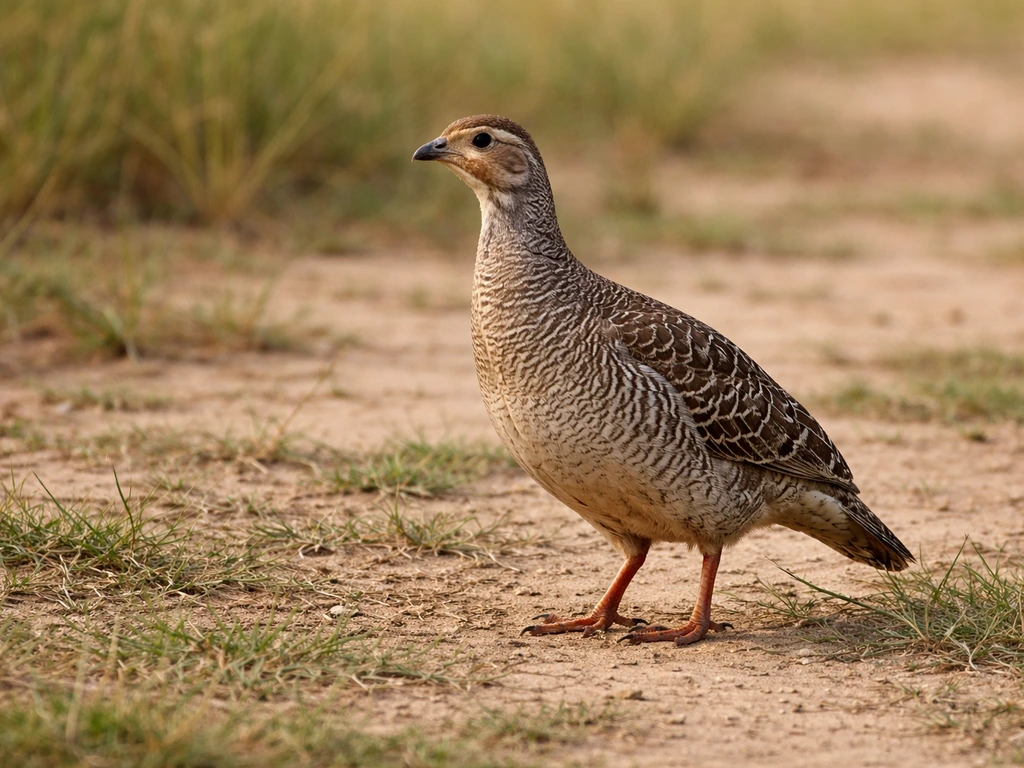
What "teetar" likely refers to
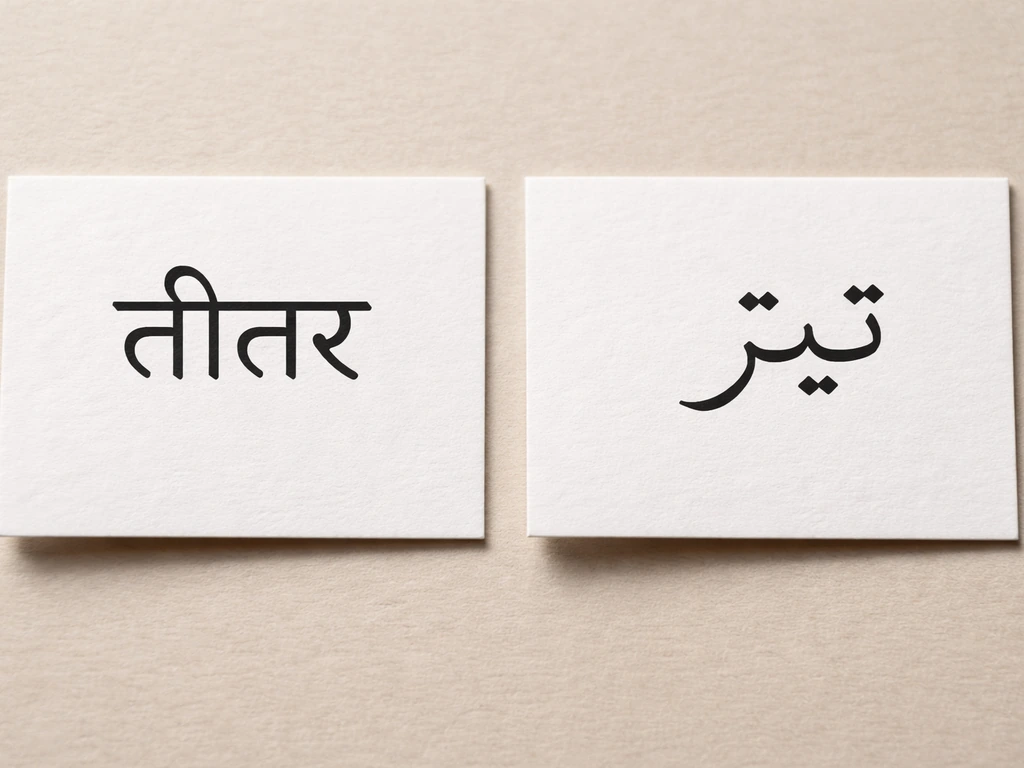
"Teetar" comes from Hindi and Urdu (written तीतर in Devanagari, تیتر in Urdu script) and is the everyday name used across northern and western India, Pakistan, and Bangladesh for the Grey Francolin. Regional natural history records, including Birds of Gujarat, explicitly note that the Grey Francolin is "locally known as Teetar." South Asian dictionaries treat teetar and its close variant titar as straightforward translations of "partridge" in English. UrduPoint’s dictionary entry links 티تر (teetar) to the English word “partridge.” teetar and its close variant titar as straightforward translations of "partridge" in English. So when the word appears in conversation, a recipe, a wildlife documentary commentary, or a nature walk in that region, it almost always points to this one species.
That said, South Asian bird naming can be loose in everyday speech. In some rural areas, "teetar" gets used informally for other ground birds like quails or even the Black Francolin. Context, location, and a quick look at photos will lock down the ID, and I will walk you through exactly how to do that below.
The correct English name (and why there are two)
The bird has two common English names that float around, and both are correct depending on the source. Cornell Lab of Ornithology's All About Birds uses Grey Francolin (spelled "Gray Francolin" in American English). The U.S. Fish and Wildlife Service also uses Gray Francolin. Older field guides and some Indian sources use Grey Partridge, which is technically a different species in Europe (Perdix perdix), so that overlap can confuse people. For clarity, always pair the common name with the scientific name Ortygornis pondicerianus when precision matters.
| Name Used | Region/Source | Notes |
|---|---|---|
| Gray Francolin | North America (Cornell, USFWS) | Preferred modern English name, American spelling |
| Grey Francolin | UK, India, international sources | Same species, British spelling |
| Grey Partridge | Some older Indian field guides | Ambiguous; also the name of a European species (Perdix perdix) |
| Teetar | India, Pakistan, Bangladesh | Local Hindi/Urdu name, origin is the bird's call |
How to verify you have the right bird
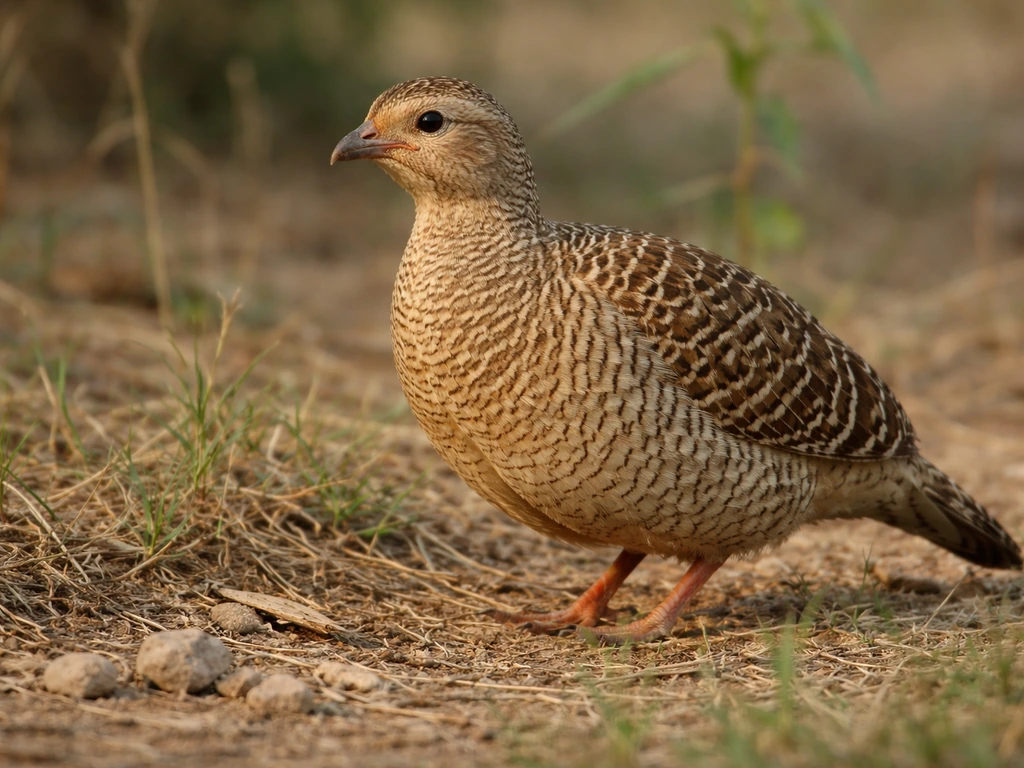
The fastest verification method is visual. The Grey Francolin is a stocky, brownish ground bird about 30 to 35 cm long, with a distinctive barred and streaked pattern across its chest and flanks, a pale orange-buff throat, and a reddish bill. It does not look like a quail (which is noticeably smaller) and does not have the black-and-white plumage pattern of the Black Francolin, which is another species sometimes loosely called "teetar" in parts of Pakistan.
Here are the practical steps to confirm your identification:
- Search "Grey Francolin" or "Ortygornis pondicerianus" on Cornell's All About Birds or eBird for range maps and photos. If the bird you saw matches and was spotted in South Asia or the Middle East, you have your answer.
- Check the call. The Grey Francolin has a loud, distinctive repeated call often written as "Ka-tee-tar-tee-tar" or "kateetar." If the bird you heard inspired the name, this is almost certainly the one.
- Look up spelling variants if you are searching in a different script or language. Teetar, titar, teeter, and titar are all transliterations of the same Hindi/Urdu root. Merriam-Webster lists "titar" with its etymology pointing directly to Hindi tītar.
- Cross-check location. The Grey Francolin is widespread across the Indian subcontinent, Iran, Sri Lanka, and has an introduced population in Hawaii and parts of the USA. If the person mentioning "teetar" is from any of those regions, the identification is essentially confirmed.
Where the name "teetar" comes from
This is genuinely one of my favorite bird-name origin stories because it is so satisfying and self-referential. "Teetar" is an onomatopoeia, meaning the name literally sounds like the bird. The Grey Francolin's call is a loud, enthusiastic repetition that people transcribe as "Ka-tee-tar-tee-tar-teetar." The bird essentially named itself. IndiaBiodiversity's species page makes this connection explicit, noting that the Hindi name teetar is derived directly from that repeated call pattern.
This is a naming pattern that shows up across bird languages worldwide (think "cuckoo" or "pewee"), but teetar is a particularly clean example because the call almost perfectly matches the syllables of the name. Merriam-Webster traces the English-adjacent word "titar" to Hindi tītar, confirming the South Asian linguistic root.
Scientific name and where the bird sits taxonomically
The Grey Francolin currently sits in the genus Ortygornis, making its full scientific name Ortygornis pondicerianus. You will frequently see it listed as Francolinus pondicerianus in older texts and some databases, because taxonomists moved it out of the large Francolinus genus during a reclassification of the francolins and partridges. Both refer to the same bird, so do not let the genus difference throw you off.
Taxonomically, it belongs to the family Phasianidae, the same family as pheasants, peacocks, quails, and turkeys. Within that family it sits in the partridge and francolin group, which explains why older sources call it a partridge and newer ones prefer francolin. The species epithet pondicerianus refers to Pondicherry (Puducherry) in India, the region from which early specimens were described.
Other birds that get called "teetar" (and how to tell them apart)
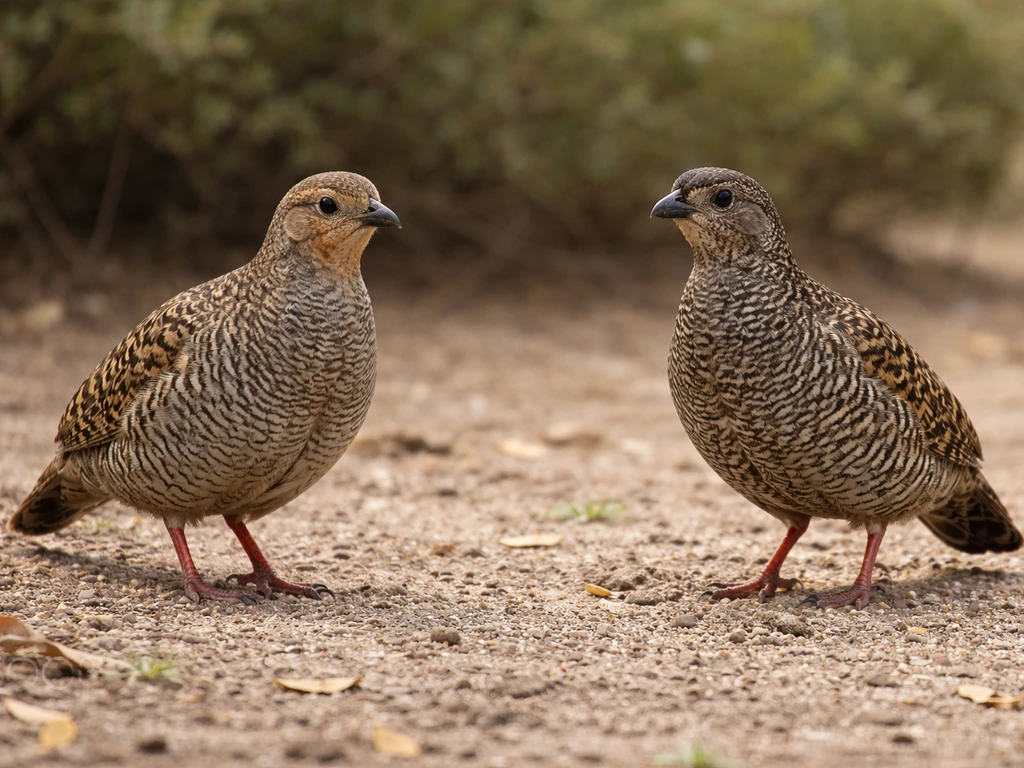
The Grey Francolin is the primary bird behind the teetar name, but in everyday South Asian usage the word sometimes gets applied loosely to other ground birds. If you are wondering whether there is a bird called Venus, the term is not a standard name for the Grey Francolin or any of its common synonyms. Knowing which ones can save you a misidentification.
- Black Francolin (Francolinus francolinus): Called "kala teetar" (black teetar) in Hindi and Urdu to distinguish it. The male has a striking black belly with white spots and a chestnut collar. Much easier to ID visually than the grey one.
- Common Quail (Coturnix coturnix): Smaller than the Grey Francolin, and sometimes called "bater" rather than teetar, but can get confused in casual speech. Quails are noticeably more compact and lack the barred flank pattern of the francolin.
- Rain Quail (Coturnix coromandelica): Another quail species occasionally lumped under informal teetar usage in some regions, but again smaller and differently patterned.
- Grey Partridge (Perdix perdix): A European bird that shares the English name "grey partridge" sometimes applied to teetar. Completely different species, different range, different appearance. If you are in Europe and someone says grey partridge, they do not mean teetar.
The key rule: if someone in South Asia says "teetar" without a modifier, default to Grey Francolin. If you are asking “is there a bird called reading,” keep in mind that people often mean a similarly sounding South Asian name like “teetar,” which is most commonly Grey Francolin. If they say "kala teetar," think Black Francolin. If a qualifier like "bater" or "quail" appears, you are likely in different territory altogether.
Naming a pet bird: choosing the right English name
If you have a Grey Francolin as a pet or aviary bird and want a name that honors the teetar connection while being usable in English, you have a few directions to go.
The most direct option is just using "Teetar" as a pet name itself. If you are wondering, is there a bird called fancy, the closest match in this teetar naming tradition is Grey Francolin. It is short, distinctive, and carries the linguistic history of the species right in the syllables. Since the bird's call inspired the name, there is a real elegance to calling your bird after its own voice.
If you prefer an English name, "Grey" or "Gray" works simply and accurately. Some owners go with names that play on the bird's characteristics: "Frankie" (from Francolin), "Pondi" (from the species epithet pondicerianus, a nod to Pondicherry), or "Katy" as a playful phonetic take on the "Ka-tee-tar" call. For a bird enthusiast who wants precision, using the genus name "Orty" (from Ortygornis) is a nice conversation starter with other birders.
Whatever name you choose, the most important step is confirming you have a Grey Francolin and not a quail or Black Francolin first, since the care requirements and temperament of these birds differ. The scientific name Ortygornis pondicerianus is your most reliable anchor when researching the species for husbandry, diet, and housing needs. If you enjoy exploring bird names across languages and cultures, this kind of name-to-species tracing is a rewarding habit, and the teetar is a great place to start since the name, the call, and the species all connect so cleanly.
FAQ
If I hear “titar” instead of “teetar,” is it the same bird in English?
Yes, in most South Asian usage “titar” is treated as the same root word as “teetar,” and it typically points to the Grey Francolin. Still, confirm with context and appearance, because people may loosely apply similar terms to other ground birds.
What should I do if an older book says “Grey Partridge” for teetar?
Treat it as a naming mismatch, not a different bird. “Grey Partridge” in that context is usually referring to the Grey Francolin (Ortygornis pondicerianus), but the European Grey Partridge is a different species, so the scientific name is the safest tie-breaker.
How can I tell Grey Francolin apart from quails if someone only uses the word teetar?
Quails are typically smaller and more compact, and they lack the Grey Francolin’s heavier, barred and streaked look on the chest and flanks. If you can, compare size (around 30 to 35 cm for Grey Francolin), call, and the reddish bill and pale orange-buff throat.
Can “kala teetar” still be Grey Francolin?
Usually not. “Kala” (meaning black) in everyday South Asian speech is commonly used to point to the Black Francolin when people contrast it with “teetar.” If you are trying to be accurate for identification or care, verify by call and plumage rather than relying only on the modifier.
Is “Teetar” the official English name of the species?
Not exactly. “Teetar” is the regional everyday name, while standard English species names used by bird references are Grey Francolin (or Gray Francolin). If you need a catalog or database match, use Ortygornis pondicerianus.
What if I see the scientific name listed as Francolinus pondicerianus?
That is an older or alternative genus placement for the same species. Use the specific epithet pondicerianus together with matching common-name clues, but Ortygornis is the currently accepted genus in many modern checklists.
Is “teetar” sometimes used for ground birds other than francolins?
Yes, in some rural or informal settings the term can be stretched to other ground birds such as quails or even Black Francolin. If identification matters, rely on the qualifier in the phrase (for example “kala teetar”) and, best of all, photos and call recordings.
If I want a pet or aviary name, is it risky to call my bird “teetar”?
It can be, if your bird is not actually a Grey Francolin. For accuracy in husbandry research and sourcing, anchor first on the scientific name (Ortygornis pondicerianus) and only then choose a name inspired by “teetar.”
Does the “pondicerianus” part of the scientific name relate to the bird’s call or the word teetar?
No. “pondicerianus” refers to Pondicherry (Puducherry), the locality tied to early specimens. The teetar connection is linked to how people transcribe the bird’s call, not to the species epithet.
Next Article
Is There a Bird Called Venus? How to Verify the Name
Verify if Venus is a real bird name or a pet nickname by checking common names, scientific taxonomy, and origin.