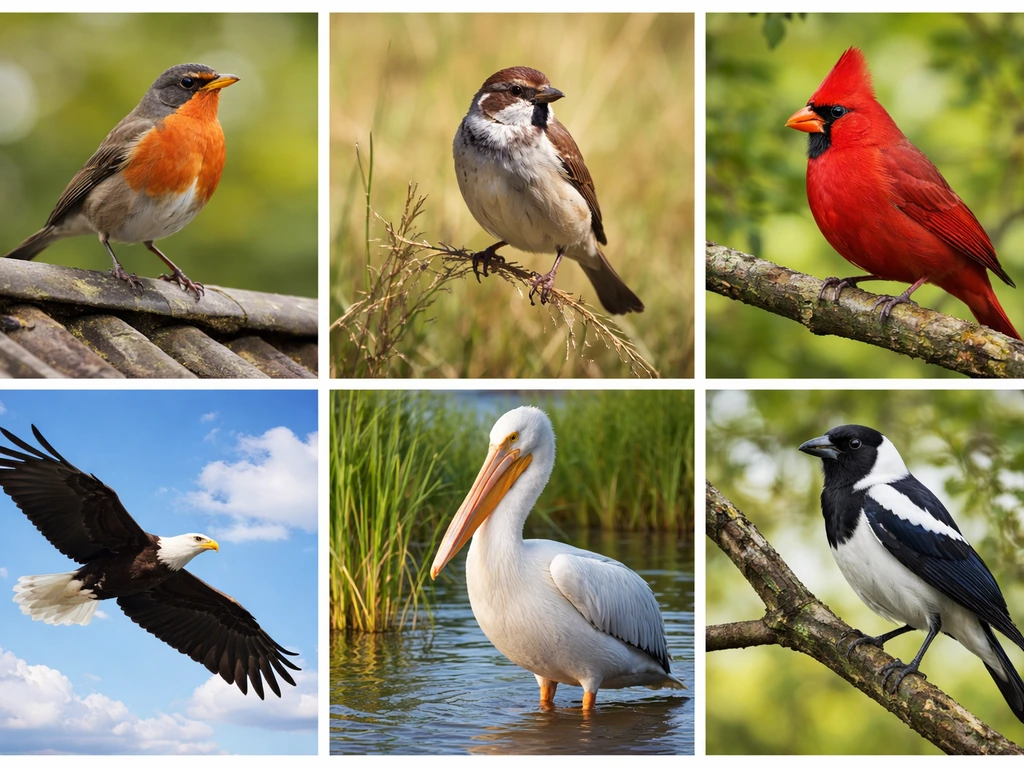
The most widely recognized bird names in English include Robin, Sparrow, Crow, Hawk, Eagle, Hummingbird, Cardinal, Blue Jay, Finch, Wren, Owl, Swallow, Falcon, Pelican, and Flamingo. Those fifteen names cover the birds most people can picture instantly, the ones that show up in field guides, backyards, sports team logos, and baby name registries alike. Whether you want a quick reference list, a name for a pet bird, or the backstory behind why a robin is called a robin, this guide has all of it.
Top Bird Names: Quick Lists, Meanings, and Naming Tips

Maya Castellanos
27 May 2026
The top bird names everyone recognizes
Popularity here means genuine cultural familiarity: these are the birds most people in the English-speaking world can name without hesitation. They show up in everyday language, children's books, folklore, and casual conversation. Grouping them by broad category makes the list easier to use.
Backyard and songbirds
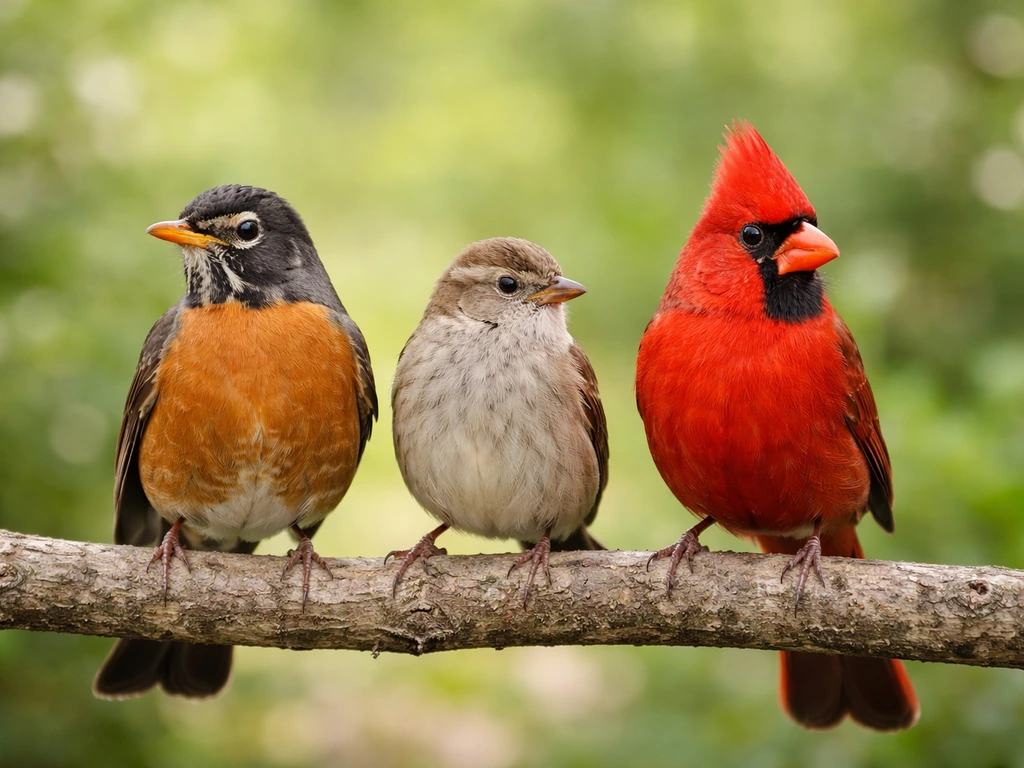
- Robin (American Robin and European Robin are distinct species but share the name)
- Sparrow (House Sparrow is the single most widespread wild bird on earth)
- Cardinal (Northern Cardinal, one of North America's most recognized backyard birds)
- Blue Jay (bold, loud, instantly recognizable in eastern North America)
- Finch (a catch-all that includes dozens of species: House Finch, Goldfinch, Zebra Finch)
- Wren (tiny but disproportionately loud; the House Wren is a backyard staple)
- Swallow (Barn Swallow is the world's most widely distributed swallow species)
Raptors
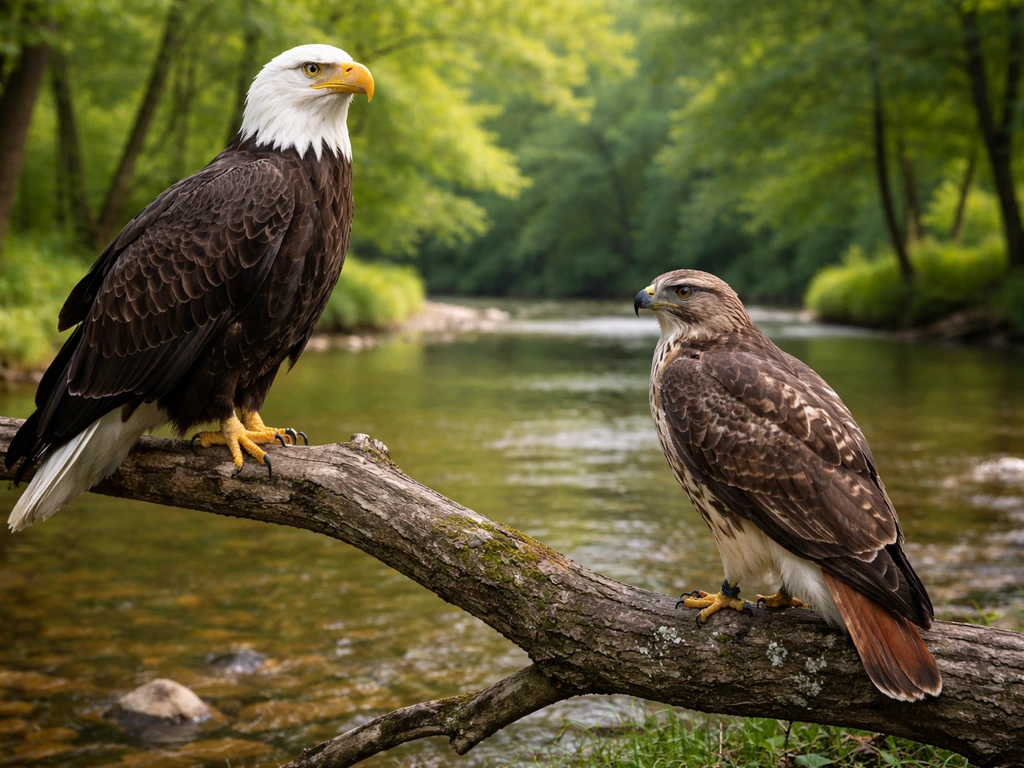
- Eagle (Bald Eagle is the iconic North American raptor; Golden Eagle is globally known)
- Hawk (Red-tailed Hawk is the quintessential North American hawk)
- Falcon (Peregrine Falcon is famous for being the fastest animal on the planet)
- Owl (Great Horned Owl and Barn Owl are the two most commonly pictured species)
- Kite (Red Kite in Europe; Mississippi Kite and Swallow-tailed Kite in North America)
Waterfowl and shorebirds
- Pelican (Brown Pelican and American White Pelican are the two North American species)
- Flamingo (American Flamingo, the only flamingo species native to North America)
- Heron (Great Blue Heron is a familiar sight at lakes and rivers across the continent)
- Duck (Mallard is the default mental image for most people when they hear this word)
- Crane (Sandhill Crane and Whooping Crane are the two North American crane species)
The corvid and parrot families (crowd favorites)
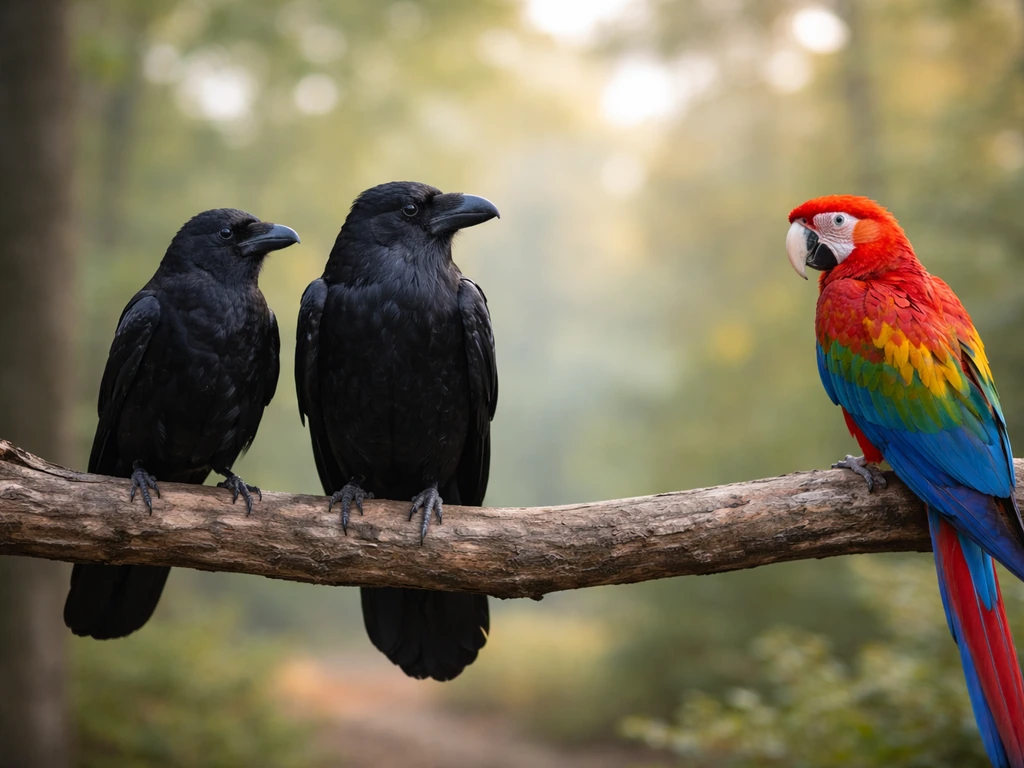
- Crow (American Crow is ubiquitous; the Raven is its larger, more mythologized cousin)
- Magpie (Black-billed Magpie in North America; Eurasian Magpie is equally famous)
- Parrot (a broad category covering macaws, cockatiels, parakeets, and African Greys)
- Hummingbird (Ruby-throated Hummingbird is the most recognized North American species)
Common names vs. scientific names: how bird naming actually works
Every bird species has exactly one scientific (Latin) name, governed by the International Code of Zoological Nomenclature. That name is universal: a birder in Brazil and a birder in Finland can compare notes about Turdus migratorius without any confusion, even if they call it an American Robin versus a merle migrateur. Scientific names are binomial, meaning two parts: genus first, then species epithet. Turdus migratorius, for example, places the American Robin in the genus Turdus (true thrushes) and tags it with migratorius, Latin for 'migratory.'
Common names are a different story. They are governed by separate committees rather than an international code. AOS/NACC’s English bird name guidelines explain how English common names are governed by committees and how stability and rationale factor into choosing, keeping, or replacing names. In North America, the American Ornithological Society's North American Classification Committee (AOS/NACC) sets the official English names. Globally, the IOC World Bird List is the most widely followed standardization effort, and its naming principles explicitly favor brevity: names should be as short as possible and, with rare exceptions, should never exceed four words. That guideline is why you see 'Barn Swallow' rather than 'Common European Barn Swallow,' even though the latter would be more descriptive.
One of the trickiest situations in bird naming happens when a species gets split into two by genetic research. Both the AOS/NACC and Cornell Lab's eBird/Clements checklist try to avoid giving the parent species name to both daughter species at the same time, since that causes real confusion in bird reporting databases.
eBird/Clements documentation also notes that when a species is split, they try to avoid reusing the same English name and scientific name for both the parent and daughter species to reduce confusion in reporting.
Often the familiar name stays with the more familiar or widespread daughter species, and the newer split gets a fresh name. This is why stability is a stated goal: ornithological committees openly weigh scientific accuracy against the disruption of changing a name that millions of birdwatchers have used for decades.
eBird's checklist infrastructure is a good illustration of how common and scientific names coexist in practice. Every entry carries both a standardized Common Name and a Scientific Name, and a separate column logs alternate common names so regional and historical synonyms don't get lost. The v2025 Clements checklist (released October 2025) continues this dual-column approach, which means a single species can officially answer to several English names depending on which authority you follow.
Where bird names come from: etymology across languages
Bird names are a linguist's playground. English borrows from Old English, Old Norse, Latin, Greek, French, and even onomatopoeia all in the same field guide. Here are the origin stories behind the names most people actually use.
| Bird Name | Language of Origin | Root Word / Meaning |
|---|---|---|
| Robin | Old French / Germanic | From 'Robert' (a pet name for the bird, given for its red breast); formally: Erithacus rubecula, from Latin ruber, 'red' |
| Sparrow | Old English | spearwa, a general word for small bird; related to Proto-Germanic *sparwan |
| Eagle | Old French / Latin | aigle, from Latin aquila, meaning 'eagle'; possibly linked to aquilus, 'dark-colored' |
| Falcon | Medieval Latin / Old French | falco, possibly from Latin falx, 'sickle,' describing the curved talons or beak |
| Heron | Old French / Germanic | hairon, from Frankish *haigiro; related to Old High German heigir |
| Finch | Old English | finc; onomatopoeic, echoing the bird's sharp call; cognate with Dutch vink and German Fink |
| Crow | Old English | crawe; onomatopoeic from the bird's call (compare German Krähe, Dutch kraai) |
| Wren | Old English | wrenna or wrænna; origin uncertain but very old, with cognates in Dutch (winterkoning, 'winter king') |
| Swallow | Old English | swealwe; from Proto-Germanic *swalwon; cognate with German Schwalbe |
| Cardinal | Latin / English | From the red robes of Catholic cardinals (cardinalis, 'principal, chief'); the bird named for its color |
| Pelican | Latin / Greek | pelecan, from Greek pelekan, likely derived from pelekus, 'axe,' referring to the beak shape |
| Flamingo | Spanish / Portuguese | flamengo, from Latin flamma, 'flame,' for the pink-red plumage; possibly also linked to the Flemish people via folk etymology |
| Hummingbird | English compound | Descriptive: hums + bird, named for the sound produced by rapid wingbeats (up to 80 beats per second in some species) |
| Magpie | Old French / English | Mag (a pet name for Margaret, used for chattiness) + pie (from Latin pica, 'magpie') |
| Owl | Old English | ule; from Proto-Germanic *uwwalon; ultimately onomatopoeic, echoing the hoot |
A pattern worth noticing: a huge number of bird names are either onomatopoeic (Crow, Finch, Cuckoo, Chickadee, Pewee) or descriptive of a physical feature (Cardinal, Flamingo, Pelican, Redstart). The ones that come from personal names (Robin, Magpie, Martin, Jack Snipe) reflect an old European tradition of giving familiar backyard birds affectionate nicknames as a way of domesticating them culturally. That tradition is alive and well in pet bird naming today.
Picking a great name for a pet bird

Pet bird naming is its own sub-discipline, and the rules are different from naming a dog or a cat. Birds, especially parrots, cockatiels, and budgies, are sensitive to phonetics in a way most other pets are not. A name that ends in a vowel sound or contains a sharp consonant tends to get a bird's attention more reliably than a flat, soft name. Think 'Kiwi,' 'Mango,' 'Rio,' or 'Cosmo' rather than 'Humphrey' or 'Norman' (though Norman the cockatiel is genuinely a great energy).
Sound patterns birds respond to best
Parrots and other vocal birds process high-frequency sounds particularly well. Names with bright vowels (i, ee, ay) and hard consonants (k, t, p) tend to register faster. One or two syllables is ideal for recall and training: 'Tiki,' 'Pepper,' 'Koko,' or 'Pip' are all strong choices from a phonetics standpoint. Longer names are fine for the owner, but most trainers recommend picking a short version that becomes the bird's working name.
Matching name to species
Species personality and appearance are real factors. A Scarlet Macaw named 'Ember' or 'Blaze' is a natural fit; an African Grey named 'Einstein' or 'Sage' plays into the species' reputation for intelligence. Cockatiels tend to get gentle, musical names (Luna, Sunny, Piper) because of their soft vocalizations. Budgerigars, being small and quick, often suit punchy one-syllable names (Zip, Bean, Sky). Canaries are frequently named after their defining quality: their song. Names like 'Caruso,' 'Aria,' or 'Maestro' are popular for good reason.
Names inspired by bird etymology
If you want a name with linguistic depth, raiding bird etymology is a legitimate strategy. 'Aquila' (Latin for eagle) makes an excellent name for a large, imperious bird. 'Pica' (the Latin genus name for magpies, meaning 'magpie') works beautifully for a chatty, curious bird. 'Ruben' or 'Ruby,' both rooted in Latin ruber meaning red, are natural names for Red-factor Canaries or any bird with warm plumage. 'Falco' works for any falcon-adjacent bird with attitude.
Quick reference: top pet bird names by style
| Style | Example Names | Best Fit |
|---|---|---|
| Food-inspired (popular, easy to say) | Mango, Kiwi, Pepper, Biscuit, Peanut | Budgies, cockatiels, conures |
| Nature and color | Sunny, Sky, Ember, Indigo, Sage | Canaries, lorikeets, macaws |
| Latin/etymology-based | Aquila, Falco, Pica, Ruben, Mira | African Greys, large parrots, raptors kept for falconry |
| Musical/artistic | Caruso, Aria, Coda, Lyric, Jazz | Canaries, singing finches, cockatiels |
| Punchy and playful | Pip, Zip, Koko, Rio, Bean | Budgerigars, lovebirds, small parakeets |
| Human names (classic) | Charlie, Rosie, Max, Gus, Lola | Any species, especially larger parrots |
Spelling variations, regional synonyms, and naming confusion
One of the genuinely confusing things about bird names is that the same bird can have multiple valid common names depending on which country you are in, which checklist the author followed, and how old the field guide is. The IOC list and the AOS/NACC list do not always agree, and the British Ornithologists' Union has its own opinions too. The eBird/Clements checklist addresses this by maintaining a column of alternate common names alongside the primary standardized name, which is the most practical solution available to a working birder.
A few examples of the same bird wearing different name tags: the bird North Americans call a Common Loon is a Great Northern Diver in the UK. What Americans call the Snowy Plover, Europeans call the Kentish Plover. The Northern Lapwing is sometimes called a Peewit (onomatopoeic, after its call) or a Green Plover in older British texts. And the bird universally called a Robin in the US (Turdus migratorius, a thrush) is taxonomically unrelated to the European Robin (Erithacus rubecula, a flycatcher-relative), though both share the name because early European settlers in North America named the familiar red-breasted bird they saw after the robin back home.
Spelling variation is less dramatic but still real. 'Grey' versus 'Gray' appears in species names (African Grey Parrot is the standard English spelling; American sources sometimes use African Gray). 'Parakeet' and 'Parrakeet' are both found in historical texts; modern usage has converged on 'parakeet.' For official common names, following the AOS/NACC list for North American birds or the IOC list for global birds is the cleanest way to resolve ambiguity. It is also worth noting that bird species names are increasingly subject to review: several eponymous bird names (birds named after historical figures) have been or are being reconsidered, making it a genuinely active area of naming change right now.
Bird names in sports, wordplay, and pop culture
Bird names punch well above their weight in popular culture. In professional sports alone, there are multiple NFL teams with bird names (the Eagles, Falcons, Ravens, Cardinals, and Seahawks being the most prominent), plus MLB franchises like the Baltimore Orioles and Toronto Blue Jays. Golf has an entire scoring vocabulary built from bird names: a birdie (one under par), an eagle (two under), and an albatross (three under) all follow an escalating logic where the rarer and more impressive the bird, the better the score it represents. You might also wonder why golf uses bird names like birdie, eagle, and albatross in the first place scoring vocabulary built from bird names.
In literature and mythology, birds have always carried symbolic weight. The Raven is Edgar Allan Poe's most famous character, full stop. The Phoenix is arguably the most globally recognized mythological bird, appearing in Greek, Egyptian, Chinese (as the Fenghuang), and Japanese (as the Ho-oh) traditions. The Crane is a symbol of longevity and good fortune in East Asian cultures, deeply embedded in Japanese origami tradition. The Owl, across Greek, Roman, and Native American traditions, consistently represents wisdom, or its dangerous counterpart, omen.
Wordplay and crossword constructors have a particular fondness for bird names. Short names with uncommon letter combinations are crossword gold: EMU, OWL, JAY, TIT, and IBIS appear in English-language puzzles far more often than their populations in the wild would justify. 'Martin' and 'Robin' and 'Jay' all double as human first names, which opens up an entire category of bird-name puns. The fact that a Blue Jay is also just a guy named Jay named for a bird who might be named for the bird is a level of circular etymology that should delight anyone who loves language.
If you want to go deeper into any of these cultural threads, the intersection of bird names with sports scoring and team branding, the funniest bird names ever coined by ornithologists, the best species names from a purely aesthetic standpoint, or which bird names are currently being changed and why, all of those are rich territories worth exploring on their own terms.
If you are also wondering how many MLB teams have bird names, that team-branding angle is covered in a related guide. Those updates happen when taxonomic splits and committee revisions shift what “official” common names are used for each species which bird names are changing. If you want the best bird species names, the next step is to narrow your favorites by style, familiarity, and how they’re officially standardized.
If you are hunting for funny bird names, you will find plenty of playful options in the way birders coin nicknames and swap labels over time. If you are also brainstorming a name for a dog, you can use the best bird dog names list as a starting point.
FAQ
What’s the easiest way to look up “top bird names” without running into regional name confusion?
Use a workflow that pairs a common name with the scientific name (or at least checks both). If you only remember the English common name, switch to a checklist or database view that includes an alternate-common-names column, then confirm the species by the scientific Latin binomial to avoid the “same word, different bird” problem.
If I want the “most official” common name for a species, which standard should I follow?
For North America, follow the AOS/NACC English common names. For a global, single reference, follow the IOC World Bird List. If you use eBird or similar tools, rely on the platform’s standardized entry because it is designed to handle synonyms through a separate alternate-name column.
Why do some birds have a very long common name even though naming rules prefer brevity?
Brevity rules are not absolute across every region, older field guides, and transitional committee decisions after splits. If you see an expanded phrase (often with habitat, geography, or qualifier words), it may be a legacy label kept for clarity or because the older guide pre-dated later standardization.
How should I handle bird name spelling differences like “gray” vs “grey” when creating a label or register?
Decide on a target audience and stick to one convention. For official North American species common names, use the AOS/NACC spelling style. For broader international use, use the IOC listing’s spelling, especially if your list might be shared across countries or databases.
What happens to a bird’s “top name” when a genetic split occurs, does the old name get reused?
Often the original common name stays with the more familiar or widespread daughter species, and the newly split population gets a fresh name. During the transition, some birders keep using the old label informally, so if you are tracking “top names” over time, you should record both the old and new labels and the year of change.
Are the “top bird names” list items always the same as the most popular birds to spot in real life?
Not necessarily. Cultural familiarity and real-world detectability are different. A widely known name like “Eagle” or “Robin” can be more recognizable in media, even if a different species is more common in your local area. If your goal is identification, sort by local abundance rather than just cultural exposure.
Can I use scientific names as pet bird names, and are they safe/usable?
Yes, but keep them practical. Many people shorten scientific or genus names into something pronounceable (for example, using a genus root as a nickname). For everyday training and calling, stick to a name that fits on the breath in one to two syllables, and avoid hard-to-pronounce Latin clusters that won’t land well.
What are common mistakes people make when choosing bird names for training?
A frequent mistake is choosing a long or soft name that is easy to miss, or picking something that sounds too similar to common cues (like “sit,” “stay,” or “night”). Also avoid names that are easily confused with the bird’s alarm sounds, since birds can treat that similarity as a signal.
How do phonetics preferences for parrots and other vocal birds affect name choice?
Vocal birds often respond faster to names with clearer consonant onsets and bright vowel sounds, and one or two syllables generally become the working name. If you want the best recall, test the name out loud multiple times per day, in a consistent tone, and watch for attention or head turn within the first few weeks.
If a bird name is shared with a human name, is that helpful or confusing?
It can be helpful because recall is easier for humans and the name often has emotional familiarity. But it can be confusing in shared households, especially if family members have the same name. A practical fix is to choose a short bird-specific variant (for example, “Pip” instead of “Piper”) that won’t be regularly used for people.
Where do “top bird names” show up in wordplay puzzles, and does that bias which names are most common in lists?
Yes, puzzle-friendly short names (like OWL, JAY, EMU) tend to be overrepresented in everyday wordplay references compared with what shows up most in nature. If you are building a list for a game or classroom activity, you may want a separate ranking based on letter patterns and brevity rather than cultural bird familiarity.
Are bird names that reference people or history (eponyms) likely to change?
They can. Naming decisions are actively reviewed, especially after new taxonomic insights or committee consensus shifts. If your list matters for publishing or a long-term project, store an “as-of” date and capture both the current and prior labels so you can update without losing context.