If you looked up 'turkey bird' in a dictionary expecting it to simply mean the Thanksgiving bird, you are in for a surprise. Merriam-Webster defines 'turkey bird' specifically as the wryneck, flagged as dialectal English. That is a completely different species. So the question 'how did the bird turkey get its name' actually has more than one answer depending on which creature you are asking about. This article covers all the main candidates, but spends the most time on the wryneck definition, because that is the one that genuinely puzzles people once they discover it.
The direct answer: why 'turkey' ended up attached to a bird name
The short version: 'turkey' in bird common names almost always signals a resemblance-based label, not a claim of biological kinship with Meleagris gallopavo. When English speakers looked at a bird and saw something that reminded them of a turkey, whether a puffed-up neck, a bare warty head, a fan-shaped tail, or just an overall silhouette, they reached for the word 'turkey' as a descriptive shorthand. This is exactly how common names in English have worked for centuries. It is casual, visual, and utterly unscientific.
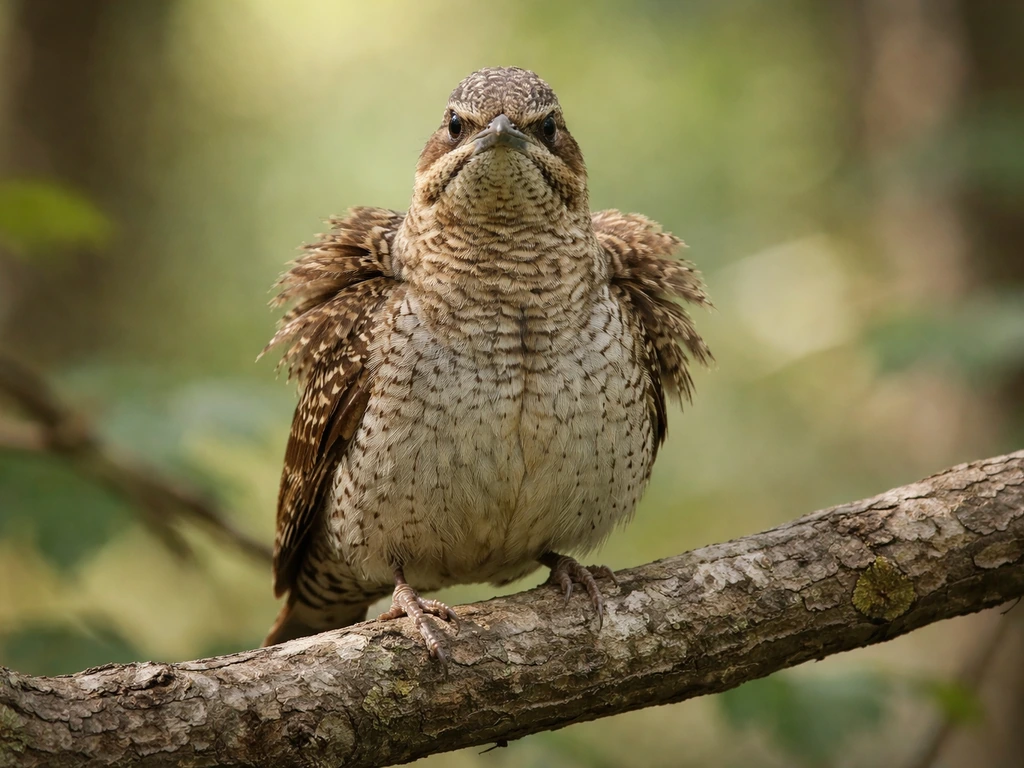
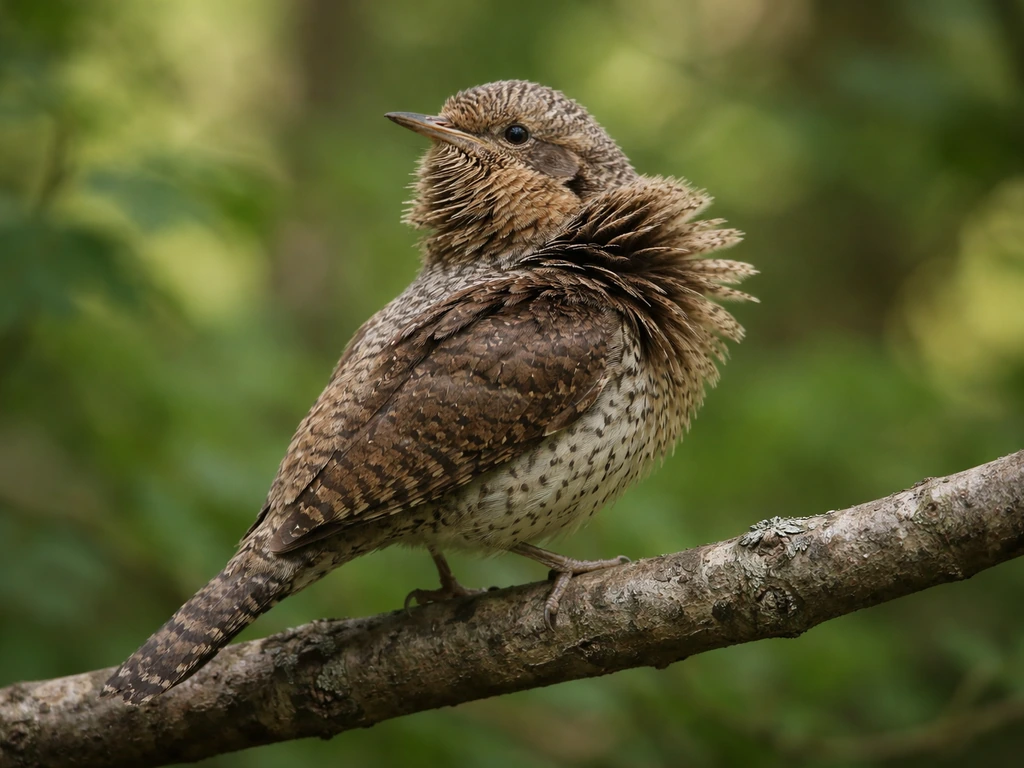
For the wryneck specifically, the Collaborative International Dictionary of English spells out the reasoning directly: the bird 'erects and ruffles the feathers of its neck when disturbed,' which apparently reminded observers of a turkey doing the same thing. That behavioral cue was enough to earn it the label 'turkey bird' in provincial English usage. There is no taxonomic relationship involved whatsoever. The wryneck belongs to the woodpecker family (Picidae), while the domestic turkey is a galliform. The name is pure folk description.
How 'turkey bird' entered English usage for the wryneck
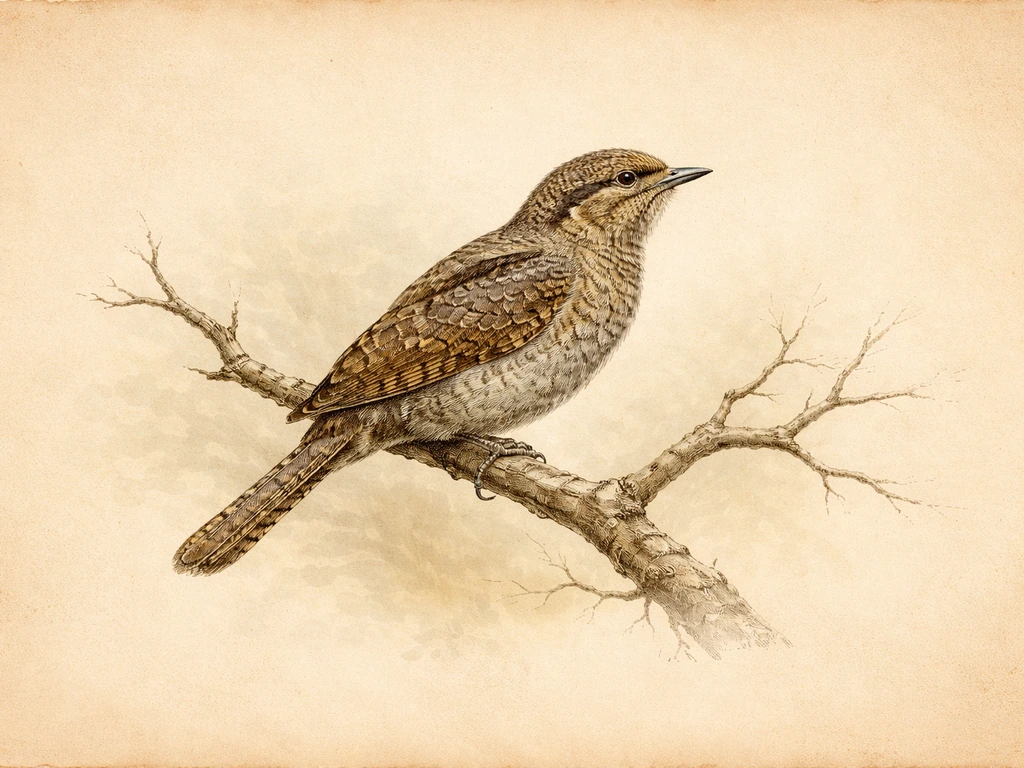
The term 'turkey bird' as a name for the wryneck appears in historical British natural history records, particularly from East Anglia. One passage in the natural history notes on Norfolk references 'Turkey-bird' appearing in an old manuscript note, with the editor confirming it refers to the wryneck. The Century Dictionary, one of the most thorough historical American-English dictionaries, lists 'turkey-bird' as 'The wryneck, lynx torquilla. Local, British.' That taxonomic binomial (now updated to Jynx torquilla) helps pin down exactly which species the old common name was attached to.
The 'Local, British' tag is important. This was not a nationwide standard name. It was a regional vernacular, the kind of informal field name that birders and naturalists in certain counties used among themselves. Common names like this were rarely coined by scientists or lexicographers; they grew organically out of everyday observation. Someone in Norfolk watched a wryneck ruffle its neck feathers, thought of a gobbling turkey, and the nickname spread locally. That is genuinely how a lot of bird common names were born, which is also why the same species can carry a dozen different names depending on where you are in the country.
It is worth noting that the wryneck is also the bird behind the old-fashioned name 'throstle' in some older texts, which illustrates just how tangled historical common names can get. Multiple names, same bird, different regions, different centuries.
Folk naming vs documented etymology: what the evidence actually says
A lot of bird-name origin stories circulate online as settled fact when they are actually folk etymology: plausible-sounding explanations that have never been documented in primary sources. The 'turkey' element in bird names is a good test case for this. There are at least three documented mechanisms at work, and it is worth keeping them separate.
- Behavioral resemblance: The wryneck ruffles its neck feathers like a turkey. This is documented in the CIDE and supported by historical manuscript evidence from Norfolk.
- Physical resemblance: The turkey vulture's naked, warty head and neck reminded observers of a turkey's, earning it the name 'turkey buzzard.' This is also documented in the CIDE with an explicit physical comparison.
- Silhouette/tail resemblance: The Anhinga's fan-like tail when spread for drying gave it the nickname 'water turkey.' Cornell Lab's All About Birds and the Anhinga's Wikipedia entry both confirm this as the visual basis for the nickname.
What you do not find in any of these cases is a documented etymological chain connecting the bird's name back to the country Turkey or to trade routes through the Ottoman Empire. That story does come up for the domestic turkey (Meleagris gallopavo) itself, where there is a genuine and interesting etymological debate, but it does not cleanly transfer to every bird that carries a 'turkey' nickname. Whether the domestic turkey is actually named after the country is a separate question with its own complicated answer.
For the wryneck specifically, the name origin is behavioral and observational, not geographic. That is the documented explanation, and it is backed by dictionary definitions going back at least to the 19th century. If someone tells you the wryneck is called 'turkey bird' because of some connection to Turkish trade, ask them for the source. You will not find one.
The 'turkey' label across multiple species: a pattern worth knowing
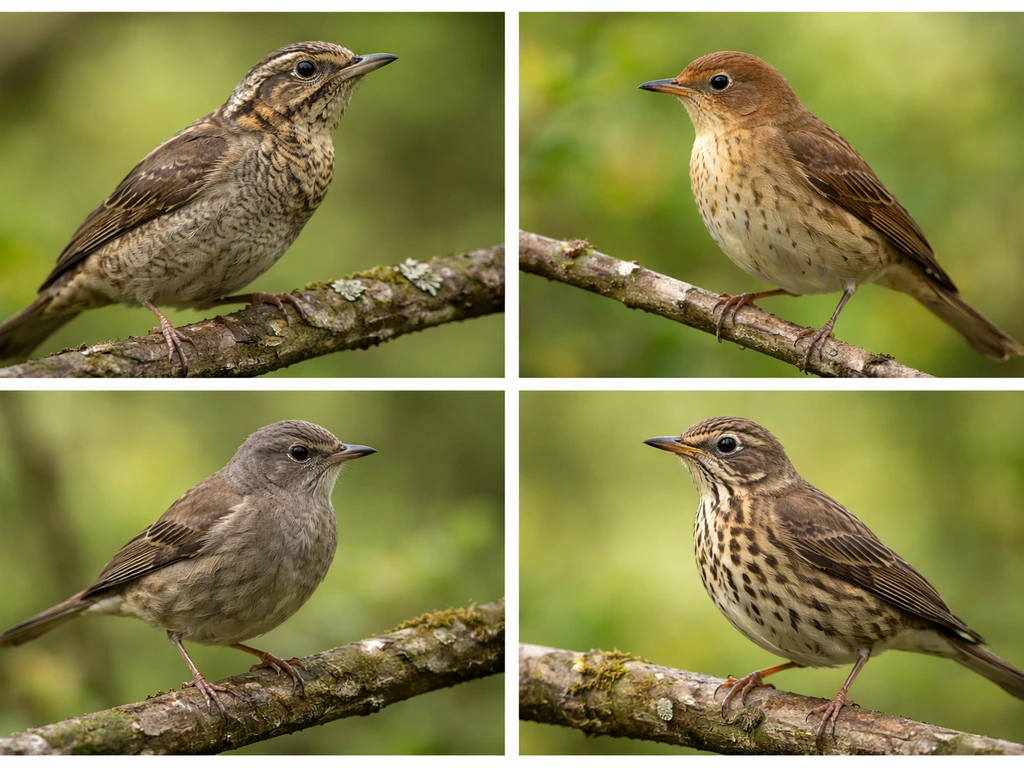
Once you start looking, 'turkey' turns up as a descriptor in a surprising number of bird common names, and almost all of them work the same way: someone noticed a turkey-like quality in another bird and the label stuck. The turkey vulture, the water turkey (Anhinga), and the turkey bird (wryneck) are the three most documented examples in English, but the pattern itself tells you something useful about how common names function. Britannica also discusses the turkey vulture (Cathartes aura) and notes its common alternate name, “turkey buzzard.”.
The Anhinga (Anhinga anhinga) is a good illustration of how far this naming convention can stretch. It is a water bird in the darter family, entirely unrelated to the domestic turkey (Meleagris gallopavo). Yet in Florida it is regularly called 'water turkey,' and both the Florida Fish and Wildlife Conservation Commission and Cornell Lab's All About Birds record this as an accepted vernacular name. The reason is purely visual: when an Anhinga spreads its wings and tail to dry in the sun, the fan of tail feathers looks remarkably like a turkey displaying. That one shared visual cue was enough for the nickname to take hold regionally and persist for generations.
This pattern of borrowing a familiar bird's name to describe a superficial resemblance in a completely different species is not unique to English or to turkeys. It is a universal feature of folk nomenclature. If you have ever wondered why people say 'tuna fish' but not 'chicken bird', that question actually touches on the same underlying dynamic: how everyday language handles animal names in ways that have nothing to do with biology. If you have ever wondered why do people say 'tuna fish' but not 'chicken bird', that question actually touches on the same underlying dynamic: how everyday language handles animal names in ways that have nothing to do with biology.
Common names vs scientific names: why the difference matters here
Scientific names exist precisely because common names are unreliable. The wryneck's scientific name, Jynx torquilla (historically written as 'lynx torquilla' in older dictionaries), says nothing about turkeys. 'Jynx' refers to the bird's use in ancient Greek magic charms, and 'torquilla' comes from the Latin for 'to twist,' referencing its neck-twisting behavior. That is a completely independent naming tradition that describes what the bird actually does, not what it vaguely resembles.
Common names, on the other hand, are regional, informal, and historically unstable. 'Turkey bird' for the wryneck was local to parts of England. Someone in Scotland might have called the same bird something else entirely. A birder in the American South might never have heard of it. This is why ornithologists moved toward standardized common names alongside scientific names, though even standardized common names can carry legacy confusions from centuries of folk usage.
| Bird | Common Name with 'Turkey' | Scientific Name | Reason for 'Turkey' Label | Geographic Scope |
|---|
| Wryneck | Turkey bird | Jynx torquilla | Ruffles neck feathers like a turkey (behavioral) | Local, British (dialectal) |
| Turkey Vulture | Turkey buzzard | Cathartes aura | Naked, warty head and neck resembles a turkey's (physical) | North America, widely used |
| Anhinga | Water turkey | Anhinga anhinga | Fan-shaped tail when drying resembles a turkey's tail display (visual) | Southern US, regional vernacular |
| Domestic/Wild Turkey | Turkey | Meleagris gallopavo | Complex etymology possibly tied to trade routes or confusion with guineafowl | English-speaking world |
The table above makes it clear that 'turkey' in a bird name is not a taxonomic signal. It is a descriptive one, applied independently to birds across completely different families when something about them triggered a turkey association in the minds of local observers. This is worth keeping in mind whenever you encounter a 'turkey-something' bird name and want to understand where it came from.
The naming question also opens into a broader pattern you see with other animals. For instance, whether kiwi fruit is named after the kiwi bird involves the same basic question of whether a label implies a real biological connection or is just a borrowed resemblance term. The answer in that case is also more complicated than it first appears.
A note on parallel naming traditions in other languages
English is not the only language where the domestic turkey ended up with a geographically confusing name. In Polish and Ukrainian, the turkey is called 'indyk,' meaning essentially 'Indian bird,' pointing toward a separate folk etymology that associated the bird with India rather than Turkey. These parallel traditions show that different European languages independently reached for geographic labels to make sense of this unfamiliar New World bird, and they did not agree on which geography to invoke. The English word 'turkey' stuck in English; 'indyk' stuck in Slavic languages. Neither label is biologically accurate, but both tell you something about how 16th and 17th century Europeans processed unfamiliar animals by connecting them to places they already knew.
This kind of geographic labeling in animal names is surprisingly common. If you are curious about how countries and birds have influenced each other's names, there are several countries whose names are directly tied to birds, and the stories behind them follow a similar pattern of explorers and settlers using familiar or aspirational labels to name new things.
How to verify the name origin yourself
You do not have to take any of this on faith. The sources that document these etymologies are accessible, and checking them yourself takes less than 15 minutes. Here is a practical research path for confirming the 'turkey bird = wryneck' etymology and understanding where the 'turkey' label came from.
- Merriam-Webster online: Search 'turkey bird.' The definition explicitly gives 'wryneck' as the meaning with the dialectal England label. The word history section confirms the compound structure ('turkey' + 'bird') and the regional usage.
- The Collaborative International Dictionary of English (CIDE): Freely available via platforms like dict.org. Search 'turkey bird' to find the wryneck definition with the neck-ruffling behavioral explanation. Also search 'turkey buzzard' to see the parallel resemblance-based reasoning for that name.
- The Century Dictionary (archive.org): Search for 'turkey-bird' in the scanned pages. You will find the entry with the taxonomic binomial 'lynx torquilla' (historical spelling) and the 'Local, British' geographic tag.
- Google Books / Archive.org: Search 'turkey bird wryneck' in historical natural history texts. Notes and Letters on the Natural History of Norfolk is one documented source that uses 'turkey bird' in an old manuscript note and explicitly identifies it as the wryneck.
- Cornell Lab's All About Birds (allaboutbirds.org): Search 'Anhinga' to verify the 'water turkey' nickname and the tail-resemblance explanation. This confirms how turkey-based nicknames work in a well-documented modern species account.
- OED (Oxford English Dictionary): If you have institutional or library access, the OED entry for 'turkey' includes historical citations for various turkey-based bird names. This is the most authoritative source for dated usage in print.
When you are searching, use specific terms rather than just 'turkey bird etymology.' Try 'turkey bird wryneck dialect,' 'why is wryneck called turkey bird,' and 'turkey as bird common name resemblance.' These more targeted searches surface the primary dictionary definitions rather than generalist pop-science articles that often conflate the wryneck meaning with the domestic turkey's name history.
The practical takeaway
If someone asks you how the bird turkey got its name, the honest answer is: which bird, and which 'turkey' label? For the domestic turkey (Meleagris gallopavo), the etymology involves a genuinely contested history tied to trade routes, confusion with guineafowl, and European exploration of the Americas. For the 'turkey bird' as defined in dictionaries, you are actually talking about the wryneck, a small British woodpecker relative that earned its nickname by ruffling its neck feathers in a turkey-like display. And for birds like the Anhinga or the turkey vulture, 'turkey' is just a visual descriptor applied by local observers who noticed a resemblance and reached for the most familiar large bird they knew.
The broader lesson is one that applies to almost every bird common name you will encounter: these names were never meant to be scientifically precise. They were practical, local, and observational. The scientific name is the one that travels across languages and centuries without confusion. The common name is the one that tells you what a particular community of people noticed first about a bird, which is often more interesting anyway.