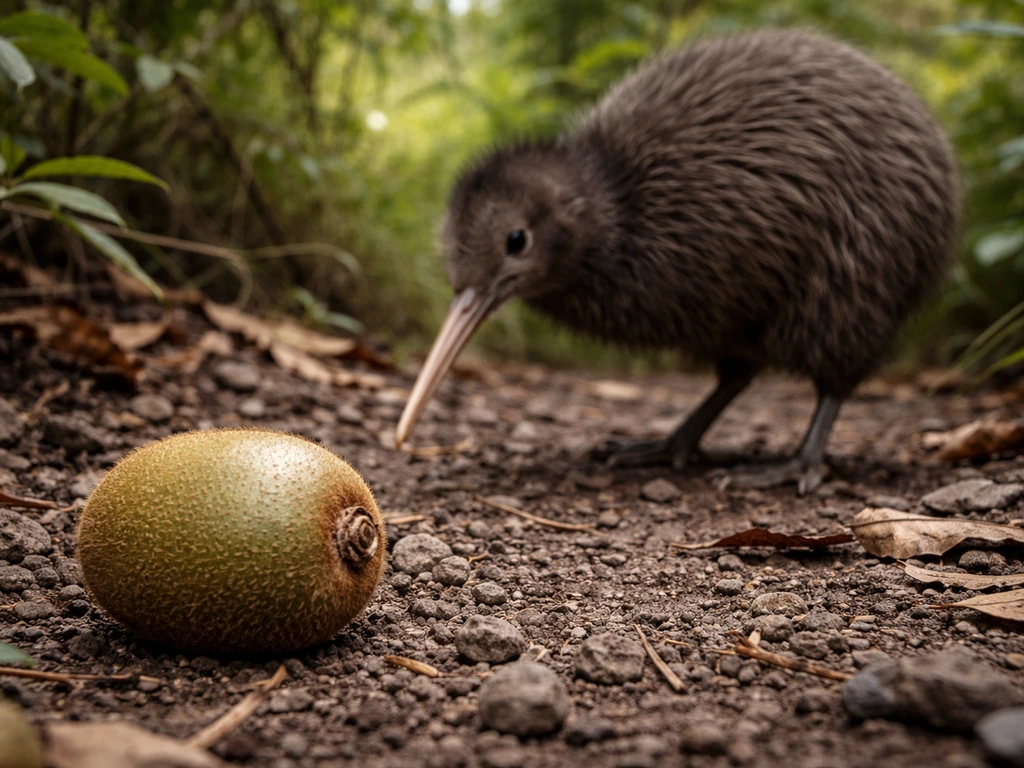
The kiwi fruit is named after the bird, not the other way around. The Māori word "kiwi" for the bird entered English around 1825 to 1835, borrowed directly from the Māori language where it almost certainly imitated the bird's call. Dictionary.com similarly describes the English borrowing timing for Māori "kiwi" as around 1825 to 1835, helping clarify that the bird term predates the fruit name blank" rel="noopener noreferrer">the Māori word "kiwi" for the bird entered English around 1825 to 1835. The fruit didn't get the name "kiwifruit" until June 15, 1959, when a New Zealand export company called Turners and Growers coined the term as a marketing rebrand for what was then known as the Chinese gooseberry. National Library of New Zealand materials similarly describe how the fruit was known under other names and that the marketing “kiwifruit” name was devised in 1959 blank" rel="noopener noreferrer">the “kiwifruit” name was devised in 1959. That's a gap of well over 120 years, which makes the naming direction pretty clear-cut.
Is the Kiwi Fruit Named After the Bird or Vice Versa?

Which name came first: bird or fruit?
The bird wins by a landslide. Both Etymonline and Merriam-Webster record the first known use of English "kiwi" (referring to the flightless New Zealand bird) as 1835. Dictionary.com puts the borrowing from Māori slightly earlier, around 1825 to 1835. Either way, English speakers were calling this bird a kiwi decades before the fruit even had a commercial presence outside of China and New Zealand.
The fruit, botanically Actinidia chinensis, was being grown in New Zealand by the early 20th century, but under the name "Chinese gooseberry." That was the standard English name for it in New Zealand as late as 1925. It wasn't until 1959 that the fruit got rebranded, and it took until around 1966 for the "kiwi" name to catch on in the United States according to Etymonline. So if you've ever wondered which came first, the answer is: the bird by well over a century.
The etymology timeline: from Māori bird call to supermarket shelf
| Year | Event | Source |
|---|---|---|
| c. 1825–1835 | English borrows "kiwi" from Māori to name the flightless bird | Etymonline, Dictionary.com, Merriam-Webster |
| 1925 | Actinidia chinensis is recorded in New Zealand English as "Chinese gooseberry" | Etymonline |
| June 15, 1959 | Turners and Growers coins "kiwifruit" at an Auckland management meeting; name applied to U.S.-bound exports | NZ History (Manatū Taonga), Fruitnet, TIME |
| c. 1966 | "Kiwi" as a fruit name enters common U.S. English usage | Etymonline |
What I find fascinating here is the deliberate, almost cynical marketing logic behind the fruit's renaming. The people in that 1959 Auckland meeting knew exactly what they were doing. "Chinese gooseberry" wasn't going to sell well during the Cold War, especially into the American market where anything with "Chinese" in the name carried political baggage. Jack Turner, who suggested the name "kiwifruit" at that Turners and Growers meeting, was reaching for something that said "New Zealand" without spelling it out. The kiwi bird, already the national symbol and the nickname for New Zealanders since around World War I, was the obvious choice.
How the fruit got its name from the bird (and not vice versa)
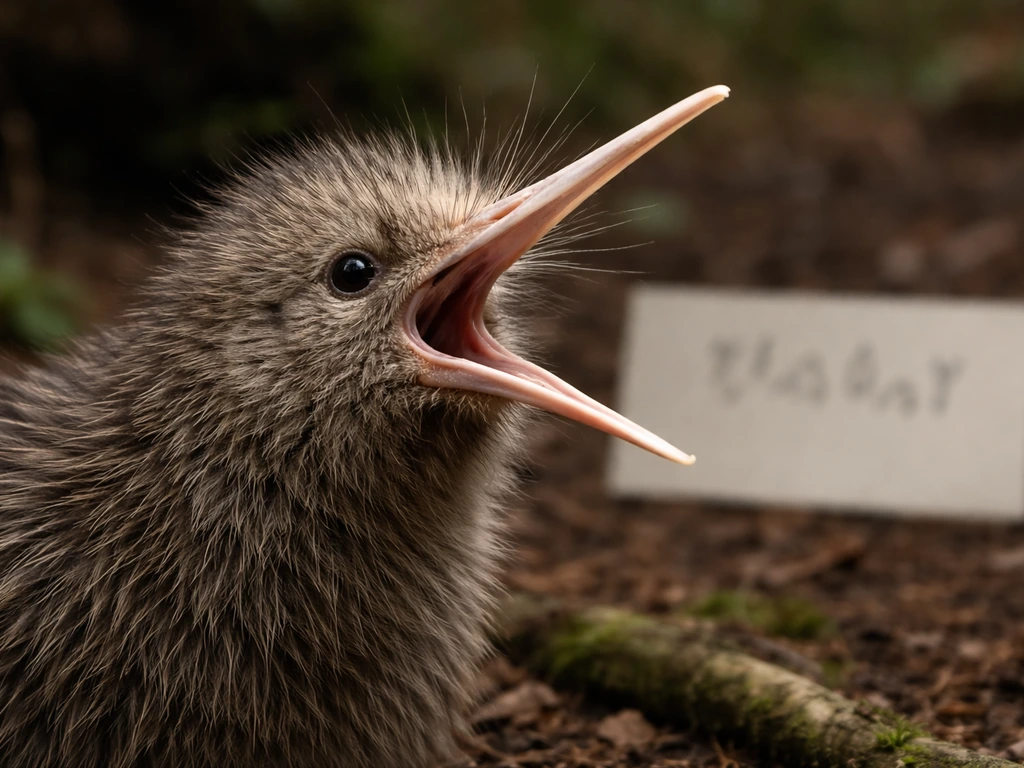
The Māori word "kiwi" is widely accepted by linguists as onomatopoeic, meaning it imitates the sound the bird actually makes. The kiwi (Apteryx species) has a high, piercing call, and the Māori name captures that sound. This is classic zoonomy, naming an animal after its vocalization, and it's extremely common in bird nomenclature across cultures. The English borrowed the Māori term wholesale, which is also not unusual. New Zealand contributed quite a few Māori bird names to English, including weka, tui, and pukeko.
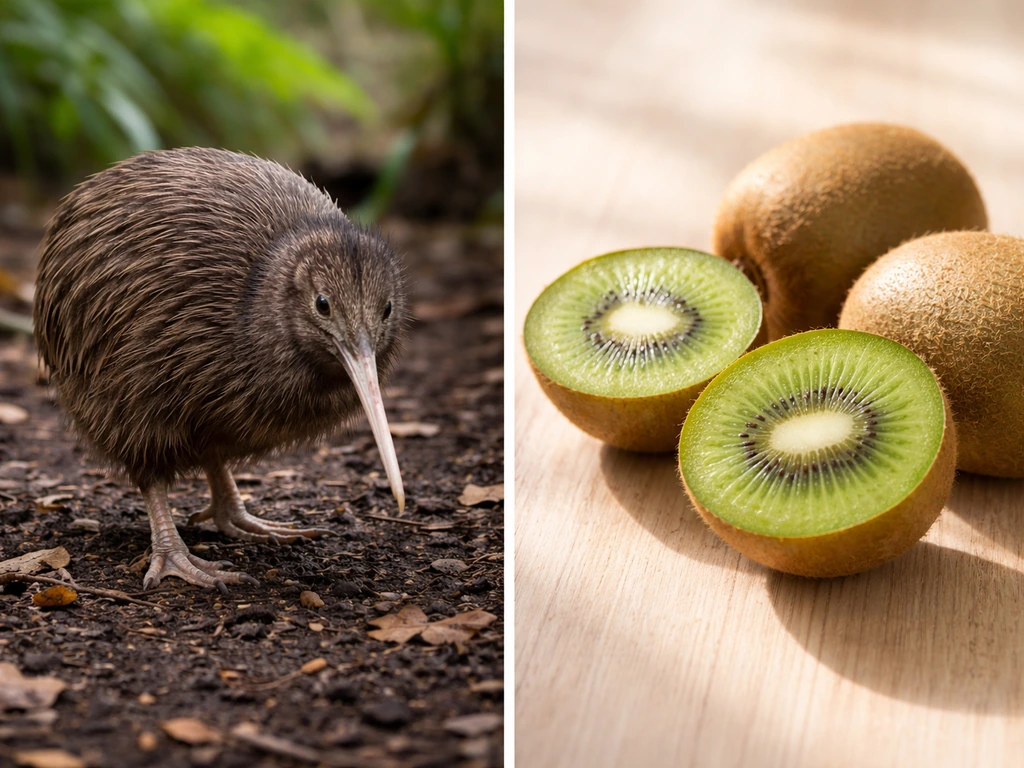
The fruit's connection to the bird is entirely visual and symbolic, not phonetic. Wiktionary states it plainly: kiwifruit was "named after the endemic New Zealand bird, the kiwi, because the fruit's fuzzy brown skin resembles the plumage of the bird." The Te Ara Encyclopedia of New Zealand and the TIME magazine account of the 1959 rebranding both confirm that the fruit was deliberately named to evoke the national identity of New Zealand, using the bird as a proxy. It's a marketing decision, not a linguistic evolution. The World Crops Database is equally direct: kiwifruit got its name from the kiwi bird, rebranded from Chinese gooseberry.
So the naming direction is: Māori bird call (imitative) → Māori word "kiwi" → English borrowing for the bird (1835) → New Zealand national symbol and nickname for New Zealanders (by WWI) → marketing team applies the bird's name to the fruit (1959). Each step points the same way.
Why people get confused about this
The word "kiwi" now carries at least three common meanings in English: the bird, the fruit, and a New Zealander. That's a recipe for genuine confusion, especially for anyone who grew up eating kiwifruit without ever thinking much about the bird. For a lot of people in North America or Europe, the fruit is the first "kiwi" they ever encounter, so it's natural to assume the bird might be the newcomer borrowing a fruit name. It's the same cognitive trap that catches people with the turkey: was the country named after the bird, or the bird after the country? For Turkey, the bird-versus-country confusion is also a matter of etymology and whether the name comes from the place or the animal the turkey: was the country named after the bird, or the bird after the country?. People sometimes feel the same kind of doubt with other animal and place names, like chicken versus tuna fish naming patterns the turkey. Turkey is the example that often comes up when people ask whether a country was named after a bird. (That one has a genuinely complicated answer, unlike this one.)
There's also the fact that "kiwifruit" became enormously more commercially visible than the bird in global markets after the 1960s. By the time kiwifruit was a mainstream supermarket item worldwide in the 1980s, the bird was still mostly known to New Zealanders, wildlife enthusiasts, and people who'd been to a zoo. Commercial dominance doesn't equal naming priority, but it does create the illusion of it.
- "Kiwi" can mean the bird (any of the Apteryx species), the fruit (Actinidia chinensis or deliciosa), or a New Zealander colloquially
- The fruit was called "Chinese gooseberry" in English for decades before the 1959 rebrand
- The bird's name predates the fruit's common English name by at least 124 years
- The word "Kiwis" for New Zealanders was already established by World War I, which is part of why it made sense as a fruit-marketing term in 1959
How to verify this yourself using reliable references

If you want to confirm this for trivia, a school project, or just your own satisfaction, here's what to look for and where to look. The key is checking the first attested dates in reputable dictionaries and etymology databases, then cross-referencing with historical food and agricultural records.
- Check Etymonline (etymonline.com) for both "kiwi" (bird, 1835) and "kiwi fruit" (U.S. usage c. 1966). The separate entries make the timeline obvious at a glance.
- Check Merriam-Webster's entry for "kiwi," which states the first known use as 1835, referring to the bird.
- Go to NZ History (nzhistory.govt.nz) and search for "kiwifruit." The specific date of June 15, 1959 is documented there as the day Turners and Growers officially adopted the name for export shipments.
- Check Te Ara, the Encyclopedia of New Zealand (teara.govt.nz), for the kiwifruit article. It confirms the 1959 marketing rename from "Chinese gooseberry" to "kiwifruit."
- For the bird's etymology, Wikipedia's kiwi (bird) article has a dedicated etymology section that covers the Māori imitative origin and the English borrowing timeline.
The two linguistic clues to anchor your answer are: first attested date (1835 for the bird in English) and origin type (imitative Māori vs. deliberate 1959 marketing coinage). Those two facts, sourced from Etymonline and NZ History respectively, are enough to settle the question for any context, whether you're answering a trivia question, writing an essay, or just winning an argument with a friend.
How to phrase the answer accurately
The most accurate way to state it: the kiwifruit is named after the kiwi bird, which in turn takes its name from the Māori word for the bird, likely imitative of its call. The fruit was previously known in English as Chinese gooseberry and was renamed kiwifruit in 1959 as a marketing strategy, borrowing the bird's name to evoke New Zealand's national identity. The bird's English name predates the fruit's by well over a century.
What you want to avoid saying is that they share a common origin or that the naming direction is unclear, because it isn't. This is one of the cleaner etymology stories in bird nomenclature: a Māori word borrowed into English for a bird, then repurposed more than a century later for a fruit that needed a better marketing angle. If you enjoy this kind of naming puzzle, the story of how the bird turkey got its English name is a much messier case, and there are even countries whose names trace back to birds. If you also like messy naming puzzles, see how did the bird turkey get its name, which is a comparison point for how different naming stories can get tangled. The kiwi's story, by contrast, is refreshingly straightforward once you know where to look. Throstle is an old fashioned name for that same bird throstle is an old fashioned name for which bird.
FAQ
If both “kiwi” and “kiwifruit” existed at different times, how should I word the answer without sounding confusing?
Use “kiwi” for the bird in English, and “kiwifruit” for the fruit. If someone asks about the timeline, the clearest phrasing is that the bird’s English name came from Māori first, then the fruit was rebranded in 1959, using the bird’s already established New Zealand identity.
Does it matter that the fruit was grown in New Zealand before 1959?
Even if the fruit plant existed in New Zealand earlier, that does not decide naming priority in English. The decisive point for your question is when English “kiwi” began meaning the bird, versus when the fruit name “kiwifruit” entered commercial English.
Could “Chinese gooseberry” imply the fruit named the bird in some way?
Be careful with “Chinese gooseberry.” That was the common English label for the fruit in New Zealand for decades, but it was a translation and marketing name, not evidence that the bird or Māori word came from the fruit.
Why do so many people assume the fruit came first?
In English usage, the default association is later because global supermarkets made “kiwifruit” far more familiar worldwide than the bird. That visibility can mislead people into thinking the fruit must have coined “kiwi” first, but the recorded first use of “kiwi” for the bird is much earlier.
What’s the shortest, “trivia-safe” version of the explanation?
If you are answering a trivia question, give the direction and the key dates: Māori “kiwi” enters English in the early 1800s for the bird, and “kiwifruit” appears as a branded term in 1959. That combination is usually the fastest way to score full credit.
Is there any solid reason to think the Māori bird name was influenced by the fruit?
Don’t claim the Māori word came from a fruit. The article’s logic is that Māori “kiwi” refers to the bird, likely by sound imitation, and only later did marketers apply the bird name to the fruit because of visual resemblance and New Zealand branding.
What’s the best way to handle the multiple meanings of “kiwi” when explaining this?
The confusion is partly meaning overlap: “kiwi” can mean the bird, the fruit, or a person from New Zealand. If you are speaking to a general audience, specify which meaning you’re using before you state the etymology.
What do I say when someone argues from logic like “the bird is smaller, so it probably came later”?
If someone insists it is “obvious” because kiwi birds are smaller than kiwi fruit, treat it as a misconception. Naming priority is determined by earliest recorded use of the specific words in the relevant language, not by size, popularity, or modern familiarity.