A 'good luck bird name' is simply a name for a bird, usually a pet, that draws on the symbolic association between a particular bird species (or a word meaning fortune, blessing, or happiness) and good luck in a specific cultural tradition. Think Felix for a robin, Tsuru for a crane, or Magpie if you want to lean into the irony of British folklore. The name works on two levels: it sounds right for the bird, and it carries a meaning that resonates with the owner. That combination is what people are really looking for when they type 'good luck bird name' into a search engine.
Good Luck Bird Name Ideas: Lucky Bird Names by Culture

Maya Castellanos
14 Jul 2026
What 'Good Luck Bird Name' Actually Means
When someone searches for a 'good luck bird name,' they are usually asking one of two slightly different questions. The first is: which bird species are traditionally considered lucky, and what should I name my pet to reflect that? The second is: are there actual names, from any language, whose literal meaning is 'lucky,' 'fortunate,' or 'blessed,' and which of those would suit a bird? Both are valid, and this article covers both. The underlying idea comes from cultural onomastics, the academic study of how names function as social and symbolic resources. A name is never just a label. It encodes values, expectations, and cultural identity, whether you are naming a child, a town, or a cockatiel.
Why We Call Birds Lucky (It's Cultural, Not Scientific)
Luck itself is defined as 'success or failure apparently brought by chance rather than through one's own actions.' That word 'apparently' is doing a lot of work. Anthropologists treat luck as a culturally mediated explanatory category, something closer to concepts like destiny, mana, or apotropaic ritual than to any measurable force. When a culture decides that a swallow nesting on your roof means a good harvest, that belief is doing real social work: it provides comfort, reinforces seasonal awareness, and binds communities around shared omens. Birds are especially convenient vessels for luck beliefs because they migrate (appearing and disappearing at meaningful times of year), they are visible and accessible, and their behavior is genuinely hard to predict. Framing a bird as 'lucky' is a way of giving meaning to that unpredictability. So when I use the word 'lucky' in this article, I mean it in that cultural sense. I'm not claiming that naming your parrot Felix will cause your lottery numbers to come up.
Lucky Birds Around the World: Regional Traditions
Luck beliefs about birds are remarkably widespread, but they are not universal, and the same bird can mean opposite things in different places. Here is a quick regional tour.
Europe
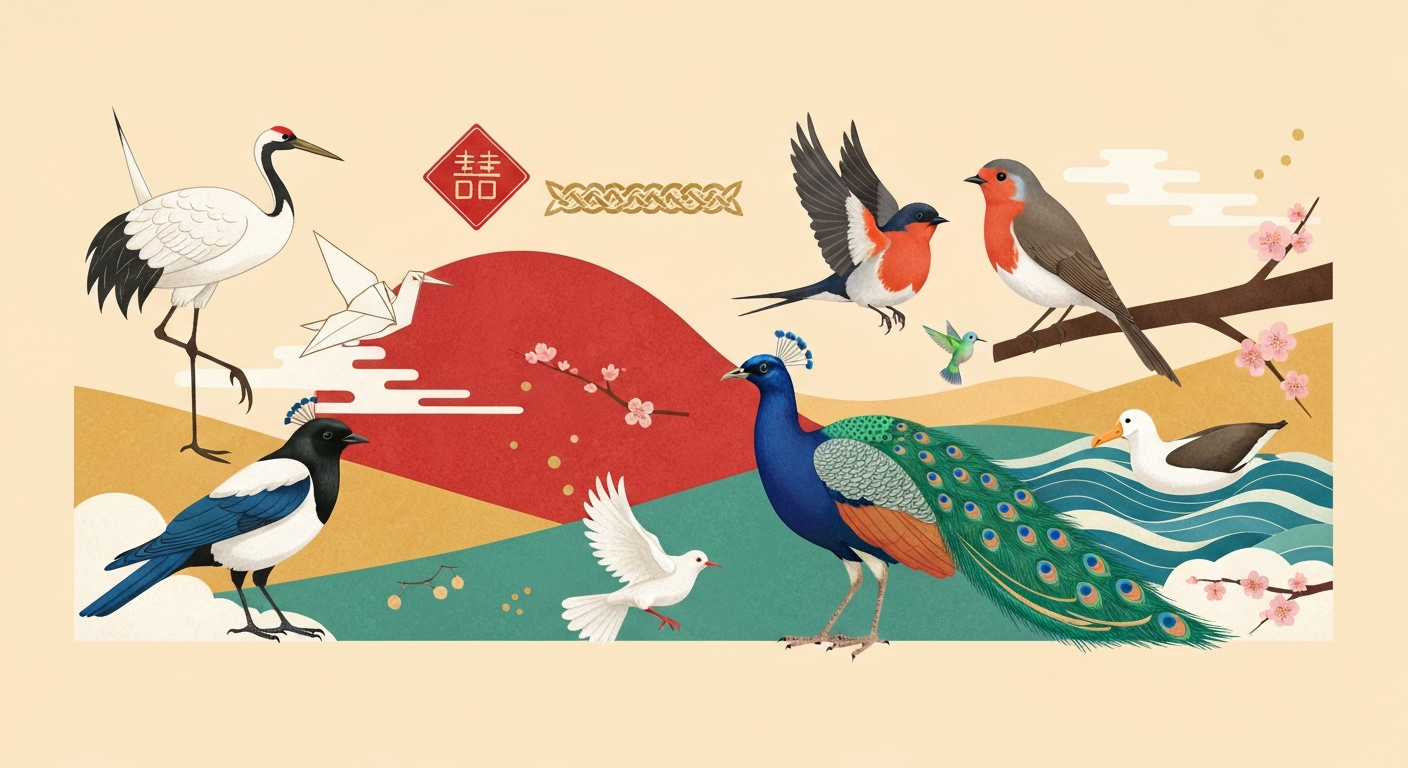
British and Irish folklore attaches protective and auspicious meanings to robins, treating the first robin of spring as a sign of good things to come and linking the bird to messengers and guardians in regional folk tales. Swallows nesting on or in a house are considered lucky and protective across much of northern and western Europe. The magpie presents a fascinating split: in Britain, a lone magpie is counted as an omen of sorrow (captured in the well-known counting rhyme 'One for sorrow, two for joy...'), while two or more shift the omen toward good fortune. The albatross sits in its own category, with maritime tradition treating it as an auspicious sign for sailors at sea, a belief memorably crystallised in Coleridge's The Rime of the Ancient Mariner, where killing an albatross brings catastrophe on the ship.
East Asia
In Japan, the crane (tsuru) is one of the most powerful lucky symbols in the culture, associated with longevity, fidelity, and good fortune. The senbazuru tradition, folding a thousand paper cranes to earn a wish, became globally recognised through the story of Sadako Sasaki, but its roots are much older. The Complete Book of Origami (Dover), discussion of the traditional Japanese crane and senbazuru (thousand cranes) provides background on the crane's role in Japanese culture and the senbazuru tradition The Complete Book of Origami (Dover) — discussion of the traditional Japanese crane and senbazuru (thousand cranes). In Chinese culture, the magpie (喜鹊, xǐquè, literally 'happy magpie') is emphatically auspicious: magpie motifs appear in wedding decorations, New Year imagery, and classical art, and the magpie-bridge appears in the romantic Qixi legend. The contrast with British magpie superstition is a perfect illustration of why cultural context matters.
South Asia
In Hindu tradition, the peacock is considered sacred and auspicious, associated with the deity Kartikeya and treated as the national bird of India partly for this reason. The common myna is regarded as a sign of good fortune in some regional traditions, and parrots are frequently associated with the love deity Kamadeva, making them symbolically charged as pets.
Indigenous Americas
Eagle symbolism is deeply embedded across many Indigenous North American nations, with eagles representing strength, renewal, and spiritual communication rather than 'luck' in the Western casual sense. The hummingbird carries auspicious associations in several Mesoamerican and Andean traditions, sometimes linked to messages from ancestors or signs of love. It is worth being careful here: Indigenous traditions are enormously diverse, and collapsing them into a single 'lucky bird' claim misrepresents living cultures. I'll note symbolic associations where they are well documented, but resist overgeneralising.
Africa
The yellow-billed hornbill and other large-billed birds carry auspicious meanings in parts of sub-Saharan Africa. In many West African traditions, specific birds serve as totemic or ancestral messengers, and the ibis was revered as sacred in ancient Egypt, associated with the god Thoth and with wisdom. The cattle egret, following livestock and appearing wherever people work the land, is widely seen as a companion bird rather than an omen, but its constant presence has given it a benign, fortunate quality in agricultural communities.
The Species Most Commonly Called Lucky: A Quick Guide
| Bird Species | Primary Culture(s) | Core Lucky Association | Best Name Approach |
|---|---|---|---|
| Robin | British, Irish | Spring messenger, good tidings, protection | Warm, cheerful names; seasonal references |
| Swallow | European, maritime, East Asian | Safe return, domestic luck, protection | Sailor-inspired, homecoming, traveller names |
| Crane | Japanese, Chinese, Korean | Longevity, fidelity, fortune, peace | Japanese/Chinese vocabulary names; elegant, long |
| Magpie | Chinese (auspicious), British (mixed) | Joy, good tidings (CN); counted omens (UK) | Joy-based names (CN lens); cheeky names (UK lens) |
| Dove | Western, Abrahamic | Peace, reconciliation, hope, Holy Spirit | Peace-meaning names; gentle, soft sounds |
| Sparrow | Many world cultures | Humility, resilience, everyday blessing | Small but mighty names; unpretentious, warm |
| Goose | Celtic, European, East Asian | Watchfulness, fidelity, safe travel | Navigation, fidelity, and journey-related names |
| Albatross | Maritime European | Safe passage, good wind, guardian of sailors | Nautical names; weather and wind references |
| Phoenix | Global mythological | Rebirth, renewal, auspicious transformation | Fire, sun, and transformation names |
| Peacock | South Asian, broadly | Prosperity, beauty, sacred protection | Regal, colourful, Sanskrit-derived names |
Species-Specific Naming Suggestions
Robin
The robin's association with spring and good tidings in British and Irish folklore makes warm, seasonal names a natural fit. Names like Ember, Russet, or Dawn play to the bird's famous red breast and the sense of seasonal renewal it represents. If you want a name with a literal luck meaning, Felix (Latin: happy, fortunate) sits naturally on a robin because the Latin root connects happiness to abundance, which echoes the robin's spring-messenger role. There is a whole world of robin-specific naming ideas worth exploring if you want to go deeper into species-specific options.
Goose
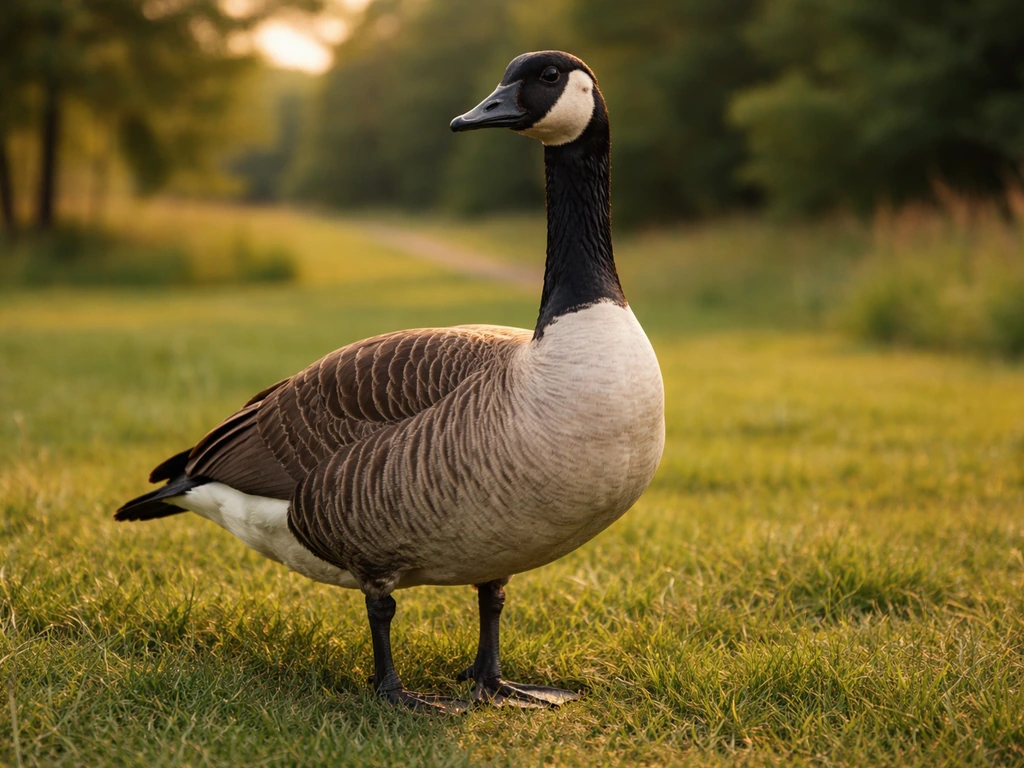
Geese carry associations with watchfulness, fidelity, and safe travel across Celtic and broader European traditions, and their migratory journeys have always made them symbols of seasonal return and navigation. Names with a wayfaring or guardian quality work well: Sentinel, Pilgrim, Warden, or the Irish Faoláin (little wolf, but historically applied to watchful animals). For those drawn to the nursery-rhyme tradition around geese, there is a rich vein of playful naming culture in the 'goosey goosey' folklore lineage that connects pet-goose naming to a surprisingly old linguistic heritage.
Swallow
The swallow's luck associations cluster around homecoming and protection. Sailors historically had swallow tattoos as talismans for safe return, and the swallow nesting in your eaves was considered a sign of domestic good fortune in much of Europe and parts of Asia. Names like Marina (of the sea), Haven, Harbor, or the Japanese Tsubame (the everyday word for swallow, which has a clean, bright sound) all capture different facets of this tradition.
Crane
For cranes, lean into Japanese and Chinese vocabulary. Tsuru is the Japanese word for crane and is genuinely used as a name. Kōzuru means 'young crane' and has a softer sound. The Chinese hè (鶴) is the character for crane and appears in compound names. Senbazuru, meaning 'a thousand cranes,' works beautifully as a name for a bird you have a particularly hopeful relationship with, though it is long enough that you might train your bird to respond to Sen for short.
Sparrow
The sparrow's luck associations are quieter and more universal than the crane's, rooted in resilience and everyday grace rather than grand ceremony. Names like Finch (a neighboring species name that carries the same small-but-tenacious energy), Pip, Wren, or Zara (Arabic root meaning 'flower,' chosen here for its bright, compact sound) suit sparrows well. If you want a luck-meaning name, Asher (Hebrew: happy, blessed) works nicely for a male sparrow with an unassuming but genuinely fortunate character.
Magpie
Naming a magpie is an opportunity to pick a side in one of folklore's great disagreements. If you're going with the Chinese auspicious reading, Xǐ (喜, joy, happiness) or the Anglicised Joy work perfectly. If you're a British-tradition ironist who knows that one magpie means sorrow, naming your bird Solo or Omen or even Sorrow-Not leans into the joke with full awareness. The magpie's intelligence and theatrical personality make a slightly cheeky name feel earned.
Names That Literally Mean 'Lucky': A Catalogue by Language
This is where etymology earns its keep. Below are names drawn from multiple linguistic traditions, each with its root meaning verified. These work for any bird species because the luck meaning comes from the name itself, not from a species association.
| Name | Language/Origin | Root Meaning | Notes |
|---|---|---|---|
| Felix | Latin | Happy, fortunate | From Latin felix (gen. felicis); PIE root linked to fruitfulness |
| Felicity | Latin/English | Happiness, good fortune | From Latin felicitas; feminine form of the same root as Felix |
| Felicia | Latin | Happy, fortunate | Feminine Latin adjective form; elegant and classical |
| Asher | Hebrew | Happy, blessed, fortunate | Biblical Hebrew name (אָשֵׁר); one of the twelve tribes |
| Saeed / Sa'id | Arabic | Happy, fortunate, blessed | From Arabic root s-ʿ-d (سعيد); common across Arabic-speaking world |
| Saida | Arabic | Happy, fortunate | Feminine form of Saeed; soft three-syllable sound |
| Fu | Chinese | Good fortune, blessing | From character 福 (fú); widely used in names and decorations |
| Fuku | Japanese | Good fortune | Japanese reading of 福; warm and compact sound |
| Kichi / Yoshi | Japanese | Auspicious, lucky | From kanji 吉; Yoshi is common in modern names |
| Beatrix / Beatrice | Latin | She who brings happiness | From Latin beatus (blessed); not identical to 'luck' but overlapping |
| Bonaventure | Latin/French | Good fortune, good luck | From bona ventura; medieval given name; playful for a large bird |
| Fausto | Italian/Spanish | Lucky, fortunate | From Latin faustus; brother-root to Felicity |
| Fortuna | Latin/Italian | Fortune, luck | Direct name of the Roman goddess of luck; dramatic for a confident bird |
| Lucky | English | Directly meaning lucky | Transparent and training-friendly; one syllable variants work well |
| Chance | English | Fortune, luck by chance | Short, clear, and training-friendly |
| Blessing | English | Divine favour, fortunate gift | Elegant as a name for a calm, gentle bird |
Names by Gender and Use Case
Here is the same catalogue reorganised by how you might actually use it. I've also added a 'short for training' column because a two-syllable name with a hard consonant at the start is genuinely easier for birds (especially parrots and corvids) to learn and respond to.
| Name | Gender | Use Case | Short for Training | Cultural Root |
|---|---|---|---|---|
| Felix | Male | Elegant, classical | Felix (already short) | Latin luck |
| Asher | Male | Warm, spiritual | Ash | Hebrew blessed |
| Saeed | Male | Multicultural, meaningful | Sid | Arabic fortunate |
| Fausto | Male | Dramatic, romantic | Foz | Latin lucky |
| Kichi | Male | Compact, Japanese-inspired | Kichi | Japanese auspicious |
| Tsuru | Unisex | Elegant, species-specific (crane) | Tsu | Japanese crane/luck |
| Fu | Unisex | Short, punchy, Chinese-inspired | Fu | Chinese fortune |
| Fuku | Unisex | Warm, Japanese | Fuku | Japanese fortune |
| Lucky | Unisex | Playful, direct, training-friendly | Lucky | English luck |
| Chance | Unisex | Cool, modern, training-friendly | Chance | English fortune |
| Felicity | Female | Graceful, classical | Fliss or Flic | Latin happiness |
| Felicia | Female | Elegant, soft | Fee | Latin fortunate |
| Saida | Female | Multicultural, melodic | Said | Arabic fortunate |
| Fortuna | Female | Dramatic, goddess-inspired | Fori | Latin fortune goddess |
| Blessing | Female | Gentle, warm | Bless | English divine favour |
| Beatrix | Female | Whimsical, literary | Bea or Trix | Latin brings happiness |
| Joy | Female/Unisex | Bright, simple, species (magpie) | Joy | Chinese xǐ connection |
| Sen | Unisex | Short, training-ideal | Sen | Japanese thousand (cranes) |
| Pip | Unisex | Playful, tiny bird energy | Pip | Compact and cheerful |
| Ember | Unisex | Warm, robin/seasonal | Em | Colour and season based |
Ready-to-Use Name Lists
Male Good Luck Bird Names
- Felix (Latin: fortunate)
- Asher (Hebrew: happy, blessed)
- Saeed (Arabic: fortunate)
- Fausto (Latin: lucky)
- Kichi (Japanese: auspicious)
- Tsuru (Japanese: crane, longevity)
- Phoenix (mythological: renewal and rebirth)
- Merlin (the bird and the wizard: both carry auspicious power)
- Robin (British folklore luck association)
- Pilgrim (traveller safely returned)
- Warden (guardian, protective energy)
- Sol (sun, warmth, renewal)
Female Good Luck Bird Names
- Felicity (Latin: happiness, good fortune)
- Felicia (Latin: fortunate)
- Saida (Arabic: fortunate, feminine form)
- Fortuna (Latin: goddess of luck)
- Beatrix (Latin: she who brings happiness)
- Blessing (English: divine favour)
- Aurora (Latin: dawn, renewal)
- Marina (Latin: of the sea, swallow luck)
- Zara (bright, cheerful energy)
- Tsuruko (Japanese: crane child)
- Dove (direct peace and hope symbolism)
- Haven (safe harbour, swallow homecoming)
Unisex Good Luck Bird Names
- Lucky (English: direct and training-friendly)
- Chance (English: fortune by chance)
- Fu (Chinese: good fortune)
- Fuku (Japanese: good fortune)
- Sen (Japanese: short for senbazuru, thousand cranes)
- Joy (English/Chinese xǐ echo: happiness)
- Ember (seasonal warmth, robin association)
- Pip (compact, cheerful, small bird energy)
- Wren (small but auspicious in Celtic lore)
- Finch (resilience, everyday blessing)
- Boon (English archaic: a blessing or benefit)
- Harbor (safe return, swallow and sailor lore)
Names Tied to Bird Behavior, Appearance, and Season
Not every good luck name has to come from a dictionary of fortune-meanings. Some of the best bird names combine a lucky cultural layer with something true about the bird itself: its colours, song, migration timing, or personality.
Migration and Seasonality
Birds that arrive in spring carry natural associations with renewal and optimism. Names like Vernal (from Latin ver, spring), Solstice, Equinox, or simply March and April work for swallows, robins, and any migratory species you acquire in spring. If your bird arrived in autumn, names like Amber, Harvest, or Gilded capture the seasonal luck of abundance before winter.
Song and Sound
A singing bird was traditionally a household blessing in many European and Asian traditions. Names that reference song: Aria, Carol, Lyric, Serenade, or the Japanese Uguisu (the Japanese nightingale, traditionally a sign of spring and good fortune) all nod to this. Uguisu is long for training, so Ugo or Gisu as shortened forms keep the cultural reference without confusing the bird.
Colour and Appearance
Colour-based names tap into luck associations that are visually immediate. Red is auspicious in Chinese and broader East Asian tradition, making Scarlet, Crimson, or Rubin (a variant of Ruby) work especially well for red-feathered birds or for any bird whose owner wants to invoke that colour symbolism. Gold and yellow carry prosperity associations across many cultures, so Goldie, Saffron, Aurelius (Latin: golden), or Marigold suit yellow-plumaged birds with a luck intention behind the name.
Practical Naming Tips for Pet Birds
Choosing a name with a beautiful meaning is only half the work. The other half is making sure your bird can actually learn it, and that you will still feel good about calling it out in a park or at the vet in five years. Here are the practical considerations I always come back to.
Sound and Syllable Count
Most bird trainers and avian behaviourists recommend names of one or two syllables for birds you want to train to recognise their name. Hard consonants at the start (K, F, B, T sounds) carry better than soft fricatives. Felix, Fuku, Tsuru, Asher, Lucky, and Chance all meet this criterion. Longer names like Felicity or Fortuna are elegant but should have a short training form (Fliss, Fori) that you use consistently during reinforcement sessions.
Cultural Sensitivity
Using a name from another culture is generally fine when it is done with awareness rather than as a random aesthetic choice. Knowing that Tsuru means crane in Japanese and carries a specific tradition of longevity and wishing is respectful use of that name. Using it because it 'sounds exotic' without caring about the meaning is less interesting and occasionally gets you into awkward conversations. The etymology section above gives you enough context to use any of these names with genuine knowledge behind them.
Longevity of the Name
Parrots, cockatoos, and some corvids can live for decades. A name that feels clever at purchase can wear thin by year ten. Names with genuine etymological weight, like Felix or Asher, tend to age better than purely topical or ironic names. That said, if your bird's entire personality is ironic, Omen for a magpie is a commitment you might enjoy for twenty years.
Quick Naming Dos and Don'ts
- DO choose a name with one or two syllables for training ease
- DO pick a name with a hard consonant at the start (K, F, B, T) for clarity
- DO learn the meaning and cultural background of any name you borrow from another language
- DO test the name by saying it aloud twenty times fast before committing
- DO have a short training form ready if the full name is three or more syllables
- DON'T pick a name that sounds like a common command (No, Go, Shoo, Sit)
- DON'T choose a name solely because it looks good in a social media caption
- DON'T confuse the luck association with the species name (Tsuru is a Japanese word for crane, not its scientific name)
- DON'T ignore your bird's own personality in favour of a culturally prestigious name
- DON'T change the name repeatedly once you have started training
Find Your Bird's Lucky Name: A Short Quiz
Work through these six questions in order. Each answer narrows the field and leads you to a name cluster at the end.
- What species is your bird? (A) Robin or small songbird. (B) Parrot, cockatoo, or corvid. (C) Crane, heron, or large wading bird. (D) Dove, pigeon, or soft-plumaged bird. (E) Goose, duck, or waterfowl.
- What cultural tradition matters most to you? (A) British or Irish folklore. (B) East Asian (Japanese or Chinese). (C) Latin or classical European. (D) Arabic, Hebrew, or Semitic. (E) Mythological or cross-cultural.
- What personality does your bird have? (A) Cheerful and bouncy. (B) Elegant and composed. (C) Loud and dramatic. (D) Gentle and calm. (E) Mischievous and clever.
- Do you want the name to be training-friendly (short, hard consonant)? (A) Yes, prioritise that. (B) Somewhat, I'll use a nickname. (C) No, I want the full beautiful name.
- What gender presentation do you prefer for the name? (A) Traditionally male. (B) Traditionally female. (C) Unisex or neutral.
- How important is the literal luck meaning? (A) Very important, I want a name that literally means lucky. (B) Somewhat, I want a species-based lucky association. (C) Not very, I just want something that feels fortunate.
If you answered mostly A: your name cluster is Robin, Ember, Felix, Lucky, or Pip. If mostly B: try Tsuru, Sen, Fu, Fuku, or Kichi. If mostly C: Fortuna, Phoenix, Fausto, or Bonaventure. If mostly D: Blessing, Dove, Asher, or Saida. If mostly E: Chance, Haven, Wren, or Boon. In Western and Abrahamic traditions the dove is a longstanding symbol of the Holy Spirit and of peace, exemplified by Noah’s dove with an olive branch and New Testament baptism imagery blank" rel="noopener noreferrer">dove as symbol of the Holy Spirit and peace. Mix and match across clusters if your bird sits between categories. If you want a more personalised answer based on your bird's specific traits, a dedicated naming quiz is an excellent next step for any owner uncertain between two strong options. Try the 'What should I name my bird' quiz for a personalised suggestion what should i name my bird quiz.
Decision Tree: Pick a Name by Species, Size, Personality, and Culture
If the quiz above felt too open-ended, follow this path step by step.
- Start with species. Is your bird a crane or large wading bird? Go to Step 2A. Is it a songbird or small parrot? Go to Step 2B. Is it a goose, duck, or waterfowl? Go to Step 2C. Is it a magpie, raven, or corvid? Go to Step 2D.
- 2A (Crane/Large wading bird): Is elegance your priority? Yes: Tsuru, Sen, Kōzuru, Senbazuru. No, you want something punchier: Fu, Kichi, Fausto.
- 2B (Songbird/Small parrot): Is the bird male? Yes: Felix, Asher, Saeed, Robin. Female? Felicity, Felicia, Saida, Aurora. Unisex? Lucky, Pip, Ember, Joy.
- 2C (Goose/Waterfowl): Want a guardian/journey theme? Yes: Warden, Pilgrim, Sentinel, Faoláin. Want a luck-meaning name? Chance, Boon, Blessing, Haven.
- 2D (Corvid/Magpie): Leaning into Chinese auspicious tradition? Joy, Fu, Xǐ (anglicised as Shee). Leaning into British ironic tradition? Solo, Omen, Sorrow-Not, Twos.
- Final filter: Does the chosen name have a hard consonant opening and two syllables or fewer? If yes, use it as is. If no, create a training nickname from the first syllable.
How to Talk About These Traditions Responsibly
Throughout this article I have used phrasing like 'in Japanese tradition, cranes are associated with...' or 'British folklore treats the robin as...' rather than 'cranes bring luck' or 'robins are lucky.' That distinction matters. Cultural beliefs about lucky animals are real as cultural facts, meaning they genuinely exist and have real social effects, but they are not empirical claims about causation. When you write or talk about them, anchoring statements to a tradition ('in X tradition,' 'historically, sailors believed,' 'according to British folklore') is both more accurate and more respectful of the cultures involved. It also protects you from overgeneralising: a Japanese speaker reading that 'cranes are lucky' might agree, while a reader from a culture with no crane symbolism would rightly find that puzzling. The cultural frame does the necessary work.
Choosing, Testing, and Living With Your Good Luck Bird Name
The best good luck bird name is the one that means something to you, is easy for your bird to learn, and holds up over the lifetime of the relationship. Run it through the practical checklist: one or two syllables, hard consonant, no clash with commands, a meaning you genuinely know and like. Then test it out loud for a week before making it official. Names are cultural resources, as the onomastics researchers put it, and they carry symbolic weight whether you intend them to or not. Choosing Felix because you know it comes from the Latin word for happy and fortunate, and your bird is genuinely the most cheerful animal in the house, is a much richer act than picking it because it appeared first on a list. That knowledge is what transforms a label into a name. For owners still deciding between a few finalists, working through a structured naming quiz or exploring species-specific guides for birds like robins or male birds generally can help resolve the close calls. If you're wondering what should I name my male bird, try a short gender-focused list that highlights names suited to male plumage, size, and personality. Whatever you choose, you're participating in a tradition that stretches back through every culture that has ever watched a bird and decided it meant something good.
FAQ
How should the article define “good luck bird name” so readers understand the concept clearly?
Define it as a culturally framed label given to a bird (pet or symbolic) that either literally means 'luck' or 'fortune' in a language/etymology or is associated with birds and motifs commonly treated as auspicious in particular traditions. Emphasize that "good luck" here is a cultural and symbolic category—not an empirically proven causal force—drawing on anthropology and onomastics which treat luck and names as social meaning-making practices (see Project Gutenberg 'Introduction to the History of Religions' and Nomina Africana on cultural onomastics).
What contextual framing about "luck" should the article use to avoid unsupported claims?
Explain at the outset that luck is a culturally variable explanatory category, commonly defined as success or failure apparently due to chance, and that beliefs about lucky birds differ by region and tradition. Cite museum and anthropological sources (Horniman Museum; Project Gutenberg) to justify treating luck as belief and ritual practice rather than scientific causation. Use phrasing like "widely regarded as lucky in X tradition" and avoid universal statements.
Which bird species are commonly seen as lucky across cultures and what traditions support those links?
Give a concise survey with citations: Japanese crane (Tsuru) — longevity and senbazuru tradition (origami crane) as auspicious (Dover/Origami sources); magpie — auspicious in Chinese visual culture (喜鹊) but ambivalent/unlucky in some British rhymes (Oxford Learner’s Dictionaries; Routledge handbook); swallow/house martin — nests associated with domestic protection and sailors' talismans (Reaktion Books); robin — springtide/positive omens in British/Irish folklore (regional folklore sources); albatross — maritime omen in sailors' lore and literary record (Coleridge, British Library); dove — Western/Christian symbol of peace and reconciliation (Christian symbolism sources); phoenix — mythic rebirth/auspicious transformation (Encyclopaedia Britannica). Note regional variation for each entry.
How can the article assemble an etymology-backed catalogue of names that literally mean 'luck' or 'fortune'?
Group names by language family and include short etymologies and authoritative references. Examples to include: Latin-rooted: Felix / Felicia / Felicity (from Latin felix, 'happy, fortunate') — cite Etymonline and Behind the Name; Arabic: Sa'id / Sa'ida (سعيد/سعيدة) from root s-ʿ-d 'happy/fortunate' — cite Behind the Name; Hebrew: Asher (אָשֵׁר) 'happy/blessed' — cite Behind the Name; East Asian characters: Fu/Fuku (福) and Kichi/Yoshi (吉) — cite Wiktionary and Chinese/Japanese kanji sources. Make clear transliteration, gender tendency (if any) and cultural usage notes.
How should the catalogue be organized for usability (language, etymology, gender/use case)?
Organize the catalogue in three layered sections: 1) Language/etymology headings with each name, literal meaning, transliteration and short etymology; 2) Gender/use-case tags (masculine, feminine, unisex, pet-friendly, symbolic); 3) Cross-reference lines linking each name to species-themed options (e.g., 'Felix — fits a cheerful cockatiel or cheeky parrot'). This structure helps readers search by language, meaning or intended pet type.
Which species-specific name suggestions should the article include (examples for robins, geese, etc.)?
Provide species-tailored suggestions and explain cultural links briefly: Robin — 'Robin', 'Robyn', 'Aine' (Irish spring figure) — link to British/Irish spring-lore; Goose — 'Goshen' (play on goose + 'haven'), 'Nara' (neutral); Swallow — 'Skua' (nautical vibe), 'Sora' (short, sailbird vibe); Magpie — 'Xi' or 'Xique' (from Chinese 喜 'joy'), 'Sable' (appearance-based); Crane — 'Tsuru' (Japanese word for crane), 'Sen'/'Zuru' (senbazuru reference), 'Haku' (white/crane imagery). Note cultural attributions and cite sources for folklore claims where appropriate.