The bird in the nursery rhyme line 'Goosey, goosey, whither shall I wander' is a goose, and the full canonical line is actually 'Goosey, goosey, gander, whither shall I wander?' The word you may be missing is 'gander,' the male goose, which sits right between 'goosey' and 'whither.' The rhyme is about geese, full stop. If you landed here because you half-remembered the line and wanted to pin down the exact bird being named, you have your answer.
Goosey Goosey Whither Shall I Wander Bird Name Guide

Maya Castellanos
27 Jun 2026
What the nursery rhyme line actually says
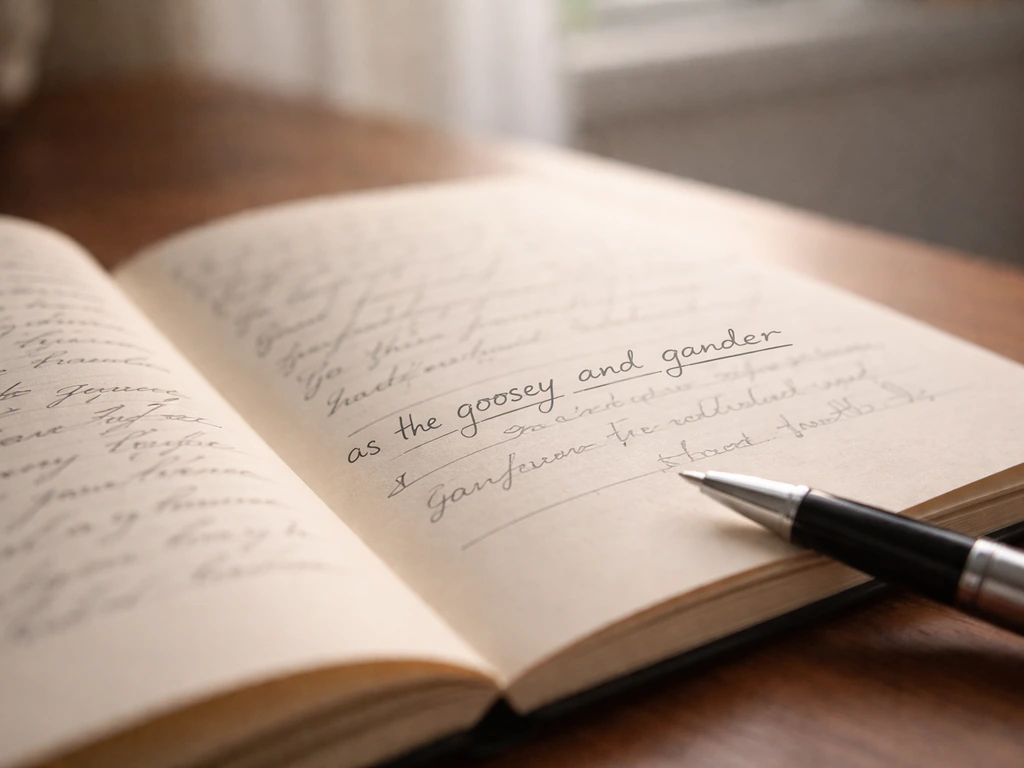
The most widely recognized modern version of the rhyme goes: 'Goosey, goosey, gander, whither shall I wander? Upstairs and downstairs, and in my lady's chamber.' The earliest traceable print source is 'Gammer Gurton's Garland,' published in London in 1784, which already includes this wording. That makes the rhyme well over 240 years old, which partly explains why people stumble over it today. The language is archaic, the meter is bouncy enough to blur the words, and most of us learned it by ear rather than by reading.
One thing trips people up immediately: the line contains two bird-related words in a row, 'goosey' and 'gander,' before it asks 'whither shall I wander.' When people half-remember the rhyme, they tend to collapse those two words into one, or drop 'gander' entirely. The result is the search phrase you just typed, which is missing a word but is still pointing at exactly the right bird.
Which bird it points to (and common misinterpretations)
The bird is a goose, specifically framed through two names in the same line: 'goosey' (an affectionate, diminutive take on 'goose') and 'gander' (the standard English word for a male goose). So the rhyme is essentially saying 'little goose, male goose, where are you going?' Both terms point to the same species. There is no ambiguity about the animal here; it is waterfowl, not a duck, swan, or any other bird that sometimes turns up in similar rhymes.
The misinterpretations tend to fall into a few categories. First, some people genuinely think 'goosey' might refer to a gosling, a different bird, or even a person's nickname, because the '-y' suffix can soften a word into a term of address. Second, the word 'gander' sometimes gets lost in quick recitations, so people remember 'goosey... whither shall I wander' without the middle noun.
Third, there is a documented social-history layer to the rhyme: some commentators have noted that 'goosey' and 'gander' carried slang connotations in historical English, which has led to theories that the rhyme is not about a bird at all. For the purpose of naming the bird the rhyme calls out, though, you can set that aside. The literal, surface-level answer is goose.
Confirming the correct bird name fast
If you want to verify the bird name today using reliable sources, here are the fastest routes. Wikipedia's 'Goosey Goosey Gander' article quotes the canonical line directly and notes that the rhyme carries Roud Folk Song Index number 6488.
That catalog number is a useful anchor: the Roud Folk Song Index, maintained via the Vaughan Williams Memorial Library and searchable through institutions like BYU's music reference resources, lets you pull up documented variant texts of the rhyme so you can see every recorded wording in one place.
Wikisource hosts multiple editions of the rhyme and lists specific published collections that include it, including versions from 1918 and 1922, which is handy for checking exactly which edition uses 'whither' versus 'where. ' Between those three resources (Wikipedia, Roud, Wikisource), you can confirm both the bird name and the precise wording in under five minutes.
One quick note on the 'whither versus where' question, since it shows up a lot in search queries. Older editions and scholarly sources consistently use 'whither.' A blank" rel="noopener noreferrer">scanned Mother Goose collection on Internet Archive uses 'where' instead, and that version has clearly circulated widely, because Reddit threads about the rhyme show users confidently quoting both forms. A modern poetry collection titled 'Where Shall I Wander' even took its name from the rhyme, locking in the 'where' version for a whole new audience. Neither is wrong in casual use, but if you need the historically grounded wording, 'whither' is the word from the 1784 text.
Meaning and origin of 'goosey' and other key words
Let's dig into the linguistics for a moment, because this is where it gets genuinely interesting. 'Goosey' is simply 'goose' plus the English suffix '-y,' which Wiktionary describes as a diminutive and jocular suffix used to form adjectives and terms of endearment. Collins defines 'goosey' as 'like or characteristic of a goose,' and Merriam-Webster includes it as a recognized word form. So when the rhyme opens with 'goosey,' it is not naming a different bird or a breed; it is using an affectionate, slightly playful version of 'goose,' the same way you might call a dog 'doggy' or a duck 'ducky' in a children's song.
'Gander,' the next word, is the standard English noun for a male goose, as confirmed by both Cambridge Dictionary and Collins. Cambridge is explicit: 'The female bird is called a goose and the male bird is called a gander.
' So the rhyme's opening line stacks an affectionate adjective ('goosey') directly against the male-specific noun ('gander'), almost like calling out to a particular bird by mood and sex at once. 'Whither' is an archaic adverb meaning 'to what place' or 'where to,' making 'whither shall I wander' a slightly formal way of asking 'where am I going?
' The pairing of 'whither' and 'wander' is also an example of alliteration, which is part of why the line sticks in memory even when people get the exact words wrong.
Common vs scientific naming for geese
In everyday English, 'goose' refers to the bird broadly, with 'goose' used for the female and 'gander' for the male. Scientifically, geese belong to the family Anatidae, which they share with ducks and swans. The most familiar goose in British and North American contexts is the Greylag Goose (Anser anser), often cited as the ancestor of most domestic goose breeds, and the Canada Goose (Branta canadensis), which is ubiquitous across North American parks and waterways.
The genus 'Anser' covers many of the 'grey geese,' while 'Branta' covers the 'black geese. ' 'Anser' itself comes from the Latin word for goose, which also gives us the English word 'answer' through a completely different etymological path, though that is a coincidence worth noting at a trivia night.
| Common Name | Scientific Name | Notes |
|---|---|---|
| Greylag Goose | Anser anser | Ancestor of most domestic geese; the likely 'farm goose' of nursery rhyme era Britain |
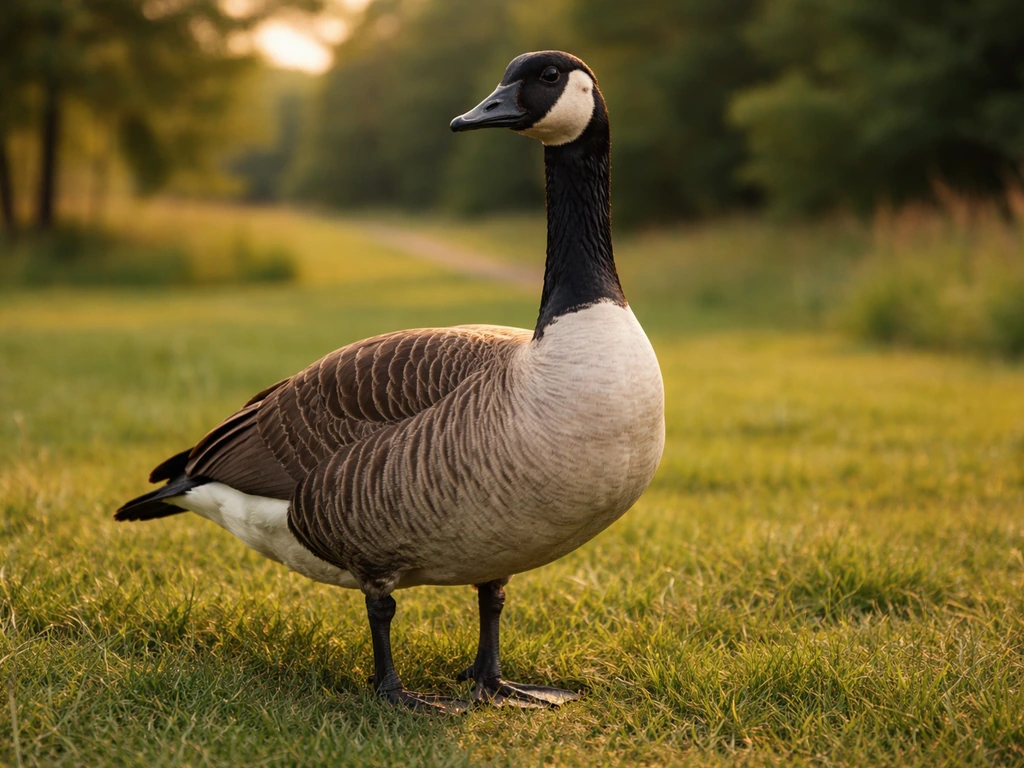
| Canada Goose | Branta canadensis | Most recognized goose in North America; large, distinctive black-and-white head |
| Domestic Goose | Anser anser domesticus | Subspecies designation for farm-kept birds; historically common in English households |
| Snow Goose | Anser caerulescens | Common North American migratory species; white with black wingtips |
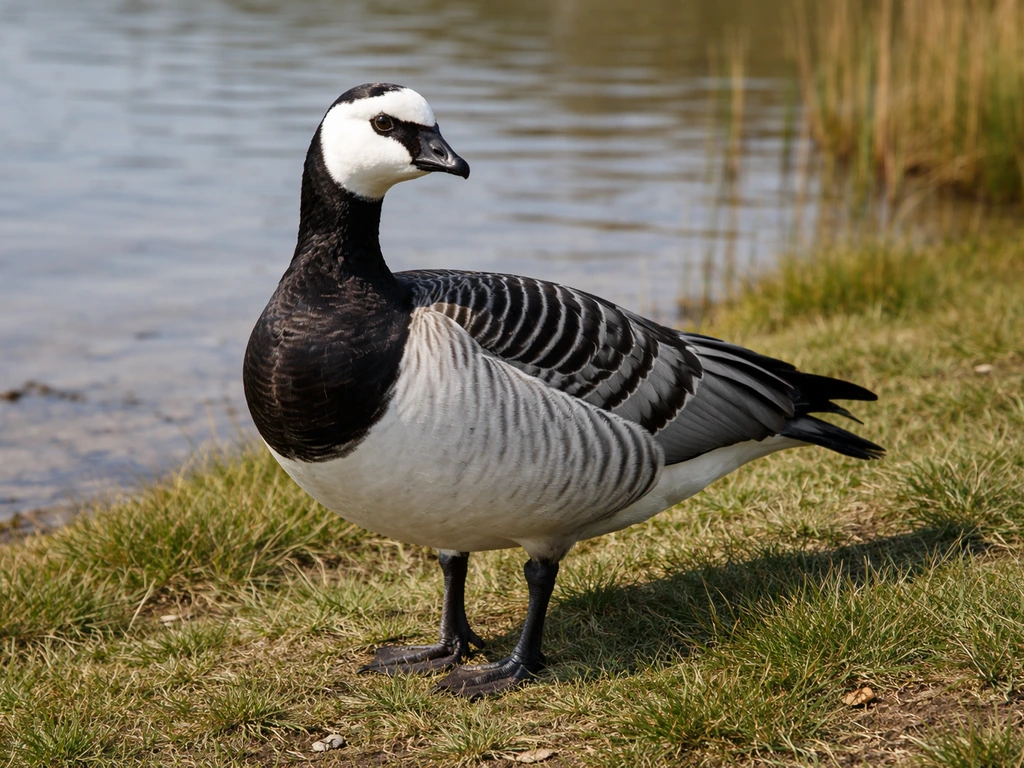
| Barnacle Goose | Branta leucopsis | European species; the name 'barnacle' has its own quirky historical mythology |
For most practical purposes, if someone asks you 'what bird is in Goosey Goosey Gander? If you searched for "good luck bird name," the nursery rhyme’s bird is the goose, specifically the goosey and gander mentioned in the line. ' the correct common-name answer is simply 'goose' or 'domestic goose.' If you need a scientific name, Anser anser domesticus is the most historically appropriate choice, since the rhyme originates in 18th-century Britain where domestic geese were household fixtures, not wild birds spotted on a pond.
Using the right goose name for pet birds and wordplay
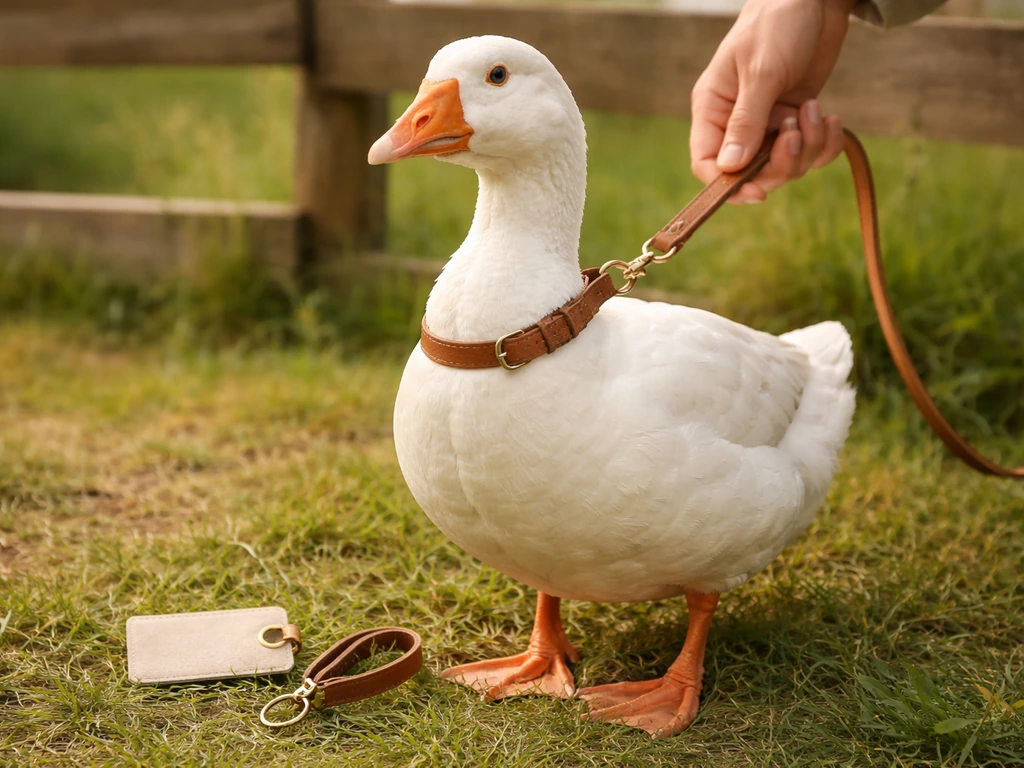
If you have a pet goose and you want to name it with a nod to this rhyme, you have several directions to go. If you are trying to come up with good names for a robin bird instead, you can use similar naming ideas like place, personality, and classic bird terms.
'Gander' works immediately as a pet name, and it has the bonus of being both a bird term and a casual English idiom ('take a gander' meaning 'have a look'), which gives it wordplay value. 'Goosey' itself is a natural pet name, warm and informal, with that built-in '-y' diminutive softness.
You could also lean into the rhyme's geography and name a goose 'Wander' or 'Whither,' both of which are genuinely distinctive and carry an old-English literary flavor without sounding pretentious.
For wordplay purposes, the goose is one of the richest birds in the English language. It appears in idioms ('wild goose chase,' 'what's good for the goose'), in the Mother Goose brand of nursery rhymes that gave us this very rhyme, and in countless cultural references. If you are building a crossword, a quiz, or just trying to identify the bird for a pub trivia answer, 'goose' is the one-word answer that wins every time.
If you are writing a quiz about this rhyme, a good place to start is figuring out what should i name my bird quiz so the title matches the topic. The nursery rhyme does not name a duck, a swan, or a gosling; it names a goose, twice over, in the very first line.
One related naming note: if you are exploring names for other birds and this rhyme sent you down a broader naming rabbit hole, the questions of how to name a male bird versus a female bird, how to find good names for a robin, or how 'luck' and cultural symbolism shape bird names are all worth exploring separately. If you are specifically trying to pick a name for a male bird, you may also find it helpful to compare guidance on what to name a male bird versus a female bird what should i name my male bird. The goose has a uniquely rich naming tradition because it sits at the intersection of farm life, nursery culture, and English idiom in a way that few other birds can match.
FAQ
I only remember “Goosey, goosey, whither shall I wander.” What bird does that point to?
If you are trying to identify the bird from a single line fragment like “Goosey, goosey, whither shall I wander?”, the missing word is almost always “gander.” With that added, the named animal is still the same species, a goose, specifically framed as “goosey” (goose in an affectionate form) plus “gander” (male goose).
Does “goosey” refer to a gosling or a different bird than a goose?
No, “goosey” does not mean a separate bird like a gosling. In standard usage it is “goose” with a diminutive, playful ending “-y,” so it is still the same bird species, not a different waterfowl.
Why do people often quote it without “gander,” and is that just wrong memory?
The rhyme’s first line is built to say two goose-related terms back to back, so dropping “gander” is the most common memory slip. If you recall only “goosey… whither,” you can treat it as a shorthand for the canonical “goosey, goosey, gander, whither shall I wander.”
If I want the older, historically grounded wording, should I use “whither” or “where”?
For “whither” versus “where,” the historically grounded choice for the older print tradition is “whither.” “Where” versions circulated too, but if you want the 18th-century wording, “whither” is the safer match.
For trivia, is the expected answer “goose” or do I need to say “gander”?
If your goal is a trivia answer, “goose” is the correct one-word response. If your goal is a more precise “bird name” as used in the line, then the rhyme’s wording points to “goosey” and “gander,” which are just different descriptors of the same bird type (goose, with male emphasis from gander).
What should I double-check when comparing different printed versions of the rhyme?
If you are matching a version to a specific source, the fastest check is to verify both the middle word (“gander”) and the verb form (“whither”). Some collections swap “where” in later retellings, so copying the line from memory can lead to a mismatch even when you got the bird correct.
Does the idiom meaning of “gander” change what the rhyme is about?
Yes, “gander” can show up as an everyday idiom (“take a gander,” meaning to look). That does not change the rhyme’s meaning, it is still the male goose term placed in the line as part of the goose naming pair.
Do I need the scientific name, or is “goose” enough for identifying the bird in this rhyme?
If someone is asking for a “scientific name,” the article’s practical recommendation is to use a historically appropriate domestic-goose scientific naming convention. But for general identification, you do not need taxonomy, because the rhyme itself already specifies goose versus duck, swan, or gosling.
Next Articles
Good Names for a Dodo Bird: Ideas and How to Pick
Cute, funny and elegant dodo bird names plus how to pick one, with language meanings for flightless island vibes.
How to Pronounce Dodo Bird Correctly in English
Learn standard and US UK pronunciation of dodo bird, with syllables, stress, etymology, and practice drills.
How Did the Dodo Bird Get Its Name? Discovery and Etymology
See who first documented the dodo and who coined its name, plus the etymology of dodo with common myths.