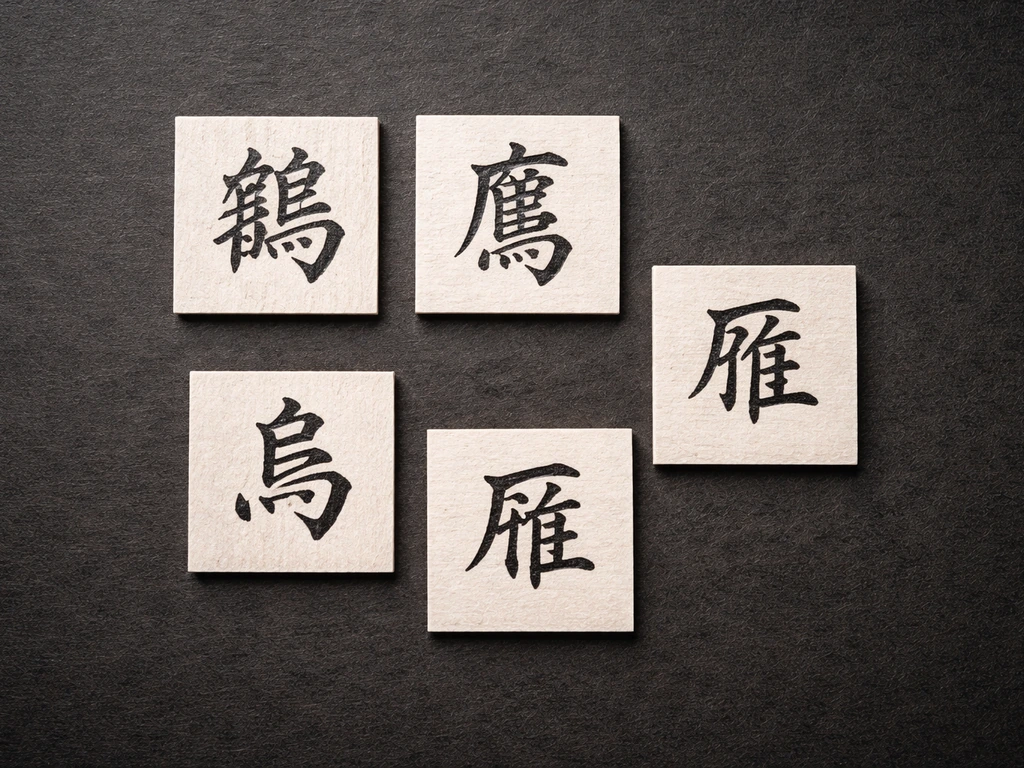
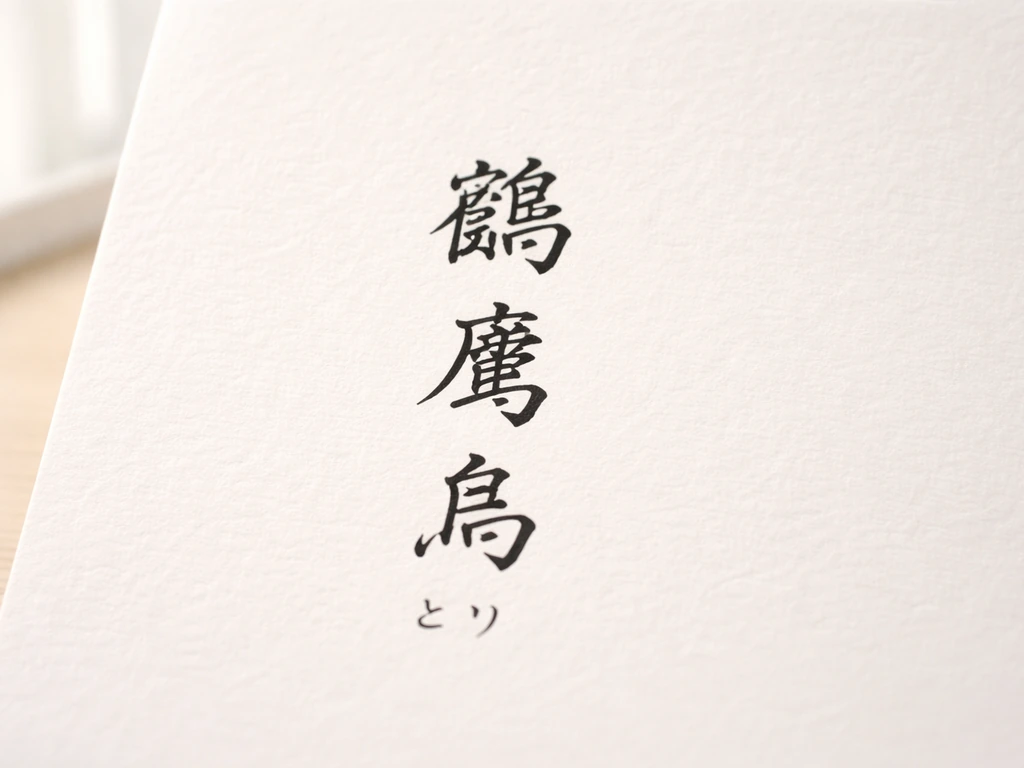
Japanese names meaning bird pull from a rich set of kanji, and the most common ones you'll encounter are 鳥 (tori, bird in general), 鶴 (tsuru, crane), 鷹 (taka, hawk/falcon), 烏 (karasu, crow), 雁 (gan, wild goose), and 鳩 (hato, dove/pigeon). These characters show up in both given names and surnames, sometimes as the whole meaning and sometimes tucked into a compound where the bird flavor is more subtle. Which kanji you pick completely changes the vibe, the pronunciation, and even whether the name skews masculine or neutral, so it's worth slowing down and understanding what each one actually carries before you commit.
Japanese Names Meaning Bird: Given and Surnames Guide

Maya Castellanos
4 May 2026
How bird meanings work in Japanese names
Japanese personal names are built from kanji, and each kanji carries meaning, sound, and cultural weight simultaneously. The tricky part is that a kanji used in a name doesn't always get its standard dictionary reading. Names use special readings called "nanori" (名のり) or "jinmeikun" (人名訓), which are readings approved specifically for personal names and can differ significantly from how you'd read the same character in a regular word. For example, 鶴 in a dictionary is read "tsuru" (crane), but in a given name it might be read "tazu," "tsuru," or even just "tsu" depending on the full name. This is not a typo or a mistake, it's how Japanese naming works.
There's also a legal layer. In Japan, only kanji from the approved list, the standard kanji table (常用漢字) plus the supplementary jinmeiyō kanji (人名用漢字) list, can be used in registered given names. The Ministry of Justice (法務省) publishes and maintains this list, which currently covers around 2,232 kanji total. Several bird-related kanji are on the jinmeiyō list specifically because they're considered appropriate for names even though they're not in everyday use. 鷹 (hawk) is a clear example: it's listed as a jinmeiyō kanji, meaning it's approved for name use even though most Japanese people wouldn't write it in a regular sentence.
When you're looking at a Japanese name and trying to figure out whether it means bird, you need to look at the kanji component, not just the sound. Two names can sound identical but have completely different kanji and meanings. Conversely, the same kanji can produce names that sound nothing alike. Keep that in mind as we go through the examples below.
Japanese given names with bird meanings
Most Japanese given names that reference birds tend to skew masculine or gender-neutral, though feminine names with bird kanji do exist (and are more common with gentle birds like the crane or dove). Here's a breakdown of the most useful candidates, grouped by the central kanji.
Crane (鶴) names
The crane is probably the most prestigious bird in Japanese cultural naming. It symbolizes longevity, good fortune, and elegance, and it shows up in names across centuries of Japanese history. Common given names using 鶴 include Tsuruo (鶴雄, tsuru + male/hero), Tsurumi (鶴己 or other combos), and the classic single-character name Tsuru itself, which is traditionally feminine or old-fashioned. For male-leaning options, 鶴雄 (Tsuruo) or 鶴之助 (Tsurunosuke) carry a distinctly traditional, formal feel. The nanori readings for 鶴 include tsuru, tazu, and tsu, so you may see names like Tazuko (鶴子) where the first syllable seems to drift from the standard "crane" reading.
Hawk and eagle (鷹) names

Taka (鷹) is one of the most popular bird-derived name elements for boys and men in Japan. The hawk/falcon carries connotations of strength, sharpness, and ambition, qualities that have made it a favorite in masculine names for generations. Names like Takashi (鷹士, hawk + warrior), Takami (鷹海 or 鷹巳), Takao (鷹雄), and simply Taka (鷹) as a short given name are all well-documented. Because 鷹 is a jinmeiyō kanji, it's legally approved for birth registration, and naming dictionaries consistently show it as a masculine option. If you want a Japanese bird name that reads unambiguously as male, something with 鷹 is your clearest choice.
Bird (鳥) in given names
The general kanji for bird, 鳥 (tori), appears in names less often as a given name component than you might expect, probably because it's so generic. That said, it does appear in compound given names and is more frequently found in surnames (see below). When it does show up in a given name context, it usually combines with another character that gives it direction, like 鳥羽 (Toba, bird + feather/wing), which is also a famous place name in Japan.
Crow (烏) and wild goose (雁) in names
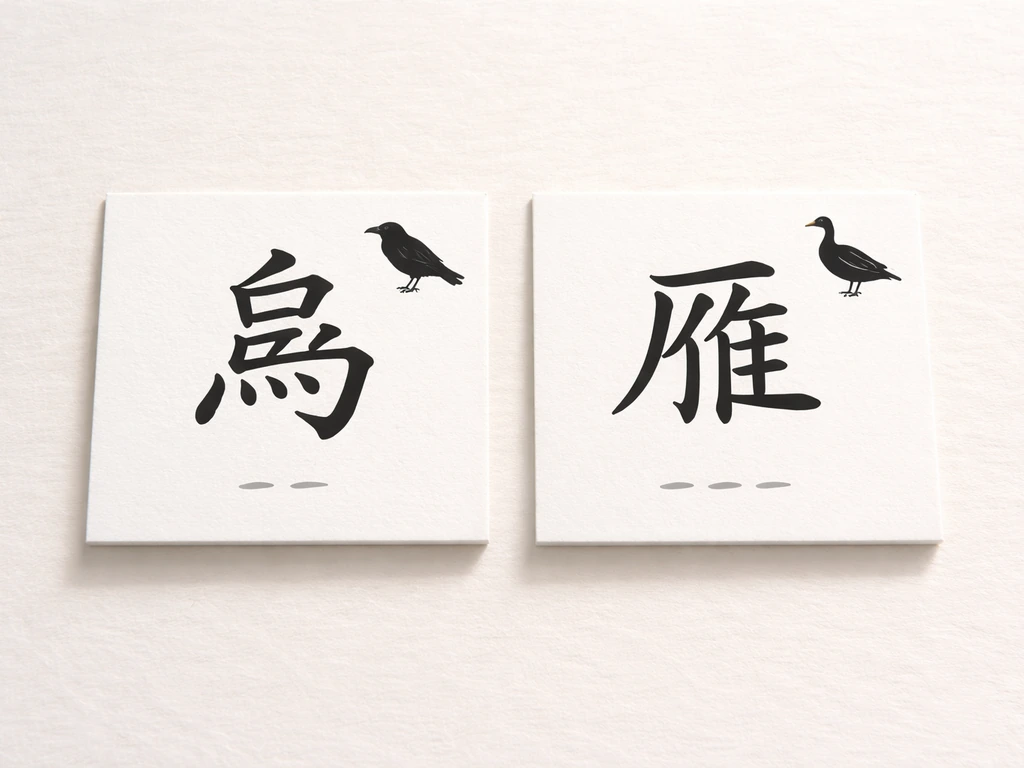
烏 (karasu, crow) is visually similar to 鳥 and trips up a lot of learners, notice that 烏 has one fewer horizontal stroke than 鳥. In names, 烏 is much rarer and carries darker, more mysterious connotations. It does appear in historical and literary names but is uncommon in modern given names. 雁 (gan, wild goose) is similarly rare in given names today but carries a poetic, migratory quality that lends itself to literary or artistic naming choices. Neither 烏 nor 雁 are typical everyday name picks in 2026, but they're worth knowing if you're hunting for something unusual or researching older Japanese names.
| Kanji | Reading (standard) | Bird | Name nuance | Gender lean |
|---|---|---|---|---|
| 鶴 | tsuru (name: tazu, tsu) | Crane | Longevity, elegance, tradition | Neutral / slightly feminine traditional |
| 鷹 | taka | Hawk/Falcon | Strength, ambition, sharpness | Strongly masculine |
| 鳥 | tori | Bird (general) | Broad, neutral | Neutral |
| 烏 | karasu | Crow | Dark, mysterious, poetic | Rare in modern names |
| 雁 | gan | Wild goose | Poetic, migratory, literary | Rare in modern names |
| 鳩 | hato | Dove/Pigeon | Peace, gentleness | Neutral / uncommon |
Japanese surnames with bird meanings
Bird kanji are actually more common in Japanese surnames than in given names, probably because surnames historically reflected landscape, animals, and local geography. Here are some of the most recognizable ones.
- 鳥谷 (Toritani / Toridani): literally 'bird valley,' a real Japanese surname with the reading toritani or toridani. It's a compound of 鳥 (bird) and 谷 (valley/ravine).
- 白鳥 (Shiratori): one of the most well-known bird surnames, meaning 'white bird' or effectively 'swan.' The main reading is shiratori, but you'll also see haくちょう (hakuchō) as an alternative reading of the same kanji — a good example of why you can't assume surname readings.
- 鶴見 (Tsurumi): combines 鶴 (crane) with 見 (to see/view). The reading is tsurumi, and it's also a well-known place name in the Yokohama area. The crane meaning is present but softened by the compound.
- 鷹野 (Takano): hawk (鷹) plus field/plain (野). A fairly common surname, read takano, with a strong, outdoorsy feel.
- 鶴田 (Tsuruta): crane (鶴) plus rice paddy (田). A classic compound surname, very recognizable to Japanese speakers.
- 鳥居 (Torii): yes, the same word as the famous Shinto gate. It means 'bird perch' and is both a surname and a culturally loaded term.
- 烏丸 (Karasuma): crow (烏) plus circle/round (丸). This is a real Kyoto place name and surname, with the bird element clearly carried by 烏.
One thing to notice in the surname list: the bird kanji often sits at the front of the compound, and the second element is a landscape or place word (valley, field, paddy, hill). This is typical of Japanese family names, which frequently describe the land or environment associated with the family's origin. So if you see 鳥, 鶴, or 鷹 followed by 野, 田, 山, 谷, or 川, there's a good chance you're looking at a bird surname.
How to look up names by kanji and verify what you're reading
If you want to look up or verify a Japanese name's bird meaning yourself, here's a practical process that actually works and doesn't leave you guessing. A publicly available table of Jinmeiyō kanji and their character codes also points back to the Ministry of Justice’s Jinmeiyō kanji PDF as the authoritative reference.
- Start with the kanji, not the romaji. Romanized Japanese names lose all the meaning information. 'Tsuru' could theoretically be written with many different kanji. Always track down the actual characters before drawing conclusions about meaning.
- Check the Ministry of Justice jinmeiyō kanji list (法務省 人名用漢字). This confirms whether a kanji is legally approved for given names in Japan. The list is publicly available as a PDF and is the authoritative source. If a bird kanji appears there, it's a valid name option.
- Use a dedicated naming dictionary (命名辞典) for nanori readings. Standard dictionary readings won't tell you how a kanji is read in a personal name. Sites like baby naming dictionaries (赤ちゃん命名辞典) list the approved nanori — these are the actual readings people use in their names, not just the regular dictionary reading.
- For surnames, use a dedicated surname database. Sites like 苗字.jp or jitenon list verified readings for actual Japanese family names. Don't just guess by combining the standard kanji readings — surnames have their own fixed readings that often differ from what you'd expect.
- Cross-check with Kanshudo or Jisho for kanji detail. These English-friendly tools will show you the kanji's meaning, standard readings, name readings, and example usage all in one place. They're especially useful for spotting alternative readings of the same kanji (like 白鳥 being read both shiratori and hakuchō).
- When in doubt, look at both the kanji and context together. A kanji might mean 'crane' in isolation but contribute a different flavor when combined. 鶴見 is more 'crane-view' than just 'crane,' and the surname reading tsurumi doesn't announce 'crane' to most modern ears the way 鶴 alone would.
Picking a Japanese bird name for your pet
This is where things get genuinely fun. Japanese bird-meaning names are fantastic for pet birds, they're evocative, relatively short, and easy to call out across a room. If you're specifically interested in female names meaning bird in Japanese, focus on the bird kanji most often used in gentle crane and dove-style given names. The legal restrictions on jinmeiyō kanji only apply to registered human names in Japan, so for a pet you have complete freedom to use any bird kanji you like, even the rarer ones.
That said, sticking to the well-established kanji still makes practical sense because the names will be more recognizable and easier to explain to others. Here are some quick picks depending on what kind of bird you have and what you're going for.
| Name | Kanji | Meaning | Best for |
|---|---|---|---|
| Taka | 鷹 | Hawk/Falcon | Birds of prey, large parrots, assertive birds |
| Tsuru | 鶴 | Crane | Elegant, long-necked birds, white or grey birds |
| Tori | 鳥 | Bird (general) | Any bird, works as a charming simple name |
| Shiratori | 白鳥 | White bird/Swan | White birds, doves, cockatoos |
| Hato | 鳩 | Dove/Pigeon | Doves, pigeons, gentle calm birds |
| Karasu | 烏 | Crow | Black birds, ravens, clever birds |
| Tobari / Toba | 鳥羽 | Bird feather/wing | Small birds, feathered songbirds |
For a pet parrot or a larger bird with a strong personality, Taka (鷹) or a compound like Takao are satisfying choices that sound energetic and confident when you call them. For a crane, heron, or an elegant white cockatoo, Tsuru is hard to beat, it's short, distinctly Japanese, and carries obvious avian meaning. For something a little more playful or generic, just Tori (鳥) is completely charming and immediately recognizable as bird-related to anyone who knows any Japanese at all.
Easy mix-ups to watch out for
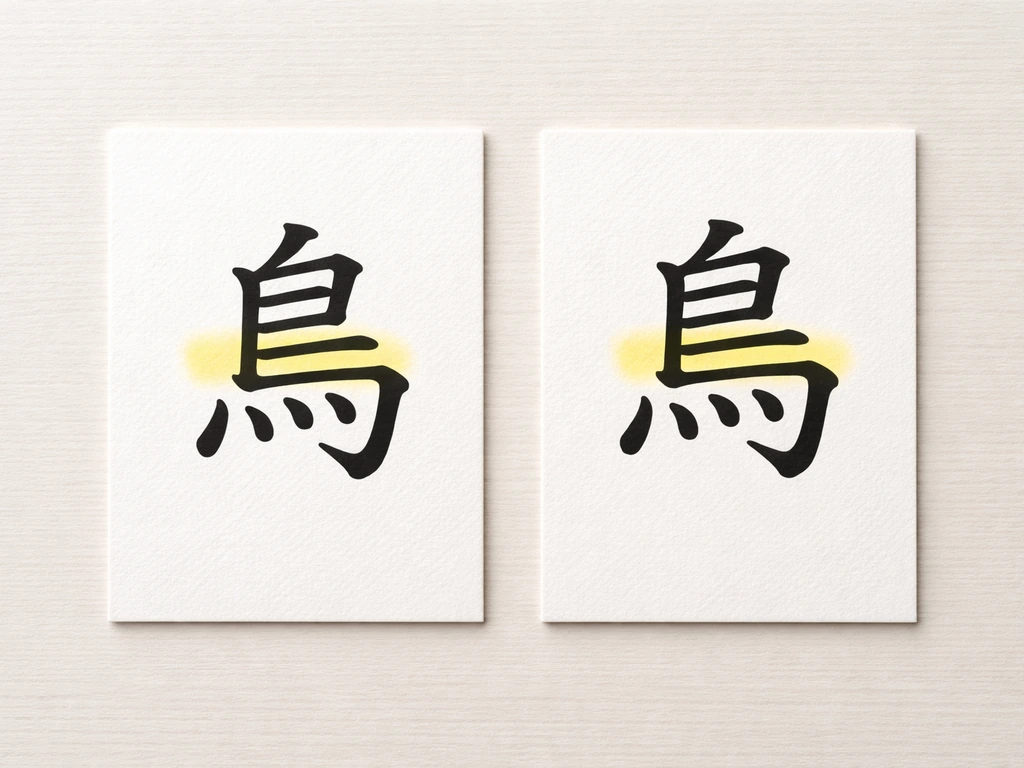
A few kanji confusions come up constantly when people research Japanese bird names, and they're worth flagging directly so you don't end up with a name that means something you didn't intend.
鳥 vs 烏: bird vs crow
These two kanji look nearly identical. 鳥 (tori, bird) has four horizontal strokes in the middle section; 烏 (karasu, crow) has three, one stroke is missing because, as the folk explanation goes, the crow is so black you can't see its eye. In print at small font sizes they are genuinely hard to tell apart, and in handwriting they get confused even by native speakers. If you're copying a name from a source and it includes one of these kanji, zoom in and count strokes before assuming which one it is.
Same reading, different kanji, different meaning
The name Takashi, for example, can be written with many different kanji, most of which have nothing to do with birds. 隆 (prosperity), 孝 (filial piety), and 高 (tall/high) all produce the reading 'Takashi' but have no bird meaning at all. Only 鷹士 or 鷹志 would give you the hawk-meaning Takashi. This is why you always need to see the kanji to confirm a bird connection, not just the romanized name.
Same kanji, multiple surname readings
As mentioned earlier, 白鳥 can be read both shiratori and hakuchō (and occasionally shiraori or shiradori). This isn't an error, Japanese surnames preserve multiple historical readings, and families with the same written surname may use different pronunciations. If you're trying to address someone by name or research a specific family, you need to confirm which reading that particular family uses. Surname databases like 苗字. 苗字.jp lists the surname 鳥居 as read とりい (torii) 鳥居 is read as とりい. jp are useful here because they list the actual attested readings, not just the phonetically obvious one.
Nanori readings that don't sound like the bird at all
This one surprises people. A name might contain 鶴 (tsuru, crane) but be read with the nanori 'tazu' or even just 'tsu,' making the crane connection invisible unless you see the written form. Baby naming dictionaries are the most reliable place to find these alternate nanori readings listed explicitly. If you only consult a standard kanji dictionary, you'll miss the name-specific readings entirely.
If you enjoy exploring bird names across different linguistic traditions, Japanese is one of the most layered and rewarding systems to dig into, the way a single kanji like 鶴 carries visual symbolism, phonetic flexibility, and cultural history all at once is genuinely fascinating. For a broader look at how other languages handle bird-meaning names, comparisons with Korean bird names and Arabic bird names reveal some interesting parallels in how birds like cranes and eagles get used as symbols of strength and grace across completely different naming traditions. If you want a similar, themed rabbit hole for naming, you might also enjoy the bird hermes is my name as a related perspective on how bird references show up in identity stories. Greek names can also be analyzed by their bird-related meanings, so comparing them to Japanese naming shows how cultures assign symbolism to birds. Arabic names meaning bird can be found using similar symbolism, where birds like cranes and eagles often represent grace, strength, or freedom Arabic bird names. You can also look up how Korean names with bird meanings work, including which syllables and Hanja or Sino-Korean roots correspond to specific birds like cranes or eagles Korean bird names.
FAQ
How can I tell if a name that sounds like “Tori” actually means bird (鳥)?
Check the kanji, not the romanization. 鳥 is tori, but many names can sound similar with different kanji. If you only have the spelling in romaji, you can’t confirm the meaning, so look for the kanji version in a reliable database or the person’s official name record.
Are bird-meaning kanji like 鷹 (hawk) or 鶴 (crane) always read the standard way in names?
No. Bird kanji often use name-only readings (nanori), so 鶴 can show up as tsuru, tazu, or tsu, and 鷹 can be read in multiple name contexts. To confirm the intended reading and meaning, you need the full written name, ideally with furigana or the kanji sequence.
Can a Japanese given name with bird kanji be feminine, even if it’s usually “boy-coded”?
Yes. The hawk (鷹) is strongly associated with masculine naming, but crane and dove (鶴, 鳩) are more likely to appear in gentle, feminine-leaning names. Still, gender impression varies by era and by the exact compound, so confirm by the specific kanji pairing (for example, whether it includes a traditionally male suffix like 雄).
What’s the best way to figure out the bird meaning when a surname has multiple elements?
Look at the kanji that sits at the start of the compound. Bird-related surnames typically place the bird kanji first, followed by a landscape or place character like 野, 田, 山, 谷, or 川. Even then, the second element can affect nuance, so identify both kanji to avoid misreading the whole surname.
If I find a bird-meaning name in a baby naming book, can I assume it’s legally usable in Japan?
Not automatically. For registered human names, the kanji must be from the approved sets (常用漢字 plus 人名用漢字 on the supplementary list). A baby naming resource may present kanji, but you should still verify the specific character is allowed if you plan to register it in Japan.
Why do some bird surnames have different readings across families, and how should I handle that?
Japanese surnames can preserve historical readings that don’t match modern “obvious” pronunciation. If you need the correct reading for a particular family, use sources that list attested readings for that surname (not just what the kanji would suggest). If you’re addressing someone, always ask or confirm with the person directly.
What are common mistakes when researching bird names from romanized sources?
The biggest mistake is assuming the meaning from the sound. For example, Takashi can be written with 非-bird kanji (like 隆 or 高) and still be pronounced the same. Another common error is swapping 鳥 and 烏, so if a source shows one of these kanji, zoom in and compare stroke counts.
Can I use any bird kanji for naming a pet, or are there restrictions like for human names?
For pets, there’s typically no legal restriction on kanji choice, so you can use any bird-related character you like, including rarer ones. However, practical usability matters, choose kanji that other people can read or that you can reliably spell consistently.
How do I choose between a generic bird name like 鳥 and a more specific bird like 鶴 or 鷹?
Use 鳥 if you want the simplest “bird” meaning that’s widely recognizable. Choose 鶴 for elegance and longevity symbolism, or 鷹 for intensity and strength. If you’re naming a pet, short names tend to work best in daily calling, so 鶴 (Tsuru) and 鷹 (Taka) are often easier than longer compounds.
If a name contains 鶴, how can it end up not sounding like “tsuru”?
That happens when the name uses a nanori reading different from the dictionary reading. A character like 鶴 can be read as tazu or even tsu in certain names, so the bird meaning is only visible in the kanji. The most reliable step is to confirm the kanji and then use a name-specific source for nanori.
Next Article
Female Names Meaning Bird: Dove, Lark, Swallow and More
Bird-meaning female names like Dove, Lark, Swallow plus etymology, variants, pronunciation, and tips to verify meanings