If you ask most English speakers to name a bird, you'll get one of three answers: robin, sparrow, or pigeon. In everyday speech, "robin" is almost certainly the single most commonly meant bird common name in the US and UK combined, with "house sparrow" and "pigeon" (rock pigeon) close behind. In the pet world, the picture shifts slightly: budgie (budgerigar) and cockatiel dominate the household familiarity contest. Which one is "most common" really depends on what you mean by common, so let's sort that out first.
Most Common Bird Names: What People Usually Mean

Maya Castellanos
31 May 2026
"Most common" vs "most popular" bird names: they're not the same thing

These two phrases get used interchangeably, but they measure different things. "Most common" in a strict sense means the bird name that appears most frequently in everyday speech, written text, or birding checklists. Think raw frequency: how often does the word show up? "Most popular," by contrast, often means the name people actively seek out, love, or choose, especially when naming a pet. A name can be extremely common without being anyone's favorite, and vice versa.
There's also a third angle worth naming: the most commonly recognized bird name, meaning the one a general (non-birder) audience can identify without hesitation. That's a familiarity question, not a frequency or preference question. For this article, "most common" means the bird name that turns up most often in everyday English, in casual conversation, in published text, and in major bird databases. Popular and recognized are useful secondary lenses, especially once you get into pet naming.
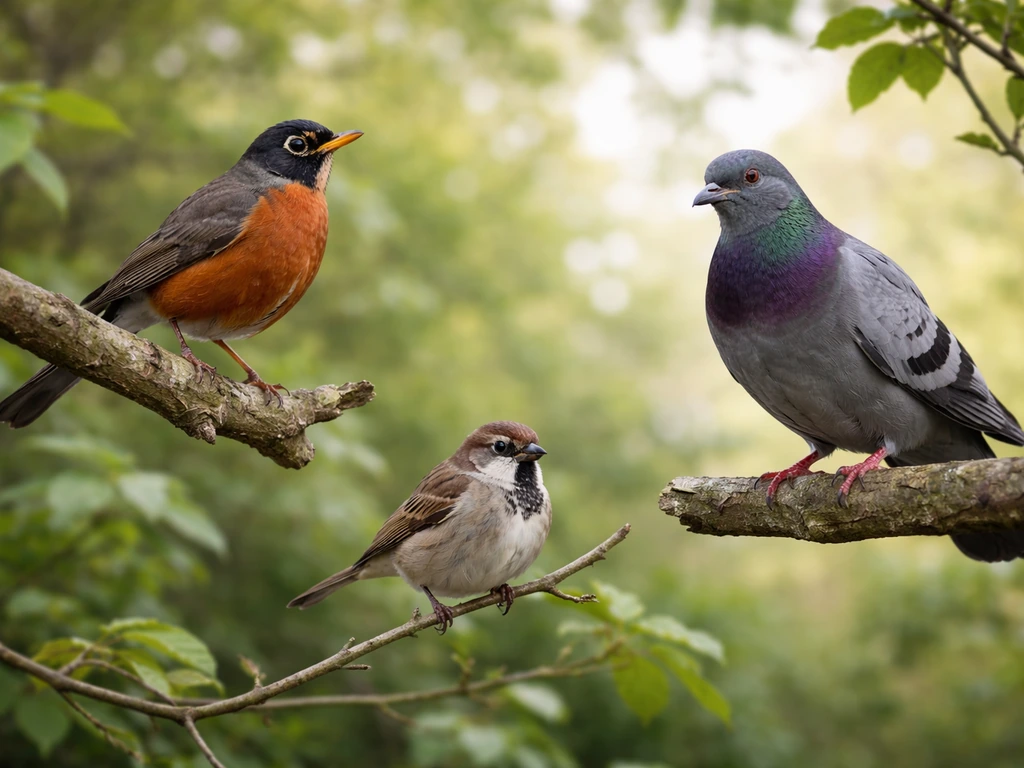
The likely answer: robin, sparrow, and pigeon are your top three
In North American everyday English, "robin" (specifically the American Robin) is the bird name that consistently surfaces as the default mental image of a common bird. Cornell Lab's All About Birds describes the American Robin as a common sight on lawns across North America, and it's genuinely the bird that many people point to when asked to picture a typical backyard bird. In the UK, "robin" holds the same cultural position, though it refers to the smaller European Robin with its iconic red breast. That cross-Atlantic overlap makes robin arguably the single most universally recognized English-language bird common name.
"Sparrow" and "house sparrow" run a very close second, especially globally. Britannica describes the house sparrow as one of the world's best-known and most abundant small birds, and it's present on every continent except Antarctica. The RSPB's Big Garden Birdwatch consistently puts the house sparrow at or near the top of UK garden bird counts, and the Wildlife Trusts describe it as a familiar bird of towns, parks, and gardens. In terms of sheer worldwide abundance and cross-language recognition, "sparrow" might actually beat "robin" if you zoom out past English-speaking countries.
Then there's "pigeon," which Audubon describes bluntly as the bird where most people's bird identification begins and ends. The Rock Pigeon, better known as the common city pigeon, is arguably the bird the largest number of humans interact with daily without ever thinking of themselves as birdwatchers. It's omnipresent in cities worldwide. So if "common" means the bird name encountered most often in daily life, pigeon has a genuine claim to the top spot.
| Bird Name | Strongest Region | Most Common Context | Everyday Familiarity |
|---|---|---|---|
| Robin | US, UK, Canada | Backyard birding, everyday speech | Very high: both continents, both species |
| Sparrow / House Sparrow | Worldwide, UK especially | Garden birds, general reference | Very high: global abundance |
| Pigeon / Rock Pigeon | Urban worldwide | City streets, casual observation | Highest for urban non-birders |
| Budgie / Budgerigar | UK, Australia, US pet owners | Pet bird naming, households | Very high among pet owners |
| Cockatiel | US, UK pet owners | Pet bird naming, households | High among pet owners |
Why these names dominate: familiarity, pets, and media
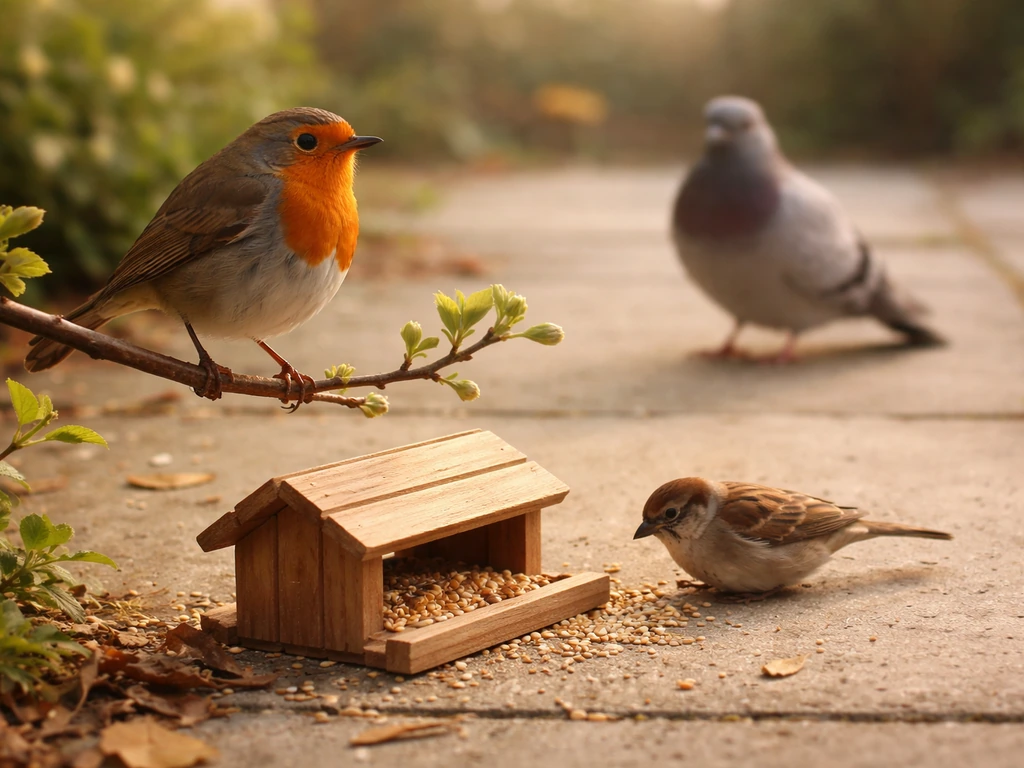
Robin has a massive head start because it's been culturally embedded in English for centuries. It shows up in nursery rhymes, Christmas cards, folklore, and children's books. The name itself comes from a nickname for the personal name Robert, via "Robin Redbreast," which was the affectionate folk name given to the European Robin long before bird taxonomy was formalized. That kind of cultural saturation means generations of English speakers grow up already knowing the word before they ever go outside and spot the actual bird.
Sparrow benefits from a different kind of familiarity: sheer ubiquity. House sparrows literally live where people live. They nest in buildings, eat crumbs in outdoor cafes, and hop around train station platforms. You don't need to be interested in birds to know what a sparrow is. That passive, unavoidable exposure is why "sparrow" ranks as a commonly understood bird name even among people who couldn't name another species.
Pigeon benefits from the same unavoidable-presence effect, amplified in dense urban environments. If you want the best overall bird names in the world, this commonness effect is exactly what shapes the rankings best bird names in the world. And in pet-bird contexts, budgie and cockatiel dominate for a simpler reason: they're the two most commonly kept pet birds in English-speaking households. PetMD and the American Animal Hospital Association both use "budgie" (short for budgerigar) as standard terminology, and it's the term most owners reach for instinctively. Cockatiel is similarly entrenched as the go-to name for the crested, yellow-and-grey companion bird that fills pet stores.
How to verify the most common bird name for your situation today
If you want to confirm which bird name is actually most common for your specific region or use case, here are four practical methods you can use right now. If you're wondering how this works in practice, the bird definition in english can also help you confirm what people mean when they use common names like robin, sparrow, or pigeon. Because common bird names are not tightly regulated, the same word can mean different things across regions, communities, and sources bird names are unregulated.
- Google Books Ngram Viewer (books.google.com/ngrams): Type in robin, sparrow, pigeon and hit search. The graph shows how often each word appeared in published books over time, split by English corpus (American English vs British English). It measures written frequency, not spoken usage, but it's the fastest way to see relative word frequency across decades.
- eBird (ebird.org): Search any of the candidate bird names and check the species account. eBird uses standardized English common names for birding checklists and lets you switch between US and UK/international name preferences. This tells you exactly which common name is considered the official English label in a birding context today.
- Major field guides and dictionaries: Merriam-Webster and Cambridge Dictionary both define "robin" as primary headwords with full etymology sections, which is a reliable signal that the name is fully mainstream in both American and British English. If a bird name has a Merriam-Webster entry with a Word History section, it's genuinely entrenched.
- RSPB Big Garden Birdwatch results (UK) or Cornell Lab's eBird frequency maps (US): These data sources show which birds are actually most frequently recorded by observers in a given region, which is the closest thing to an objective "most common" measure grounded in real observations rather than cultural perception.
One important caveat: corpus frequency (how often a word appears in text) doesn't perfectly match everyday spoken familiarity. English-Corpora.org notes the need to be careful about whether a corpus matches American vs British English and what genres it covers. A word can be very common in bird books but less common in general conversation. For a complete picture, combine at least two of the methods above.
Naming a pet bird: picking the right common name
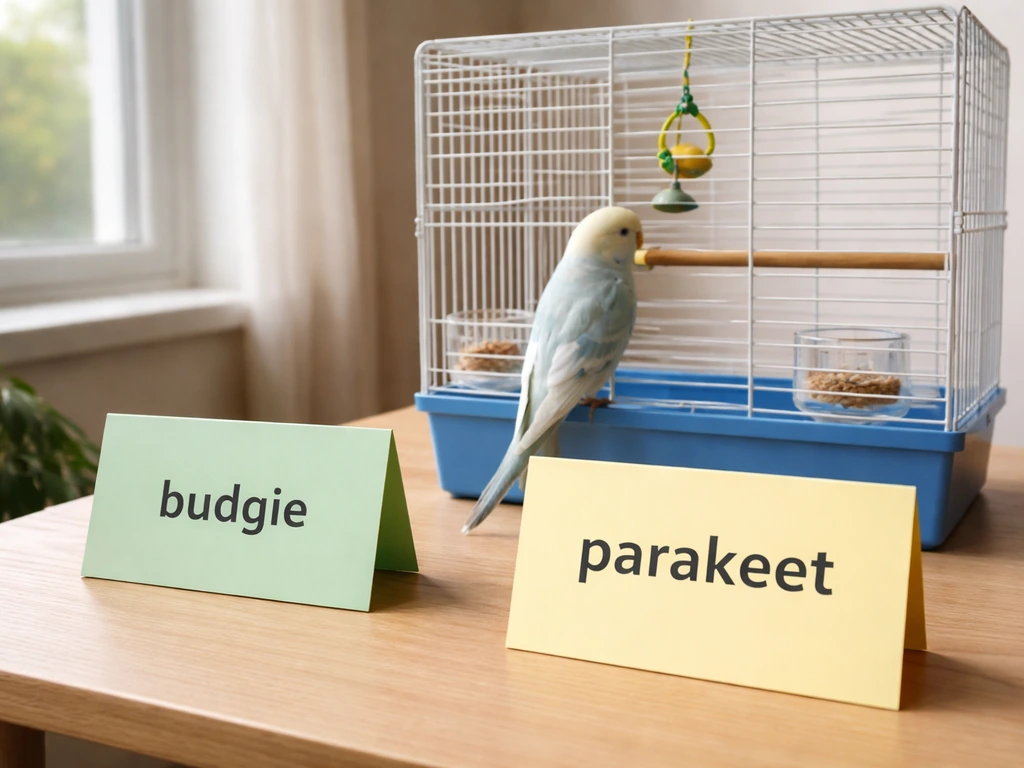
If you're here because you're naming a pet bird (or deciding what to call the species you just adopted), the most common bird names in the pet world are a slightly different list from the wild-bird rankings. Budgie, cockatiel, canary, parakeet, and cockatoo are the names you'll encounter most in pet stores, vet offices, and owner communities. But watch out for overlap and confusion between these names.
- Budgie vs parakeet: PetPlace explicitly advises against calling a budgerigar just a "parakeet" because "parakeet" technically covers many small parrot species. If you own a budgerigar, "budgie" is the cleaner, more specific common name.
- Parakeet as a catch-all: Wikipedia lists multiple alternative names for the budgerigar including "budgie" and "shell parakeet," illustrating that the same bird can carry several common names depending on context (pet trade, breeding community, or casual owner speech).
- Cockatiel is fairly unambiguous: unlike "parakeet," "cockatiel" maps to a single species and is the standard term in both dictionaries and vet documentation.
- Canary is similarly clear: it maps to one well-known domesticated finch species and doesn't overlap confusingly with other birds in everyday speech.
For naming a specific pet bird (as in choosing a personal name for your individual bird, rather than what species it is), the site also covers bird names that could function as human names, which is a completely different but equally fun rabbit hole. Species-name and personal-name conventions don't have to conflict.
Etymology: where these common names actually come from
Robin
"Robin" comes directly from the personal name Robin, itself a medieval French diminutive of Robert. The bird got the name from the affectionate English folk term "Robin Redbreast," which was in common use before the word "robin" stood alone as a species name. Etymonline traces the bird-name usage to this shortening, which makes robin one of the few bird common names derived entirely from a human first name rather than a description of the bird's appearance or behavior. Merriam-Webster's entry includes a full Word History section tracing this path.
Sparrow
"Sparrow" is an Old English word (spearwa) and one of the oldest bird names in the English language, predating the Norman Conquest. Etymonline traces it through Proto-Germanic roots meaning something close to "flutterer" or "quiverer." Interestingly, "sparrow" functioned for much of English history as a generic term for small, drab, seed-eating birds, not just the house sparrow specifically. That broad early meaning is part of why the word feels so instinctively like the default name for a small, ordinary bird.
Pigeon
"Pigeon" arrived in English via Old French pijon, which itself came from a Late Latin form related to pipire, meaning to chirp or peep, with the original Latin referring specifically to a young dove. Etymonline documents this lineage clearly. So historically, "pigeon" started as a word for a baby dove and evolved into the everyday English name for the adult city bird. "Dove" and "pigeon" are technically the same family, which is why the rock pigeon's formal name contains both concepts.
Budgerigar and Canary
"Budgerigar" comes from an Australian Aboriginal language, likely Gamilaraay, where a similar word is thought to mean "good bird" or "good food" (accounts differ slightly). The shortened form "budgie" is a uniquely British-Australian nickname that became the dominant everyday term for the species in the UK and Australia. "Canary," by contrast, comes from French canarie and Spanish canario, meaning literally "of the Canary Islands," the archipelago off northwest Africa where the wild ancestor of the domestic canary was first found and exported to Europe.
How common bird names differ by region and language

One of the genuinely interesting things about bird common names is how they fracture across regions, even within English. Cambridge Dictionary's definition of "robin" illustrates this perfectly: it describes the European Robin as a small bird with a red front, then notes that a similar North American bird also carries the same common name. Same word, completely different species. The American Robin is a large thrush; the European Robin is a small flycatcher-like bird. A reader in Boston and a reader in Birmingham picture entirely different birds when they read the word "robin."
eBird addresses this directly by maintaining alternate English common names and regional name preferences. UK birders using eBird can set the system to British English common names, where some species carry different labels than their North American equivalents. This matters practically: a birding checklist in the US labels a bird as "Common Loon," while the same species in the UK is the "Great Northern Diver."
Across languages, the picture shifts further. In Spanish, the house sparrow is called gorrión, which Cambridge's Spanish-English dictionary confirms maps directly to "sparrow." WordReference similarly links gorrión to the house sparrow specifically. But a Spanish speaker reaching for a generic word for a small ordinary bird might default to gorrión the same way an English speaker defaults to sparrow, even if the exact species being referenced varies. The conceptual role of the word (default small bird) stays consistent even when the word itself changes.
If you're researching common bird names alphabetically or building a reference list, it's worth flagging your regional context upfront, because a "common bird names" list for the UK looks noticeably different from one built for North America, Australia, or South Africa. A practical way to approach bird common names is to build a list based on the region and context you care about. The concept of a "most common" bird name only makes clean sense once you've fixed a region, language, and context (wild birds vs pet birds vs cultural references). That disambiguation step is the single most useful thing you can do before diving deeper into any bird-names reference.
FAQ
If someone says “robin,” how can I tell whether they mean the European robin or the American robin?
Ask for location (country or even city). In UK contexts “robin” usually points to the European robin, while in US contexts it usually means the American robin. If the person is referencing a photo or a backyard bird they saw, the region of the image and where it was taken usually resolves the ambiguity quickly.
When people argue about the “most common bird name,” what definition should I use to avoid talking past each other?
Use the same frame the other person is using: frequency in writing or checklists, everyday verbal default, or pet-shopping terminology. A pet owner, a birder, and a general reader can all be “right,” but they are answering different questions (word frequency, familiarity, or preference).
Why might “pigeon” feel more common than “robin” in daily life, even if robin shows up more in text?
Because exposure and intent differ. City pigeons are encountered incidentally by many people every day, while “robin” can be more present in cultural media and bird literature. This makes spoken familiarity and corpus frequency diverge, so the ranking can flip depending on the measurement method.
What should I do if a bird common name is used loosely across regions, for example in books or online checklists?
Treat the common name as a starting label, then confirm the species using the context (country) and any additional clues (size, habitat, plumage, or the exact phrasing). If a list mixes British and American English, switch the regional setting or compare against a region-specific checklist.
Are pet-bird “most common names” the same as the most common names for wild birds?
Not usually. In pet contexts, names are driven by what is commonly sold and discussed by owners, so terms like budgie and cockatiel dominate even if those species are not the most frequently used everyday names for wild birds.
If I’m naming my pet bird, should I use the species name or the everyday common name?
Either works, but choose based on your goal. If you want clarity in conversation with other owners or vets, use the established pet common name. If you want precision and reduce confusion across regions, use the species name (or include it as a “scientific name” in your notes), since some common names overlap multiple species.
Do common bird names always correspond to a single species, or can one name point to multiple birds?
They can point to multiple species. “Robin” is the classic example, where the same English label can refer to different species depending on the region. That’s why region and the source being referenced matter as much as the word itself.
If I want to check which bird name is “most common” in my area, what’s a practical workflow?
Pick a region and context first (wild bird vs pet, your country or local area). Then compare at least two inputs, such as a region-specific bird database and everyday text sources (local news, local birding groups, or checklists). Finally, watch for mixed-language lists that silently switch between UK and US naming.
How do I handle situations where the same bird is called different things across languages?
Look for the conceptual role first, not the exact word. Many translations map to the same “default bird type,” but the underlying species can differ. If you need precision, use a species indicator (or a local synonym list) rather than relying on the single translated term.
What common mistake should I avoid when using word frequency data for “most common bird names”?
Avoid assuming that text frequency equals everyday spoken familiarity. Corpus data can skew toward bird books or birding communities, and it may also mix American and British English or different genres. Use frequency as one clue, then validate with regional naming and real-world exposure.
Next Article
Common Bird Names List: How to Build, Verify, and Use It
Build a usable common bird names list, verify birds, resolve name mismatches, and decode etymology for real use.