Bird names are not entirely unregulated. Scientific names are tightly governed by the International Code of Zoological Nomenclature (ICZN), which has been setting rules since 1895. What is genuinely unregulated, and what causes most of the confusion, is the common name side of things. Nobody owns "robin." Nobody can stop a pet seller in one country from calling a bird something completely different from what a field guide in another country calls it. That gap between a locked-down scientific system and a free-for-all vernacular world is the source of almost every bird-naming headache you will ever run into.
Bird Names Are Unregulated: What That Means and How to Verify

Maya Castellanos
30 Jun 2026

What people usually mean when they say bird names are unregulated
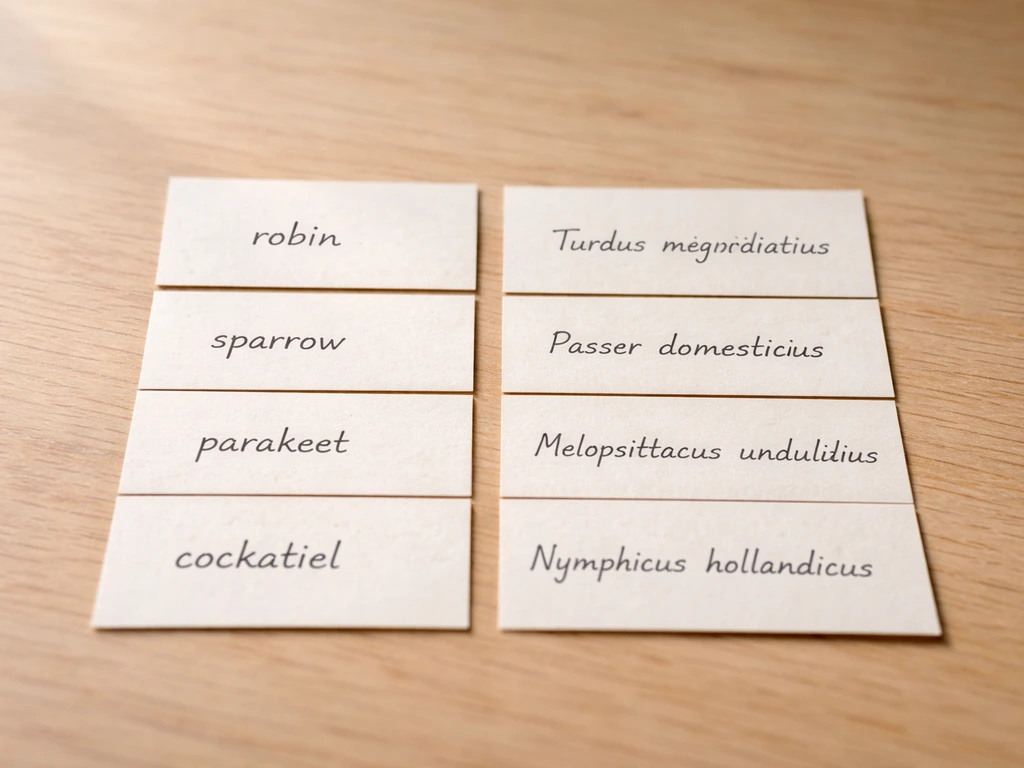
When someone says bird names are unregulated, they almost always mean common names, not scientific ones. The common name is the everyday word: robin, sparrow, parakeet, cockatiel. The scientific name is the two-part Latin binomial: Turdus migratorius for the American robin, Erithacus rubecula for the European robin. These two birds share a common name in casual speech but are not remotely close relatives. That right there is the problem in miniature.
Scientific names belong to a carefully managed system. Common names belong to whoever decides to use them. A pet market can call a bird a "sun parrot" without any authority checking that label. A regional field guide in Ecuador might use a common name that eBird's Clements Checklist has since updated or abandoned. A breeder can invent a trade name to make a bird sound more exotic. None of that is technically illegal, and none of it is governed by any international body. That is what people mean when they say bird names are unregulated.
How bird naming actually works
The scientific name side: strict and codified
Scientific naming is governed by the ICZN Code. Article 1 of the Code defines its scope as the names of taxa in the family group, genus group, and species group. Article 5 formalizes the binominal structure, meaning every species gets a two-part name (genus + species epithet). Article 23 sets the Principle of Priority, which says the oldest validly published name wins if two names are competing for the same species. The Code also handles typification, availability, and validity so that scientists worldwide can look at a scientific name and know exactly which animal is being discussed, regardless of language or geography. This system is not perfect, but it is genuinely regulated.
The common name side: curated at best, chaotic in practice
The ICZN Code explicitly states that it does not regulate vernacular (common) names. Full stop. Common names have no official status under the Code and never will under its current scope. What fills that gap is a patchwork of editorial decisions made by major checklists and ornithological organizations.
These are influential and worth following, but they are not binding the way the ICZN is. The Cornell Lab's Clements Checklist is updated annually, posts taxonomy changes online, and is the backbone of eBird's species taxonomy (updated every August alongside Clements). The IOC World Bird List publishes ongoing name-change logs with explicit rationales for every English name it updates, including alignment with other major lists or reversions after taxonomic mergers.
BirdLife International uses the HBW/BirdLife Illustrated Checklist as its taxonomic foundation, displaying both scientific and English common names. These organizations do not always agree with each other, which is how you end up with the same bird having different English names depending on which list you consult.
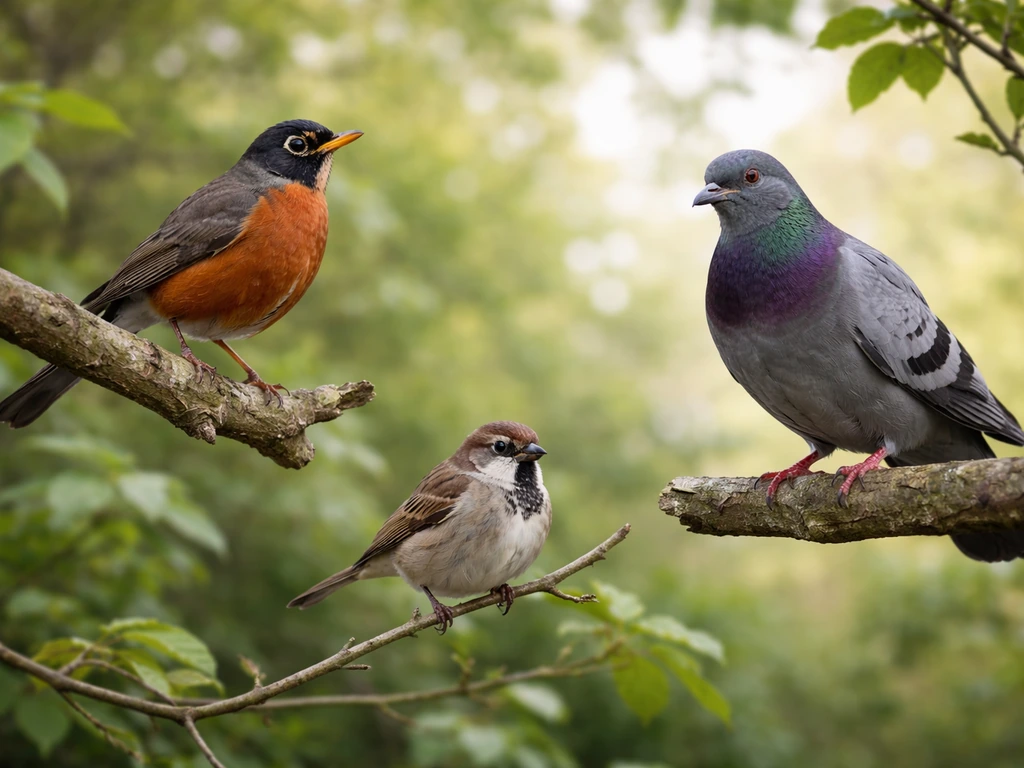
Regional chaos adds another layer. The word "robin" is applied to multiple unrelated species across different continents, all because they happen to have red or orange breasts. The European robin (Erithacus rubecula) is a flycatcher. The American robin (Turdus migratorius) is a thrush. There are also Australian robins, Indian robins, and several African robins, none of them closely related. In Ecuador, field-guide common names frequently do not match eBird's current English names, and eBird itself provides mapping tables to reconcile the differences. Common names drift, split, merge, and get reinvented with every new guide, translation, and market trend.
Who actually sets the standards (and how much power do they have)
Understanding who influences bird naming in practice is genuinely useful, because it helps you know whose list to trust for what purpose.
| Organization/Body | What they govern | Binding? | Best used for |
|---|---|---|---|
| ICZN | Scientific (Latin) names for all animal taxa | Yes, for scientific naming | Resolving scientific name disputes, checking valid species names |
| IOC World Bird List | English common names + scientific names globally | No, but widely followed | Global English name reference, tracking name updates |
| AOS NACC | English names for North and Middle American birds | No, but authoritative in region | North American common names; any change needs 2/3 vote |
| Cornell/Clements Checklist | English + scientific names; eBird taxonomy | No, but eBird-integrated | Digital birding, checklists, ID apps like Merlin |
| BirdLife/HBW Checklist | English + scientific names; IUCN-linked | No, but conservation-linked | Conservation status, trade documentation, IUCN cross-referencing |
| IUCN Red List | Conservation status + primary common name + synonyms | No | Checking alternate common names, tracking name synonyms |
| USDA APHIS / CITES | Import/export documentation requirements | Yes, for regulated species | Pet bird import paperwork, legal trade compliance |
The American Ornithological Society's North American Classification Committee (AOS NACC) has the most explicit governance model for common names in its region: proposals to change an established English name require a two-thirds majority vote. That is a real editorial process, not just someone's preference. But its authority ends at its geographic coverage area, and no equivalent body has global jurisdiction over English common names. The IOC comes closest to a global reference, but following it is a choice, not a legal requirement.
Real problems caused by unregulated common names

This is not just an academic issue. If you’re searching for the bird definition in English, it helps to understand how common and scientific names are used differently bird names. The USGS's AviList project explicitly states that mismatched names between checklists can have negative consequences for conservation science, trade legislation, enforcement, and education. When a legally protected species can be sold under a colloquial trade name that does not appear on any permit or regulation, enforcement becomes very difficult. When two bird species share a common name, misidentification can send conservation resources toward the wrong population or lead buyers to purchase a different species than they intended.
- Conservation misallocation: funding or protections aimed at the wrong species because regional common names overlap
- Regulatory loopholes: trade in CITES-listed species under alternate common names that do not trigger inspection flags
- Pet market scams: buyers receiving a different (often less valuable) species under a misleading trade name
- Checklist confusion: birders logging sightings under a common name that has since been reassigned to a different species after a taxonomic split
- Import compliance risk: health certificates and permits that require both common and scientific names (as 50 CFR 15.25 does) being filled out with conflicting or outdated common names
- Educational misinformation: field guides using different names for the same bird, making it harder for new birders to cross-reference sources
The import side is particularly concrete. USDA APHIS requires that a pet bird's identification method (microchip, tattoo, or leg band) listed on the health certificate must match the physical ID on the bird. Port inspection confirms this match. During import or home quarantine, CFR Title 9 Part 93 requires that port inspection confirm the bird's identification method (such as leg band, tattoo, or microchip) matches the health certificate documentation, so compliance depends on reliable identification rather than informal common names port inspection confirms identification matches the health certificate documentation. Regulators treat common names as potentially variable and require scientific names alongside them precisely because common names cannot be trusted to uniquely identify a species in a legal context.
How to find and verify the correct name for a bird today
The practical fix is simple: always anchor to the scientific name first, then find the common name through a trusted reference. Here is the workflow that works.
- Start with a reliable checklist. For global English names, use the IOC World Bird List (ioc-worldbirdnames.org). For North America, use the AOS NACC checklist or Clements via Cornell's eBird. For conservation and trade purposes, use BirdLife's DataZone or the IUCN Red List.
- Get the scientific name first. Once you have the scientific name (genus + species epithet), you have a stable anchor. Cross-check it across at least two sources to confirm it is current and not a synonym or outdated name.
- Map the common name back to the scientific name. If someone gives you only a common name, search it in eBird, Merlin, or the IOC list to find what scientific name it actually maps to. If results show multiple species, you have a disambiguation problem and need more information.
- Check for recent taxonomic changes. Clements posts annual updates each August. IOC publishes versioned changelogs (the current version as of mid-2026 is 14.x/15.x range). If a name changed recently, older sources may still show the previous name.
- For non-English names, use the same checklist anchor. Find the scientific name first, then look up the local-language name. Do not assume a translation of a common name will map to the correct species.
- For trade or regulatory purposes, always record both the scientific name and the common name from a named checklist. Note which checklist version you used and the date.
Field guides for specific regions (like Ecuador) often contain mapping tables that reconcile local common names with eBird's current English names. If you are working in a specific geography, look for this kind of reconciliation resource rather than assuming the field guide name and the checklist name are identical. They frequently are not.
Naming pet birds responsibly
Naming your pet bird is a personal, cultural, and sometimes linguistic adventure, and there is plenty of room to be creative. A cockatiel named "Archimedes" or a budgie named "Mango" is not a nomenclature problem. To get at bird names that could be human names, focus on which common names have been adopted as personal names and where that overlap causes confusion. The issue arises when the species identity of the bird gets muddled, either in your own records, in veterinary documentation, or if you ever need to move the bird across borders.
What to document alongside the fun name

Keep a simple record that pairs your bird's personal name with its verified species identity. This should include the scientific name (from a named checklist), the standardized English common name from the same source, and the bird's physical identification (leg band number, microchip ID, or tattoo). If you bought the bird from a breeder or importer, record the country of origin and the documentation you received. This is not bureaucracy for its own sake. It matters practically if your bird ever needs an import/export health certificate, if you need to prove it is captive-bred rather than wild-caught, or if a vet needs to look up species-specific drug dosages.
Avoiding misleading species names
Pet markets and breeders sometimes use common names that obscure what a bird actually is. A "fancy parakeet" might be a budgerigar (Melopsittacus undulatus). A "sun conure" and a "jenday conure" are two different species (Aratinga solstitialis and Aratinga jandaya respectively) that are sometimes confused or misrepresented. If you are buying a bird and the seller uses only a trade name with no species information, ask for the scientific name and verify it against a checklist before completing the purchase. Leg bands can help, but as practical experience in the birding community confirms, leg-band registries are inconsistent and not universally reliable outside specific breeder networks. The scientific name cross-checked against documentation is your strongest verification tool.
Balancing cultural naming with species clarity
Many bird enthusiasts love exploring the linguistic side of naming: the etymology of a species' Latin name, what the name means in another language, or whether the bird shares its common name with a human name (something that comes up in topics like bird names that could be human names).
If you want to cross-check labels more reliably, it can also help to look at common bird names alphabetical listings alongside a checklist bird names that could be human names. That kind of exploration is genuinely enriching and entirely compatible with responsible documentation. Just keep the two things separate: the personal or cultural name you give your bird lives in one column, and the verified species identity lives in another. Both matter, but for very different reasons.
Practical next steps: what to actually do right now
If you have hit a naming problem, whether it is identifying a bird from a confusing common name, reconciling conflicting sources, or sorting out documentation for a pet bird, here is a quick workflow you can follow today. If you are hunting for the best bird names in the world, start by choosing a checklist or region, then confirm the scientific identity so the name is not just a label.
- Go to eBird (ebird.org) or the IOC World Bird List and search the common name you have. Check what scientific name comes up and whether there are multiple species sharing that common name.
- Cross-check the scientific name in BirdLife DataZone (datazone.birdlife.org) to confirm the name is current and to see any listed synonyms or alternate common names.
- If names conflict between sources, check the IOC English Name Updates log to see if a name change was recently published. Clements updates are released every August, so a late-July search may find a name that is about to change.
- For a pet bird with paperwork, compare the common and scientific names on your documentation against at least one current checklist. If they do not match, get corrected documentation from your vet or breeder before any international travel.
- If you believe a species is being consistently misnamed in a commercial or trade context, you can submit a report to USDA APHIS (for import/export violations), CITES national authorities (for trade violations involving protected species), or contact the relevant regional ornithological authority (AOS for North America; relevant national body elsewhere) to flag a common-name usage issue.
- For checklist errors or outdated common names in eBird, use eBird's feedback mechanism (available on individual species pages) to flag discrepancies. IOC accepts nomenclatural proposals through its standing committee process.
- Build your own reference habit: bookmark the IOC list, Clements annual update page, and BirdLife DataZone. Check your sources' version dates. A name that was correct in a 2022 field guide may not match the 2026 checklist.
The honest summary is this: the scientific name layer of bird naming is as regulated as any biological naming system gets. The common name layer is managed and curated by serious organizations, but it is not legally binding and never uniform across regions or languages. That is not going to change. What you can do is work with the regulated layer (scientific names via ICZN-valid checklists) as your anchor and treat common names as useful, culturally rich, but always-needs-verification labels. Once you have that habit, the chaos of common bird names stops being a trap and starts being interesting.
FAQ
If bird names are “unregulated,” can two different English names both be “correct” for the same species?
Yes. English common names vary by checklist and country, so you can see multiple acceptable labels for the same species. The practical way to decide is to treat the scientific name as the identifier, then record the checklist-specific English common name used in your documentation.
Can anyone legally rename a bird species in everyday speech, for example calling something a “sun parrot”?
In everyday usage, yes. Common names are not governed like scientific names, so sellers and local communities can coin labels. The catch is that when permits, veterinary care, or transport documents are involved, you will still need the scientific name and matching physical ID, because regulators rely on those.
What should I do if a field guide and eBird (or another checklist) disagree on the common name?
Do not try to force the names to match. Instead, confirm the scientific name for the bird you are looking at, then use your checklist as the source of the standardized English common name for your records. If you are in a specific region, also check whether the guide includes a mapping table to reconcile local names with that checklist.
How can I tell whether “robin,” “sparrow,” or another common label refers to the wrong species?
Assume common names can be ambiguous across regions. Use the bird’s geography, habitat, and most importantly its scientific name from a trusted reference. If your species identity is for a pet, record both the scientific name and the standardized English common name that corresponds to that scientific name on your chosen checklist.
Is the IOC World Bird List always a better choice than Clements for English common names?
Not necessarily. Both are influential, and they may diverge when classifications change. For consistency, pick one checklist you will use as your “source of truth” for a project or documentation set, then apply it consistently across your records rather than mixing names from multiple lists.
Do trade names like “sun parrot” ever show up in official paperwork?
They might be used informally, but they are risky for official contexts because they are not standardized and may not map cleanly to a single species. Regulators and health certificates typically require identification methods plus species-level information, so you should ensure the paperwork uses the scientific name associated with the bird you actually have.
When identifying a pet bird, is a leg band or microchip ID enough without the common name?
Leg bands and microchips help, but they are still not a substitute for confirming the scientific name. Best practice is to record the scientific name verified against a checklist, then attach the physical ID method and number, so that your vet or any inspection can connect the physical bird to the correct species.
What is the safest record format if I travel or import/export my bird?
Keep a single “species identity line” in your records: scientific name (from the checklist you chose), standardized English common name from that same checklist, and your bird’s physical ID (microchip, tattoo, or band number). Also keep the country of origin and the documentation you received, since those often affect compliance questions.
If common names are not legally binding, why do regulators care about them at all?
Common names can appear on informal labels, sales documents, or translations, and mismatches can create enforcement problems. That is why many authorities require scientific names alongside common names, treating English labels as potentially variable while still allowing them to appear in the paperwork.
How do I handle a situation where I already wrote down the wrong common name for my bird?
Update your record by correcting the scientific name first, then replace the standardized English common name to match your verified scientific identity. If you have veterinary or transfer documents, keep a note of what was previously written and what it corresponds to, so future reviewers can reconcile the change.
Next Articles

Bird Name Is: How to Identify, Verify, and Understand Names
Identify the bird, verify its common and scientific name, and decode naming origins and regional name differences.
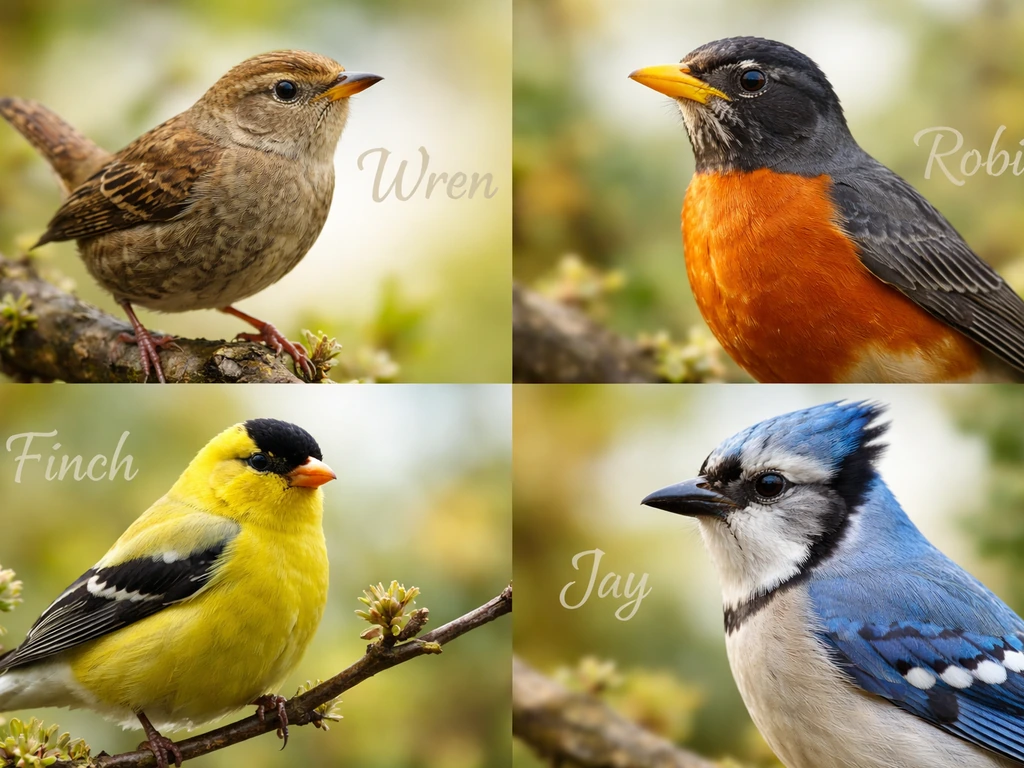
Bird Names That Could Be Human Names: Lists and How to Pick
Curated bird names that could work as human names, with pronunciation, meanings, and tips to pick the right one.
Most Common Bird Names: What People Usually Mean
Find the most common bird name people mean, plus how to verify it by region, language, and pet-bird usage.