When someone says 'the green bird,' they almost always mean one of a handful of species: the Green Jay, the Greenfinch, the Green Heron, a wild or escaped parakeet, or one of the many small green flycatchers. None of these is officially called just 'green bird,' but all of them get that label all the time because green is their most striking visible feature. The one you're thinking of depends heavily on where you are in the world, how big the bird looked, and what it was doing when you spotted it.
Which Green Bird Is It? Quick ID Guide and Names

Maya Castellanos
19 Jun 2026
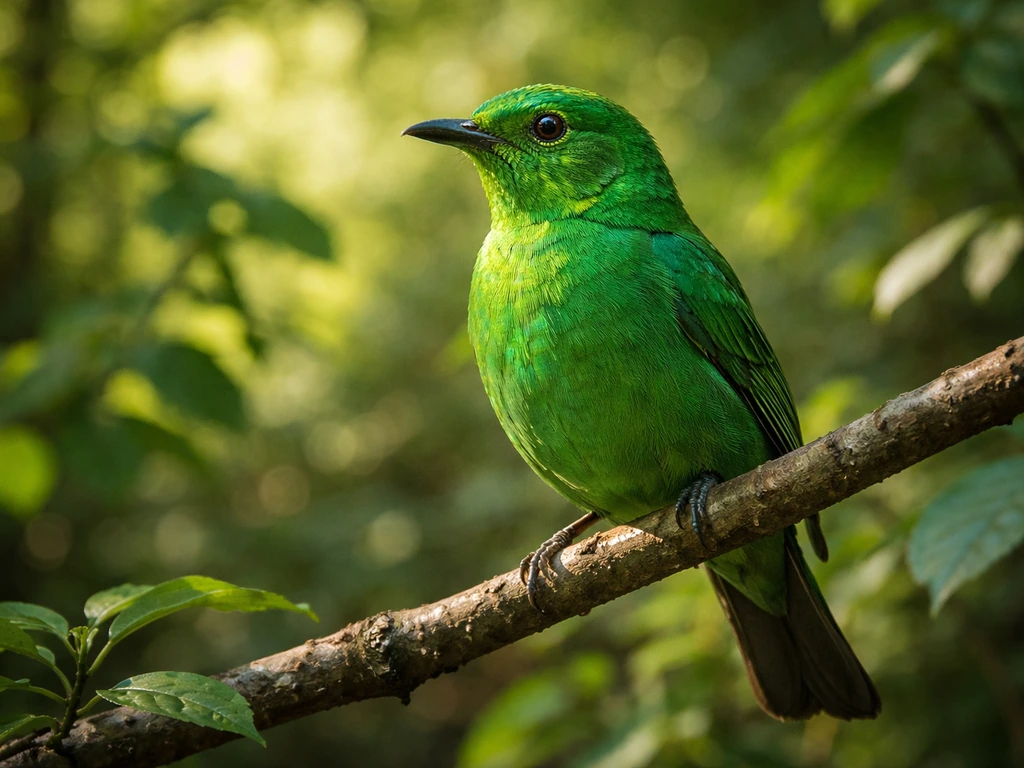
The most common 'green birds' people actually mean
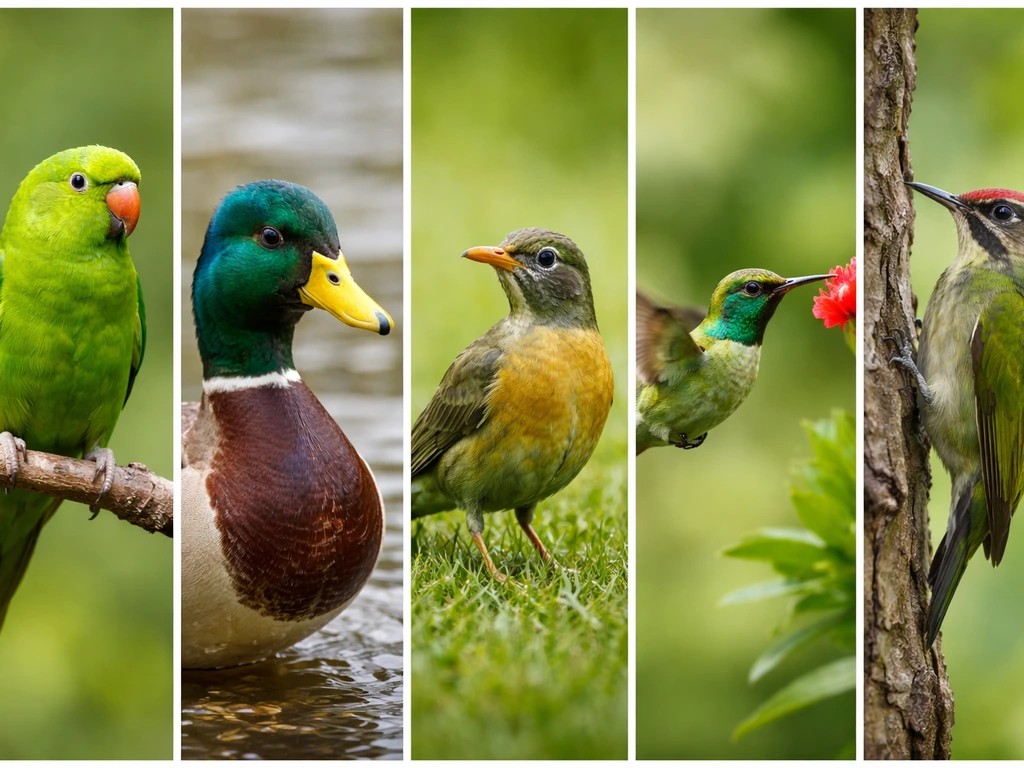
Here's a fast shortlist. Most people asking 'which is the green bird' are picturing one of these five species, depending on their location and the context. If you're also wondering what is the cutest bird name, the same idea of starting from common sightings can guide you to playful, crowd-favorite species names cute bird name ideas.
| Bird | Where you'll see it | Most obvious green feature | Key extra clue |
|---|---|---|---|
| Green Jay | Texas, Central America, Mexico | Bright green back and wings | Blue crown, black throat, yellow outer tail feathers |
| Greenfinch | UK, Europe, gardens and parks | Olive-green body with yellow-green flash on wings | Chunky finch shape, often at garden feeders |
| Green Heron | North America, wetlands | Iridescent green-blue back | Small and stocky for a heron, rusty-chestnut neck |
| Rose-ringed / Monk Parakeet | UK, parts of US and Europe | Bright all-over green | Long pointed tail, often in urban flocks |
| Willow Flycatcher | US woodlands and scrubby areas | Subtle olive-green upperparts | Small, upright posture, often described as 'little green bird' |
In the UK, the Greenfinch is by far the most likely candidate because it loves gardens and feeders and is genuinely common. In Texas and the American Southwest, the Green Jay is the showstopper that people can't believe is real. Across North American wetlands, the Green Heron gets the label even though its 'green' is more of a dark iridescent sheen that can look bluish or even black depending on the light. And in many cities across the UK and Europe, escaped or feral parakeets have become such a fixture that 'green bird' almost always means them.
How to pin down the exact bird you saw
Color alone will never close the case. The trick is to layer at least three or four traits together: shade of green, size, beak shape, habitat, and ideally the call. Walk through these steps in order and you'll narrow it down fast.
Step 1: What shade of green and where on the body?
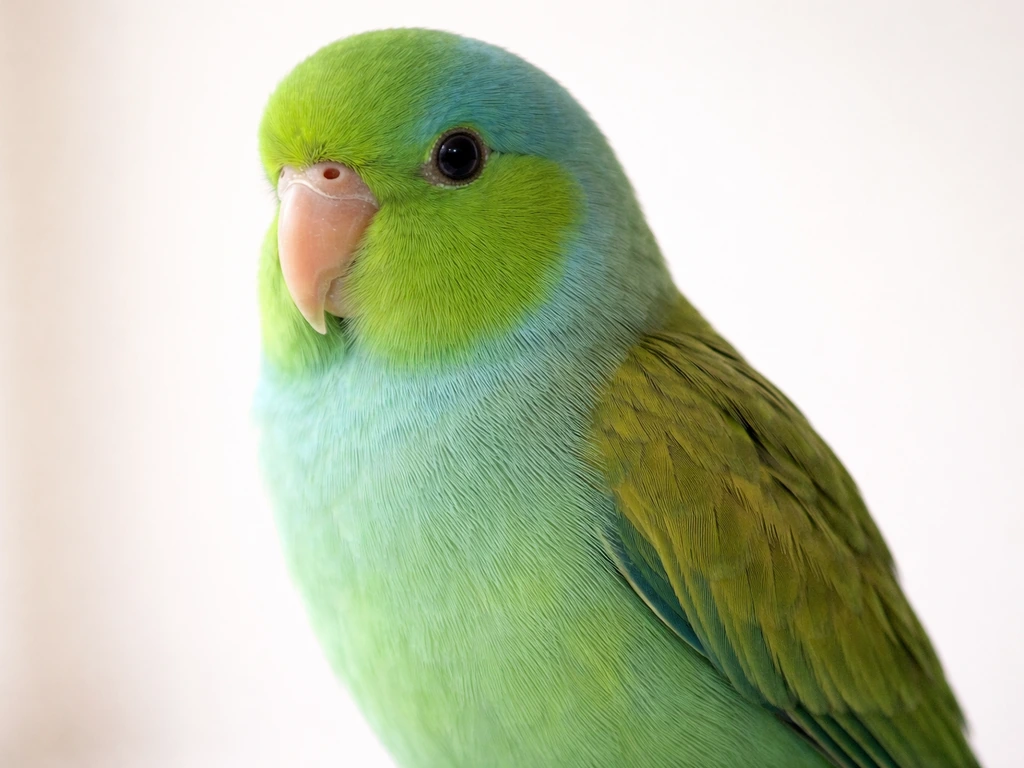
Bright, almost lime or turquoise green covering most of the body points toward a parakeet or the Green Jay. Olive or yellow-green concentrated on the wings or chest points toward the Greenfinch or a flycatcher. A dark, metallic sheen on the back with a warm rufous neck is the Green Heron, and it only looks truly green in good light.
Step 2: How big was it?
Size is one of the most reliable quick filters. A parakeet is roughly the length of a large thrush with a long pointed tail. The Green Jay is jay-sized, about 27 cm long. The Greenfinch is sparrow-to-starling sized, chunky and compact. The Green Heron is small for a heron (around 44 cm) but still looks lanky and upright compared to a songbird. A bird that looked tiny and flitted nervously in shrubs is almost certainly a flycatcher or warbler, not a jay.
Step 3: What was the beak like?
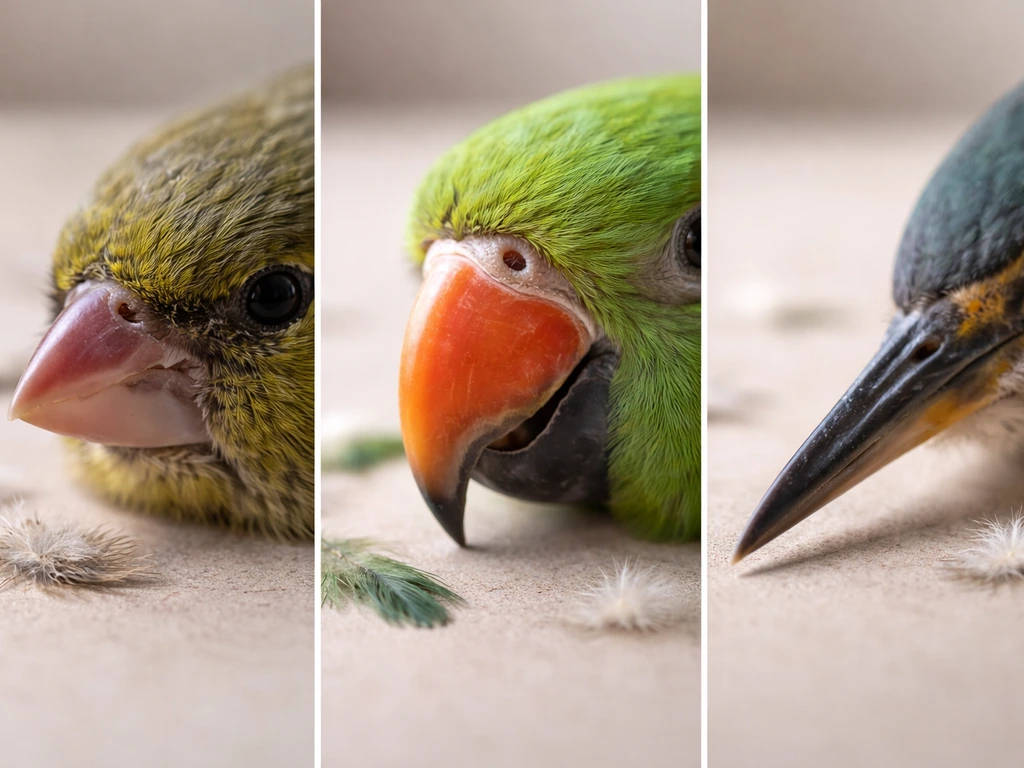
- Short, thick, seed-cracking beak: Greenfinch or other green finch species
- Hooked, parrot-style beak: parakeet or small parrot
- Long, pointed dagger beak: Green Heron
- Medium, all-purpose jay beak: Green Jay
- Tiny, thin insect-catching beak: flycatcher or warbler
Step 4: Where were you, and what was the bird doing?
Habitat and behavior cut out a lot of guesswork. A green bird wading or crouching at a pond edge is almost certainly a Green Heron. One flying in a noisy flock through city trees is almost certainly a feral parakeet. One sitting at a garden seed feeder in the UK is a very good bet for a Greenfinch. One making noise in a Texas oak or mesquite with a group of bold, colorful birds is the Green Jay. One flicking its tail nervously in willowy scrub near water is the Willow Flycatcher doing exactly what its name suggests.
Step 5: Use the call to confirm
Once you've narrowed it to one or two candidates, the call will usually confirm it. The Green Heron has a sharp, harsh 'skowp' that sounds a bit like rusty scissors snapping shut. The Green Jay gives a loud, bell-like ringing call in flight and a repeated 'cheh' contact call when feeding in groups. Greenfinches have a distinctive drawn-out, slightly wheezy 'dzeee' that garden birdwatchers in the UK learn quickly. If you heard the call and want to match it, blank" rel="noopener noreferrer">the Cornell Lab's All About Birds site and the Audubon guide both have playable audio for each species, which is the fastest way to get a definitive answer.
Green bird species: what they look and sound like up close
Green Jay
The Green Jay (Cyanocorax yncas) is one of those birds that makes people stop and say 'wait, that's real?' It has bright green upperparts, pale yellow-green underparts, a vivid blue crown, a black throat and eye mask, and yellow outer tail feathers that flash as it moves. It's loud, social, and found in Texas and south through Central America. It's the bird that Mexicans historically nicknamed 'pajaro verde,' meaning simply 'green bird,' which perfectly illustrates how strongly color defines this species in everyday language.
Greenfinch
The Greenfinch (Chloris chloris) is the UK's most familiar green garden bird. It's a large, chunky finch with olive-green plumage, bright yellow-green flashes on the wings and tail, and a heavy pale bill designed for cracking seeds. It's common in gardens, parks, woodland edges, and farmland across Europe. In the UK particularly, if someone says 'there's a green bird on my feeder,' this is the default answer. Historically, British natural history texts listed 'Green Linnet' and 'Green Bird' as folk names for this exact species, so that label has real old roots.
Green Heron
The Green Heron (Butorides virescens) deserves a specific note: its 'green' is genuinely deceptive. In flat light it can look dark grey or brownish, and the iridescent green-blue sheen on the back only really shows in good sunlight. It's small for a heron, stocky and short-necked, with a rich chestnut-rufous neck and chest. It lurks at the edges of ponds, streams, and marshes across North America. The call is what really helps seal the ID: that sharp, startled-sounding 'skowp' carries well and is quite unlike any other heron sound.
Parakeets and small parrots
In the UK, southeastern US, and many European cities, escaped or established feral parakeets, especially the Rose-ringed Parakeet (Psittacula krameri), are now common enough that 'green bird in the garden' increasingly means them. They're a bright, unmistakable lime green with long pointed tails, and they move in loud, chattering flocks. If someone in a city spot sees an all-green bird and is confused, this is increasingly the right guess, especially in London and southeast England where feral populations are well established. A similar confusion happens with Monk Parakeets in parts of the US.
Willow Flycatcher and small green birds
The Willow Flycatcher (Empidonax traillii) is sometimes literally called 'The Little Green Bird' in birding education contexts, which tells you how often the 'tiny green flitting bird' description applies to flycatchers and warblers. If the green bird you're thinking of was small, nervous, and kept moving through dense vegetation near water, it's worth checking the Empidonax flycatchers, various warblers, and similar small green species. There are at least 26 species in the US alone that could fairly be called 'green,' so this group genuinely needs location and habitat to narrow it down. If you are trying to figure out which bird name matches what you saw, combine the shade, size, habitat, and call to narrow it to the right species green bird.
Scientific names and why 'green bird' means different things in different places
One reason 'green bird' is so confusing is that it's a folk description, not a taxonomic one. Science uses binomial names precisely because 'green bird' in Texas, 'green bird' in the UK, and 'pajaro verde' in Mexico can all refer to completely different species. Here are the key scientific anchors for the most common candidates.
| Common Name | Scientific Name | Name Meaning |
|---|---|---|
| Green Jay | Cyanocorax yncas | 'Cyanocorax' = blue raven (Greek); 'yncas' references the Inca, reflecting its South American range |
| Greenfinch | Chloris chloris | 'Chloris' from Greek 'khloros' meaning green or greenish-yellow, repeated for emphasis |
| Green Heron | Butorides virescens | 'Butorides' = resembling a bittern; 'virescens' = becoming green, or greenish (Latin) |
| Rose-ringed Parakeet | Psittacula krameri | 'Psittacula' = little parrot (Latin); 'krameri' honors naturalist Wilhelm Heinrich Kramer |
| Willow Flycatcher | Empidonax traillii | 'Empidonax' = king of insects (Greek); 'traillii' honors Scottish ornithologist Thomas Traill |
The regional naming problem is real and worth knowing about. The Green Jay is split taxonomically into multiple subspecies, and in some classifications the South American populations are treated as a separate species, the Inca Jay. So even among scientists, 'Green Jay' doesn't mean exactly the same bird everywhere. Common names shift even more: the Greenfinch is called 'verdier d'Europe' in French, 'Grünfink' in German, and 'verderón' in Spanish, all of which directly translate to 'green finch' or 'green bird.' The Green Heron has alternative common names in Spanish and French across its range, and Heron Conservation documents a long list of regional variants. The takeaway is: if someone from a different country or region tells you about a 'green bird,' the scientific name is the only reliable shared reference point.
Naming a pet green bird
If you've got a green bird as a pet and you're after a name that fits, you've actually got a rich palette to work with. For the best female bird names, you can use similar color and personality cues to find something that fits her perfectly. Green carries strong associations across languages and cultures: nature, luck, freshness, and vibrancy. The best pet names usually nod to the bird's color or personality without being too on-the-nose, though honestly 'Kermit' has survived this long for a reason.
Color-based name ideas
- Sage: soft, herby, works for muted olive-green birds
- Jade: cool and elegant, great for brighter green plumage
- Fern: gentle and natural, suits small green birds
- Basil: playful and food-inspired, popular for parakeets
- Olive: classic and warm, especially for yellow-green tones
- Kiwi: fun and obvious, works well for bright green parrots
- Malachite: for the bird with truly vivid, gem-like green plumage
- Clover: cheerful and luck-associated
Names drawn from the scientific side
The scientific name Chloris (from the Greek 'khloros,' meaning green) is actually a beautiful name for a bird, and it doubles as the name of a Greek goddess of flowers and spring. Viridian (from the Latin 'viridis,' meaning green) is another strong option with an artistic edge. Celeste or Cyan work well for green birds with blue highlights, like the Green Jay. These names carry a bit of etymology pride without needing any explanation.
Personality and behavior-inspired names
If your green bird is loud and social (looking at you, Green Jay owners), names like Jazz, Clang, or Bel (short for bell-like) reflect the call character. If it's a quieter, sneaky bird that lurks and watches, names like Shadow or Scout fit well. For a parakeet that talks or mimics, Rio, Loco, or Chatter are reliable crowd-pleasers. You might also find inspiration in the sibling topic of good pet bird names, cute bird names, or female bird names if you want a wider pool of ideas beyond the green-specific angle. If you want more inspiration beyond green, browsing good pet bird names can give you plenty of fresh options.
Where these 'green bird' names come from linguistically
The phrase 'green bird' has been used as a folk name in English for centuries. Old British natural history texts list 'Green Bird,' 'Green Linnet,' and 'Green Grosbeak' as informal names for what we'd now call the Greenfinch, showing that color-label bird names are not a modern laziness but a deeply rooted folk tradition. Wiktionary even records 'green bird' as a general English term for any bird with notably green plumage, which validates why the label is so persistent even if it's technically imprecise.
In other languages, the green-bird naming pattern plays out the same way. Spanish 'blank" rel="noopener noreferrer">pajaro verde' (literally 'green bird') is used casually for the Green Jay in Mexico and Texas, as documented by Texas Parks and Wildlife. French 'verdier' (Greenfinch) comes from 'vert,' meaning green. German 'Grünfink' is literally 'green finch.' The Greek root 'chloro' (green) appears not only in Chloris chloris (Greenfinch) but also in 'Chloroceryle' (green kingfishers) and many other bird genera named for their color. Latin 'virescens' (becoming green, or greenish) appears in Butorides virescens and several other species names where greenish coloration is the defining trait.
What's interesting is that common names follow visible cues and human associations while scientific names try to anchor the same observation in a more stable framework. The riflebird, for example, got its folk name from an association with British Rifle Brigade uniforms, not from biology. Green birds get their folk names from the one thing everyone notices first: the color. It's an honest, practical system, even if it makes identification conversations messier than they need to be. The moment you add a second trait, 'it's the green bird with the blue head' or 'the green bird that sounds like a rusty gate,' you've done most of the identification work already. That same nickname-style wording is why people often ask what the froot loops bird name is when they remember the cereal mascot folk name.
FAQ
I saw a tiny green bird near water, what should I check besides “green”?
If you are in the US and the bird is small, olive-green, and constantly flicking in low branches near water, “green bird” could be multiple species, including flycatchers and warblers. A practical tie-breaker is to note the tail behavior (Empidonax often holds the tail still or flicks in short bursts) and, if possible, record the call for later comparison.
How can lighting or a bad photo make a green bird harder to identify?
Don’t rely on a single photo for ID. Lighting, angles, and camera white balance can shift greens toward yellow, blue, or even gray. If you can, confirm with at least one non-color trait, such as beak shape (finch-like heavy bill vs. slender flycatcher bill) and habitat (feeder in gardens vs. forest canopy vs. pond edges).
What are the best quick behavior clues to separate parakeets from other green birds?
If the bird looked lime-green and moved in a noisy flock through city trees, feral parakeets are a top guess, especially around the UK and parts of Europe. If it was solitary and quieter, focus on other candidates like the Green Jay or Green Heron, which tend to be less “flock-chattery” than parakeets.
I only saw the green heron in cloudy weather, how do I avoid misidentifying it?
Green Herons are tricky because the sheen can look dark brown or almost black in flat light. If you only saw it indoors shade or during overcast conditions, treat the color as unreliable and prioritize the call (the sharp “skowp”) and posture (lanky, upright heron stance near water).
In the UK, is the Greenfinch always the answer for “green bird on the feeder”?
For backyard “green bird at the feeder” sightings, the Greenfinch is the most likely in the UK, but it may vary by feeder type and local species. A useful detail is bill shape, heavy and pale in Greenfinch for seed cracking. If the bill looked thin and pointed, reconsider flycatchers or other small songbirds instead of a finch.
What visual details confirm a Green Jay when someone says “that green bird in Texas”?
The Green Jay often causes confusion because it can look vividly green even at distance, but its blue crown and black throat mask are strong confirmation traits when visible. If those features were not clearly seen, don’t conclude too quickly, note tail flashes during flight, and confirm with location (Texas and nearby regions are the highest-probability match).
How should I handle it when someone uses a local common name like “green bird” but I’m not in the same country?
If you’re trying to name the bird but the person you’re asking used a different local common name, ask for a scientific anchor (binomial name) or at least their region and habitat. Common names can shift dramatically between countries, so “green finch” might mean different species depending on where the speaker is.
Can Monk Parakeets be mistaken for the rose-ringed parakeet, and what’s the safest ID check?
For parakeets, note whether it was long-tailed and whether it called or chattered loudly in groups. For some locations, Monk Parakeets can also be mistaken for other green birds, so location plus tail length plus flock behavior is usually more reliable than color alone.
Is the bird call always the fastest way to confirm “which green bird,” and what if I can’t record sound?
If the green bird was singing or calling from a specific perch, recording the call is often more definitive than visual traits. If you cannot record audio, observe timing and context, for example garden feeder visiting, pond edge wading, or flock movement through city trees.
I want a name for my green bird pet, how do I choose based on bird personality and not just color?
If your goal is just a “green bird” pet name, decide whether you want a name that references color (Viridian, Celeste, Cyan) or personality (Shadow, Scout, Jazz). For a talking or mimic-leaning parakeet, names that reflect chatter tend to fit better than names tied to loud but non-mimic behavior like some jays.