If you want a male name that genuinely means bird, falcon, eagle, raven, or any other specific species, you have solid options across several languages. Behind the Name notes that some meanings come from user submissions of varying quality, so accuracy is not guaranteed.
Male Names Meaning Bird: 40+ Options and Origins

Maya Castellanos
3 Jun 2026
Names like Robin, Corbett, Arend, Baz, and Jonah all carry verified bird-related meanings, and the list goes deeper than most name sites let on. The catch is that "bird meaning" covers a wide spectrum, from names that literally translate to "bird" in another language, to names rooted in a specific species, to names borrowed from ancient mythology where a bird was the central symbol.
Knowing which category a name falls into helps you pick one you can confidently explain and actually verify.
What actually counts as a bird-meaning name
There are three genuinely distinct categories here, and collapsing them together causes most of the confusion you see on baby-name websites.
- Direct translation names: The name literally means "bird" in its source language. Aderyn (Welsh), Avis (Latin), and Pájaro (Spanish, though rarely used as a given name) are examples where the word for bird became a name without much transformation.
- Species-specific names: The name is derived from or shares its root with a particular bird. Robin comes from the same Germanic root family as "Robert" but was borrowed into English as a reference to the robin redbreast. Corbett comes from Old French "corbet," a diminutive of "corp" (crow or raven). These names are tied to a specific bird, even if the etymology runs through an old occupational or descriptive nickname.
- Mythological and symbolic names: The name belongs to a deity, hero, or figure whose defining symbol was a bird, making the bird connection cultural rather than purely linguistic. Hermes, for example, is linked to the ibis through his identification with the Egyptian god Thoth, a connection explored in more depth in the context of how mythology threads into modern bird naming.
Why does the distinction matter? Because if you tell someone your son's name means "eagle" and the actual etymology is a three-step chain ending in a Proto-Germanic word that roughly meant "noble" and was applied to the eagle as a symbol of nobility, the claim is defensible but not quite the clean translation many people expect. Being clear about which type of bird-meaning name you are working with saves you from awkward conversations later.
Male names with bird-related meanings
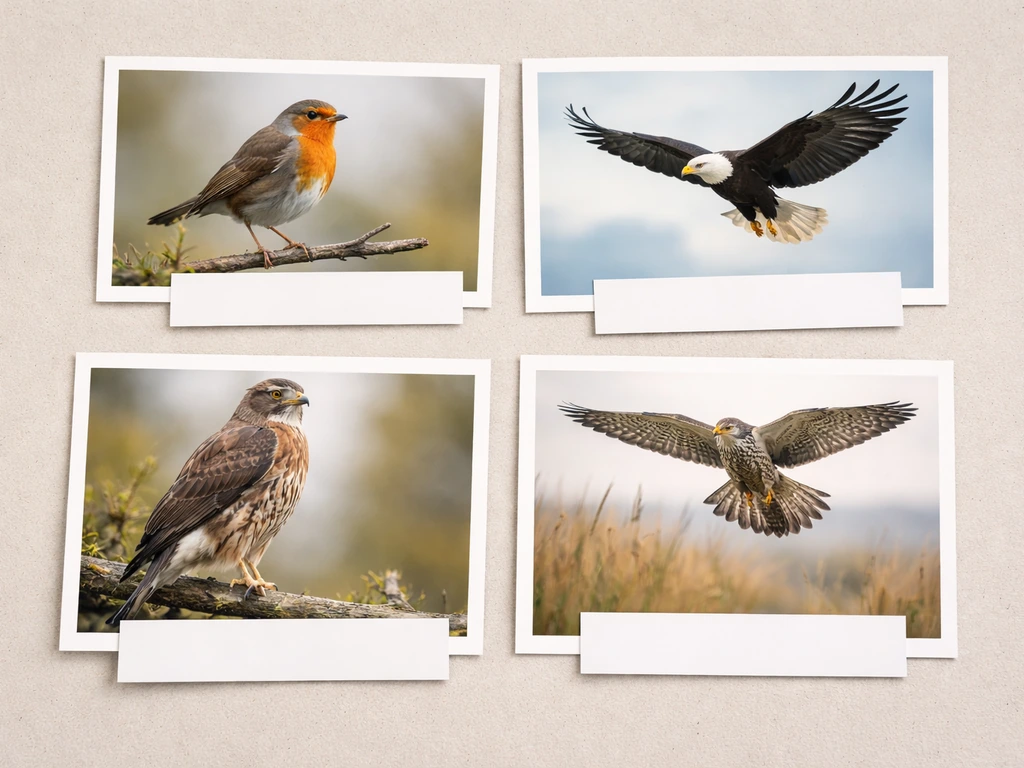
The following names all have documented, traceable bird connections. I have included the origin, the specific bird link, and a note on why the name works in practice.
| Name | Origin | Bird Connection | Why It Works |
|---|---|---|---|
| Robin | Old French / Germanic | Robin redbreast (Erithacus rubecula) | Familiar, friendly, genuinely tied to a specific species. One of the strongest species-specific names in English. |
| Corbett | Old French | Crow or raven (from 'corbet', diminutive of 'corp') | Sophisticated surname-style name with a crisp raven connection. More distinctive than Raven used as a given name. |
| Jonah | Hebrew | Dove (the story of Jonah centers on the dove as a symbol of peace and divine message) | Soft, classic, and globally recognized. The dove symbolism is culturally rich even if the name itself means 'dove' indirectly through the biblical narrative. |
| Baz | Arabic via Persian | Hawk or falcon ('baz' in Persian/Arabic means hawk) | Short, punchy, and rare in English-speaking countries. Strong bird of prey energy without being on the nose. |
| Arend | Dutch / Germanic | Eagle (from Old Germanic 'arn', eagle) | Common in the Netherlands, unusual elsewhere. The eagle root is shared with names like Arnold and Arnulf, but Arend keeps it clean and direct. |
| Arnold | Old High German | Eagle power ('arn' = eagle, 'wald' = power/rule) | Classic, heavyweight, easy to pronounce everywhere. The eagle root is solid even if the name is now more associated with a certain action-movie governor. |
| Arnav | Sanskrit | Ocean, but also linked to bird in some regional dialects; verify carefully | Popular in South Asia. The bird connection is disputed in some databases, so double-check before using this as your primary bird meaning. |
| Taka | Japanese | Hawk or falcon | Clean, two-syllable, works well cross-culturally. The hawk meaning is consistent across Japanese name references. |
| Gan | Hebrew | Garden; indirectly associated with the dove in some texts | Minimal and distinctive, though the bird connection here is symbolic rather than direct. Best used if you want a subtle nod. |
| Corvus | Latin | Crow or raven (the genus name for crows) | Maximum directness. You are literally naming someone after the crow genus. Bold choice, but unambiguous. |
| Phineas | Hebrew / Greek | Nubian or serpent-mouth; historically linked to the ibis through the figure of Phinehas and Egyptian associations | Vintage and literary. The ibis link is mythological and indirect, but interesting for a bird-focused family. |
| Efron | Hebrew | Songbird or lark ('efron' in Hebrew) | Obscure in English but genuinely means bird in Hebrew. Efron is one of the cleaner direct-translation names for boys. |
| Branoc | Cornish / Brythonic | Crow or raven (from 'bran', raven) | Rare outside Cornwall and Wales but historically solid. The 'bran' root (raven) also appears in Brân from Welsh mythology. |
| Altair | Arabic | The flying eagle (from 'al-ta'ir', the flyer) | Astronomical and elegant. Altair is the brightest star in Aquila (the Eagle constellation), so the eagle link is both linguistic and celestial. |
| Gavin | Welsh / Scottish | White hawk or hawk of the plain (from 'gwalch', hawk) | Popular and easy to wear in English-speaking countries. The hawk root is well-documented in Celtic name scholarship. |
A note on names that often appear on bird-meaning lists but are less reliable: Byrd is a straightforward English surname meaning bird, usable as a given name but a bit literal. Merlin refers to the small falcon (Falco columbarius) and is well-documented, but most people will assume the wizard first. Falcon used as a given name is genuine but uncommon. These are worth knowing, but go in with eyes open about the connotations.
Where these names come from and what bird symbolism they carry
Bird names for men appear in nearly every major linguistic tradition, and each culture tends to favor different birds for different reasons.
Germanic and Old English roots
The eagle is the dominant bird in Germanic naming. The Proto-Germanic root 'arnuz' (eagle) fed into Old High German, Old English, and eventually into names like Arnold, Arend, Arne, and even the place name variants that later became surnames. Eagles represented power, sovereignty, and divine favor in Germanic and Norse cultures, which is why eagle-root names were given to sons of chieftains and warriors. If you want a name in this family, Arend is the purest modern form.
Celtic and Brythonic traditions

Celtic cultures leaned toward ravens and hawks. The raven in Celtic mythology (especially Welsh and Irish) was a symbol of prophecy, battle, and otherworldly knowledge. The 'bran' root (raven) produced Brân, Branoc, and influenced Cornish and Welsh place names. The hawk root 'gwalch' appears in Gavin and Gawain, making them some of the most widely-used bird-meaning male names in English-speaking countries without most people realizing it. Greek names with bird connections, including those rooted in ancient nature poetry and mythology, form their own rich branch worth exploring separately. If you are specifically after a Greek name meaning bird, the Greek branch mentioned here is a great place to start.
Arabic and Persian naming
Falconry culture in Arabic and Persian traditions made falcon and hawk names prestigious male names for centuries. 'Baz' (hawk), 'Saqr' (falcon), and 'Shaheen' (peregrine falcon) all carry the status of a trained bird of prey, symbols of nobility, precision, and controlled power. Altair, while Arabic in origin, crossed into Western astronomical naming via medieval Islamic astronomy, which is why it now sounds equally at home as a baby name or a spaceship in a science fiction film. Arabic names with bird meanings form a particularly rich category, with connections running through poetry, astronomy, and falconry.
Hebrew and biblical connections
Hebrew bird names often come with heavy narrative weight. The dove (yonah) is the bird of peace and prophecy, and Jonah is the most widely-used male name in this tradition. Efron (songbird or lark) appears in the Hebrew Bible as a personal name, making it one of the few male Hebrew names that directly translates as a small singing bird rather than a predator. Hebrew names with bird meanings tend to be less about power and more about communication, peace, and the divine. This contrasts interestingly with the eagle-heavy Germanic tradition.
Japanese and East Asian naming
Japanese male names with bird meanings often use the kanji for crane (鶴, tsuru), hawk (鷹, taka), or eagle (鷲, washi). If you are exploring Japanese names meaning bird specifically, you will usually see these kanji mapped to the exact bird rather than a generic “bird” label. Taka is the most export-friendly version, recognizable and short.
Japanese names with bird connections carry connotations tied to longevity (crane), precision and ambition (hawk), and strength (eagle), with the specific kanji chosen shaping the meaning as much as the pronunciation. Korean and Japanese bird naming traditions share some of this symbolic vocabulary, though the specific names and conventions differ.
If you are specifically after Korean names meaning bird, it helps to look at the Korean naming conventions and the exact hanja used for the species Korean bird naming traditions.
How to actually verify a name's bird meaning before committing

This is where most naming guides let you down. Behind the Name distinguishes between editor-vetted “main database” meanings and user-submitted meanings, and it notes how marketing pressure can lead some sites to gloss over or even make up pleasant-sounding meanings editor-vetted “main database” meanings vs user-submitted meanings. They give you a list, you trust it, and then someone with a linguistics degree at a dinner party politely dismantles your explanation of why your son's name means eagle. Here is a practical verification process that actually works.
- Check Behind the Name's main editor-vetted database first, not the user-submitted section. Behind the Name explicitly distinguishes between editor-reviewed entries and user-submitted names, and the site itself acknowledges that user-submitted meanings cannot be guaranteed for accuracy. If the name only appears in the 'submitted names' section, treat that meaning as a starting hypothesis, not a confirmed fact.
- Cross-reference with a language-specific etymological dictionary. For Germanic names, use Wiktionary's Old High German or Proto-Germanic entries (which cite sources). For Arabic names, consult Hans Wehr's Dictionary of Modern Written Arabic or an Arabic-language resource. For Hebrew names, the Brown-Driver-Briggs lexicon is the standard scholarly reference.
- Look for the name in academic texts on personal names, not just baby-name websites. Books like Withycombe's 'The Oxford Dictionary of English Christian Names' or Hanks and Hodges' 'A Dictionary of First Names' are peer-reviewed and cite sources. If a name appears there with a bird meaning, the claim is on solid ground.
- Be skeptical of meanings that are unusually positive or vague. Baby-name marketing pressure is real: sites are incentivized to assign appealing meanings like 'soaring spirit of the free bird' to names whose actual etymology is more mundane. If the meaning sounds more like ad copy than a translation, dig deeper.
- For names from languages you don't read, ask in specialist forums. Reddit's r/linguistics and r/babynames both have users who can verify a meaning in context. For Japanese names, a native speaker can confirm which kanji compound is standard, since romanized names can map to multiple kanji with different meanings.
One practical shortcut: if the name is also used as a genus name or species name in ornithology (like Corvus for crows, or Falco for falcons), the bird connection is about as verified as it gets. Scientific nomenclature is conservative and well-documented, so a name that doubles as an avian genus is not going to be disputed at any dinner party.
How to pick the right one for your situation
Whether you are naming a baby boy or a pet bird, the selection criteria are actually pretty similar, just weighted differently.
Matching tone to the bird
Eagle and hawk names (Arnold, Arend, Baz, Gavin) carry authority and power. They suit someone who wants a name that projects strength without being aggressive. Crow and raven names (Corbett, Corvus, Branoc) are darker and more intellectual in feel, good for families who like mythology and don't mind a name with an edge. Dove and songbird names (Jonah, Efron) are softer and more peaceful in connotation.
Robin sits in the middle: friendly, accessible, and specific to a beloved bird without carrying heavy symbolic weight in either direction. If you are naming a pet bird, matching the name to the species personality or plumage is a fun extra layer. A bold corvid named Corvus is chef's kiss. A gentle dove named Jonah is just right.
Pronunciation across languages and cultures
Some of these names travel better than others. Robin, Gavin, Arnold, Jonah, and Altair are all easy to pronounce in English, Spanish, French, and German without much distortion. Arend will be pronounced 'AH-rent' in Dutch but often mangled to 'uh-REND' in English, which is close enough to survive. Branoc and Efron are genuinely unfamiliar to most English speakers and will need spelling out repeatedly, which is not a deal-breaker but is worth factoring in. Taka is clean and universal. Corvus is unmistakable but might prompt a lot of 'oh, like the crow?' conversations, which could be a feature rather than a bug.
Variants and nickname potential
If you want flexibility, look for names with strong variant forms. Arnold gives you Arne and Arno as European diminutives. Gavin stays pretty much as Gavin (the Welsh form Gawain is technically more accurate to the hawk root but significantly more medieval in feel). Robin has no natural nickname, which is actually a plus for people who hate their names being shortened. Corbett can go by Cob or Corby informally, which are charming. Altair is essentially nickname-proof, which suits parents who want the full name used.
A quick guide to picking by use case
| Use Case | Best Picks | Why |
|---|---|---|
| Baby name, English-speaking country | Robin, Gavin, Jonah, Arnold | Easy to spell, pronounce, and explain. Strong cultural familiarity without sounding dated. |
| Baby name, international or multilingual family | Altair, Taka, Arend, Baz | Cross-cultural clarity; each has a clean bird meaning that survives translation. |
| Pet bird name (any species) | Corvus, Robin, Taka, Baz | Short or distinctive, easy to call out, and species-appropriate depending on the bird. |
| Parent who wants maximum etymology credibility | Corvus, Efron, Arend, Branoc | Direct, documented translations with minimal interpretive chain. |
| Parent who wants subtle bird nod, not obvious | Gavin, Arnold, Corbett, Phineas | The bird root is real but not immediately obvious to people unfamiliar with the etymology. |
One last thing worth knowing: if you are drawn to female or gender-neutral bird names for comparison, or you are specifically looking at Japanese, Greek, Arabic, Hebrew, or Korean naming traditions for a more culturally specific choice, those traditions each bring their own distinctive bird symbolism and name conventions. If you are also exploring female names meaning bird, you can use the same verification steps to confirm the etymology and the specific species or symbol involved.
The male bird-name landscape in Arabic is particularly rich given falconry's central role in that culture, and the Hebrew tradition has some genuinely unusual options that do not appear on most mainstream lists. Starting with a specific language family often leads to a more satisfying result than scanning a generic cross-cultural list.
One name you might run into is the phrase “the bird hermes is my name,” which shows how bird symbolism can be woven into a personal identity or chant-like expression.
FAQ
How can I tell if a “bird meaning” male name is real etymology versus a folk story?
Yes, but you need to verify the direction of borrowing. Some names look bird-like because of modern spelling or popular associations, not because the original language meant a bird. Check whether the earliest recorded form already links to a species symbol (for example, an eagle root in Germanic forms) or whether it is a later nickname or folk etymology.
What’s the difference between a name that means “bird” and one that means a specific bird?
Use category-based claims. If a guide says the name means “bird” generically, confirm whether the original word meant “bird” broadly or a specific bird (eagle, raven, hawk). Generic translations are harder to defend than species-specific roots or the names that also match ornithological genus names.
Is there a quick verification method beyond checking name-list websites?
A good check is to see whether the name is used in taxonomy in a stable way (genus species in ornithology). Corvus, Falco, and similar double-uses are strong evidence because scientific naming is conservative. If there is no taxonomic overlap, you will want to rely on language-family roots or historic attestations instead.
Will the bird meaning survive if the name pronunciation changes in another country?
Pay attention to pronunciation drift rules. For example, Arend can shift vowel sounds across languages, which can make the name feel like a different word, even if the etymology is intact. If you want the bird meaning to stay explainable, practice the most likely local pronunciations and decide whether you can comfortably spell and explain it.
Can a surname-derived bird name still count as a male name meaning bird?
Yes, but only if you can trace the connection without skipping steps. Some “bird names” originate as place names or surnames tied to a bird symbol, then later become given names. That can still be valid, but you should confirm whether the surname was originally occupational or symbolic before assuming it automatically “means bird” as a first name.
Do bird-meaning names carry consistent symbolism across cultures, or does it vary?
For names with strong symbolism, decide what you want emphasized. Eagle and hawk clusters often read as authority and ambition, while raven and crow options commonly feel darker or more intellectual because of mythic associations. If you are choosing for a child, test how the symbolism will land in your community, where cultural knowledge may be uneven.
What are common social misinterpretations of bird-meaning male names?
Yes, some names are “technically bird-related” but are likely to be explained differently. Byrd is bird-literal but may feel surname-first to other people. Merlin is documented as a falcon reference, yet many will assume the wizard association. If you want minimal sideways talk, choose names that communities recognize as names first and bird references second.
If I want a specific bird, which languages make that easiest to verify and explain?
You can, and it is often cleaner to choose names where the bird link is explicit in the writing system. For example, Japanese crane, hawk, and eagle meanings typically map to specific kanji used for the species. That usually gives a clearer “this exact bird” explanation than names that rely on a vague symbolic story.
Which bird-meaning male names tend to cause the most spelling or explanation friction?
Assume you will need to spell more often if the name is unfamiliar in your audience. Branoc and Efron may require repeated spelling, which is fine but affects how smooth day-to-day life feels. If you want the explanation to be consistent, choose spelling-stable options or names that have common variants people already recognize.
Can I use nicknames or variants without losing the bird connection?
Yes. Many have variant forms that shift familiarity but keep the core bird reference, like Arnold leading to Arne or Arno, or Gavin aligning with Gawain forms in Welsh contexts. If you want flexibility, pick a base form that has multiple credible variants in your target languages.
Does the best choice for a baby boy versus a pet bird follow different rules?
Sometimes, but it changes the story you can tell. Scientific names like Corvus and Falco are strong for “bird connection,” yet they are not guaranteed to be “pet-approved” in every context, and the association will depend on how people interpret taxonomy. If you are naming a pet bird, match the species personality or plumage to strengthen the real-world fit, then treat the etymology as the bonus layer.
Why do two different sources sometimes disagree on what the same name “means”?
Be cautious with “one-size-fits-all” lists that merge myth, translation, and etymology. If a name’s bird link is actually through a multi-step root or a symbol chain, you may be able to defend it, but you should avoid presenting it like a direct translation. Category separation is the simplest way to keep your explanation accurate.
Next Article
Japanese Names Meaning Bird: Given and Surnames Guide
Japanese given and surnames with bird kanji, including male options, meanings, readings, and how to verify similar names