
Alcatraz Island is named after the pelican. When Spanish explorer Juan Manuel de Ayala sailed into San Francisco Bay in August 1775, he saw so many of these large seabirds on a rocky island that he wrote it down on his chart as 'Isla de los Alcatraces,' meaning 'Island of the Pelicans.' That name stuck, got shortened, got anglicized, and eventually became the one word the world now associates with a maximum-security federal prison rather than a thriving seabird colony.
Alcatraz Island Named After What Bird? Name Etymology

Maya Castellanos
26 Jun 2026
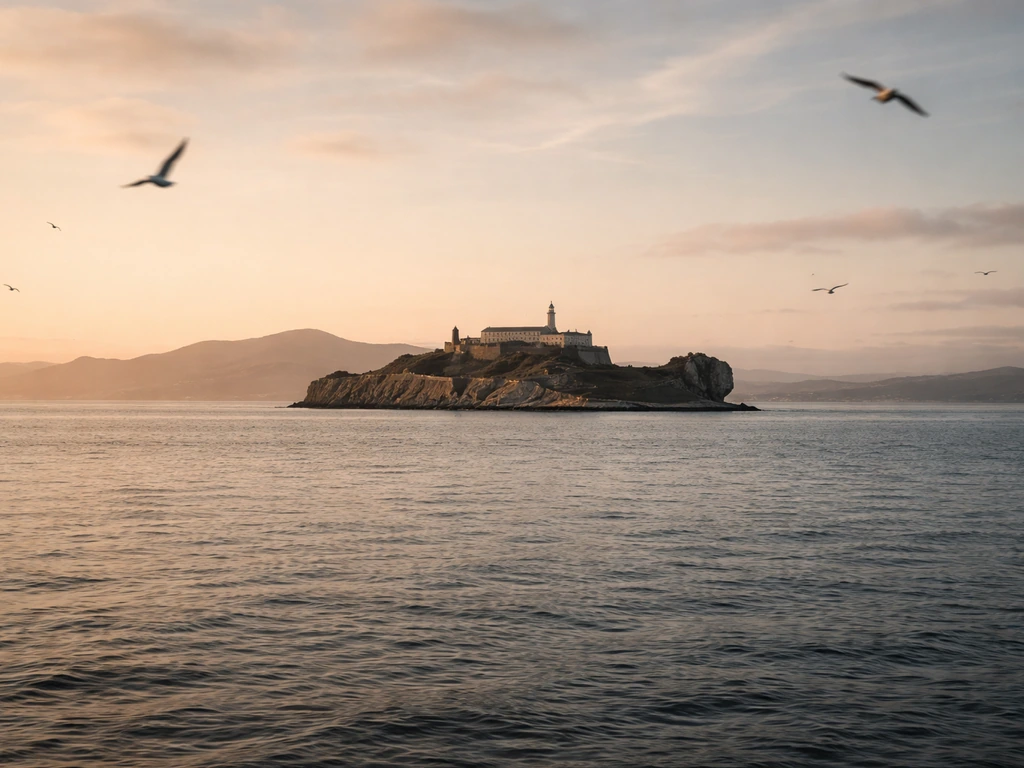
The bird behind the name
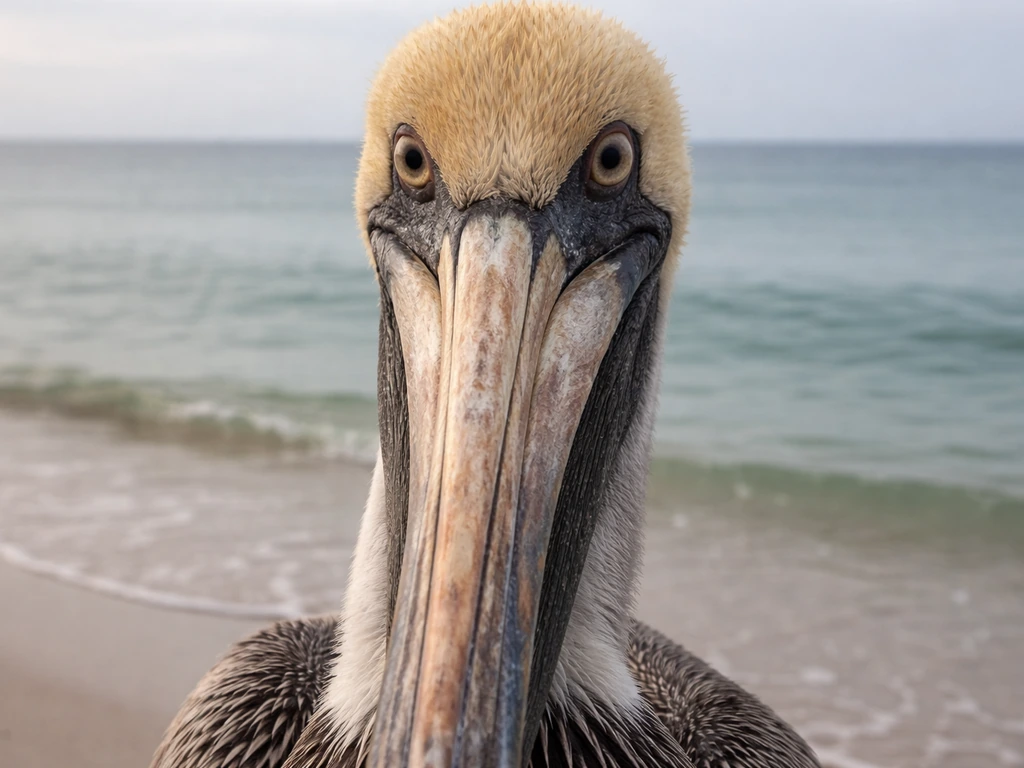
The Spanish and Portuguese word 'alcatraz' (plural: alcatraces or alcatrazes) referred primarily to the pelican in early usage. Both Merriam-Webster and the Oxford Learner's Dictionary back this up directly, glossing the term as 'pelican.' The National Park Service, which manages Alcatraz today, confirms the same: Ayala named the island on account of the abundance of those birds, and 'those birds' were pelicans. If you ever need one clean answer for a trivia night or a crossword clue, pelican is the one.
That said, 'alcatraz' was never a surgically precise scientific label. It functioned historically as a broad seabird umbrella term in the Iberian world, much the way English speakers once used 'fowl' for almost anything with wings near water. Merriam-Webster even hedges a little, defining 'alcatras' as 'a large water bird, such as the pelican or frigate bird.' Portuguese dictionaries like Priberam list multiple 'alcatraz-' compound species entries, including the northern gannet (Morus bassanus). So while pelican is the core, original meaning, the word had range.
The etymology chain: where did 'alcatraz' actually come from?
The word has a genuinely tangled linguistic past, and linguists are not entirely in agreement. Here is the most widely accepted chain, followed by the main competing theory.
The bucket theory (mainstream)

The Online Etymology Dictionary traces 'alcatraz' back through Spanish and Portuguese to Andalusian Arabic 'al-qatrás,' which referred to a bucket or water-carrying vessel. The connection to pelicans is surprisingly logical: a pelican's throat pouch looks remarkably like a bucket or a drawwell vessel being lowered for water. From that Arabic root, Portuguese sailors coined 'alcatruz' (water bucket or pulley bucket) and then extended the term to the big-pouched bird they kept seeing at sea. Early 16th-century Portuguese and Spanish texts used 'alcatraz' meaning pelican, and over time the word broadened to cover other large seabirds.
The Arabic sea-eagle theory (alternative)
Wiktionary and Etymonline both note an alternative theory that links 'alcatraz' to Arabic 'al-ghattas,' meaning sea eagle or diving bird. This path is less widely accepted but gets repeated often in online discussions, partly because it sounds authoritative and partly because it fits the vague mental image of a large, dramatic seabird. Worth knowing it exists, but most serious etymological references land on the bucket-to-pelican route as the more plausible one.
The albatross spin-off
Here is the part that surprises most people: the word 'albatross' is itself a corruption of 'alcatraz.' English sailors in the 17th century heard Portuguese and Spanish crews calling large seabirds 'alcatraz' and mangled it into 'albatross,' attaching it to the massive Southern Ocean wanderers they encountered later. So the pelican-named prison island and the albatross of Coleridge's poem share the same etymological ancestor. That is a genuinely useful piece of trivia, and it keeps coming up when bird-name etymology intersects with popular culture, which is something this site covers in depth.
How a pelican word became an island name (and then a prison name)
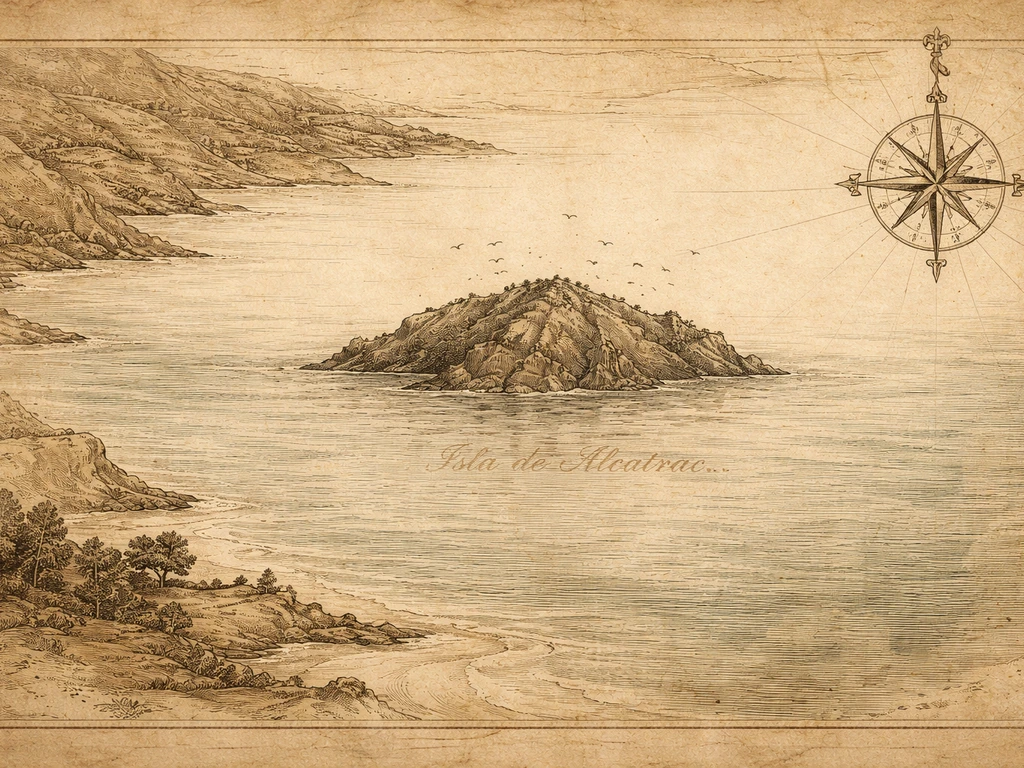
On August 12, 1775, Juan Manuel de Ayala completed the first European survey of San Francisco Bay. His navigational chart recorded a rocky, bird-covered island as 'Isla de Alcatraces.' The NPS curriculum documents confirm that later Spanish maps rendered it 'La Isla de Los Alcatraces,' translated consistently as 'the Island of the Pelicans.' The large bird population was the obvious and only inspiration.
Over the following decades, American cartographers and military planners took over the naming. The Spanish plural 'alcatraces' got dropped down to a singular anglicized form, and by the time the U.S. Army built a fortification there in the 1850s, it was simply 'Alcatraz Island.' The federal penitentiary opened in 1934. The pelicans were long gone from popular memory by then, replaced by Al Capone and the mythology of escape-proof incarceration.
There is an interesting geographical wrinkle worth mentioning. Some Wikipedia sources note that Ayala's original 'Isla de los Alcatraces' label on his 1775 chart may actually have applied to what is now Yerba Buena Island rather than the rock we call Alcatraz today. Wikipedia’s Yerba Buena Island page likewise notes that Ayala’s 1775 chart uses “Isla de Alcatraces,” glossed as “island of the pelicans,” and ties it to the birds that were abundant there Ayala's original 'Isla de los Alcatraces' label on his 1775 chart may actually have applied to what is now Yerba Buena Island. The NPS historical resource study acknowledges this translation and attribution debate, citing California place-name research. Regardless of which island Ayala pointed at first, 'Alcatraz' as a place name came directly from 'alcatraces,' the pelican word, and landed on today's Alcatraz Island through subsequent map revisions.
Common mix-ups worth clearing up
A few persistent confusions pop up whenever people look into this etymology, so it helps to address them directly. The same kind of naming history and spelling changes can also explain why the words “liver bird” and “Liverpool” are pronounced differently why “liver bird” and “Liverpool” are pronounced differently.
| The mix-up | What is actually going on |
|---|---|
| 'Alcatraz means gannets, not pelicans' | Wikipedia's Alcatraz Island article notes that some translations render 'alcatraces' as 'gannets.' This reflects the fact that the word was a broad seabird label, not a locked-down species name. The original, dominant meaning in early Spanish and Portuguese usage was pelican. |
| 'Alcatraz and albatross are unrelated' | They share the same root. 'Albatross' is an English corruption of 'alcatraz,' carried through Portuguese sailors' bird-naming habits. Both words trace back to the same Arabic-origin Iberian seabird term. |
| 'The Arabic origin means sea eagle, so the bird is a raptor' | The 'al-ghattas' (sea eagle) theory is an alternative hypothesis, not the consensus. Most dictionaries and etymological references anchor the word to the pelican-as-water-bucket image, not an eagle. |
| 'Alcatraz was always the name of that specific island' | No. It was a transferred place name from a general bird label. The mechanism was: bird term in Iberian languages, used by a Spanish explorer on a chart, shortened and anglicized by American authorities, then frozen as a proper noun. |
The gannet vs. pelican debate is the one that comes up most often. It is worth understanding why: 'alcatraz' in modern Portuguese can refer to species like the northern gannet (Morus bassanus), so Portuguese speakers today might genuinely translate 'alcatraces' as gannets. But in the 16th and 17th century context when Spanish explorers were naming things in the Pacific, the word meant pelican. Historical context matters when you are tracing place-name etymology. This same kind of translation drift shows up in other bird-named places too. The Liverpool Liver Bird is another example where a city's name and a bird's name got tangled through centuries of shifting usage, a topic worth exploring if this kind of linguistic drift interests you. In Liverpool, the Liver Bird is tied to the city’s maritime heritage, which is why people sometimes ask whether Liverpool is named after it Liverpool Liver Bird.
How to verify this yourself
If you want to confirm the etymology rather than just taking any single source's word for it, here is a practical approach that takes about ten minutes and triangulates across reliable references.
- Check the Online Etymology Dictionary (etymonline.com) under 'alcatraz.' It gives the 16th-century Spanish and Portuguese 'pelican' meaning, the Arabic source hypothesis, and the albatross connection in one concise entry.
- Cross-reference with Merriam-Webster's entry for 'alcatras,' which defines it as 'a large water bird such as the pelican or frigate bird' and confirms the Spanish/Portuguese origin.
- Look at the National Park Service's Alcatraz pages directly (nps.gov). The NPS is the managing authority and states plainly that Ayala named the island 'Isla de los Alcatraces' because of the pelicans present in 1775.
- For the Portuguese side of the word, Priberam (priberam.pt) and Infopédia both give 'alcatraz' as an ornithological entry with species breakdowns, showing how the word functions as an umbrella seabird term in modern Portuguese.
- If you want the historical place-name research side, the reference to Gudde's 'California Place Names' (University of California Press, 1962) comes up in the NPS Historic Resource Study and is the standard academic source on California toponyms derived from Spanish.
Between those five sources you will have the core etymology (Merriam-Webster, Etymonline), the primary historical record (NPS), the modern Portuguese usage context (Priberam, Infopédia), and the academic place-name literature (Gudde via NPS). Priberam’s dictionary explicitly lists the plural form alcatrazes, which supports treating the English “Alcatraz” as a shortened Portuguese plural-based toponymic form. That is a solid enough chain to answer any follow-up question confidently, whether you are writing an essay, settling a debate, or just satisfying your own curiosity about why a notorious federal prison shares its name with a bird that scoops fish into a throat pouch. The phrase “it has a long neck” is a common way people describe a pelican, the bird at the root of the name.
It is also worth remembering that this kind of animal-to-place naming is not unusual in American geography. Plenty of place names started as descriptive animal labels used by explorers who wrote down what they saw and then sailed on. The bird name outlasted the birds, which is a pattern you see whenever language moves faster than conservation. The pelicans that gave Alcatraz its name are gone from that rock, but the word they inspired is now one of the most recognized place names on earth. The “Turkey bird” you may be thinking of is actually a different animal than the pelican connected to the Alcatraz name.
FAQ
If “alcatraz” can mean different seabirds, how do I tell whether Ayala meant pelicans or something else?
Use the date and region. In Spanish charting contexts in the 1500s through 1700s around the Pacific, the core meaning tied to Spanish place naming is pelican, and Ayala’s island label explicitly reflects a dense, visible bird colony, which matches pelican behavior and size more closely than many alternatives.
Why do some people insist the word is really connected to gannets or other birds like the northern gannet?
That usually comes from modern Portuguese usage where “alcatraz” can be extended to multiple species (including gannet-like birds). The fix is to avoid modern dictionary senses and instead anchor your interpretation to the earlier Iberian meaning in the specific era when the place name was recorded.
Could Ayala’s “Isla de los Alcatraces” have referred to Yerba Buena Island instead of today’s Alcatraz Island, and would that change the bird answer?
The island location could be debated, but the bird etymology still tracks the same root term “alcatraces.” In other words, even if the label was applied to a different nearby rock, the naming logic remains “named for pelicans (the alcatraces) seen there.”
Is “alcatraz” related to “albatross,” and does that mean the prison name and the poem bird share the same origin?
Yes. The common explanation is that English sailors misheard or reshaped “alcatraz” into “albatross.” That means both the prison name and the poem’s “albatross” trace back to the same ancestor, even though the exact bird reference shifted when the English term stuck.
What’s the quickest way to verify a place-name etymology when sources disagree?
Triangulate in three layers: (1) the earliest documented form and date, (2) an authoritative language dictionary for the relevant time period, and (3) a modern place-name authority that explains how later maps and translations fixed the spelling and target location.
Why did the name shift from “Isla de los Alcatraces” to “Alcatraz Island”?
Through anglicization and singul arization during U.S. mapping and planning. Dropping the plural and Spanish article is common in American cartographic practice, and it produces the single-word form that later became the fixed official name.
Are there any “near-miss” bird-name facts people confuse with the Alcatraz pelican story?
Yes, the “liver bird” and Liverpool confusion is a frequent adjacent mix-up. Those involve a different name origin pathway (city vs. bird symbolism and maritime heritage), so they are not the same kind of translation drift as alcatraz versus gannet.
If pelicans are the origin, why are there no pelicans associated with Alcatraz today?
The naming reflects what was observed at the time of exploration and charting. Over centuries, local animal populations and ecological conditions changed, and by the era the prison entered popular history, public memory was dominated by the institution rather than the former bird colony.
Next Articles
What Is the Real Name of Turkey Bird
Discover what “turkey bird” really means, including the correct common and scientific names and how to verify the specie
Good Names for a Dodo Bird: Ideas and How to Pick
Cute, funny and elegant dodo bird names plus how to pick one, with language meanings for flightless island vibes.
How to Pronounce Dodo Bird Correctly in English
Learn standard and US UK pronunciation of dodo bird, with syllables, stress, etymology, and practice drills.