The bird called a turkey is not named after the country Turkey. It's actually the reverse of what most people expect: the English name came from a case of mistaken identity involving a completely different bird, a tangled trade route through Ottoman-controlled territory, and the linguistic habit of slapping a place name on anything exotic. The country Turkey and the bird turkey share a name only by historical accident, and the bird got there first in the English-speaking imagination.
Is Turkey Named After the Bird or the Country?

Maya Castellanos
13 Jun 2026
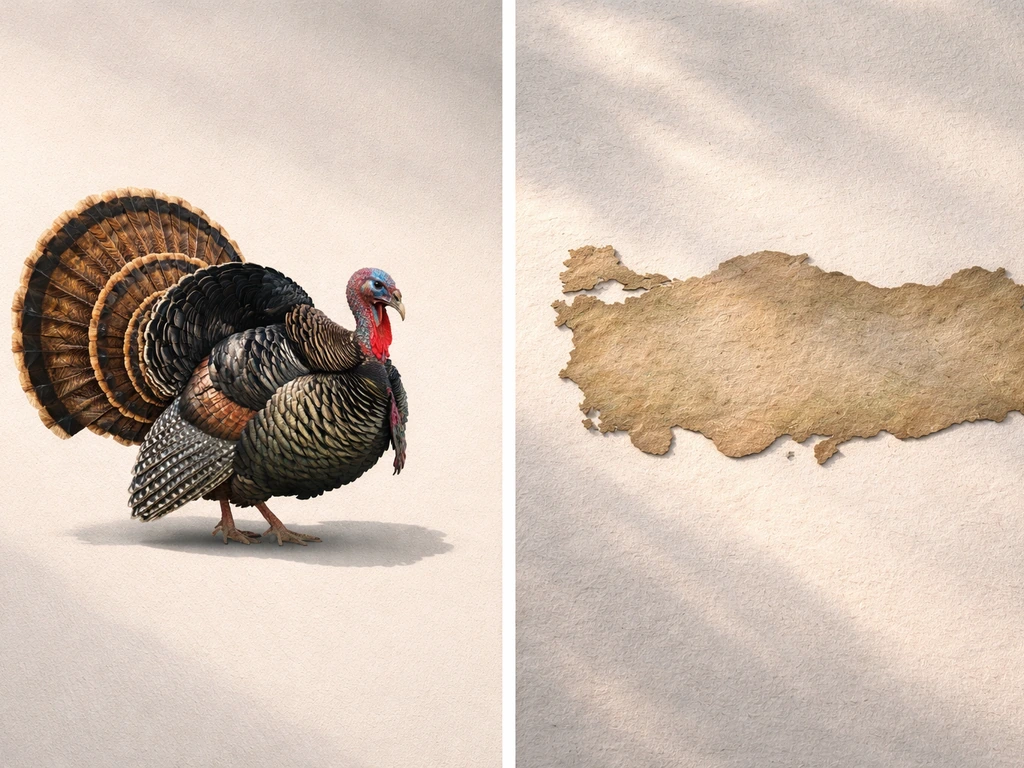
So which came first, the bird or the country name?
Neither, exactly. The country we call Turkey has its own ancient name in Turkish (Türkiye), and English speakers used the word "Turkey" broadly to mean the Ottoman lands or even just a vague sense of "the East" long before any bird was involved. The bird name in English crystallised in the 1550s, so the country name in English definitely predates the bird name. But the question of whether the bird was deliberately named after the country is more complicated than a simple yes or no. The word Turkey in the bird's name referred not to the modern nation as we understand it but to a geographic zone through which exotic goods, including birds, arrived in European markets. Think of it less as a naming tribute and more as a shipping label that stuck.
How the English word 'turkey' got attached to a bird
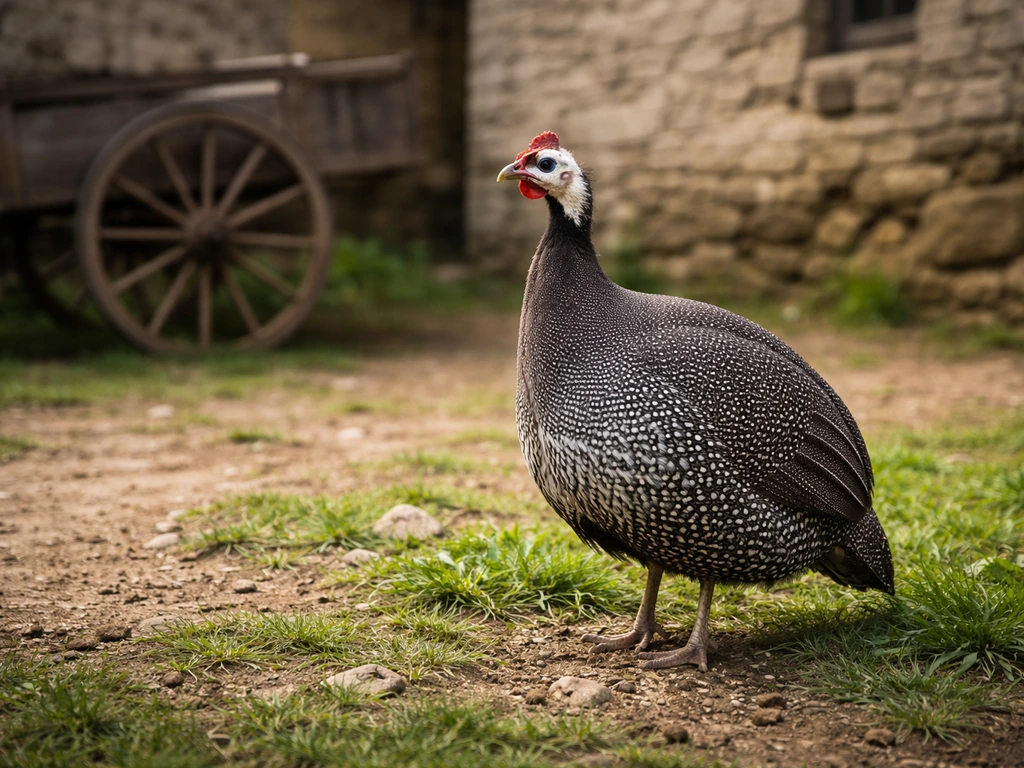
The direct etymological ancestor of the word is "Turkey-cock," a term the English applied to the guinea fowl in the early 1500s. Guinea fowl were already popular in European markets, and they often arrived via trade routes that passed through Ottoman-controlled North Africa and the eastern Mediterranean. Because of that routing, English traders assumed the birds came from Turkish territory, so they called them Turkey-cocks and Turkey-hens. The place name Turkey here was used the way we might say "French" in French toast or "Chinese" in Chinese food: not necessarily accurate, just a shorthand for foreign provenance.
When European settlers and traders encountered the large, dark-feathered bird of North America, they thought it looked similar to the guinea fowl they already knew as the Turkey-cock. The name transferred. By the 1550s, the New World bird was being called a turkey in English, shortened from the older Turkey-cock compound. Etymonline supports this by dating the English bird-name “turkey” to the 1550s and tying it to a place-name label used for exotic birds arriving through Ottoman-connected trade routes By the 1550s, the New World bird was being called a turkey in English. The Online Etymology Dictionary dates this usage to that exact decade. The guinea fowl eventually lost the Turkey-cock label as the American bird monopolised the word, and here we are.
The historical mess that made it all possible
The 16th century was a chaotic time for European naturalists trying to categorise animals pouring in from newly contacted parts of the world. Birds arrived from the Americas, from sub-Saharan Africa, from South and Southeast Asia, and from the Ottoman Empire, often through the same Mediterranean trading hubs. Merchants were not zoologists. They labelled things by where they bought them, not where those things actually originated. Guinea fowl travelled through Ottoman territory, so they became Turkey-cocks. When a completely different bird arrived from the Americas, the same merchants and colonists recognised a surface similarity (large, dark, strutting fowl) and reached for the familiar label they already had.
Merriam-Webster's word history for "turkey" puts it plainly: the name came from confusion with the guinea fowl, which was "supposed to be imported from Turkish territory." Later, English settlers in North America called the New World bird turkey because it reminded them of the European bird they already knew by that name. It is a chain of misidentifications: Ottoman trade routes led to a mislabelled guinea fowl, which then lent its mislabelled name to an unrelated American bird.
Did the name ever actually change?

There is no documented moment where someone sat down and officially renamed the bird turkey. What happened was a gradual narrowing of usage. "Turkey-cock" and "Turkey-hen" were the 16th-century forms, applied first to guinea fowl and then, by transference, to the American bird. Over time the compound was shortened to just turkey, and as guinea fowl faded from English common usage under that name, turkey came to refer exclusively to the American bird (Meleagris gallopavo). So the name did not change in a deliberate sense. It evolved through common speech, shortening and shifting referent along the way. Collins English Dictionary marks the origin as C16 (16th century) and describes the American bird label as applied "by mistake," which captures the accidental nature of the whole process perfectly.
What other languages call the bird (and what that tells us)
One of the best pieces of evidence that English is the odd one out here is looking at what everyone else called the same bird. Other languages did not follow the Turkey route at all, and their naming choices reflect entirely different assumptions about where the bird came from.
| Language | Word for turkey | Implied origin in the name |
|---|---|---|
| French | dinde / dindon | shortened from d'Inde, meaning 'from India' (the Indies) |
| Turkish | hindi | also meaning 'from India / the Indies' |
| Russian | indeyka | same root as 'India' |
| Portuguese | peru | named after Peru, reflecting South American origin |
| Arabic | dajaj hindi | literally 'Indian chicken' |
| Malay / Indonesian | ayam belanda | Dutch chicken (arrived via Dutch traders) |
| English | turkey | named for Ottoman trade routes (via 'Turkey-cock' for guinea fowl) |
The pattern is striking. Most European and Middle Eastern languages decided the bird came from India or the Indies, a category that in the 16th century often blurred the Americas and South Asia together. English alone went in the Ottoman direction. Portuguese went a step further and picked Peru specifically. Malay credited the Dutch for bringing the bird. Every language was guessing, and every language guessed differently. The fact that Turkish itself calls the bird hindi (India's bird) means the country Turkey does not even claim the bird in its own language. That alone should settle the debate: the bird is not named after Turkey in any meaningful cross-cultural sense.
Popular myths about the name
A few folk explanations circulate online and are worth addressing directly. One claims the bird makes a sound like "turk turk turk" and was onomatopoeically named. There is no solid historical evidence for this, and the phonetics do not match the documented etymology. Another story suggests the bird was brought to England by traders from the Levant (Ottoman territory) directly, making the Turkey label literally accurate for the New World bird. This is also unsupported: the bird is native to North America and no reliable record exists of it being shipped via the Ottoman Empire. The most plausible chain of events is the one the major dictionaries agree on: guinea fowl, called Turkey-cocks due to their (assumed) Ottoman trade-route origins, transferred their name to the superficially similar American bird.
There is also a persistent belief that the country Turkey (the modern republic) was somehow named after or because of the bird. The country’s name in English is often confused with the bird name, but the link is accidental rather than deliberate. This gets it completely backwards. The country name in English derives from the Latin Turchia and the Medieval Latin Turcia, referring to the lands of the Turkic peoples, and that usage long predates any bird terminology. The bird did not name the country, and the country did not deliberately name the bird.
How this fits into broader bird-naming patterns
The turkey story is a perfect example of how geographic bird names almost never mean what they appear to mean. Place names attached to birds often reflect trade routes, assumed origins, or the nationality of whoever described the bird first, rather than where the bird actually lives. If you enjoy this kind of linguistic detective work, the same principle applies in other surprising directions: the kiwi fruit was named after the kiwi bird (not the other way around), and several countries have been named after birds they are associated with. The kiwi fruit was named after the kiwi bird, so it is not the kiwi bird that takes its name from the fruit. In each case the naming logic is tangled, culturally situated, and more interesting than the simple label suggests.
How to verify bird name origins yourself
If you want to check the etymology of any bird name, these are the most reliable starting points:
- Online Etymology Dictionary (etymonline.com): free, well-cited, and gives dated first usage with source language chains. It is where most of the documented dates for 'turkey' come from.
- Merriam-Webster's full word history entries: not every word gets one, but when they appear (as with 'turkey') they are thorough and readable.
- Oxford English Dictionary (OED): subscription-based but available through many public libraries; gives the earliest printed quotation in English for any word, which is the gold standard for dating common usage.
- Compare across languages: looking up the same bird in five different languages often reveals which culture or trade route dominated early naming. The turkey example is a textbook case of this working beautifully.
- Check scientific names: the genus and species names for birds (in Latin or Latinised Greek) are assigned by the scientist who formally described the species, and they often contain geographic or personal name clues. Meleagris gallopavo, the turkey's scientific name, references guinea fowl (Meleagris was the Greek name for guinea fowl) and the Spanish colonial name gallipavo, which itself means something like 'peacock chicken.'
Bird-name etymology rewards curiosity. Once you start pulling the thread on one name, you find trade routes, colonial misunderstandings, naturalists with agendas, and merchants who just needed a quick label for the strange creature in the hold. The turkey is one of the most entertaining examples, and knowing the real story makes Thanksgiving dinner conversation considerably more interesting.
FAQ
So is it correct to say the bird “turkey” is named after the country Turkey?
In standard etymology, no. English “turkey” started as a label tied to a misassumed origin from Ottoman-linked trade routes, not to the modern republic’s name, and the country’s English name predates the bird’s English usage.
Why do people mix up the country and the bird in the first place?
Because English uses the same word for both, and it was historically broad and confusing, with “Turkey” sometimes meaning Ottoman territories or even “the East.” That overlap makes the later bird label feel like it must be referencing the country.
Does the modern country’s name (Türkiye) have any connection to the bird?
Not in the usual etymological sense. Türkiye is the Turkish-language name for the country, and in Turkish the bird is typically called something meaning “hindi” (India’s bird), which does not treat Turkey as the source of the bird name.
Could “turkey” come from the bird sound, like “turk turk turk”?
That explanation is considered weak because the documented historical form traces through earlier compound labels for guinea fowl and then a transfer to the New World bird, and the timing and phonetics do not match a straightforward sound-based origin.
Was the turkey bird actually imported to Europe from Ottoman regions?
No. The New World turkey is native to North America, and the best explanation is a naming transfer: traders used a familiar label for guinea fowl (linked to presumed Ottoman provenance), then applied the same label to a visually similar North American bird.
When did the New World bird start being called “turkey” in English?
The term solidified in English in the mid-1500s after the earlier compound forms (“Turkey-cock,” “Turkey-hen”) had already been circulating. The important point is that the bird name arrived as a chain of reused labels, not as an official renaming event.
Did the name evolve by design at any point, like a king or official deciding on “turkey”?
There is no recorded moment of an official renaming. Usage narrowed gradually in everyday speech, first shifting references and then shortening “Turkey-cock” to “turkey” as the American bird became the dominant meaning.
Do other languages name the turkey bird differently based on their own trade ideas?
Yes. Many languages tied the bird to India, the Indies, or other places based on what merchants believed or where they encountered it. English is notable for following the Ottoman-style “Turkey” route, while other languages made different guesses.
Is it possible that the country name influenced the bird name in English at any stage?
Not in the main etymological direction. The bird’s English label developed after the earlier “Turkey-cock” naming for guinea fowl and through the mid-1500s transfer, while the country’s English usage was already established long before that bird-specific English meaning took hold.
What’s the best way to check whether a bird name sounds geographic but is actually misattributed?
Look for the earliest written forms of the bird name, then trace whether the term began as a compound tied to trade or assumed provenance, and whether the bird is native to a different region than the place word suggests.
Next Article
Why Do People Say Tuna Fish but Not Chicken Bird?
Learn why English says tuna fish but not chicken bird, how naming conventions and expectations shape bird phrases