The best parrot names are short, distinct, and easy to say with genuine enthusiasm every single time. That's the practical answer. But getting there, finding the name that actually fits your bird and that your parrot will reliably respond to, takes a little more thought than pointing at a list and picking the first thing that sounds cute.
Good Bird Names for Parrots: Picks by Type and Vibe
Maya Castellanos
22 Mar 2026
This guide walks you through the whole process: how to narrow down your options by species and personality, which name styles work best for talking birds, how to teach your parrot to respond, and the common mistakes that make the whole thing harder than it needs to be. If you are also wondering what to name a pet bird, this guide will help you narrow down the best options quickly.
How to pick a name that actually fits your parrot
Start with two things: how the name sounds out loud and whether it matches what you see in front of you. The sound matters more than people expect. Research on pet naming consistently shows that two-syllable names create the clearest signal for animals, because they have enough variation to be distinct without being so long that the bird (or you) loses track of where the name starts and ends.
Names like Mango, Kiwi, Sunny, Coco, and Harley all hit that sweet spot. Single-syllable names like Max or Bird work too, but they can get lost in the noise of everyday conversation. Three-plus syllable names like Bartholomew or Persephone are charming on paper but annoying to actually use fifty times a day.
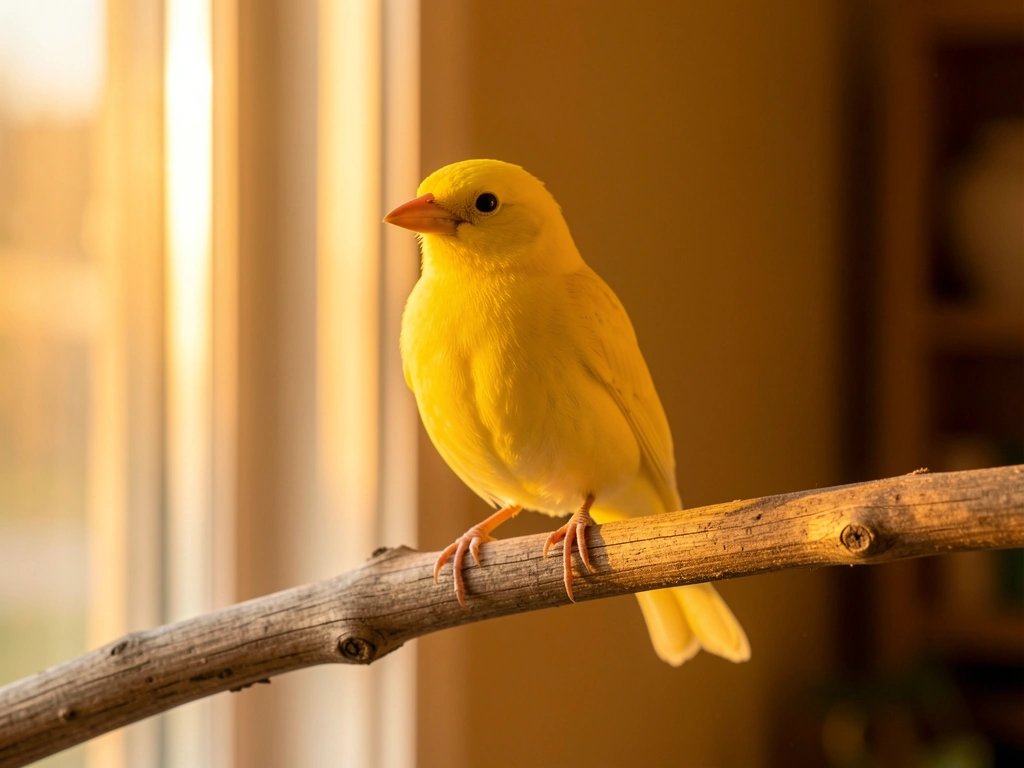
Then look at the bird. Color is the obvious starting point, and there's nothing wrong with naming a yellow bird Sunny or a green one Kiwi. Those names are popular because they genuinely fit. But personality is just as useful. A bird that's already showing bold, chaotic energy at the pet store or breeder's place might suit something with a bit of swagger, while a quiet, curious bird might suit something softer. If you've been around parrots a while, you know that personality often solidifies in the first few weeks at home, so it's fine to wait a little before committing. Most parrots won't suffer an identity crisis from a week of being called 'hey you.'
Also think about what the name means to you. Names drawn from favorite shows, music, foods, or places tend to stick better emotionally, which means you'll use them more consistently, and consistency is everything when you're trying to build name recognition. If you're a big fan of Breaking Bad, Marty Byrd (a name one conure owner actually uses) gives you both a formal name and a rich pool of nicknames to pull from. That kind of built-in flexibility is genuinely useful.
Name ideas by parrot type and personality
Different species come with different energy levels, vocal ranges, and general vibes, and a good name plays to all of that. Here's a practical breakdown by parrot type.
Budgies
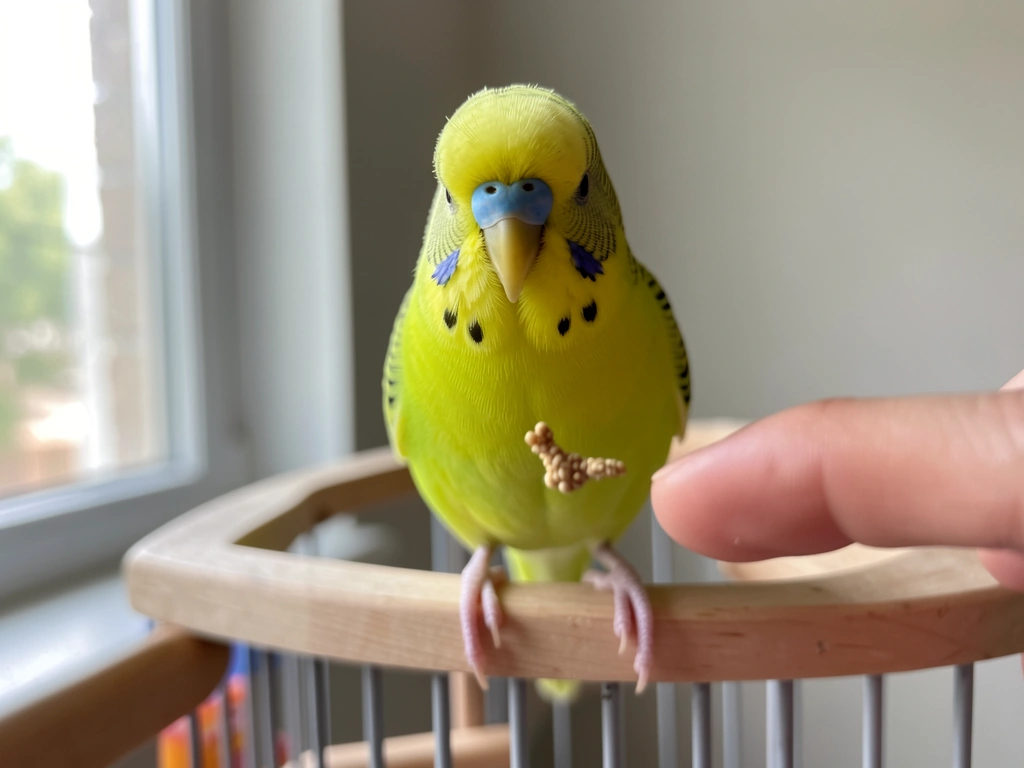
Budgies are small, fast, and often intensely social. They suit names that are light and musical, because you'll be saying those names in a cheerful, upbeat tone (that's actually part of how they learn to respond). Kiwi, Buddy, Sunny, Tiki, and Milo are consistently popular for good reasons: they're easy to say quickly, they sound warm, and they match the small-but-mighty energy of most budgies. If you want to go a little more distinctive, Pebble, Pip, or Ziggy work nicely. For yellow budgies specifically, Sunny and Lemon are perennial favorites and they genuinely fit.
Cockatiels
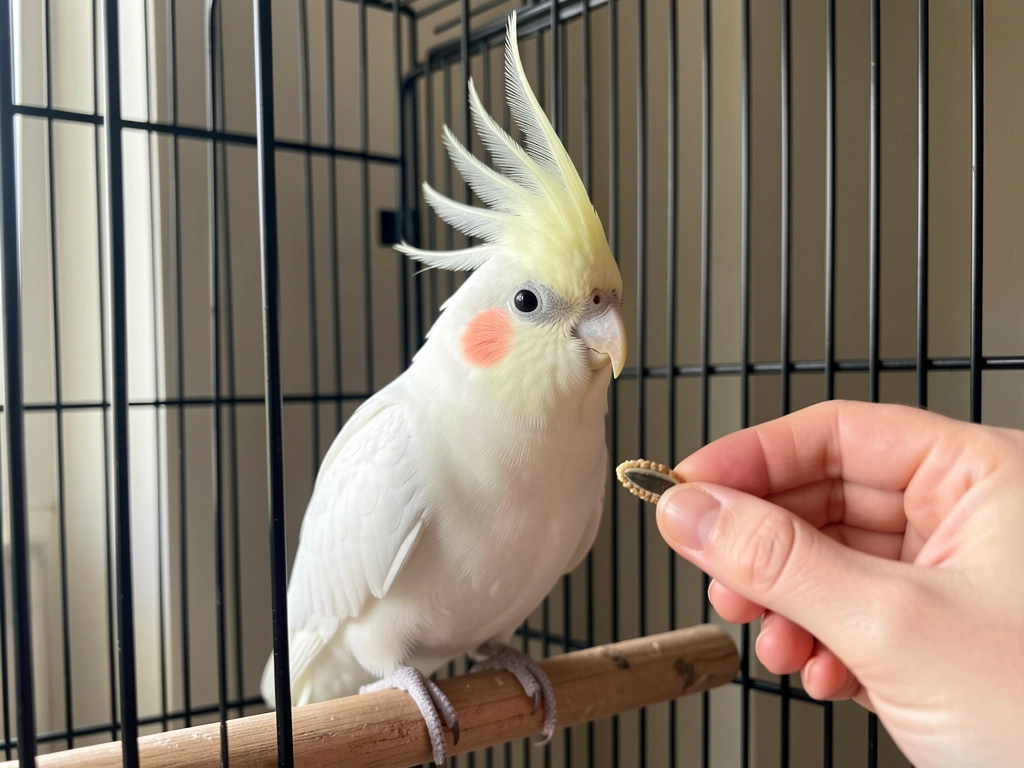
Cockatiels are a little more composed than budgies, often sweet and affectionate with a gentle personality. Names that lean soft and slightly classic tend to work well: Luna, Charlie, Coco, Pearl, Dusty, and Oliver are common picks that fit the vibe. If your cockatiel has that signature crest drama and acts like it knows it's important, something like Duchess or Captain is worth a look.
Conures
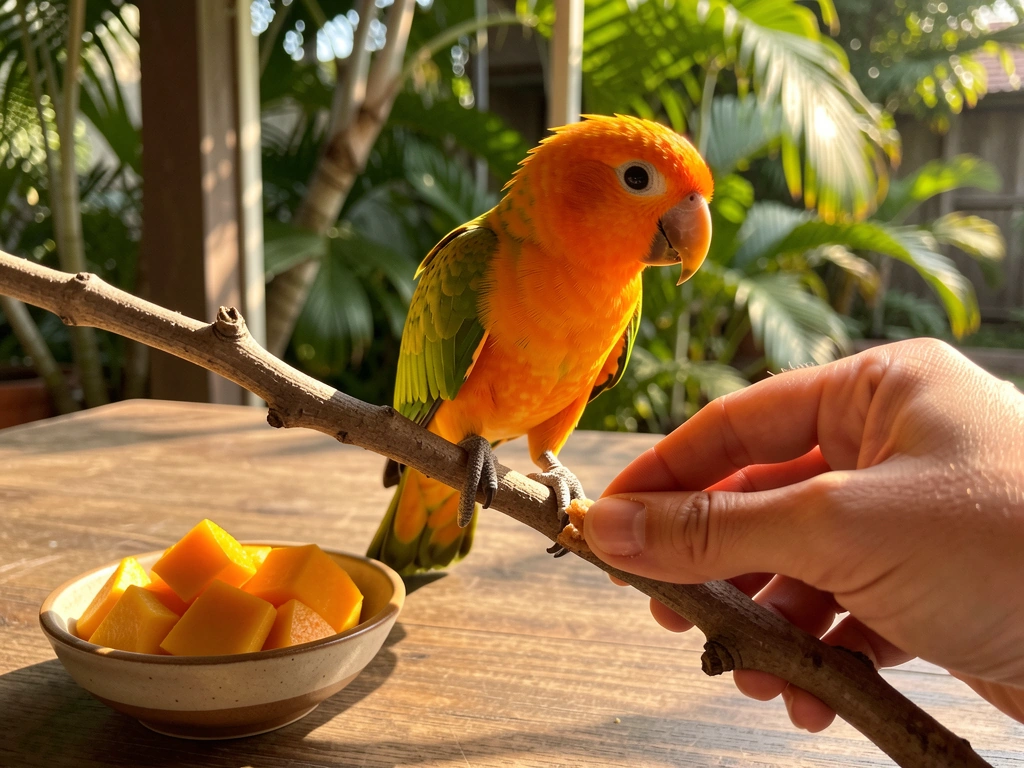
Conures are loud, colorful, and absolutely convinced that they're the main character. Mango is by far the most common conure name, particularly for sun conures, and at this point it's almost a running joke in the community. That doesn't make it a bad choice, but if you want to stand out slightly, Papaya, Blaze, Zazu, or Pico give you a similar tropical-bold energy with a bit more individuality. Sun conures especially suit names that match their screaming-orange coloring and relentless personality.
African greys
African greys are the intellectuals of the parrot world, and their names often reflect that. The most famous research African grey was named Alex, which is perfect: short, clear, and completely unambiguous. Apollo and N'kisi are two other documented grey names that hit different notes, Apollo being warm and mythological, N'kisi being distinctive and memorable. For your own grey, human names with a bit of weight tend to work well: Simon, Arthur, Iris, or Clara. Greys are also strong candidates for names that match their striking grey-and-red coloring, like Ash, Sterling, or Ember.
Macaws
Macaws are bold birds with bold colors and they suit bold names. Scarlet, Rio, Blaze, Zeus, Indigo, and Harley all fit the big personality and striking plumage of blue-and-yellow or scarlet macaws. Sun conures especially suit names that match their screaming-orange coloring and relentless personality blue-and-yellow or scarlet macaws. Because macaws are often long-lived companions (some live 50 to 80 years), it's worth picking a name you genuinely love and won't find embarrassing to say out loud at the vet for the next several decades.
Cute, funny, and elegant: parrot names by vibe
Once you know your species, the next filter is vibe. Here are names grouped by the feeling they give off, which makes it much easier to zero in on what fits your personality as an owner and your parrot's personality as a bird.
| Vibe | Example Names | Best For |
|---|---|---|
| Cute / Sweet | Peanut, Mochi, Biscuit, Coco, Pip, Pudding | Budgies, cockatiels, small conures |
| Funny / Playful | Sir Fluffington, Waffles, Nacho, Chaos, Taco, Pickle | Any parrot with a big personality |
| Elegant / Classic | Apollo, Iris, Sterling, Duchess, Athena, Roman | African greys, macaws, large parrots |
| Nature / Food-Inspired | Mango, Kiwi, Papaya, Sage, Basil, Saffron | Conures, green parrots, tropical-colored birds |
| Human / Nickname-Style | Charlie, Milo, Lola, Oliver, Nora, Max | Any species; especially greys and cockatiels |
| Bold / Adventurous | Blaze, Harley, Zorro, Titan, Rio, Storm | Macaws, sun conures, high-energy birds |
A quick note on funny names: they work best when they're still easy to say clearly and quickly. Sir Fluffington is adorable, but you'll almost certainly shorten it to Fluffy within a week. That's fine, but make sure the shortened version is the one you use consistently for training purposes. The formal name can live on business cards and Instagram.
Names that work especially well for talking parrots
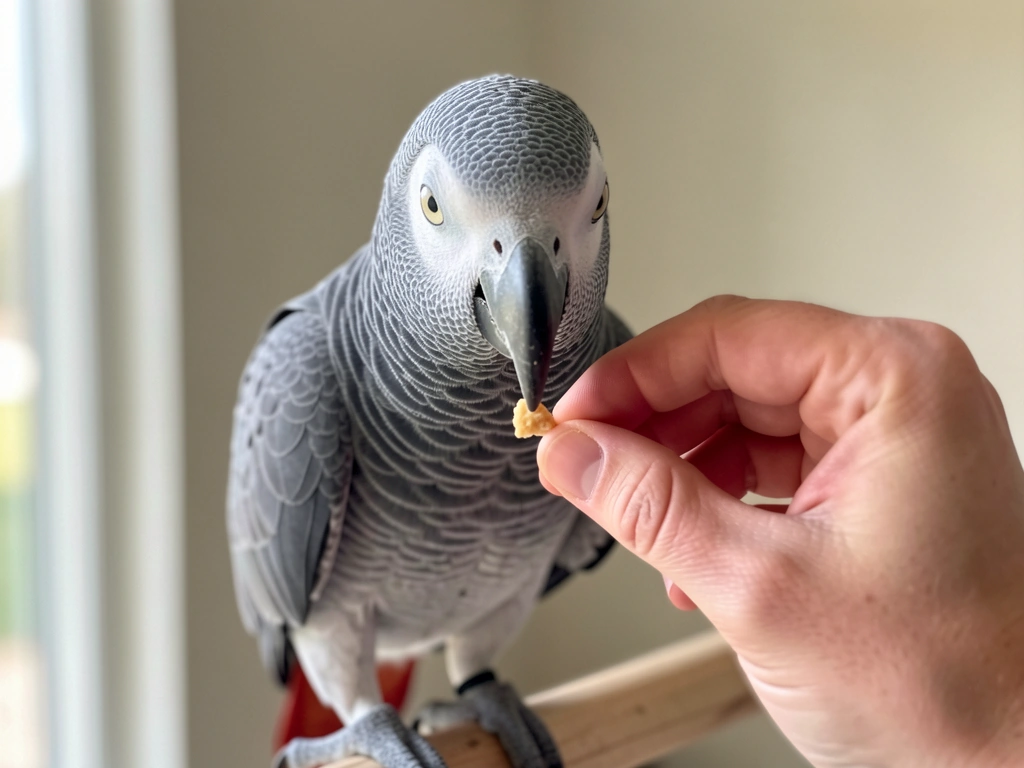
If your parrot is a species known for mimicry, like an African grey, Amazon, or even a chatty budgie, the name you choose can also become part of how the bird introduces itself. That's worth thinking about. Names with sounds that parrots naturally mimic well tend to feature clear vowels and consonants that appear in words birds already pick up easily, things like 'hello,' 'bye-bye,' and 'good bird. Names that make that cue clear can also help with other talking-bird favorites, including good bird names for male pets good bird names male. ' Names that include those same sounds are genuinely easier for mimics to learn and repeat.
Names that work especially well for talking birds tend to share a few features: they start with a consonant (so the beginning of the name is crisp and clear), they have an open vowel sound in the middle or at the end, and they're two syllables. Alex, Kiwi, Sunny, Coco, Mango, and Milo all fit this pattern. Names that end in a long 'ee' sound (Sunny, Kiwi, Charlie) are particularly good because that sound is easy for most parrots to produce and tends to come out clearly even in the bird's own voice.
Avoid names that rhyme with or sound very similar to common command words or phrases you'll use around the bird. If you plan to say 'step up' a lot, naming your parrot something that rhymes with 'up' will create unnecessary confusion. Same goes for names that sound like 'no' or that blend into phrases like 'good bird.' The goal is for the name to stand alone as a clear, recognizable signal.
How to teach your parrot to respond to its name
Teaching name recognition is simpler than most people think, but it requires consistency and good timing more than anything else. Here's the method that actually works.
- Start with short, focused sessions. Two to three sessions of about ten minutes each per day is the right amount. Any longer and you're both losing focus.
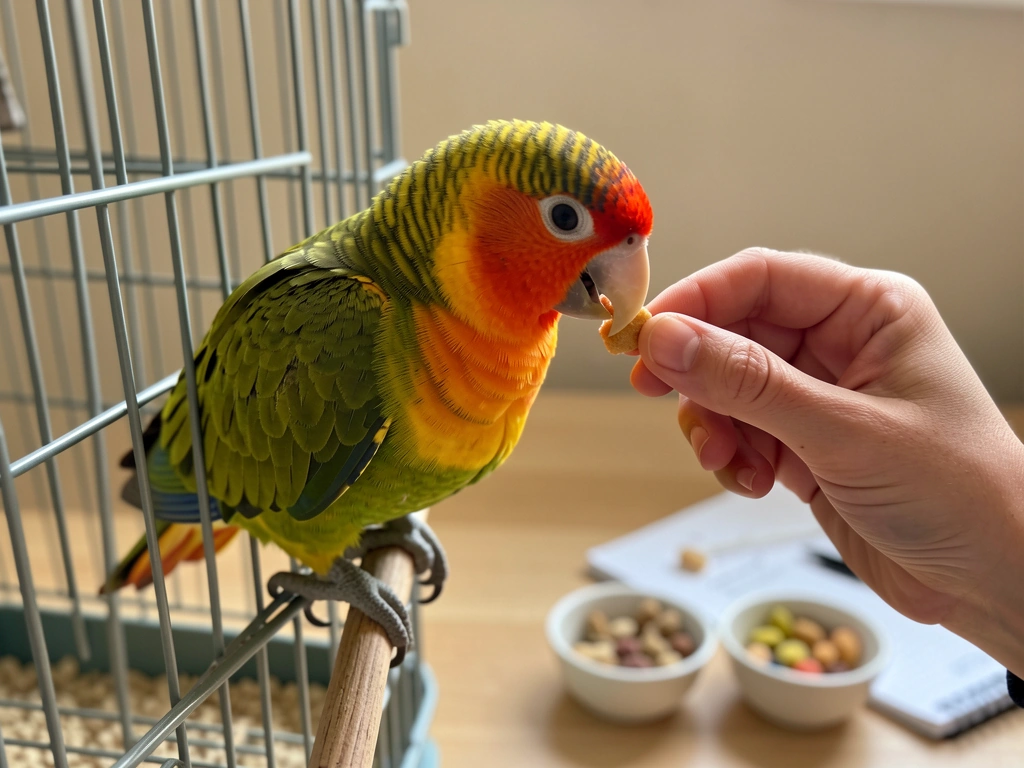
- Say the name clearly and cheerfully, then immediately offer a favorite treat. The treat should arrive within a second or two of you saying the name. This is what builds the association: name equals something good is coming.
- Use a consistent tone and the same emphasis every time. If the name is Sunny and you say 'SUN-ny' with a bright, upbeat inflection the first time, use that exact delivery every time during early training. Variation confuses the learning process.
- Repeat across different contexts and locations in your home. Once the bird is reliably orienting toward you when it hears its name in one spot, start using it in other rooms, from different distances, and in slightly different situations.
- Gradually reduce treat frequency once the behavior is solid. You don't need to reward every single response forever, but keep it frequent early on. Some owners use a clicker as a marker (a click immediately followed by a treat) to make the timing even cleaner.
- Watch for signs of recognition: the bird turning toward you, bobbing its head, making a sound, or flying/stepping toward you when called. These all count as responses, especially in the beginning.
One thing that trips people up is the phrase problem. If you're constantly saying things like 'come here, Sunny' or 'good bird, Sunny,' the bird may learn 'come here' or 'good bird' as the relevant cue and treat the actual name as background noise. Reddit parrot owners have noted this exact issue, with birds responding to embedded phrases rather than their actual names. To avoid it, use the name alone sometimes, just 'Sunny,' followed immediately by the reward. That isolation is what teaches the bird which specific sound is the signal.
Keep your expectations reasonable in the early stages. Asking too much too soon is one of the most common training mistakes with parrots. In the first few weeks, you're just building the association between the sound of the name and good things. Reward-marker training is designed to mark the instant the desired behavior occurs so the animal can associate that behavior with the upcoming reward the association between the sound of the name and good things. You're not expecting the bird to come flying across the room on command yet. Small, consistent steps are what actually get you there.
Common naming mistakes and how to avoid them
Most naming mistakes fall into a few predictable categories. Knowing them in advance saves you the hassle of trying to rename a bird three months in (which is doable, but annoying for both of you).
- Choosing a name that's too long. Anything over three syllables is going to get shortened or avoided. If you love 'Clementine,' just commit to 'Clem' from day one and use that as the training name.
- Picking a name that sounds like a command. Names that rhyme with 'no,' 'stop,' 'up,' or 'down' create confusion during training. Test your shortlist against the words you say most often around the bird.
- Using the name inconsistently. If half the family calls the bird Kiwi and the other half calls it Bird or Buddy, the bird learns nothing is a reliable signal. Agree on one name before the bird comes home.
- Choosing a name based purely on looks before you've seen the personality. A bird that looks like a Sunny might turn out to be an absolute chaos agent who deserves a name like Mayhem. Give yourself a week if you can.
- Picking a name with negative associations, either sounds that resemble words you'll say in a frustrated tone, or a name that makes you cringe slightly every time you use it. You need to say this name with genuine warmth and enthusiasm dozens of times a day.
- Assuming sex-specific names require knowing the bird's sex. Unless you've had a DNA test, many parrots are visually ambiguous. Gender-neutral names like Kiwi, Sunny, Coco, and Mango sidestep any awkwardness. If you do know the sex and want a gendered name, that's completely fine too.
Narrowing down your shortlist right now
If you're sitting with a list of five to ten names and can't decide, here's a fast way to cut it down. Say each name out loud three times in a row, in your most cheerful and enthusiastic voice, as if the bird is right in front of you. Notice which ones feel natural and which ones feel slightly awkward or flat. Then say each name paired with a pretend reward sentence, something like 'Sunny, good bird!' and see which combination flows. The name that sounds best when you're saying it happily and quickly is almost always the right one.
Aim for a shortlist of one to three names maximum before the bird comes home, or immediately if it's already there. Pick your top choice and start using it consistently from day one. Call the bird by name every time you approach the cage, every time you offer food, and every time you make eye contact. PetMD also recommends verbally praising your bird by saying “Good bird” or the bird’s name when you open the cage door during training. Within a week or two, you should start seeing the first signs of recognition. From there, the name becomes part of how your parrot understands its place in your world, which is exactly what a good name is supposed to do.
FAQ
Can I keep a “cute” nickname for everyday use but still teach my parrot the official name for training?
Yes, but be strict about which sound you use for the cue. Pick one name (or one shortened version) that always gets called immediately before rewards, and use it consistently when training. You can use a separate nickname at other times, as long as it never shows up right before the reward or as the command during sessions.
What if my parrot already responds to another name from the breeder or previous owner?
Avoid switching abruptly. Start by using the current name to confirm engagement, then introduce your chosen name right after it with rewards, so the bird can associate the new label with good outcomes. If the bird shows clear confusion, pause the change and keep training with the familiar cue for a few more days.
Are there names I should avoid if my house already has common phrases like “good bird” or “step up”?
Yes. If you frequently say a phrase, avoid names that rhyme with it or sound like part of it. For “step up,” try not to pick names ending in a similar “up” sound, and for “good bird,” avoid names that blend into “good bird” in quick speech. The goal is that your parrot hears the name as a standalone, crisp signal.
Does the bird need to learn the name to talk, or can it just happen naturally?
A talking bird can mimic without formal name training, but recognition usually improves consistency. If your goal is “good bird” style introductions and reliably getting attention, name training helps because the bird learns when that specific sound predicts rewards. Also, use short, clear syllables, and repeat the name in the same cheerful tone so it becomes predictable.
How long should it take to see name recognition, and what counts as progress?
In many cases you see early signs within one to two weeks, but progress can be subtle. Count as progress any increase in head turns toward you, leaning in when you say the name, calmer behavior at the same time you call, or approaching the cage door after repeated pairings with rewards.
What rewards work best for name training, especially for different parrot types?
Use fast, high-value treats your bird already likes, and keep portions tiny so the session stays quick. For many parrots, a small favorite seed, a preferred pellet bite, or a consistent training treat works well, but you may need to adjust if your bird has specific dietary restrictions. Keep rewards immediate, then stop and reset for the next repetition.
Can I use a two-syllable name that doesn’t “sound friendly,” like something more serious, and still expect it to work?
Yes. “Friendly” matters less than clarity and consistency. Choose something you can say quickly with a crisp start and open vowel sounds, even if the name itself feels formal. For long-term use, prioritize a name you will not rush or mumble when you are excited, because unclear speech ruins the cue.
Should I start teaching the name immediately after bringing the bird home?
Start right away with low-pressure repetitions, but keep expectations modest. Use the name alone with rewards when the bird is alert, and avoid intense training in the first few days when stress may be higher. If the bird seems fearful, slow down, shorten sessions, and focus on calm pairings rather than “come here” behavior.
What if my parrot never responds to the name I pick, even after a few weeks?
First check timing and phrasing. If you often say multiple things around the cue, the bird may associate a different sound. Then try a different name only if training conditions were consistent for at least a couple of weeks. A common fix is to isolate the name, reward immediately, and reduce background chatter so the bird gets a clear one-signal message.
Is it okay if my bird shortens the name or invents its own version of it?
Often it is. If the bird consistently echoes a shortened version right after you say the name, you can treat that sound as success and keep using it as part of your training routine. The key is that whatever the bird says should reliably predict the reward, not that it matches the exact original syllables.
Next Article
Good Names for a Yellow Bird: Cute, Funny, Elegant Ideas
Cute, funny, elegant yellow bird name ideas plus a quick method to match shade, behavior, and your speaking style