If you have a yellow bird and you're staring at it thinking 'what on earth do I call you? ', here's the short answer: Sunny, Mango, Lemon, Buttercup, and Goldie are the five most popular starting points, and any of them will work. But the name that actually sticks, the one you'll still love two years from now, is the one that fits your specific bird's shade of yellow, personality, and the way you naturally talk to it.
Good Names for a Yellow Bird: Cute, Funny, Elegant Ideas

Maya Castellanos
22 Mar 2026
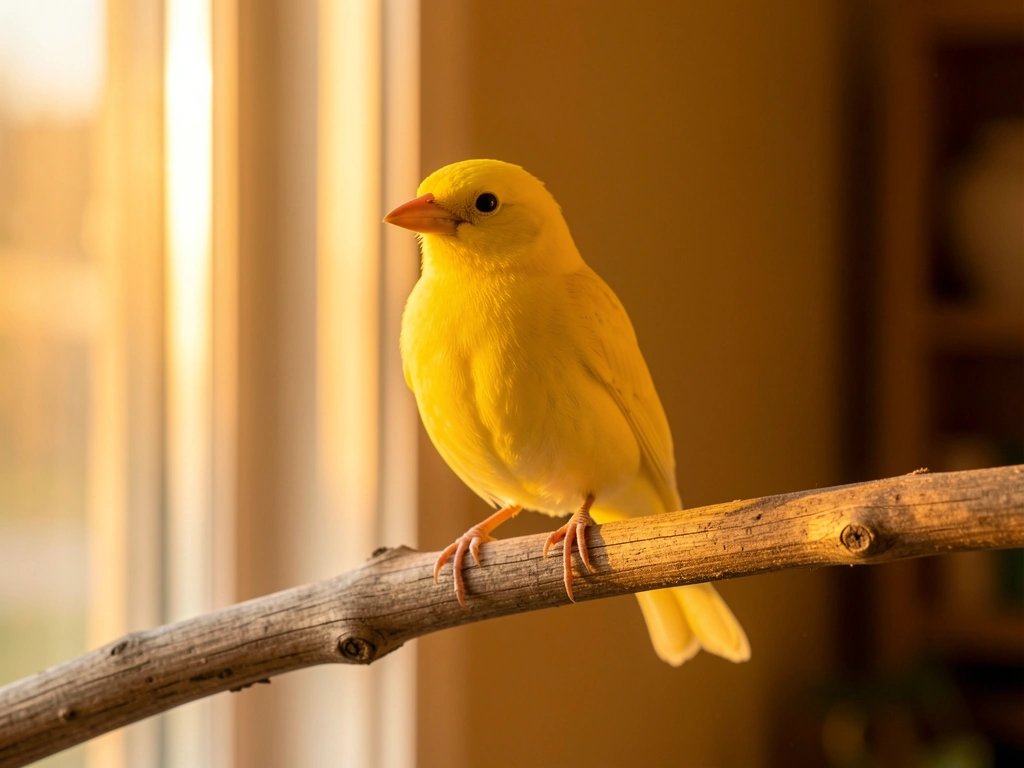
This guide gives you a ready-to-use list organized by style, plus a simple method to narrow everything down to the right name in about ten minutes. If you're wondering what to name a pet bird, this guide will help you narrow choices quickly and pick something that fits.
Quick name categories for yellow birds
Think of these as buckets. Scan through each one and mentally flag anything that makes you go 'oh, that's kind of perfect.' You don't need to decide yet, just collect candidates.
Cute and sweet
- Sunny
- Buttercup
- Lemon
- Daisy
- Honey
- Biscuit
- Muffin
- Peaches
- Waffles
- Pudding
Food and drink inspired
- Mango
- Banana
- Bananer (a nod to the classic budgie community spelling)
- Custard
- Butterscotch
- Saffron
- Turmeric
- Cheddar
- Dijon
- Limoncello
Nature and sky
- Sol
- Dawn
- Ray
- Soleil
- Pollen
- Prairie
- Marigold
- Daffodil
- Clover
- Finch
Mythology and bright-color references
- Apollo
- Helios
- Ra
- Aurora
- Midas
- Electra
- Solara
- Clio
- Phoenix
- Aurum (Latin for gold)
Funny and playful
- Tweety (the classic, and honestly it still lands)
- Big Bird
- Yolk
- Nacho
- Cheeto
- Bumblebee
- Twinkie
- Quackers
- Squawk
- Lord Fluffington
Human-style names that suit a yellow bird
- Felix
- Leo
- Goldie
- Amber
- Clara
- August
- Jasper
- Pip
- Billie
- Cleo
Gender-neutral picks
- Sunny
- Rio
- Kit
- Ziggy
- Pixel
- Mochi
- Scout
- Sage
- Remy
- Nova
Elegant and poetic
- Aurelius
- Celeste
- Isolde
- Solenne
- Florian
- Seraphine
- Luminara
- Caelum
- Vesper
- Oriel
Choose names based on color shade and appearance
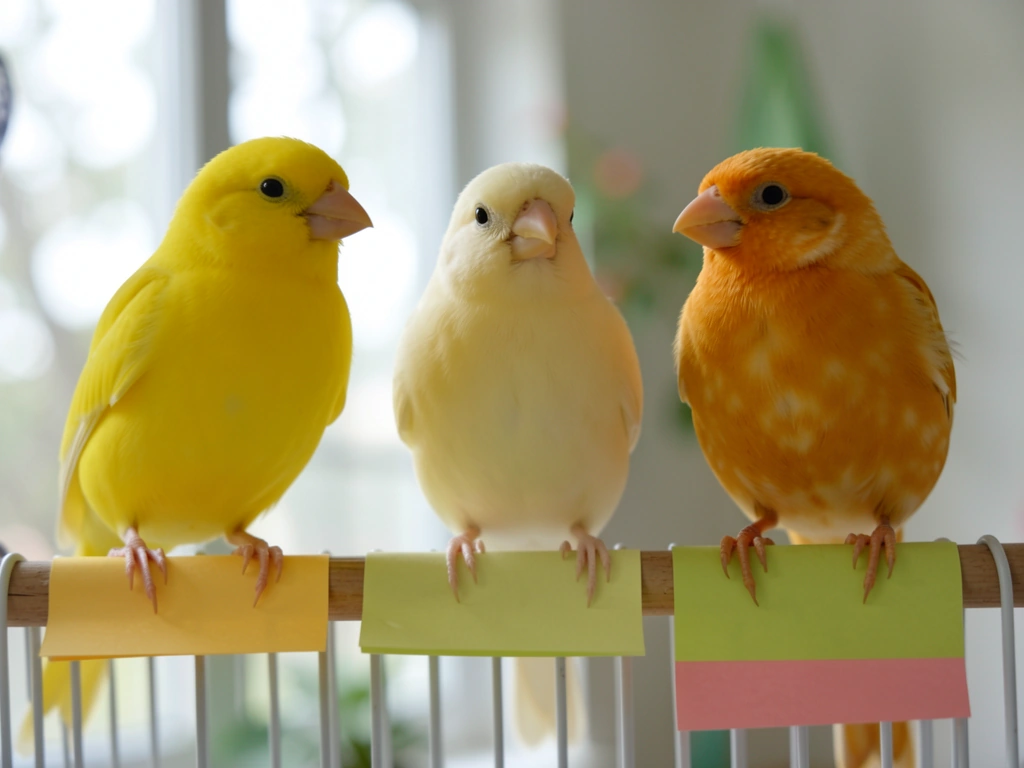
Not all yellow birds are the same yellow, and that actually narrows your list in a useful way. A deep, almost-orange canary looks like a Saffron or a Mango. A pale, creamy budgie feels more like a Vanilla or a Custard. A bright, crayon-yellow bird with no markings is your Sunny or your Lemon. A yellow bird with black wing tips or a green tint? That's more of a Juniper, a Kiwi, or even a Jade, playing off the contrast.
Think about distinctive markings too. A yellow bird with a little orange blush on the cheeks could be a Peaches or a Clementine. One with white or silver flashes might suit Luna or Pearl better than any pure-yellow name. This isn't about being poetic for its own sake. It's about creating a name that, when someone hears it, they can almost picture the bird. That specificity is what makes a name feel right rather than just assigned.
| Appearance | Name ideas that fit |
|---|---|
| Bright, saturated yellow | Sunny, Lemon, Marigold, Apollo, Goldie |
| Pale or creamy yellow | Custard, Vanilla, Biscuit, Pearl, Ivory |
| Deep golden or orange-yellow | Saffron, Mango, Amber, Midas, Butterscotch |
| Yellow with black markings | Domino, Bandit, Pepper, Zorro, Ace |
| Yellow with green tones | Kiwi, Clover, Juniper, Sage, Rio |
| Yellow with orange cheek patches | Peaches, Clementine, Tangerine, Blush, Coral |
Match names to personality and behavior
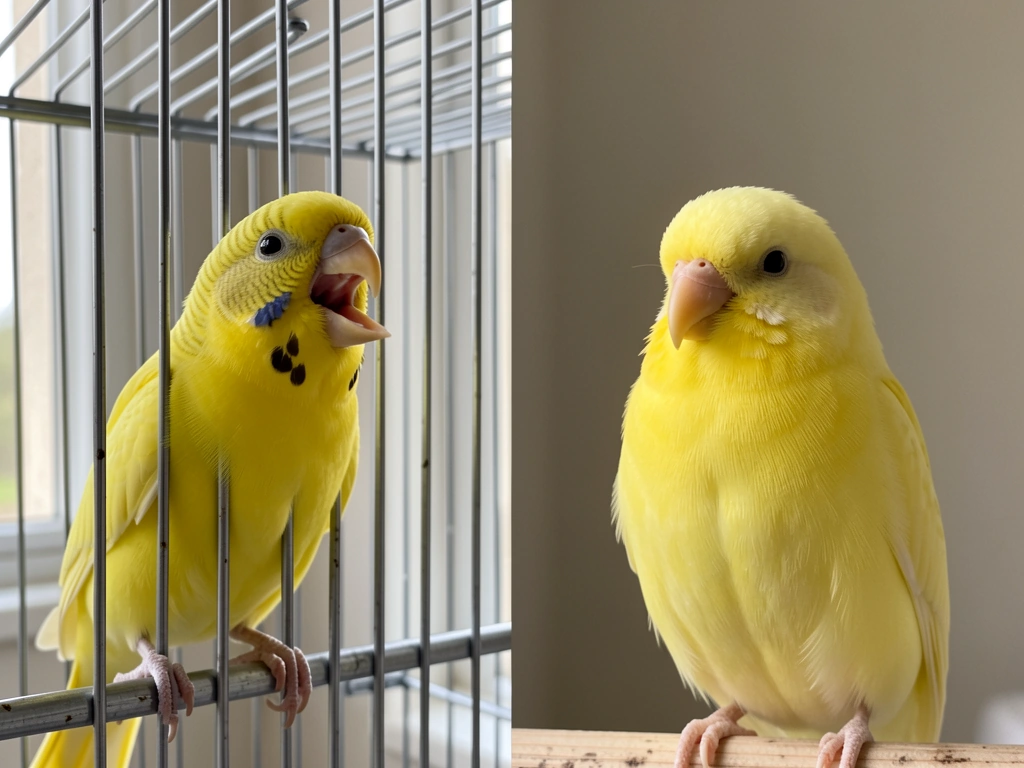
A name is something you'll say out loud dozens of times a day, so it should match the energy of the bird you're actually dealing with. Spend a day or two just watching before you commit. Is your bird loud and bossy? Quiet and watchful? A singer? A nervous wreck who startles at everything? Each of those types has a name category that fits better.
| Personality type | Name style that fits | Specific suggestions |
|---|---|---|
| Loud, bold, high-energy | Strong sounds, punchy names | Blaze, Rex, Ziggy, Tito, Rocket |
| Singer or constant vocalizer | Musical or lyrical names | Aria, Sol, Melodie, Lyric, Caruso |
| Curious and clever | Smart or mythological names | Clio, Sage, Merlin, Edison, Nova |
| Shy or gentle | Soft, warm names | Honey, Pip, Wren, Daisy, Mochi |
| Funny, unpredictable, chaotic | Playful or ironic names | Chaos, Nacho, Gremlin, Tater, Yolk |
| Calm and regal | Elegant or classical names | Aurelius, Celeste, Cleo, Jasper, Vesper |
If you have a canary that sings constantly, something like Caruso (the famous operatic tenor) or Aria just makes sense and will make you smile every single time you introduce the bird to someone new. A bold, noisy budgie? Ziggy or Rocket. A tiny, delicate finch that barely makes a sound? Pip or Wren fits better than Rocket ever would.
Pick bird-friendly name length and sounds
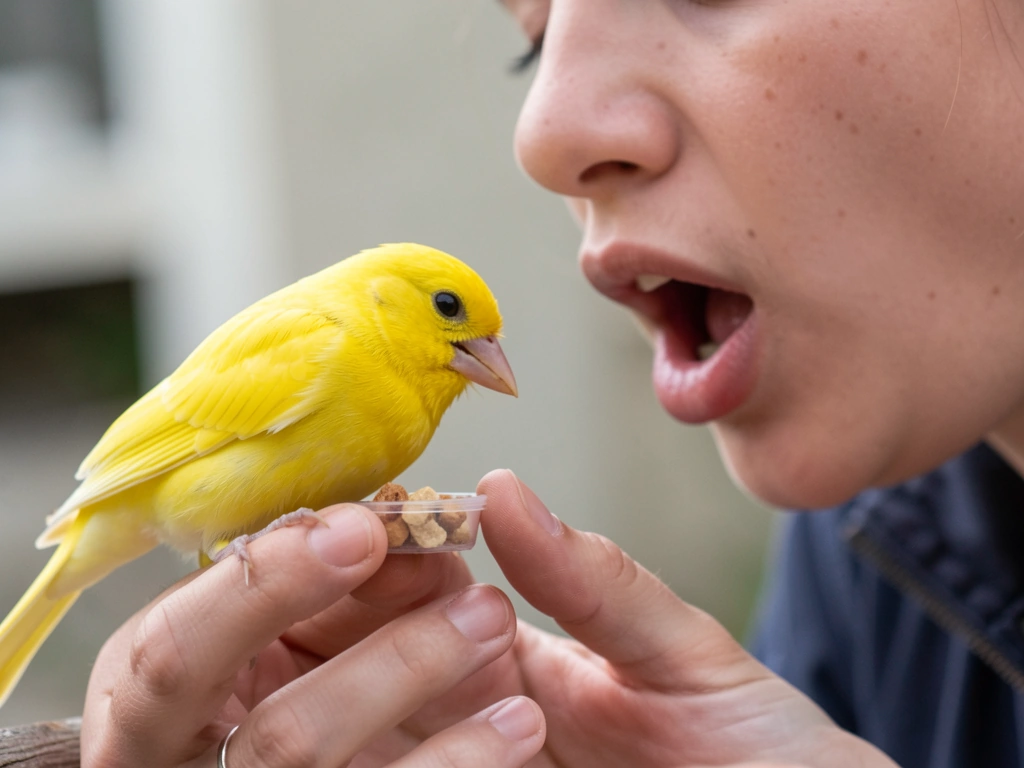
This section matters more than most people expect, especially if you want your bird to actually recognize and respond to its name. If you're looking for inspiration right away, this list of good bird names for parrots can help you narrow options fast. One or two syllables is the sweet spot. Research on parrot speech training consistently points to short names being easiest for birds to learn. A one- or two-syllable name is simply easier for a bird to process as a distinct sound pattern compared to something like Butterscotch McFluffington.
Beyond length, the sounds inside the name make a difference. Names with hard consonants, specifically sounds like B, D, K, P, and T, tend to stand out more clearly to birds during training. That's why names like Pip, Kiwi, Tweety, Buddy, and Tito tend to get picked up faster. It's also worth noting that in the wild, parrots actually learn signature contact calls (essentially their names) from their parents through repeated call-and-response interaction. The same principle applies when you're teaching a pet bird its name: clear, consistent, short sounds repeated in an upbeat tone.
If you fall in love with a longer name like Buttercup or Marigold, that's fine. Just build in a natural short version, Butter or Mari, that you use day-to-day for the bird itself, and save the full version for when you're introducing the bird to friends.
| Name | Syllables | Hard consonant sounds | Bird-friendly rating |
|---|---|---|---|
| Pip | 1 | P | Excellent |
| Kiwi | 2 | K | Excellent |
| Sunny | 2 | None (soft) | Very good |
| Tweety | 2 | T | Excellent |
| Lemon | 2 | None (soft) | Very good |
| Buttercup | 3 | B, K, P | Good (use 'Butter' daily) |
| Marigold | 3 | None dominant | Moderate (use 'Mari' daily) |
| Aurelius | 4 | None dominant | Use nickname only |
Shortlist the best options with a simple method
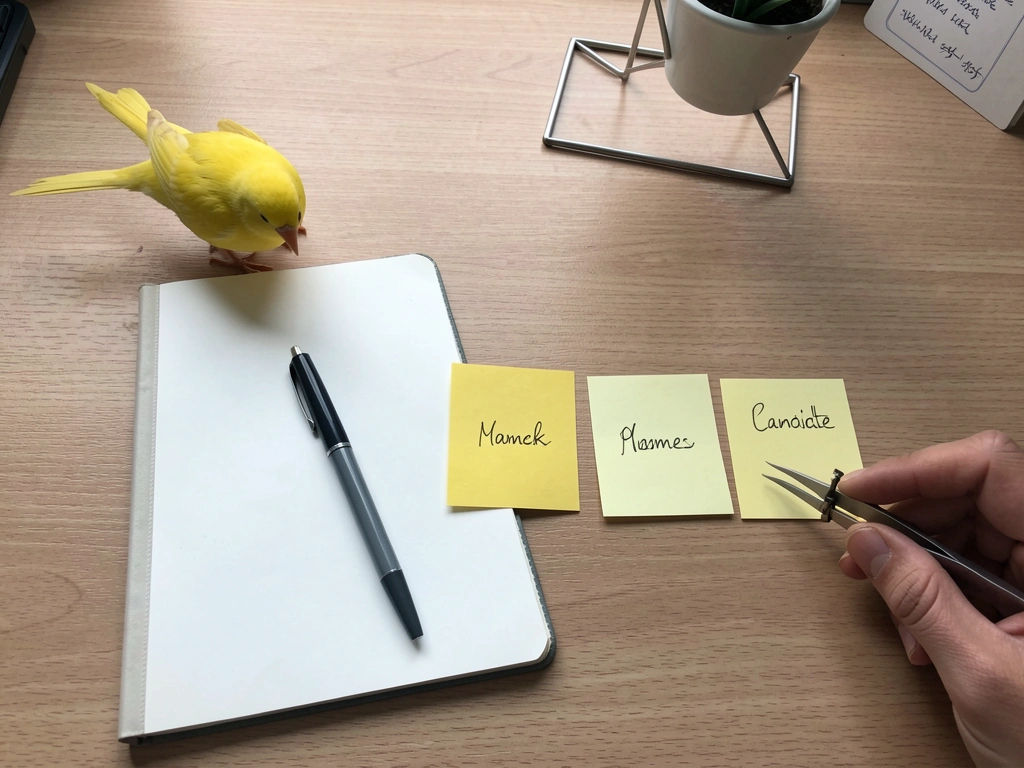
Here's a process that takes about ten minutes and actually works. Go through the categories above and write down every name that caught your attention. Don't filter yet, just collect. You should have somewhere between ten and twenty candidates. Then run each one through these four quick checks:
- Say it out loud three times fast. Does it feel natural or does it feel like you're trying to do a tongue twister?
- Imagine calling across a room: 'Come here, [name]!' If you cringe or laugh (not in a good way), cross it off.
- Check the syllable count. If it's more than two syllables, does it have an obvious short nickname you'd actually use?
- Does it match what you see when you look at the bird right now, both the color and the personality?
After those four checks, you should be down to five to ten names. From that shortlist, pick your top three and live with them for 24 to 48 hours. Say each one out loud occasionally, use it when you're near the bird, see which one you naturally gravitate toward. The one you catch yourself using without thinking is almost always the right call.
Test, refine, and avoid common naming mistakes
Once you've picked a name, start using it consistently from day one. Say it in a cheerful, upbeat tone every time you interact with the bird. Pair the name with something positive, a treat, praise, or a favorite activity, right at the start.
An avian-behavior training resource recommends using positive reinforcement by adding a favorable outcome like treats, head scratches, or verbal praise to teach and strengthen behavior Pair the name with something positive, a treat, praise, or a favorite activity. Keep sessions short: five to fifteen minutes, a few times a day is more effective than one long session.
PetMD notes that bird training is based on positive reinforcement, where some behaviors may take as little as one session while others take longer, so using a consistent reward-based approach helps. Consistency matters far more than the total amount of time you spend.
This is exactly how birds learn their names in the wild too, through repeated, socially reinforced call-and-response patterns.
Young birds between three and twelve months old are the most receptive to learning new sounds and names, so if you're starting early, you have a real advantage. But older birds can absolutely learn a new name, it just takes a little more patience and consistency.
On the mistake side, here are the most common ones worth avoiding:
- Choosing a name that sounds too similar to common household words or commands. 'No,' 'go,' 'oh,' and 'hello' can confuse a bird if the name rhymes or blends with them.
- Picking a name that's too long to use naturally. If you're already shortening it on day two, the full name wasn't really the name.
- Changing the name frequently in the first few weeks. Birds can and do get confused when a name changes after they've started learning it, and some birds may stop vocalizing it altogether if the original name disappears from your vocabulary.
- Using the name only in negative contexts, like calling the bird's name right before you put it back in the cage. The bird starts associating the name with something it doesn't like.
- Mixing the name with lots of other words before the bird has learned it. Start simple: just the name, a pause, a reward. Build complexity later.
One final practical note: if you adopted a bird that already knows its name, think hard before changing it. Birds that have learned a name as a social identity cue, essentially their contact call in your home, can lose that learned behavior when the cue disappears. If the old name is something you genuinely can't live with, a name that sounds similar phonetically is a much easier transition than something completely different.
For more ideas beyond yellow, the same logic around length, personality, and sound applies to any bird. If you're also naming a blue bird, a parrot, or working out what fits a male bird specifically, those follow the same core framework but with different color and species cues driving the aesthetics. The yellow category just happens to have one of the richest palettes to pull from: gold, sunshine, butter, citrus, saffron, and everything in between. That's actually a pretty great problem to have.
FAQ
If I like two yellow-bird names, should I pick the longer one or the shorter one?
Use the one you respond to most naturally, not the one that looks best on paper. Keep a consistent “training name” (full or short version) and always use it for the first several weeks, even if you later decide to add a nickname.
What if my bird already seems to react to a human nickname, not a formal name?
If your bird is already bonded to a person, the safest choice is a name you can say clearly in that same context. Avoid changing routines, such as switching who calls the bird, because the bird may associate the name with the interaction pattern, not just the sound.
Can I use pet nicknames and still teach the bird its “real” name?
Don’t mix multiple names in the same day. You can have one official name plus one affectionate nickname only if the nickname is always used the exact same way (same tone, same situation), otherwise the bird may treat them as different cues.
My bird ignores the name during training, what should I do next?
If the bird does not respond at first, pause and check the sound clarity. Try saying the name once, then wait quietly for 2 to 5 seconds before offering a treat, repeat in the same upbeat tone, and only count success when the bird looks toward you or comes closer.
Should I avoid certain sounds because of words I say every day?
Short names help, but avoid names that are too similar to common household words you say often (like “No,” “Okay,” or “Kitty”). A name that blends into daily conversation can slow learning because the bird hears the sounds without the reward.
Is it better to name my bird based on color or on its markings and personality?
If your bird has wing or body markings that stand out, incorporate the visual cue into the name only if it also supports easy pronunciation. A name can be descriptive, like “Lemon” for a bright bird, but still needs to be easy for you to repeat quickly.
My bird is nervous, how do I name it without making it associate the cue with stress?
For birds that are easily startled, start with lower volume and slower pacing. Use the name at the beginning of calm moments (feeding, gentle head scratches if tolerated), not right when you enter loudly or handle the bird unexpectedly.
I want to change my adopted bird’s name, what’s the safest way to transition?
Yes, but change only one variable at a time. If you must transition, choose a new name that rhymes or shares the first sound with the current one, and keep sessions brief. For a while, use the old name first, then the new name immediately after so the bird connects them.
Does it matter how I pronounce the name, or just the exact spelling?
Pick a name you can say in a consistent rhythm. If the name feels awkward for you, that often means you will change tone or speed unintentionally, and consistency matters more than perfect spelling or “cute” pronunciation.
Should I ever use the bird’s name when correcting behavior?
Use the name primarily during positive contact, and avoid using it as a “call for trouble” cue. If you say the name while scolding or removing something unpleasant, the bird may start to avoid you when it hears the cue.
How long should I wait before adding a second nickname after training works?
If you want the bird to recognize it as a cue, you should stop adding new suffixes during the training window. After the bird reliably responds, you can add a consistent second label, but keep the original cue unchanged and primary.
Next Article
What Is a Good Name for a Blue Bird? Ideas and How to Choose
Blue bird naming ideas plus step-by-step rules to pick a perfect pet, character, or craft name by style and traits.