If you've got a male bird and you need a name today, here's the short answer: go with something two syllables long, sharp and clear, that you won't mind shouting across the room twenty times a day. Names like Mango, Cosmo, Paco, Rio, or Jasper check every practical box. But if you want a name that actually fits your bird, not just any bird, keep reading. There's a real method to this, and it takes about ten minutes to nail down.
Good Bird Names Male: Best Ideas and How to Choose

Maya Castellanos
22 Mar 2026
Picking a theme and meaning that actually matters
Before you open a list and start pointing at names, it helps to know what you're going for. Not because your bird cares about the etymology of 'Apollo,' but because you'll be saying this name constantly, and it should feel right every time. A theme gives you a filter so you're not just picking randomly.
Think about what draws you to this bird. Is it his color? His attitude? A favorite musician, movie, or place? A strong male bird name can come from almost anywhere: nature, mythology, music, geography, personality. The important thing is that it means something to you, because that meaning is what makes you use the name consistently, and consistent use is exactly how your bird learns to respond to it. The name predicts good things (attention, treats, interaction), and your bird tunes in. That's the whole system.
A quick note if you haven't had your bird DNA-sexed yet: some species, including many parrots and budgies, show no obvious external difference between males and females. If you're going on a hunch right now, lean toward names that feel right to you regardless. You can always pick a theme (nature, mythology, music) that doesn't feel rigidly gendered, so the name still works however things turn out.
The best male bird names, organized by style
Here are curated lists broken down by vibe. Scan each one and notice which names make you stop. That pause is useful information.
Classic and human names
These feel familiar and roll off the tongue naturally, which makes calling the bird feel intuitive from day one.
- Oscar
- Charlie
- Oliver
- Jasper
- Felix
- Louie
- Henry
- Archie
- Theo
- Bruno
- Monty
- Walter
Nature and adventure names
Great for birds with a wild streak or striking coloring. These names tend to have strong vowel sounds, which carry well.
- Mango
- Rio
- Sable
- Flint
- Cedar
- Cove
- Storm
- Moss
- Birch
- Reef
- Indigo
- Zephyr
Cool and strong names
These have a slightly bolder feel, good for birds with big personalities or imposing presence.
- Cosmo
- Ajax
- Titan
- Blade
- Orion
- Raptor
- Axel
- Kodiak
- Ares
- Nero
- Maverick
- Diesel
Funny and clever names
Ideal if your bird already seems like he knows he's the funniest one in the room. Many parrots can mimic speech, so a name with built-in humor pays off double when they eventually say it themselves. If you want good bird names for parrots, choosing something that sounds fun when they imitate you can make the whole process easier Many parrots can mimic speech.
- Paco
- Señor
- Nacho
- Waffles
- Pretzel
- Biscuit
- Pickles
- Taco
- Ringo
- Daffy
- Goblin
- Squawk
Music and pop culture names
These work especially well for birds with vocal talent. Many common pet parrots, including budgies, cockatiels, African greys, Amazons, macaws, and cockatoos, have genuine capacity to mimic speech, so a name they'll eventually say is a fun long-term payoff.
- Bowie
- Hendrix
- Elvis
- Lennon
- Sinatra
- Freddie
- Jagger
- Ziggy
- Mozart
- Ozzy
- Prince
- Django
Personality-based names
Sometimes the bird tells you who he is in the first few days. If that's happened, lean into it.
- Chaos (for the bird who's already redecorating your house)
- Zen (for the calm, observant one)
- Rebel (for the one who won't step up on command)
- Shadow (for the one that follows you everywhere)
- Blaze (for fast movers with bright coloring)
- Houdini (for escape artists)
- Scout (for the curious, always-exploring type)
- Captain (for the bird who acts like he owns the place)
Name length, pronunciation, and how your bird actually hears it
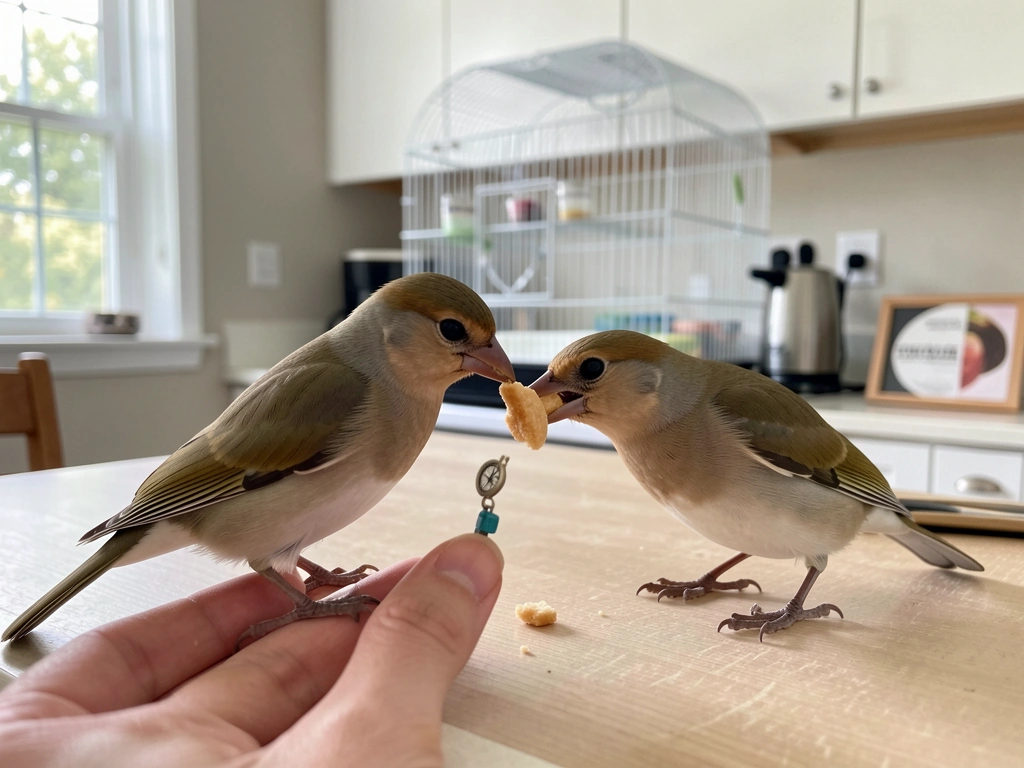
This is the part most people skip, and it matters more than any list. Bird training research and practical owner experience both point to the same rule: two syllables is the sweet spot. Data on pet naming habits backs this up too, with about 67% of pet names landing at exactly two syllables. Names like Cosmo, Mango, Rio, or Jasper hit that mark perfectly. They're long enough to sound distinct but short enough to say quickly, clearly, and without losing energy mid-word.
One syllable can work (think Rex, Cole, Flint) but it risks blending into background noise or getting lost when you're calling across a room. Three syllables is generally fine as long as the name has a strong first beat, something like Maverick or Indigo, where the accent lands immediately and doesn't trail off. Go much longer and you'll unconsciously start shortening it to a nickname anyway, so you may as well start with the short version.
Pronunciation matters because you want to say this name the same way every single time. Birds, especially parrots, learn through repetition and sound pattern recognition. If you say 'CO-smo' one day and 'cos-MO' the next, you're giving your bird two different sounds to sort out. Pick a name you can pronounce effortlessly and consistently, without thinking about it. If you have to mentally rehearse a name before saying it, drop it from the list.
Also think about how the name sounds when you're not in a great mood, when you're in a hurry, or when you're calling from another room. A name with clear vowels and a hard consonant somewhere in it (like the 'g' in Mango, the 'x' in Felix, or the 'k' in Kodiak) tends to carry well and cut through ambient household noise better than soft, breathy names.
Matching the name to your bird's type, look, and behavior
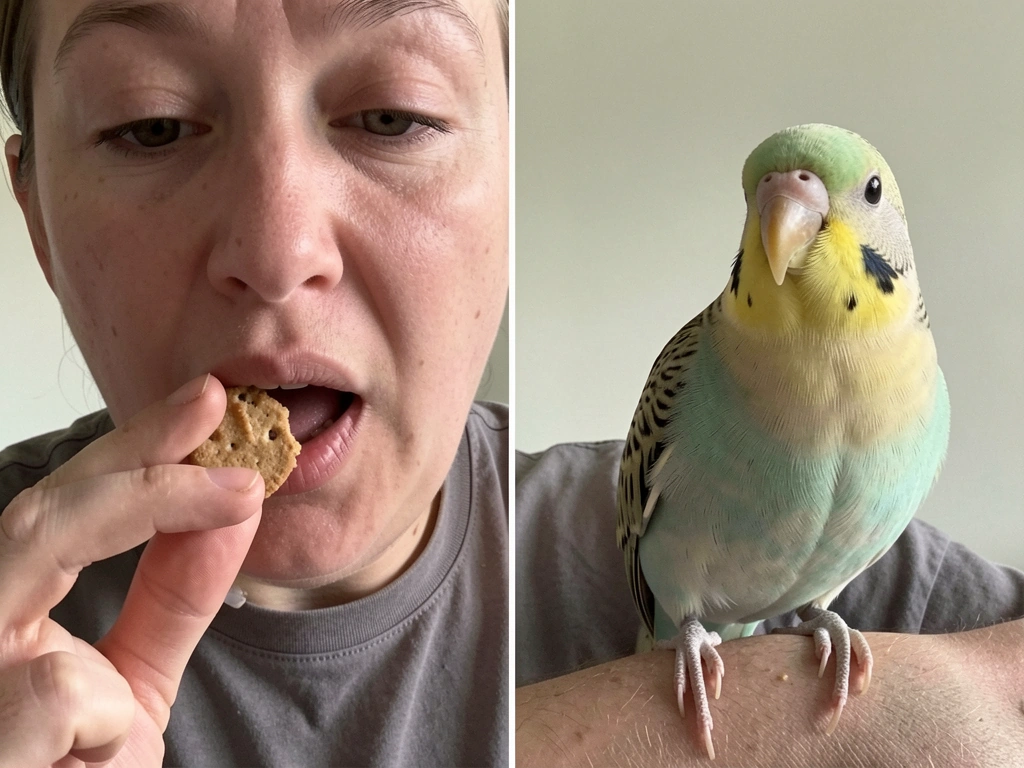
A name lands better when it connects to something real about the bird. If you need a good name for a bird, start with what you want it to mean and how easily you can say it. If you’re dealing with a yellow bird, you can use the same approach to narrow down good names for a yellow bird that feel natural to say and fit his look good name for a bird. Here's a quick matching framework based on species type, coloring, and observed behavior.
| Bird type / trait | Name style that fits | Example names |
|---|---|---|
| Bright green or tropical bird | Nature, tropical, adventurous | Rio, Mango, Zephyr, Cedar |
| Blue or grey bird (budgie, grey parrot) | Cool, calm, or celestial | Cosmo, Orion, Storm, Indigo |
| Yellow bird (canary, lutino cockatiel) | Sunny, bright, cheerful or funny | Sunny, Biscuit, Waffles, Citrus |
| All-white or pale bird (cockatoo) | Elegant, classic, or mythological | Apollo, Jasper, Oliver, Frost |
| Red or multi-colored (macaw, lory) | Bold, strong, musical | Blaze, Hendrix, Axel, Titan |
| Small, fast, feisty (budgie, conure) | Punchy, funny, short | Paco, Taco, Nacho, Goblin |
| Large and dignified (African grey, macaw) | Classic, strong, or clever | Walter, Bruno, Mozart, Ajax |
| Curious and mischievous | Personality-based | Scout, Houdini, Chaos, Rebel |
| Calm and observant | Calm, grounded | Zen, Moss, Cedar, Monty |
If your bird is a parrot species, keep in mind that many of them genuinely learn to say their own name over time. A large-scale study in "Name use by companion parrots" also describes how companion parrots can learn to use human-given names as vocal labels and apply them in appropriate contexts many of them genuinely learn to say their own name over time. An African grey named 'Maverick' who eventually says his own name with perfect inflection is a gift that keeps giving. Factor in what the name might sound like spoken in a parrot voice when you're narrowing things down, because that's a real possibility worth enjoying.
If you want more ideas organized by color, there are dedicated guides worth browsing for blue birds specifically, which can help you tie a name directly to your bird's most obvious visual feature.
How to test a name and actually commit to one
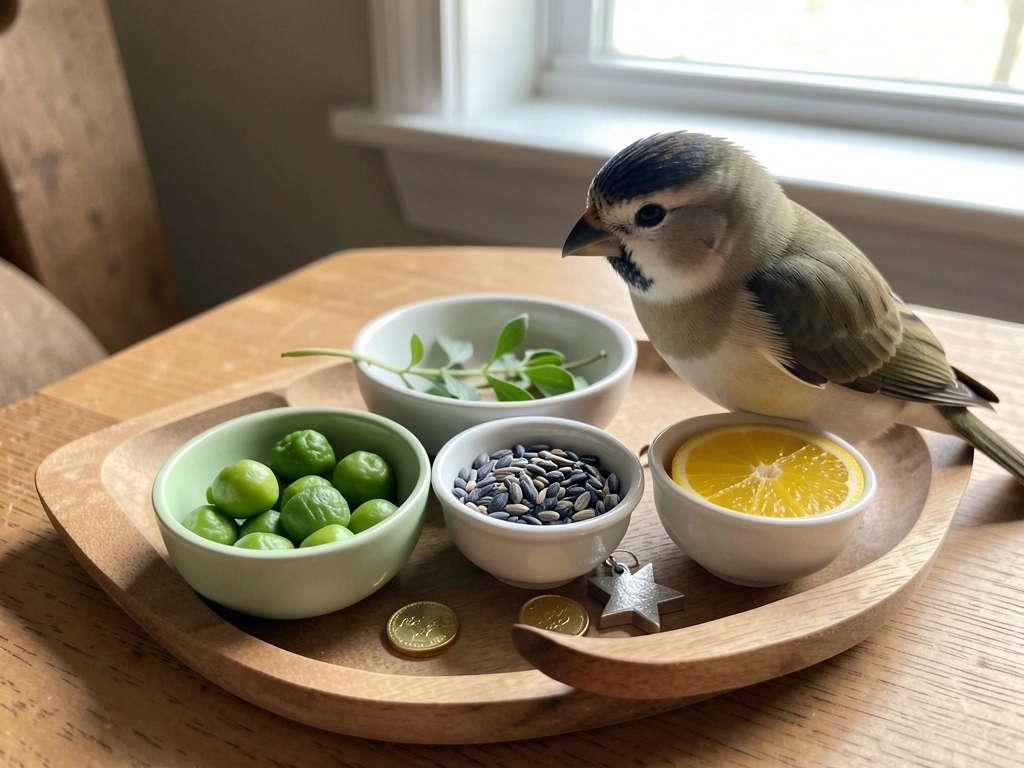
Here's the testing method I recommend. It takes about a week and gives you real feedback instead of just gut feeling.
- Get your shortlist down to three names maximum. More than three and you'll keep second-guessing yourself instead of observing your bird.
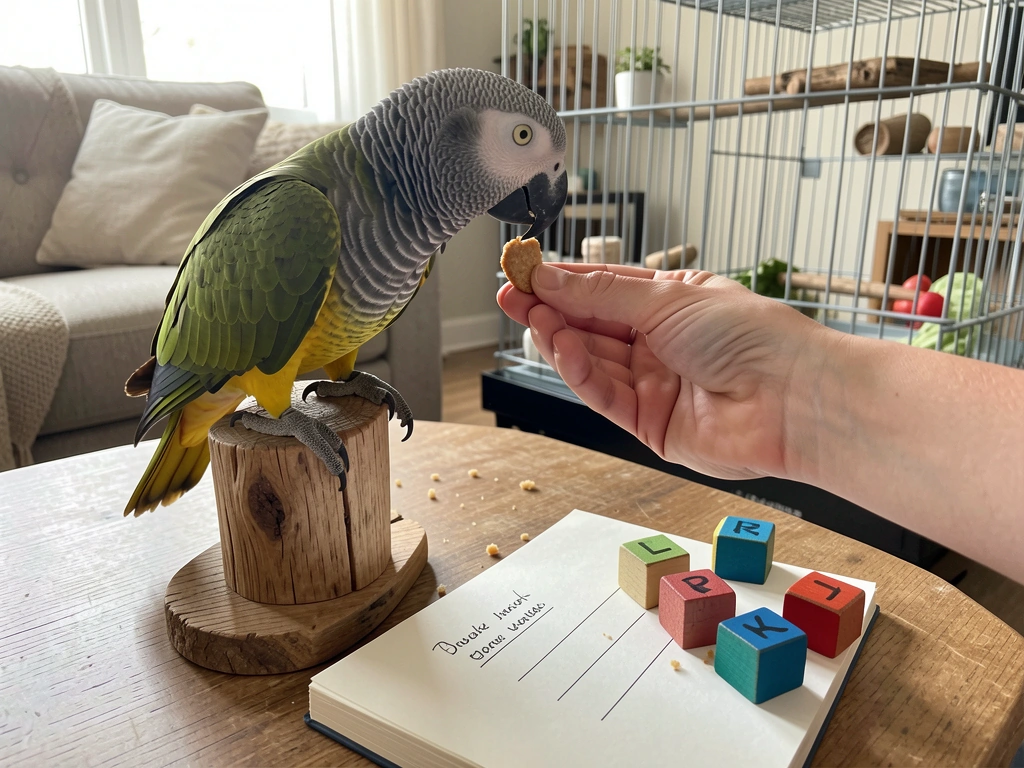
- Pick one name to try first and use it exclusively for two to three days. Say it calmly and clearly in a positive context, when you're feeding, when you're near the cage, when your bird does something you like. Always pair the name with something good: a treat, a favorite food, direct attention.
- Watch for any response: a head tilt, eye contact, a movement toward you, a vocalization. These are signs the name is registering. You don't need a dramatic reaction on day one; even a slight change in posture means something.
- Say the name before and after giving a treat or a favorite item, so the bird starts associating that sound with good outcomes. Research on name recognition training in birds confirms this pairing approach works: the name becomes an attention cue that predicts something worth paying attention to.
- After two to three days, switch to your second name candidate and repeat the process. Compare how naturally each name came out of your mouth and whether the bird seemed to tune in.
- Choose the name that felt effortless to say and got the clearest response. Commit. Start using it consistently, every time, in the same tone.
One extra tip: test the name alongside a known cue if your bird already knows one, like 'step up.' This lets you separate whether your bird is responding to the name specifically or just to any sound you make. If the bird reacts to the name but not to a random word spoken the same way, you know the name is landing.
Positive reinforcement is the engine here. You're not teaching the bird that the name means 'come here' or 'stop that.' You're teaching him that his name means something good is about to happen, which makes him want to tune in whenever he hears it. That's the actual goal.
Mistakes that are easy to make and worth avoiding
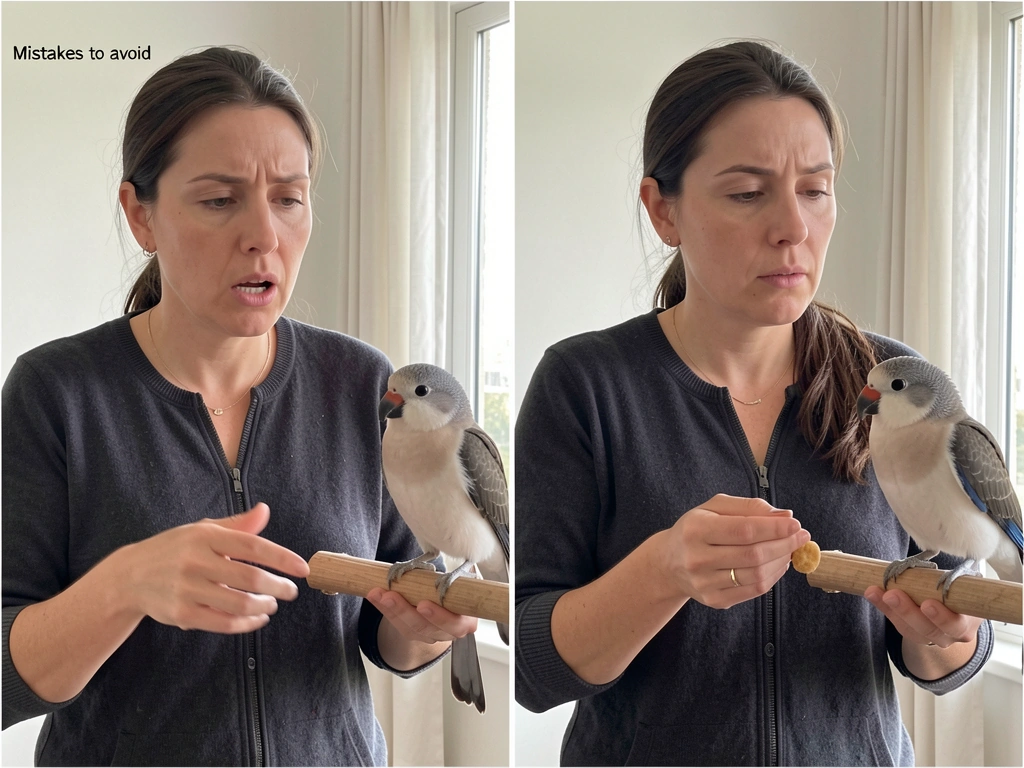
Most naming mistakes fall into one of a few categories. Here's what to watch out for before you lock anything in.
- Choosing a name that sounds like a command. Names that rhyme with or sound similar to 'no,' 'come,' 'go,' or 'stay' create real confusion during training. 'Joe' sounds a lot like 'no.' 'Dom' sounds close to 'come.' Run your shortlist against your most-used household commands before committing.
- Picking something too long. Names longer than three syllables almost always get shortened. If you name your bird Bartholomew, you'll be calling him Barry in a week. Just start with Barry.
- Choosing a name that matches another pet's name or a family member's name closely. If your dog is Max and your bird is Mack, you've already created a problem. Every time you call the dog, the bird hears his name. Consistency breaks down fast.
- Naming by novelty rather than fit. A clever name is fun on paper but if it doesn't match the bird's energy or your own calling style, it'll feel wrong every day. Funny names work best when they genuinely describe something true about the bird.
- Changing the name too often. It's tempting to keep trying new names if the bird doesn't respond immediately, but early non-response is usually about the training process, not the name itself. Give a name a real trial run before you swap it out.
- Using the name in frustrating or negative contexts. If you say your bird's name right before you put him back in the cage when he doesn't want to go, or when you're annoyed at something he did, you're building a negative association. The name should consistently predict good things, especially early on.
What to do right now
Scan back through the lists above and pull out any name that made you pause. Write them down. Get to three or fewer. Run each one through these quick checks: Is it one or two syllables (three at most)? Does it sound like any command or household name you use regularly? Can you say it the same way every time without thinking? Does it match something real about your bird, his look, his personality, his species?
If a name passes those checks, try it for two days using the pairing method above. You'll know quickly whether it fits. Most owners report that the right name stops feeling like a choice and starts feeling obvious within a few days. That's the signal you're looking for. Once you have it, use it consistently, keep the association positive, and your bird will be responding to his name sooner than you expect.
FAQ
Can I use a nickname as a good bird name for a male if the full name is too long?
Yes, especially if it is short and distinctive. If you plan to use a nickname, still start with a consistent full name you can use during training, then let the nickname emerge naturally. For example, teach “Jasper” consistently, then allow “Jazz” only when you are not testing name recognition.
What should I do if I catch myself saying the same name differently (different stress or spelling)?
Choose a name that you will not say differently in different situations. One common workaround is to standardize pronunciation by keeping the same syllable emphasis and starting sound, then avoid shortening it during play or feeding. If you cannot say the name the same way when you are excited or frustrated, pick another.
How can I tell if a male bird name will confuse my bird with commands or common household words?
Be careful with names that resemble the “release” or “stay” cues you already use, or any word you say frequently at home (like “No,” “Max,” “Kit,” “Hey,” or “Come”). Even if the bird eventually learns the difference, it slows training at the start, so run the name against your daily vocabulary first.
Is it okay to change my male bird’s name after he already responds to something?
It can, but timing matters. Avoid introducing a new male bird name right before a major routine change like moving cages, changing diets, or travel. Keep the association positive and stable for at least a week, so the bird is not trying to learn the name while learning other new cues.
If my male bird is a good talker, should I pick a name based on how easy it is for him to mimic?
Yes for many parrots, but treat mimicry as a bonus, not the goal. If the name contains clear syllables you enjoy hearing, it can accelerate bonding and make the bird more likely to repeat it, but you still need consistent pairing with treats and calm attention.
Can two pets in the same home have names that are too similar for a male bird to learn?
Try to avoid it. Names that begin with the same sound as another animal’s name or as your own nickname (like both starting with “M”) can create false responses. A quick test is to call each name once, one after the other, and see if he reacts selectively rather than generally to “attention sounds.”
What are the first things to check if my male bird does not respond to his name?
If your bird is not responding after consistent use, troubleshoot in order: clarity (two syllables, easy consonants), repetition (use it every day in the same tone), and association (pair with a reward). If you are already doing those and there is no improvement after several days, consider whether your bird’s hearing or stress level might be affecting response.
Can I use a second name or “pet name” for daily use without hurting name training?
You can, but keep it purposeful. Make one name your primary training name, then optionally assign a separate “vibe nickname” for play. For example, use “Rio” to get attention and rewards, and use “Pretty boy” only during affection, so the bird does not have to sort multiple meanings from the same person’s voice.
Is it better to test a few male bird names quickly, or should I commit immediately to one?
Many owners do this during the first week, and it can work if you control the variables. Decide on the two-syllable shortlist, then test one name at a time with the same cue and reward. If you rotate names too quickly, the bird may respond to the reward timing rather than the specific sound pattern.