If your last name is Bird, Byrd, Vogel, Finch, or something else that smells vaguely avian, it almost certainly traces back to one of four roots: a direct bird nickname, a place named after birds, an occupational label for someone who caught or kept birds, or a symbolic/metaphorical use where a bird stood in for a human trait. The tricky part is figuring out which one applies to your specific name, because a lot of bird-sounding surnames aren't actually bird-derived at all, and even the ones that are can point to very different birds depending on the language and region of origin. If you're looking up surnames meaning bird specifically, the clues below help you tell which etymology path fits your family name.
Bird Last Name Meaning: How to Trace Your Surname’s Origin

Maya Castellanos
25 Jun 2026
What "bird last name meaning" actually refers to
When people search for the meaning of a bird-related last name, they're usually asking one of two very different questions. The first is genealogical: what does my surname etymologically mean, and does it really connect to a bird? The second is more casual and creative: I want to name my pet bird after my family name or find a bird that "matches" my surname. Both are totally valid, but they need different approaches, and mixing them up leads to rabbit holes (or should I say, sparrow holes).
For the genealogical question, "bird last name meaning" refers to tracing the linguistic ancestry of a surname to determine whether it derived from a word for a bird, a bird-related place, a bird-catching trade, or a bird-like personal characteristic. For the creative/naming question, it's more about association and inspiration than strict etymology. This article covers both, but the bulk of it focuses on the linguistic side because that's where most of the confusion lives. If you're also curious about surnames that literally mean "bird" across different languages, or whether Bird is an Irish or Jewish surname, those are closely related threads worth pulling on too.
Step-by-step: finding the origin of your surname spelling and variants

Before you can interpret the meaning, you need to nail down exactly what name you're working with, because spelling has always been flexible in historical records. Clerks wrote what they heard, immigrants simplified foreign characters, and census takers guessed constantly. Here's a reliable workflow:
- Write down the exact spelling you use today, plus any variants you've seen in old documents, family letters, or ancestry records (Bird, Byrd, Bride, Birt, Burd, Vogel, Vogl, Vögel, Finch, Fink, etc.).
- Search genealogy databases like FamilySearch using wildcard characters when you're unsure of a letter or two. FamilySearch lets you substitute unknown letters in a name, which surfaces variants you might never think to try manually.
- Pull the earliest records you can find for the name in your family line: baptism records, ship manifests, naturalization papers. The spelling in these older documents is often closer to the original language form.
- Check whether the name appears in multiple countries or regions. A surname like Fink is common in German-speaking countries meaning finch, but it also exists as an independent English surname. Knowing the geography narrows the interpretation dramatically.
- Compare the oldest spelling variant you find against known bird vocabulary in that language. If your ancestor's name was recorded as Ptáček in Bohemia in 1820 and later became Bird when they arrived in Pennsylvania, the Czech root tells you everything.
- Cross-reference with a dedicated surname etymology resource (Ancestry's surname pages, FamilySearch's surname wiki, Etymonline for English roots, or national genealogical societies for specific countries) to confirm the linguistic derivation.
One thing worth emphasizing: record errors are extremely common. FamilySearch itself notes that indexes contain mistakes and spelling estimations. Don't assume the spelling on a census record is definitive. Always look for multiple records and multiple spellings before settling on an interpretation.
The four etymology paths bird surnames take
Once you've pinned down the spelling and region, you can trace the name along one of four main etymological routes. Most bird-related surnames fall into one of these categories, and some fall into more than one depending on the family branch.
Direct bird-name derivation

This is the most literal path. The surname simply comes from the word for a bird in the language of origin. blank" rel="noopener noreferrer">English "Bird") traces back to Old English "brid" or "bridd," which originally meant a young bird or nestling, not a bird in the general modern sense. The Etymonline entry for "bird" confirms this: the Old English form meant specifically a young bird, and only later did it generalize to any avian creature. So if your surname is Bird in an English context, the ancestral meaning was more like "chick" than "bird" in the broad sense. Byrd is simply an older or variant spelling of exactly the same name.
Place-based (topographic or locational) origin
Many surnames that sound bird-related actually come from place names, and those place names may or may not have bird connections themselves. A family named Heron might come from a village near a heronry rather than from the bird directly. Robin could derive from a place called Robin's Hill before it ever became a personal nickname. When researching this path, look for historical maps, county histories, and place-name dictionaries for the region your ancestors came from.
Occupational and metonymic origin
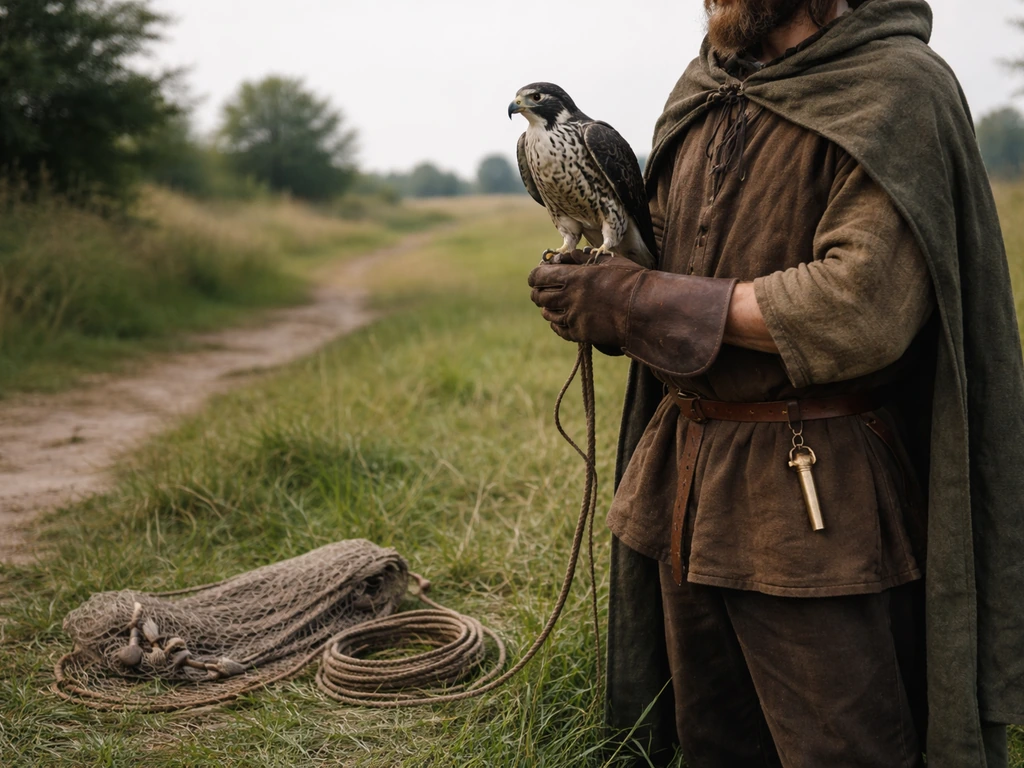
A significant chunk of bird surnames come from the trade of catching, selling, or keeping birds. The English surname Bird (and Fowler, which is the more overtly occupational form) was sometimes applied as a metonymic label for a fowler or bird-trader. Ancestry's research notes that Bird can be an occupational or metonymic name for someone who caught or traded birds, alongside its nickname sense. This is also where falconer-derived surnames come in, as falconry was a prestigious occupation that generated a whole family of surnames.
Nickname and symbolic origin
This is the most colorful category. An ancestor got stuck with a bird nickname because of something about their personality, appearance, or behavior, and it eventually crystallized into a surname. Names.org describes the English surname Bird as a nickname for a lively, tuneful, or free-spirited person. blank" rel="noopener noreferrer">Wikipedia's overview of animal epithets confirms this pattern broadly: animal-based surnames often reflect resemblance to the creature's appearance or behavior, though distinguishing whether the original nickname was affectionate, humorous, or unflattering is genuinely difficult at this distance. Someone called "Robin" might have been red-cheeked or an especially cheerful singer. Someone called "Crane" might have been tall and thin-necked.
Language and region clues: translating the roots
Bird surnames exist in virtually every European language family, and the same underlying bird can produce very different-looking surnames depending on the country. If you're looking for last names meaning bird, the language and region clues are often the fastest way to narrow down the origin. Here's a practical reference for the most common equivalents:
| Language/Region | Word for bird/specific bird | Example surname(s) |
|---|---|---|
| English (Old/Middle) | brid, bridd, bird (young bird) | Bird, Byrd, Birt |
| German/Yiddish | Vogel (bird), Fink (finch) | Vogel, Vogler, Fink, Finkel |
| French | l'oiseau (the bird) | Loiseau, Loisel, Loiselet |
| Czech/Slovak | ptáček (little bird) | Ptáček, Ptáčník |
| Irish Gaelic | éan (bird) | Heaney, Heagney, Heneghan, McEneaney (anglicized as Bird) |
| Spanish/Portuguese | pájaro / pássaro (bird) | Pajaro, Pajares |
| Italian | uccello / uccel (bird) | Uccello, Ucellini |
| Dutch/Flemish | vogel (bird) | Vogel, De Vogel |
| Polish | ptak (bird) | Ptak, Ptaszek |
The Irish case deserves special attention because it's a genuine trap for researchers. FamilySearch explains that the English surname Bird was sometimes used as an anglicization of multiple Irish surnames that were mistakenly thought to contain the Gaelic word éan (bird). In other words, “Bird” could have entered the family line from a real bird word, a place name, a bird-catching job, or an anglicized translation of an Irish or Jewish surname anglicization of multiple Irish surnames.
Wiktionary and LibraryIreland both document this: surnames like Ó hÉinigh (anglicized Heagney), Ó hÉanna (Heaney), Ó hÉanacháin (Heneghan), and Mac an Déaghanaigh (McEneaney) all got translated or anglicized to Bird at various points. If your Bird family comes from Ireland, the underlying Gaelic name may not have had anything to do with birds etymologically, even though éan sounds bird-like and the anglicizers assumed a connection.
For Jewish surnames of European origin, the German/Yiddish word Vogel (bird) is the most common bird-derived form, and variants like Vogelstein, Vogelman, and Vogelbaum are all bird-rooted. FamilySearch also notes that Americanized translations of European surnames meaning bird (including Vogel and others) were sometimes replaced by the English word Bird when families immigrated, which means a family named Bird in a 20th-century American record might have been Vogel in a 19th-century German or Eastern European record.
Common mix-ups and false matches to watch for
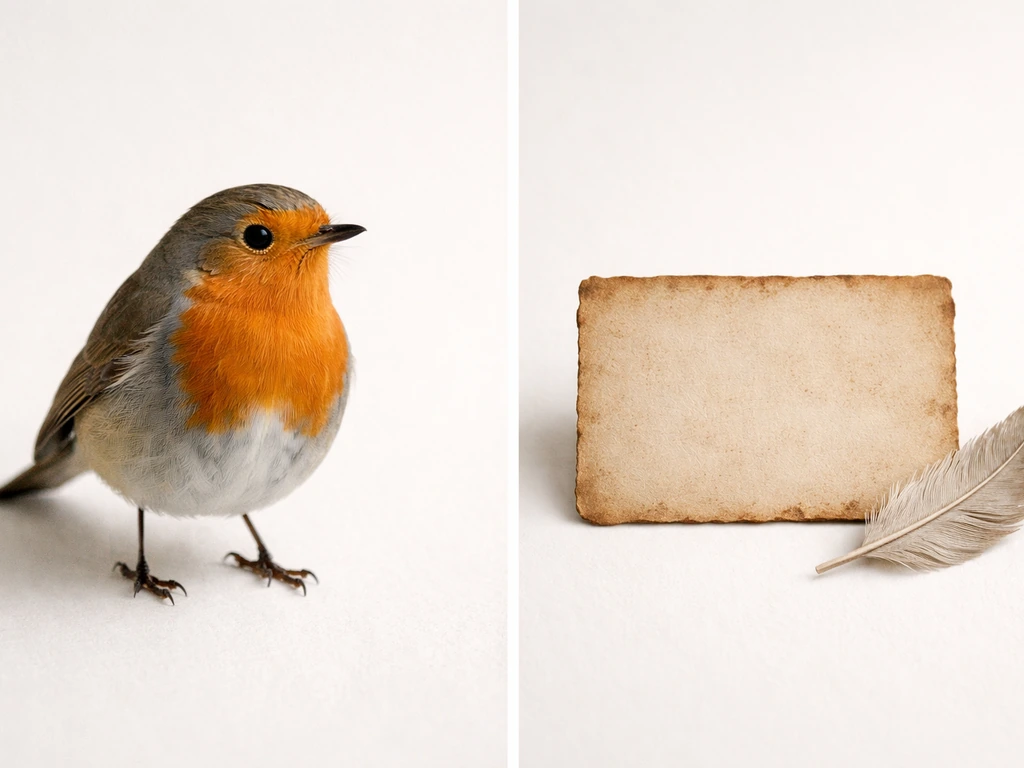
Not everything that sounds like a bird is a bird. This is one of the most important cautions in bird surname research, and it catches even careful genealogists off guard. Some Bird surnames are not Jewish in origin, so it helps to compare the spelling and language roots before concluding whether it is a Jewish surname.
- Robin: This is often assumed to be the bird, but Robin was also a medieval given name (a diminutive of Robert) that later became a surname. Many Robin surnames trace to the personal name, not the bird.
- Martin: Looks like it could reference the martin (a swallow-family bird), but it's predominantly a surname from the given name Martin, which comes from the Latin Martinus (relating to Mars). The bird is actually named after the saint because martins arrived around Martinmas.
- Crane: Usually does mean the wading bird (Old English "cran"), either as a nickname for a tall person or a topographic name near crane habitats, but there's also a separate Gaelic derivation that has nothing to do with the bird.
- Swift: The bird meaning exists, but Swift is also a topographic or occupational term (someone quick at a task), so it needs regional and contextual verification.
- Jay: Could be the bird, but Jay is also a given-name-derived surname and has independent origins in different countries.
- Finch: Mostly does mean the finch bird in English, but Fink in German (same bird) was also sometimes used as a derogatory nickname meaning informer in 20th-century slang, which has nothing to do with ornithology.
- Wren: Generally the bird in English contexts, but needs confirmation that the specific family line is English and not a phonetic approximation of something else.
- Similar-sounding non-bird names: Byrd looks like Byrd the bird, but Bird/Byrd can also be confused with Baird (a different Scottish/Irish surname entirely, meaning bard or poet).
The broader principle here, borrowed from how animal epithet surnames are analyzed generally, is that resemblance to an animal name is not sufficient proof of animal origin. You need to trace the actual historical spelling variants, the geographic origin, and the documented etymology before concluding that a name is bird-derived.
Connecting your surname to the specific bird behind it
Once you've established that your surname is genuinely bird-derived and you know the language of origin, the next step is identifying which bird it refers to. For surnames derived from a general word for "bird" (like English Bird, German Vogel, or French Loiseau), there's no specific species implied. The name refers to bird-ness in the abstract, whether as a personality trait, an occupation, or a place associated with birds generally.
For surnames derived from specific bird names, the connection is more precise and more interesting. Finch/Fink points to birds in the family Fringillidae. Crane points to Grus species. Martin (when genuinely bird-derived) points to Hirundo/Delichon species. Heron points to Ardea species. Robin in a bird context points to the European robin (Erithacus rubecula) in British English, though in North American usage the name often gets associated with the American robin (Turdus migratorius), which is actually a thrush, not a true robin. That kind of regional shift in what a bird name means is worth being aware of if you're researching a name across continents.
A useful reality check: if your surname is a specific bird species name, look up the bird's historical cultural associations in the region your ancestors came from. Medieval and early modern Europeans had rich symbolic vocabularies around birds, and the symbolism often explains why a particular bird became a nickname. A person nicknamed Wren might have been small but vocally powerful. A person nicknamed Kite might have been associated with opportunism or sharp-eyedness. A person nicknamed Dove might have had a gentle reputation, or lived near a dovecote.
How to verify your finding with reliable sources
Etymology from a single source is a hypothesis, not a conclusion. Here's how to build confidence in your interpretation:
- Check at least two independent surname etymology resources. Good options include Ancestry's surname meaning pages, FamilySearch's wiki-style surname entries, Etymonline for English word roots, and national genealogical society resources for non-English names.
- Look for the name in a historical surname dictionary specific to the country of origin. For English names, Reaney and Wilson's "A Dictionary of English Surnames" is the gold standard. For Irish names, MacLysaght's "The Surnames of Ireland" is authoritative.
- Confirm geographic clustering. If your family's earliest records come from a specific county or region and surname databases show the name clustering there historically, that's supporting evidence for the regional etymology.
- Check whether the name appears in records before the surname-formation period (roughly 1200-1500 in most of Western Europe). If you find an ancestor called "John le Bird" or "William Bird" in a 13th-century English record, you've got solid evidence of the English nickname/occupational origin.
- For immigrant families, trace the name back to the country of origin before it was anglicized or translated. The pre-immigration form often settles the question.
Using the meaning: pet names, trivia, and creative applications
Once you actually know what bird your surname connects to, you can do genuinely fun things with that knowledge. The most direct application for visitors to this site is pet bird naming. If your surname Bird traces to the Old English meaning of "lively young creature," naming your parakeet something that echoes that energy (Brid, Bridd, or even just Lively) is a nice nod to etymology. If your surname is Finch, naming a pet finch after the original German Fink or choosing a name from the finch's behavior (Triller for a trillin vocalist, Goldie for a goldfinch) works beautifully.
For trivia and cultural context: the surname Bird (and Byrd) has notable bearers across history and pop culture, from jazz musician Charlie Parker (nicknamed Bird) to basketball legend Larry Bird. The name Byrd is associated with explorer Richard E. Byrd and senator Robert C. Byrd. The Crane surname appears in American literature most famously as Ichabod Crane. Martin Luther King's surname Martin, while not bird-derived, is often confused in this space. Knowing the real etymology helps you speak confidently about these connections, or more importantly, know when to say "actually, that one isn't a bird name at all."
For writers, using a character's bird surname symbolically works best when you know whether the name is a general bird term or a specific species. A character named Wren carries different connotations than a character named Heron, and knowing the etymological weight behind each choice makes the symbolism land more precisely.
Your best next steps if you're still not sure about your specific name: start with Etymonline for the English root, FamilySearch's surname pages for regional and linguistic context, and the variant-search workflow described above to surface the oldest spelling. FamilySearch’s wildcard searching guidance can also help you test variant spellings, including how and when to use wildcards (such as when you have a minimum number of letters to work from) [variant-search workflow described above to surface the oldest spelling](https://www. familysearch.
org/en/blog/searching-with-wildcards-in-familysearch). If the name is Irish in origin, the question of whether it's a genuine bird surname or an anglicized approximation is especially worth investigating, since the Irish path specifically has a history of mistaken bird connections. If you’re specifically wondering whether “Bird” is an Irish surname, it helps to compare Irish surname variants and anglicization patterns Irish in origin.
And if the name is from a Central or Eastern European family that immigrated in the late 19th or early 20th century, check whether an earlier form exists in the country of origin before the name became "Bird" in English-speaking records.
FAQ
How can I tell if my “Bird” surname is really bird-derived, or just resembles a bird word?
Start by treating your “Bird last name meaning” query as language-mapping, not a single dictionary entry. If the earliest forms in your family line show different spelling families (for example Bird, Byrd, Brid, Bridd), that supports an English-derived root. If the earliest forms show Vogel-style or other non-English shapes, you should prioritize the foreign-language surname meaning first, then only later decide whether it was replaced by “Bird” after immigration.
If my surname is Bird or Byrd, does it literally mean “bird,” or something more specific?
In English records, Old English “brid/bridd” likely points to “young bird or nestling,” not the broad modern concept. A practical check is to look for earliest English spellings tied to your surname in the same region and time period, because later generalization (bird in the abstract) becomes more plausible when the name appears in English-speaking contexts after that shift.
What is the biggest mistake people make when researching an Irish “Bird” surname?
If you suspect an Irish connection, don’t rely on the presence of the syllable that resembles “éan” in modern intuition. Instead, compare documented Irish surname forms and anglicization pathways, because multiple distinct Gaelic surnames were translated into English “Bird” at different times, meaning the “bird” link may be accidental rather than etymological.
Could my “Bird” surname be an Americanized version of a different bird surname from Europe?
Yes, it can happen when a family adopted an English equivalent during immigration or assimilation. A common pattern is that a surname meaning “bird” in German or Yiddish (like Vogel and variants) later appears as Bird in American records, so your best test is to search for pre-immigration spellings in the original country’s language before you interpret the “Bird” meaning.
How do I figure out which specific bird (species) my surname refers to, especially for names like Robin?
Because species names can change meaning by region, you should anchor your bird to the culture where the nickname was likely coined. For example, “Robin” might map to European robin in Britain, but North American research often associates it with a different bird species. Use the ancestor’s location and time period, then match it to the bird symbolism and common usage there.
When is an etymology “good enough,” and when should I keep digging?
Treat any single-source etymology as a working theory. Increase confidence by triangulating three elements: the earliest spelling you can document in records, the most likely language or region for that spelling family, and whether reputable etymology references connect that exact word form to a bird-derived root.
What research strategy should I use to choose between nickname, place-name, occupation, and symbolic origins?
A useful decision aid is to classify your surname into one of the four routes early, then only refine. For place-name origins, map your surname to historic localities and place-name dictionaries. For occupational origins, look for historical evidence of bird-keeping or falconry trades in the relevant area. For nickname origins, look for family descriptions or recurring traits and then see whether they fit the local bird symbolism.
How should I handle spelling changes or inconsistent spellings in census and immigration records?
Yes. If your family records show rapid spelling shifts, it may indicate interpretation by clerks rather than an actual name change. In that case, build a timeline of spellings across multiple records (census, vital records, immigration documents) and prioritize the oldest consistent forms, because later “corrections” to a bird-like spelling can be indexer bias rather than original reality.
I want to name a pet bird using my surname meaning, how do I avoid picking the wrong type of “bird” reference?
If you are naming a pet bird, you can safely use “etymology-inspired” meanings without claiming strict species identification. For example, if Bird relates to the Old English sense of a lively young creature, names that echo energy or youth are a closer fit than names referencing a specific species. If your surname is clearly a species-derived surname, you can pick names tied to that bird’s historical symbolism in your ancestors’ region.