A surname 'means bird' in one of three ways: it comes directly from a bird species name (like Crane, Finch, or Crow), from an occupation tied to birds (like Falconer or Hawker), or from a nickname given to someone who resembled or behaved like a bird in some way. If you are wondering is bird an irish surname, it helps to remember that Bird-style surnames can come from bird names, bird-related occupations, or translation and Americanization paths. If your question is specifically where the last name Bird comes from, it can come from a direct nickname origin or from translation of older European surnames where does the last name Bird come from. Figuring out which one applies to your name, and actually proving it, takes a few specific steps, and the path looks different depending on whether your family roots are English, German, Slavic, Scandinavian, or somewhere else entirely.
Surnames Meaning Bird: How to Research Bird Name Origins

What 'surnames meaning bird' actually means
Not every bird surname works the same way, and lumping them all together causes a lot of confusion. There are really three distinct categories worth separating from the start.
The first and most obvious category is direct species names used as surnames. Crane, Martin, Robin, Swift, Wren, Finch, Jay, Rook, and Sparrow are all English examples where the bird's common name became a family name, usually as a nickname for a person who somehow reminded neighbors of that bird, or who lived near a place associated with it.
The second category is occupational surnames tied to birds. Falconer is the textbook example: it comes from Old French fauconier, meaning a trainer or handler of falcons, and shows up as an English surname from as early as the late 12th century. Hawker, Fowler (one who catches wild birds), and Ostler (in some lineages) fall into this group too. These names don't literally name a bird, but they're inseparable from avian history.
The third category is translated or Americanized surnames. When European immigrants arrived in English-speaking countries, surnames meaning 'bird' in German, Polish, Czech, or other languages were sometimes translated directly into English. That's why Bird itself can be an Americanized form of any number of European originals. blank" rel="noopener noreferrer">FamilySearch notes that Bird was also used as a Middle English nickname (from brid or burd) for someone young, small, or slender, which adds yet another layer. If you're researching the surname Bird specifically, it's worth knowing it has both a direct nickname origin and a translation origin depending on the family line. If you want the bird last name meaning for Bird, focus on whether your line traces to an original nickname or to a direct translation from another language surname Bird.
Patterns and suffixes that signal a bird-related surname
Once you know what to look for, bird-related surnames have recognizable fingerprints across multiple languages. Here are the patterns that come up most often.
- English -er suffix on a bird name or bird role: Falconer, Hawker, Fowler, Mercer (not bird-related, but illustrates the pattern). The agentive -er suffix signals 'one who does X' or 'one who works with X.'
- English -ward or -man suffix: Birdman (rare), Hawksworth (place-linked). Less common but worth checking.
- German Vogel- prefix or root: Vogel means 'bird' in German. Surnames like Vogel, Vogelmann, Vogelsang ('bird song'), and Vogelsanger are all directly bird-related.
- Slavic -ek, -ik, or -ka diminutives on bird roots: Polish names like Wróbel (sparrow) or Czech Holub (pigeon/dove) often carry diminutive suffixes in variant spellings.
- French faucon- or aigle- roots: Fauconnier, Faucon, and Lagle (from l'aigle, 'the eagle') signal French-origin bird surnames.
- Scandinavian -son on bird roots: Names like Kraakeson (from kraak, 'crow') or compound names with -falk (falcon) appear in Norwegian and Swedish records.
- Spanish and Portuguese -o or -a endings on bird words: Aguila (eagle), Paloma (dove), Grulla (crane), and Pato (duck) all appear as family names.
- Gaelic and Welsh prefixes: Mac an Eoin and similar constructions sometimes trace to bird associations, though these need careful case-by-case checking.
The -er suffix point is worth pausing on. In English surname formation, -er almost always indicates an occupational or agentive origin. So when you see a bird name plus -er, your first instinct should be 'this was probably someone's job or defined role,' not just a casual nickname.
How to research your surname's bird etymology, step by step

This is the practical core of the whole exercise. Here's a workflow that actually holds up when you run it on a real surname.
- Start with the spelling you know, then gather variant spellings. Surname spellings were not standardized before the 19th century. A surname clerk recorded what they heard, so Finch became Fynch, Fench, and Vince in different records. Search a database like Ancestry or FamilySearch with wildcard characters (Fin*, F?nch) to pull all spelling variants before you do anything else.
- Look up the root in a dedicated surname dictionary. The Dictionary of American Family Names (DAFN) is excellent for North American lineages and gives linguistic and historical context alongside frequency data. For British names, P.H. Reaney and R.M. Wilson's 'A Dictionary of English Surnames' is the standard scholarly reference. For German names, 'Deutsches Namenlexikon' by Hans Bahlow is the go-to.
- Check Etymonline for the underlying word. Even if Etymonline doesn't list every surname, it traces the root word itself. For Falconer, Etymonline shows the chain clearly: surname from late 12th century, from Old French fauconier, from faucon (falcon). That word-level etymology is exactly what you need.
- Find the earliest dated record of the surname. Church baptism and burial records, manorial rolls, and census documents all help you pin down when and where the name first appears. The earlier you can get, the closer you are to the original naming context.
- Cross-reference the geographic origin with the bird species. If your research points to a surname meaning 'crane' and the family comes from a region where cranes were historically common, that's corroborating evidence. It's not proof on its own, but it's a meaningful data point.
- Check for occupational context in historical records. If a surname appears consistently alongside records of falconry, bird-catching, or poultry trading in the same region and era, that strengthens an occupational interpretation.
- Rule out false cognates (see the section below on pitfalls). Before you conclude 'this means bird,' confirm there isn't an unrelated root that just looks similar.
Language and region pitfalls: variant spellings and false bird matches
This is where a lot of surname research goes wrong, and it's genuinely tricky. Some surnames look bird-related but aren't, and some bird-related surnames are disguised by centuries of spelling drift.
Take the name Martin. It's also the name of a bird (the house martin), but as a surname it usually comes from the personal name Martin, derived from the Latin Martinus (of Mars). The bird was probably named after the saint, not the other way around. So Martin-as-surname is almost never a direct bird name, even though a Martin flies through your garden.
Similarly, the surname Merlin might seem like a clear falcon reference (a merlin is a small falcon), but it's far more often derived from the Welsh personal name Myrddin (as in the legendary figure). You'd need genealogical and geographic evidence to argue a direct bird-name origin for Merlin.
On the flip side, a name like Faulkner looks nothing like 'falcon' at first glance, but it's a straightforward variant spelling of Falconer, sharing the same Old French root faucon. The -ul- spelling reflects a historical pronunciation shift, not a different word. This is why tracing the root word through etymology sources matters more than trusting your eye.
German Vogel-based names can also be confused with place names that include the element Fogel or Fugel without a bird meaning. Scandinavian names with -falk (falcon) or -ørn (eagle) are usually genuine, but Nordic records use so many compound forms that you need to read them in context. Slavic names are particularly prone to anglicization that obscures the original bird root entirely: the Polish Wróbel (sparrow) might arrive in American records as Wroebel, Vrobel, or even Rebel, which tells you nothing about its meaning on the surface.
A practical rule: if the root word in the original language unambiguously names a bird species, you're on solid ground. If the connection depends on a loose phonetic resemblance or a long chain of speculative derivations, treat it as a hypothesis, not a finding.
Bird-meaning surnames organized by bird type

Here's a reference table covering common bird types and the surnames associated with them across major language groups. These are well-documented examples, not exhaustive, but they give you a useful starting map.
| Bird Type | English Surnames | Other Language Surnames | Notes |
|---|---|---|---|
| Eagle | Eagle, Eagleton | Adler (German/Yiddish), Aguila (Spanish), Lagle/De l'Aigle (French) | Adler is one of the most common bird-derived surnames in Ashkenazi Jewish naming traditions |
| Falcon / Hawk | Falcon, Hawk, Hawks, Hawker, Falconer, Faulkner | Faucon (French), Habicht (German), Falk (Scandinavian/German) | Falconer and Faulkner are the same name with variant spellings; both occupational |
| Crow / Rook | Crow, Crowe, Rook, Rooker | Krämer is NOT crow (false cognate); Kruk (Polish, 'raven/crow'), Krähe (German, rare surname) | Crowe and Crow are usually direct species nicknames in English |
| Sparrow | Sparrow, Sparrowhawk | Wróbel (Polish), Sperling (German/Yiddish) | Sparrow as a surname likely started as a nickname for a small, lively person |
| Crane / Heron | Crane, Heron, Hernshaw | Kranich (German), Cigüeña (Spanish, 'stork') | Hernshaw refers to a young heron; Heron can also be a place-name surname |
| Wren / Robin / Finch | Wren, Robin, Robins, Finch, Fink | Fink (German/Yiddish, 'finch'), Zeisig (German, 'siskin') | Fink is common in Ashkenazi Jewish surnames; Robin is also a personal name origin |
| Dove / Pigeon | Dove, Doves | Holub (Czech/Slovak, 'pigeon'), Taube (German, 'dove'), Paloma (Spanish) | Taube is a well-documented Ashkenazi surname; Holub is widespread in Czech records |
| Swan | Swan, Swann | Schwan (German) | Swan as an English surname can also be a Norse personal name (Sveinn); verify the line |
| Jay / Jackdaw | Jay, Jays | Dohle (German, 'jackdaw'), Kavka (Czech, 'jackdaw') | Jay-as-surname may also derive from the personal name or the letter |
| General 'bird' | Bird, Byrd, Birde | Vogel (German), Fugl (Scandinavian), Ptak (Polish) | Byrd is an old variant spelling of Bird; both follow the same English nickname/translation pathway |
A note on Ashkenazi Jewish surnames: many were assigned or chosen in the late 18th and early 19th centuries when Austro-Hungarian and German authorities required Jewish families to take hereditary surnames. Bird names like Adler (eagle), Taube (dove), Fink (finch), and Sperling (sparrow) were popular choices, making them unusually well-documented in terms of both origin and date. If you are wondering whether "Bird" is a Jewish surname, the origin can depend on the family line and whether it came from a German bird-name choice or a later translation is bird a Jewish surname. If your family name falls into this group, the paper trail is often cleaner than for medieval European surnames.
How to verify and cite your findings properly
Finding a plausible bird etymology is not the same as confirming one. The Austin Public Library’s Dictionary of American Family Names describes its entries as providing linguistic and historical explanations for surnames, including comparative frequency in the United States Dictionary of American Family Names describes entries with linguistic and historical explanations for surnames. Here's how to actually verify and document what you find.
- Use at least two independent sources. If the DAFN and Reaney/Wilson both give the same bird etymology for your name, that's strong corroboration. If only one source makes the claim and the other is silent, dig further before accepting it.
- Trace to primary records where possible. Church records, census records, and ship manifests on FamilySearch and Ancestry give you dated, geographic evidence. A surname recorded in a specific county in 1650 can confirm or contradict a proposed regional origin.
- Cite the specific edition and entry. Surname dictionaries are revised between editions. When you note 'Reaney and Wilson say X,' specify which edition you consulted, because entries sometimes change.
- Use Etymonline for word-level etymology, not as a surname source. Etymonline is excellent for tracing root words (like faucon or brid) but it doesn't catalogue all surnames. Use it to verify the underlying word, then confirm the surname formation separately.
- Note what you cannot confirm. Good genealogical practice means recording gaps and ambiguities. If your research suggests a name is probably bird-related but you can't find a definitive early record, say 'probable bird-name origin' rather than stating it as fact.
- Check surname frequency databases for geographic clustering. If a surname meaning 'sparrow' clusters heavily in a region where that bird was historically a common species or cultural symbol, that's useful context to document alongside your linguistic evidence.
What to do with this information: a practical checklist
Once you've confirmed (or reasonably established) that a surname is bird-related, the information is genuinely useful in a few different directions. Here's a checklist to wrap up your research and put it to work.
- Document your findings in a genealogy file: note the bird species or role, the root language, the earliest dated record you found, and the sources you used.
- Connect it to a family narrative: an occupational bird surname like Falconer tells a story about what an ancestor did for a living, which is far more vivid than a bare name on a family tree.
- Look for related surnames in the same family line: immigration records and marriage certificates sometimes show a mix of the original-language surname and an anglicized translation, which can confirm a bird etymology you're unsure about.
- Use the bird meaning for naming inspiration: if you're choosing a name for a pet bird and you have a personal or family connection to a bird-derived surname, using the underlying species name is a meaningful and satisfying choice. A family whose name traces back to Falconer might find naming a kestrel or peregrine particularly fitting.
- Explore related topics to round out your knowledge: understanding how the surname Bird itself developed, whether a name like Bird has Irish or Jewish lineage in your family, and how bird last names work as a category all add depth to a single family name discovery.
- If you're still uncertain about the origin, post your evidence (not just the name) in a genealogy forum like the Genealogy & Family History section of Reddit or a dedicated surname study group. Showing your work gets better answers than asking a bare question.
The main thing to carry away is that 'my surname means bird' is a starting point, not a full answer. The specific bird, the specific language, the occupational vs. nickname vs. translation pathway, and the geographic origin all matter and all add something to the picture. The research process is genuinely enjoyable once you treat it like detective work rather than a lookup, and the bird angle makes it more interesting than most surname investigations.
FAQ
How can I tell whether my bird-related surname came from a person’s nickname versus an occupation?
Look for early records that mention role or location alongside the name. Occupation origins often appear in documents that list a trade (for example, handler or catcher) in the same place and time period, while nickname origins are more likely to show up as a personal descriptor in medieval or early parish records without an ongoing job pattern. If you have only modern records, treat the job explanation as a hypothesis until you find an early instance tying the name to a function.
If my surname is Bird or “Bird” in English, how do I distinguish translation origin from an inherited family nickname origin?
Track the spelling and the earliest arrival into English-speaking areas (naturalization, census entries, immigration manifests). Translation origins often align with a European-language surname that was commonly translated into English, and you may see consistent alternate spellings in earlier documents from the same immigrant family. Nickname origins are more likely to be documented as a personal name in local English records earlier than the family’s migration, or to appear without a matching foreign-language equivalent.
What should I do if my surname looks bird-like in English, but my family name might have been anglicized from elsewhere?
Start by working backward to the likely source language before you decide the meaning. Use original-language spellings found in ship records, border crossings, synagogue registers, or older local registries. Then compare those roots to bird-name and bird-occupation roots in that language. Avoid relying on English-only similarity, because centuries of clerical spelling drift can change consonants, vowels, and even entire elements.
Can a surname that includes “-er” still be a nickname instead of an occupation?
Yes, but it is less common. In English surname formation, “-er” frequently marks an agentive or occupational meaning, so you should first test that route. If your family’s earliest records show the name used for a family line without any occupational context, you can explore a nickname origin, but you’ll want geographic and timing evidence to justify it.
Why do some bird surname etymologies conflict online, especially for names like Martin or Merlin?
Because similar-looking surnames can have different roots (personal names, saint names, legendary figures) that happen to overlap with bird terms. The fix is to confirm with the earliest documented surname form and the region where your family lived, then test whether the bird connection explains the spelling historically. If the proposed explanation requires multiple speculative steps or relies on modern English word similarity, downgrade it to uncertain.
What evidence is considered strong enough to “confirm” a bird-origin theory?
Strong evidence includes (1) the earliest known spelling in your family line, (2) a geographic cluster matching the claimed language or historical root, and (3) contemporaneous records that support either an occupation, a nickname context, or a translation pattern. Ideally, you also find a document that links the surname form to a known source surname in another language. Without at least spelling plus geography, most bird etymologies should be treated as probable rather than confirmed.
Are bird surnames more common or better documented in Ashkenazi Jewish families than in medieval European families?
Often, yes. Many Ashkenazi surnames were adopted or assigned in the late 18th and early 19th centuries under administrative requirements, which can make the timing and chosen surname clearer. Still, you can’t assume every bird-like surname is a direct choice, because later translation, spelling variation, or record transcription can alter the trail. If your family line moved or changed spellings, verify with the relevant civil and community records from the adoption period.
If I find a surname that might mean sparrow, eagle, or dove, how do I avoid confusing it with a place-name?
Check whether the surname appears with indicators of habitation or land ownership in early records. Place-related surnames often correlate with a specific town, manor, or topographic element, and they may show up in inventories or tax rolls tied to land. If you see consistent bird-root spellings across multiple documents without local place references, the bird-meaning route becomes more plausible.
What are the most common spelling traps that hide the bird root in American records?
Expect shifts in vowels and consonants, especially when clerks transcribed by sound. Examples include bird roots being reshaped into different English words that look unrelated (for instance, a bird-root surname being turned into an English-sounding word with a different meaning), or compound elements being collapsed or reordered. The practical strategy is to search by surname variants that share the likely original consonant skeleton, then verify with immigration and early residence data.

Trace your surname tied to bird names with roots, language shifts, and records to confirm the etymology.
Cute, funny and elegant dodo bird names plus how to pick one, with language meanings for flightless island vibes.
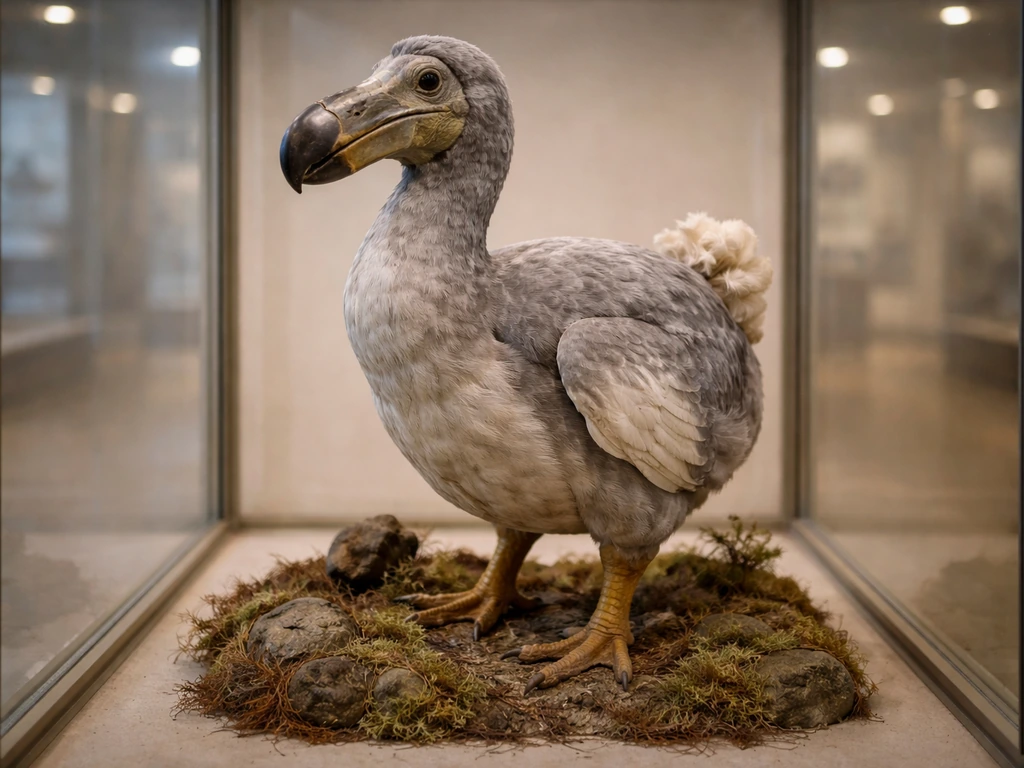
Learn standard and US UK pronunciation of dodo bird, with syllables, stress, etymology, and practice drills.