The short answer: you call a bird a bird. But if that was all you needed, you wouldn't be here. The real question behind "how do you call a bird" is almost always one of two things: you spotted something in your yard or on a trail and want to know what it's actually called, or you have a pet bird and want to give it the right (or a great) name. Both are completely reasonable things to want, and both have clear paths forward.
How Do You Call a Bird A Practical Guide to Names

Maya Castellanos
11 Apr 2026
The general word, and what your question probably really means
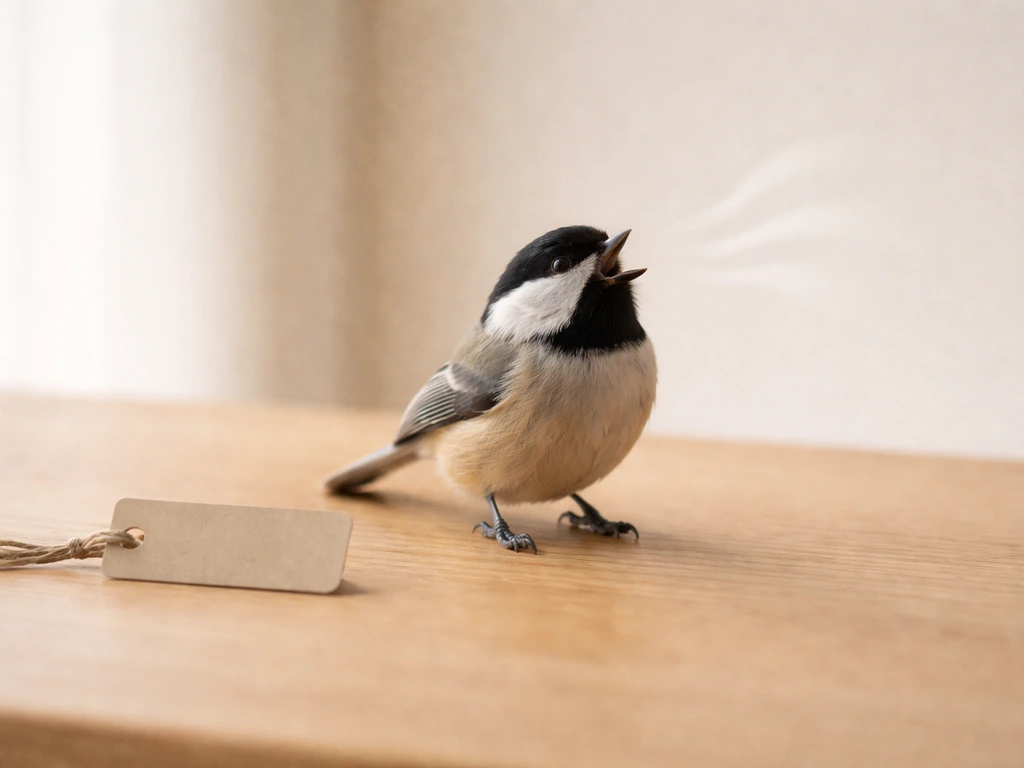
The word "call" does double duty in English. As the Cambridge Dictionary puts it, to call something means both to give it a particular name and to make a characteristic cry, which is charmingly appropriate when the subject is a bird. So "how do you call a bird" can mean "what name do you use for it" or, if you're thinking more literally, the sound it makes. This article focuses on the naming side, because that's almost always what people are actually after.
If you're curious about the deeper linguistic question, like why a bird is called a bird in the first place, that rabbit hole goes surprisingly deep into Old English and Proto-Germanic roots. But for now, let's focus on how to name the specific bird in front of you.
Common names vs. knowing exactly which species you've got
Common names are the everyday names most people use: robin, sparrow, hawk, hummingbird. They're casual, regional, and sometimes maddeningly inconsistent. A "robin" in North America is a thrush (Turdus migratorius), while a "robin" in the UK is an entirely different bird from the flycatcher family (Erithacus rubecula). So when you say "I saw a robin," what you've actually called it depends entirely on where you live.
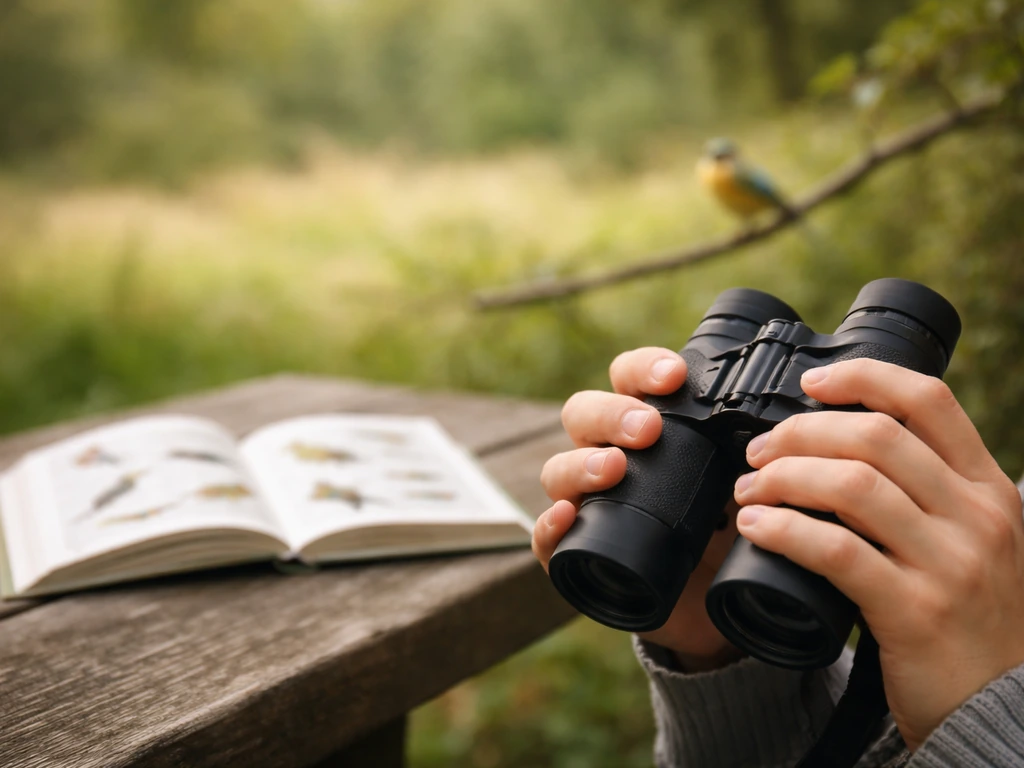
This is why identifying the species matters before you confidently name what you saw. Common names are fine for casual conversation, but they can mislead. The good news is that narrowing down a bird's identity is easier than ever. The Audubon Society recommends building up identification clues through careful observation: size relative to something familiar, body shape, beak shape, coloring, behavior, and habitat. Notes and photos help enormously. Once you have those clues, you can match them against a field guide or a birding app and land on the correct common name for your region.
You might also wonder why some bird names sound so outlandish once you start digging into them. There's actually a great discussion of why bird names are so weird that gets into how a mix of colonial-era naming, folk etymology, and pure whimsy shaped the English bird lexicon. Short version: naming birds has never been a tidy science.
Using common name patterns to call a bird correctly
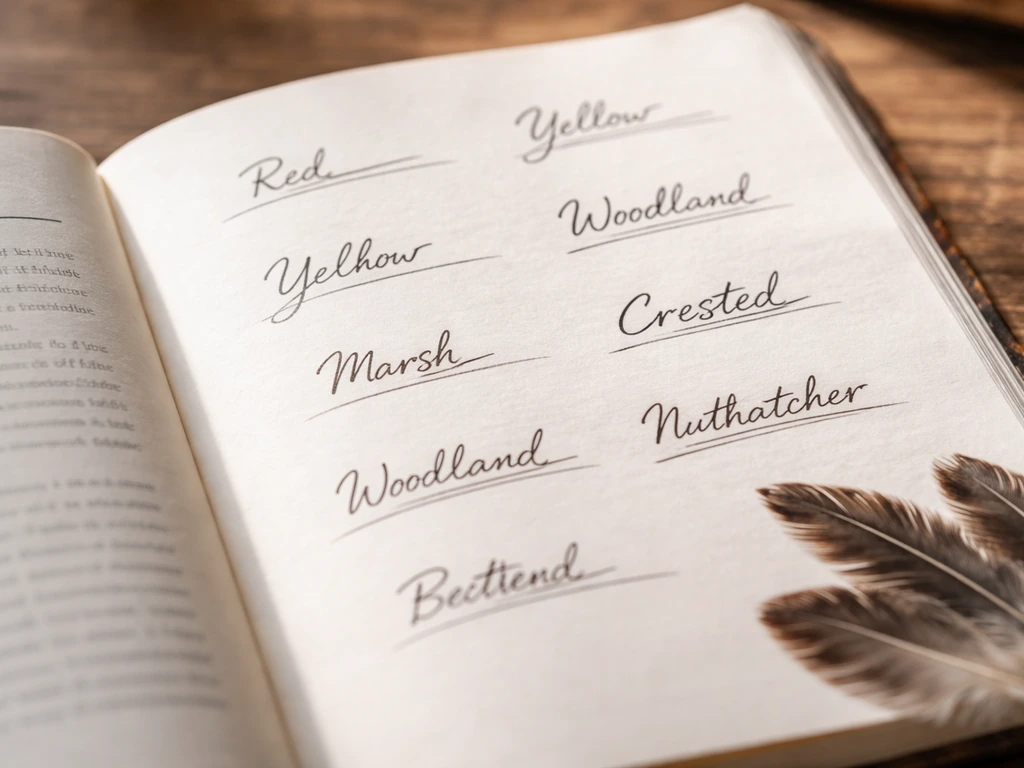
Once you have a solid description of your bird, common name patterns can actually guide you surprisingly well. Most common names follow one of a few conventions: named after appearance (Redwing, Yellowthroat, Painted Bunting), named after sound (Whip-poor-will, Chickadee, Bobwhite), named after behavior or habitat (Ovenbird, Kingfisher, Roadrunner), or blank" rel="noopener noreferrer">named after a person (Steller's Jay, Anna's Hummingbird, Bewick's Wren).
When you're trying to figure out what to call an observed bird and you only know a few features, try searching those features in a birding app or database. Platforms like eBird allow you to type part of a species name, either the English common name or the scientific name, and filter results as you type. That's a fast way to confirm whether the bird you're describing matches a known species name and to lock in the correct common name to use going forward.
One thing worth knowing: Audubon cautions that field guides can't cover every plumage variation a bird might have across seasons, age, or sex. A juvenile bird can look wildly different from the adult pictured in your guide. So if you can't confidently match a name right away, that's normal. Collect more clues and cross-reference a couple of sources before settling on a name.
When to use a scientific name instead
Scientific names solve the regional inconsistency problem entirely. Every species has exactly one scientific name, used globally, regardless of language or location. If you tell a birdwatcher in Brazil that you saw Turdus migratorius, they know exactly which bird you mean, even if they'd never heard of an "American Robin." For casual chatting, common names are fine. For anything precise, like writing about a bird, contributing to a citizen science database, or discussing species across languages, the scientific name is the way to go.
Scientific names follow a two-part binomial system: genus first, species second, always italicized. Wikipedia explains that the binomial system uses genus first and species second to form species scientific names blank" rel="noopener noreferrer">two-part binomial system. If you want to understand the full system and what those Latin and Greek parts actually mean, there's a solid breakdown in the article on what the scientific name for a bird is and how the nomenclature works. It's genuinely useful context once you start looking up birds regularly.
eBird's Quick Entry feature supports both scientific and English common name searches, which makes it a practical tool when you're not sure which naming convention you want to use. Type what you know, and it meets you where you are.
| Context | Best naming approach | Example |
|---|---|---|
| Casual conversation | Common name (regional) | "I saw a robin in the yard" |
| Birdwatching across regions | Common name + scientific name | "American Robin (Turdus migratorius)" |
| Citizen science / databases | Scientific name | Turdus migratorius |
| Pet naming | Your chosen name (no rules) | "Mango," "Archie," "Sir Tweets-a-Lot" |
| Academic / research writing | Scientific name, binomial format | Erithacus rubecula |
Naming a pet bird: what to actually call it
If your question is about naming a pet bird rather than identifying a wild one, the calculus shifts completely. Here, "what do you call a bird" is entirely up to you, and there's a whole spectrum of approaches people take. Some choose names based on the bird's species (Polly for a parrot, Petrie for a pterodactyl-ish looking bird), some name based on color or personality (Sunny, Cleo, Storm), and some go full pop culture (Tweety, Woodstock, Iago). In a Reddit thread about birding memes, people discuss why birds like Steller’s Jay and Anna’s Hummingbird are named after people and how that relates to preferences and potential common-name changes some choose names based on the bird's species.
A few practical tips that actually work when naming a pet bird: shorter names (one or two syllables) are easier for the bird to respond to and, in the case of parrots and some corvids, easier to mimic. Names with hard consonants like K, T, or B tend to register more clearly to birds than soft sounds. And picking a name that suits the bird's personality rather than just its appearance tends to feel right longer term.
It's also worth knowing that some birds carry names with genuinely funny or unexpected histories. Take the booby, a seabird with an oddly comic name that actually comes from the Spanish word "bobo" meaning foolish or clownish, referring to how tame and easy to catch the birds were. That kind of name origin makes a great conversation starter if you ever adopt one (though they're not common pets, admittedly).
Tips for choosing a pet bird name that sticks
- Keep it to one or two syllables for easier recognition
- Use names with hard consonant sounds (K, T, B, P) for better auditory clarity
- Observe the bird's personality for a few days before committing to a name
- Avoid names that sound too similar to common commands you'll use ("No," "Go," "Fly")
- Species-inspired names can be fun: look up the bird's scientific or folk name for inspiration
Where bird names come from and how to look them up
Bird names have origins that span Latin, Greek, Indigenous languages, colonial-era naturalists' surnames, and pure onomatopoeia. Understanding where a name comes from can deepen your appreciation for a species and sometimes reveal something genuinely surprising about its history. The Secretary Bird, for example, has a name whose origins are debated: one theory ties it to the French word "secrétaire" (a type of writing desk), another to 19th-century secretaries who tucked quill pens behind their ears. The bird's dramatic head crest does look remarkably like a cluster of quills. You can explore that story in more detail in the article on how the Secretary Bird got its name.
For researching bird name origins yourself, a few reliable approaches work well. Etymonline (the Online Etymology Dictionary) covers a surprisingly wide range of common bird names and their linguistic roots. Species-specific Wikipedia articles almost always include an etymology section. Ornithological society publications often carry detailed notes on how a species received its common and scientific names. And if you want the scientific name's meaning broken down, the two parts (genus and species epithet) almost always describe something about the bird's appearance, behavior, habitat, or the person who first described the species.
There are also fun tangents that open up when you start digging into bird name linguistics. For instance, knowing that the Secretary Bird's naming history involves competing colonial-era theories says something about how messy and human the process of naming species actually is. And then there are names that spilled out of ornithology entirely into cultural slang, like the fact that the middle finger is called "the bird", a usage with its own surprisingly old history that has nothing to do with ornithology at all.
Your practical next steps
To pull it all together: if you spotted a bird and want to know what to call it, start with careful observation (size, shape, color, behavior, habitat), then use a birding app or eBird to match your description to a species and confirm the correct common name. If you need to be precise, grab the scientific name too. If you're naming a pet bird, go short, go punchy, and let the bird's personality lead you. And if you want to understand why a bird has the name it does, etymology resources and ornithological databases will get you there faster than you'd expect.
FAQ
What if I only have a blurry photo, or I can’t get close enough to see the beak and markings?
If you only know one rough trait, start by narrowing by size and overall silhouette, then refine with beak shape and behavior (hopping, hovering, perching). Don’t pick a name just from color, since lighting and seasonal plumage can strongly mislead. Once you have 3 to 5 solid clues, confirm with a field guide or a birding app search using those features.
When should I skip common names and use scientific names instead?
Use common names for quick conversation only after you’re confident about species identity in your region. For anything formal, like reporting sightings, writing an article, or sharing with birders across countries, include the scientific name as a backup. That avoids the “same common name, different species” issue.
How do I handle cases where the bird looks nothing like the picture in my field guide?
Many birds look different by age and sex, so the “wrong-looking for the book” moment is common. Make a note of whether the bird seems juvenile (often softer or less distinct patterning) or adult, and check seasonality for where you are. If the app returns multiple similar candidates, compare behavior and habitat last, because these usually stay more consistent than plumage.
What’s the fastest way to confirm a bird’s name if I’m not sure whether I have the genus right?
Try searching with a partial scientific name when you’re unsure. For example, enter the genus (first word) and then filter by country or habitat, then compare the candidate species’ common names and typical markings. This is faster than scanning every common name, especially with similar-looking species.
My birding app gives multiple matches, what should I do next?
If your app or database shows more than one plausible match, don’t guess immediately. Switch from “name guessing” to “feature checking” by comparing 2 to 3 discriminators that you can still observe, like wing bars, tail shape, and typical posture. Record the time of day and whether you’re near a water source or open field, since these narrow options quickly.
If I mean the bird’s sound, how do I go from a call I heard to the bird’s name?
If you’re asking what sound a bird “makes,” treat it as separate from what the bird is called. Use the recording or description (chirp, call, song, repetitive vs rising) as your clue, then identify the species. Some birds produce multiple call types, so matching the sound alone can lead to the wrong name.
How do I choose a pet bird name that the bird can actually learn?
For pet birds, make sure the name you choose is comfortable to say consistently and doesn’t sound too similar to commands you’ll use (like “step up” or “no”). Test it for a few days, calling the bird the same way each time, and see if the bird shows attention or approach. If there’s no response after a short routine, change the name rather than repeating it endlessly.
What should I do if I pick a long pet name and it’s hard to use daily?
If a name feels too long, shorten it to a clear nickname you’ll use most often. For example, a longer formal name can become a two-syllable call sign. Consistency matters more than the original inspiration, so keep the same spoken pattern every time you interact.
Is it okay to try to attract wild birds, or should I just observe?
“How do you call a bird” can also mean human etiquette, like not disturbing wildlife. If it’s a wild bird, avoid loud calls or baiting, and focus on observation and quiet documentation instead. If it’s a bird you already have permission to approach, use gentle, non-threatening movements and let it set the pace.
Next Articles
Good Names for a Dodo Bird: Ideas and How to Pick
Cute, funny and elegant dodo bird names plus how to pick one, with language meanings for flightless island vibes.
How to Pronounce Dodo Bird Correctly in English
Learn standard and US UK pronunciation of dodo bird, with syllables, stress, etymology, and practice drills.

How Did the Dodo Bird Get Its Name? Discovery and Etymology
See who first documented the dodo and who coined its name, plus the etymology of dodo with common myths.