Yes, boobies are absolutely real birds. If you're wondering what to call the bird, the common name is “booby,” and “boobies” is just the plural. "Booby" is the singular common name, and "boobies" is simply the plural. There are six species in the genus Sula, plus Abbott's booby (Papasula abbotti) in its own separate genus, all belonging to the seabird family Sulidae. So whether you searched "booby" or "boobies," you're looking at the same group of birds.
Is There a Bird Called Boobies? Booby Meaning and Species

Maya Castellanos
24 May 2026
Booby vs. Boobies: same bird, different number
A lot of people land on this question because they've seen both spellings and aren't sure if they refer to the same thing. They do. "Booby" is one bird; "boobies" is more than one. The confusion is understandable because the word sounds informal, almost like a nickname, so it's easy to wonder if one form is the "official" name and the other is slang. Neither is slang. Both are standard English common names used in field guides, ornithological databases, and wildlife agency documents.
What kind of birds boobies actually are
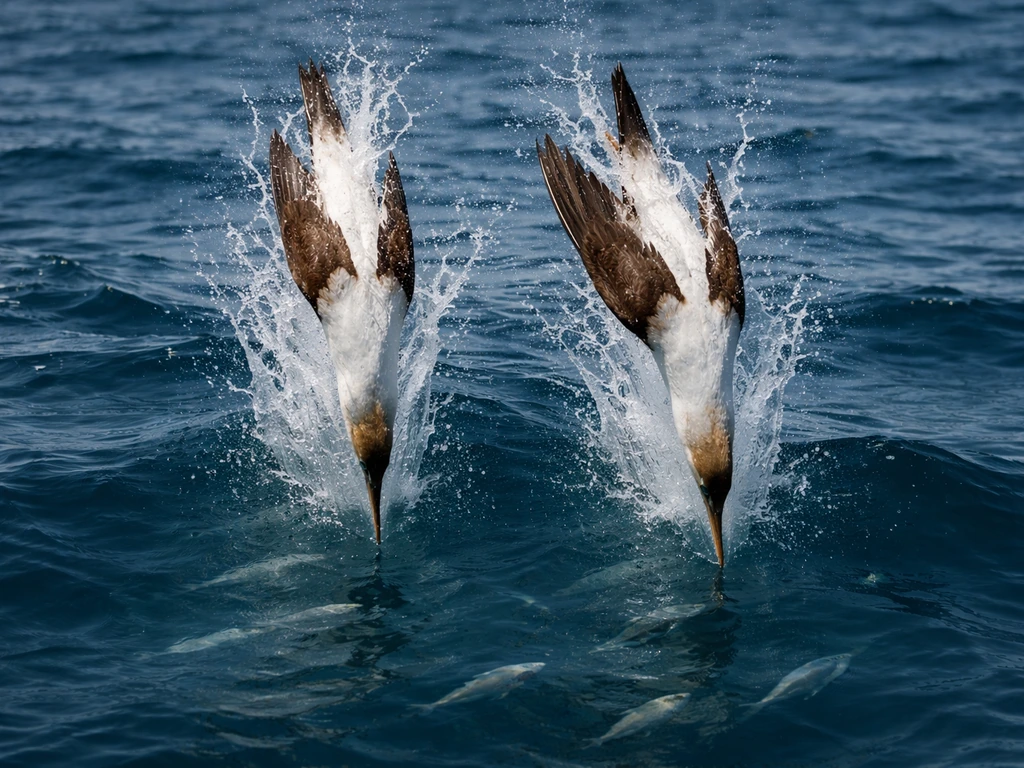
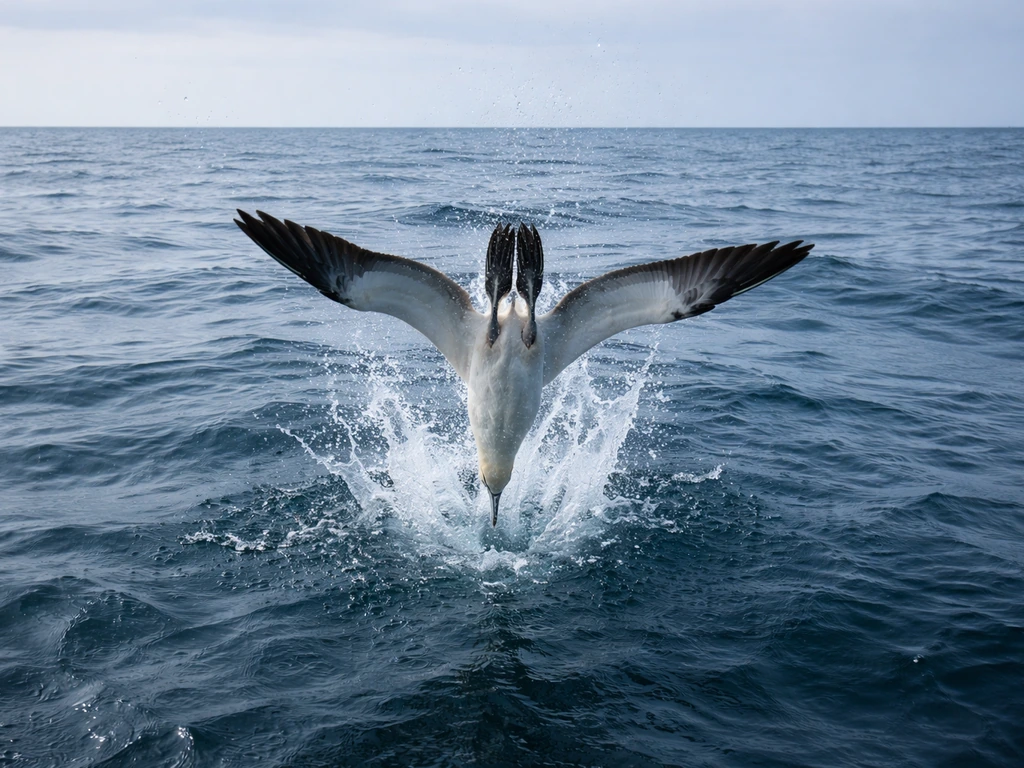
Boobies are tropical and subtropical seabirds. They're powerful, streamlined divers that hunt by plunging headfirst into the ocean at high speed to catch small fish and squid. Think of them as the gannet's warm-water cousin, because gannets (genus Morus) are actually close relatives in the same family, Sulidae.
The family Sulidae breaks down into three living genera: Sula (the six classic boobies), Papasula (just Abbott's booby), and Morus (the three gannet species). So technically, gannets are boobies' closest relatives, and the two groups are sometimes lumped together in casual conversation about "sulids." But in everyday birding, "booby" refers specifically to the Sula and Papasula birds, not the gannets.
Most boobies nest directly on the ground in simple scrapes, though some species, like the Red-footed Booby, nest in trees or bushes. They're colonial nesters and are often seen on remote oceanic islands far from the mainland.
The six Sula species at a glance
| Common Name | Scientific Name | Notable Feature |
|---|---|---|
| Masked Booby | Sula dactylatra | White body, black mask at bill base, black flight feathers |
| Blue-footed Booby | Sula nebouxii | Unmistakable bright blue feet |
| Red-footed Booby | Sula sula | Red feet; nests in trees or bushes |
| Brown Booby | Sula leucogaster | Dark brown above, sharp contrast with white belly |
| Nazca Booby | Sula granti | Similar to Masked Booby; orange-yellow bill |
| Peruvian Booby | Sula variegata | White head and neck, brown-streaked body; Humboldt Current specialist |
Abbott's Booby (Papasula abbotti) stands apart from the rest. It's in its own monotypic genus and is considered one of the most evolutionarily distinct members of the family. The U.S. Fish and Wildlife Service treats it as a separate species under Papasula, which you'll want to know if you're searching scientific databases.
Where the name "booby" comes from
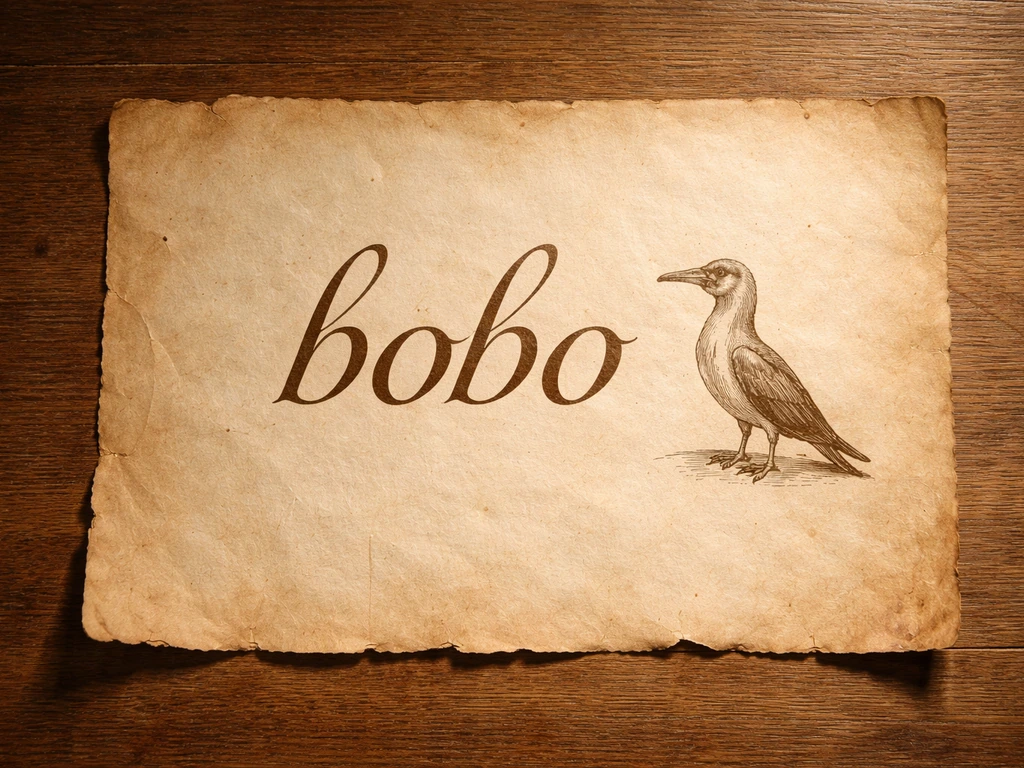
This is one of my favorite bird etymology stories because it's genuinely a little insulting. The word "booby" for the bird comes from the Spanish word bobo, meaning a stupid or foolish person. That word itself almost certainly traces back to the Latin balbus, meaning "stammering." Early European sailors who encountered these birds on remote islands noticed that the birds showed almost no fear of humans, waddling up to people and allowing themselves to be caught. To sailors used to skittish wildlife, this looked, frankly, dumb. So they named the birds after fools.
The etymology dates to the 1590s for the insult meaning and to the early 17th century for the bird sense. So the bird name is essentially frozen sailor slang from around 400 years ago. That's the same root behind "booby prize" (the prize for finishing last) and "booby trap" (a trap for a careless or dim-witted victim). Merriam-Webster traces “blank" rel="noopener noreferrer">booby trap” to schoolyard name-calling for a “dunce,” where booby means “slow-witted person,” going back to the late 1500s and possibly from Spanish bobo and Latin balbus. If you’re curious about other odd bird-name origins, the secretary bird is another great example of a name tied to history and behavior secretary bird why named. The word traveled from Latin to Spanish to English, picking up a bird name along the way.
If you're interested in how bird names get their strange origins, this is a great case study. It's not unique either. Plenty of bird names carry similar histories where sailors or colonists attached human descriptors (often unflattering ones) to animals they found unfamiliar or amusing. The naming patterns behind birds like the Secretary Bird follow their own equally surprising logic.
Scientific naming and the confusion points you'll hit
When you search for boobies in scientific databases, the genus name to know is Sula. That's the anchor. If you search "Sula" on Cornell Lab's eBird or the IUCN Red List, you'll pull up the six core booby species reliably.
The trickier naming situation is with Abbott's Booby. Because it's in Papasula rather than Sula, a search limited to "genus: Sula" will miss it entirely. If you're doing any kind of research or trying to find a complete list of boobies, you need to search Sulidae (the family) and then filter for boobies versus gannets, or specifically add Papasula to your search. If you want the scientific name for a bird, you usually need its genus and species, often formatted like Sula dactylatra for the Masked Booby scientific databases.
Another common point of confusion: older references sometimes list the family as containing "nine species" in "one genus (Sula)." That's an older taxonomic arrangement. The current consensus, as recognized by sources like Wikipedia's Sulidae entry and major ornithological databases, is three genera: Sula, Papasula, and Morus. If you see the older count, don't panic. The birds haven't changed; the classification has been refined.
The Masked Booby (Sula dactylatra) also trips people up in identification because juveniles are frequently mistaken for Northern Gannets. Adult Masked Boobies have an entirely dark tail and fully dark secondary flight feathers, while gannets have a buffy-yellow tinge on the head that boobies lack. Keeping the genus name in mind helps: if the record says Morus bassanus, it's a gannet, not a booby.
How to identify a booby when you actually see one
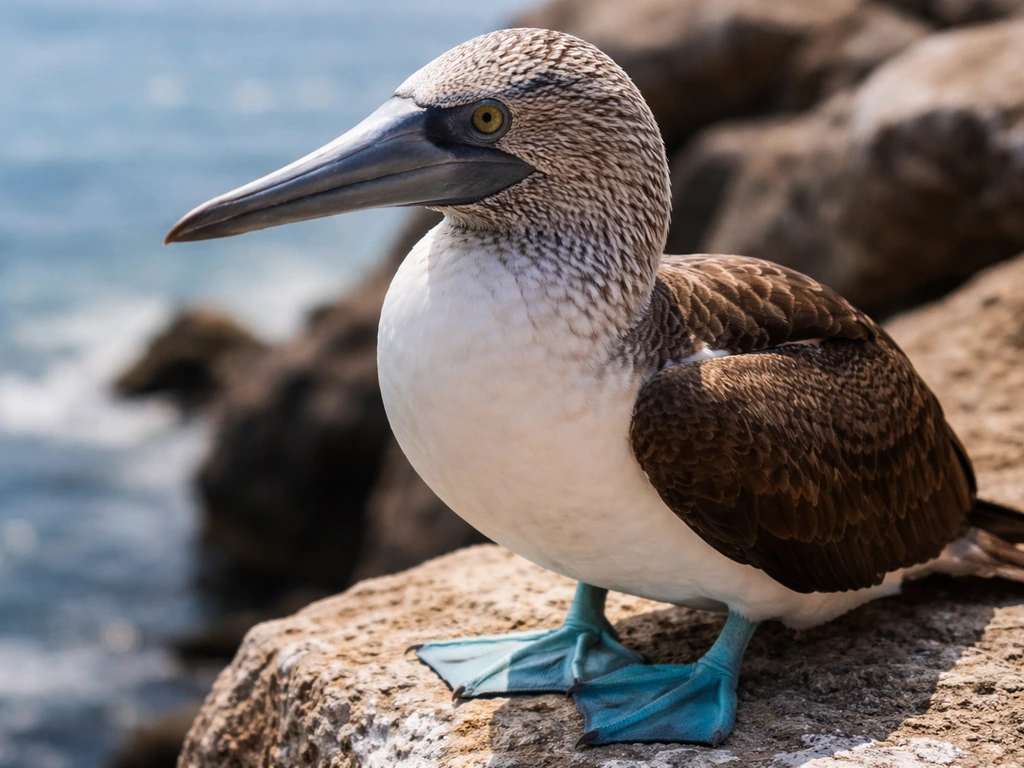
Boobies are large, torpedo-shaped seabirds with long pointed bills, long pointed wings, and pointed tails. Their plunge-diving behavior is the single most recognizable thing about them in the field: they fold their wings and hit the water like a javelin. If you see a large seabird doing that in tropical or subtropical waters, you're almost certainly looking at a booby or a gannet.
For narrowing down the species, focus on feet color and overall plumage pattern. Blue-footed and Red-footed Boobies are self-explanatory once you get a look at the feet. Masked Boobies are the most broadly distributed and most likely to be seen in the Atlantic, Pacific, and Indian Oceans. Brown Boobies are the most common species encountered close to shore in tropical regions worldwide.
Where to actually find them
- Tropical Pacific: Galapagos Islands are famous for Blue-footed and Nazca Boobies
- Caribbean and Gulf of Mexico: Brown Booby and Masked Booby are regular
- Indian Ocean: Christmas Island and other remote atolls host Abbott's Booby
- Eastern Pacific (Humboldt Current zone): Peruvian Booby in large numbers off Peru and Chile
- Pantropical (all warm oceans): Red-footed Booby is the most widely distributed species
In North America, the most likely booby you'll encounter is the Brown Booby, especially in Florida, the Gulf Coast, and Hawaii. Masked Boobies show up as occasional visitors along the Atlantic Coast. The Blue-footed Booby, despite being the most famous thanks to wildlife documentaries, is actually not seen in the continental U.S. very often and requires a trip to the Galapagos or certain Mexican Pacific locations.
Pet bird naming, wordplay, and pop culture
If you're here because you're naming a pet bird and wondering whether "Booby" works as a name, the honest answer is: yes, it works, but be prepared for reactions. It's a legitimate bird name with a documented history going back centuries. For a pet seabird-themed name or for a bird with clumsy, endearing behavior (think a large parrot that bumbles around), "Booby" is actually a charming and historically grounded choice. It carries the same warm absurdity as names like "Dodo" or "Gannet."
In pop culture, "boobies" gets used constantly in wordplay, on novelty merchandise, and in comedy precisely because the double meaning (the bird versus informal British English slang for a mistake, and the separate American slang usage) is irresistible to writers and marketers. The "I like boobies" bracelet trend from around 2010 was specifically a breast cancer awareness campaign playing on the bird name. Sports teams occasionally use the booby as a mascot reference. People also borrow the word in gestures and insults, which is part of why the middle finger is sometimes called the bird booby as a mascot reference. Crossword constructors love it because it crosses well with common vowel combinations.
In all of these cultural uses, the underlying anchor is the actual bird name. The double meaning only works because "booby" is, first and foremost, a real and widely recognized bird name. That's worth knowing if you're trying to explain the joke, name something, or just settle an argument at a pub quiz. And if you're curious how other bird names acquired their strange or funny reputations, the pattern of weird bird names goes much deeper than just boobies. If you want to dig into why bird names can sound odd or funny, that pattern shows up again and again across different cultures and eras weird bird names. The same kind of naming confusion also explains why people ask, "why is a bird called a bird?".
FAQ
If I saw “boobies” somewhere, is it a different bird than “booby”?
Yes. “Booby” and “boobies” refer to the same bird group, just singular versus plural. In most contexts, you will see “booby” when one individual or a single species is meant, and “boobies” when discussing multiple species or individuals.
Why do some scientific searches show fewer “boobies” than I expect?
In research or bird databases, you can miss Abbott’s Booby if you search only for the genus “Sula.” Abbott’s Booby is classified under Papasula, so include Sulidae (family) and then filter, or explicitly search for Papasula when you want a complete list.
What should I do if an older book says “nine species” in Sula?
Older references may mention a different species count or an older arrangement of “one genus (Sula).” That usually reflects past taxonomy, not a change in the birds themselves. If you see a “nine species” claim, check whether the source uses an outdated classification.
How can I tell a booby from a gannet when they look similar?
Boobies are often confused with gannets because both are plunge-diving seabirds in the broader sulid group. A fast rule of thumb is to treat the genus as decisive: Morus genus records are gannets, while Sula and Papasula records are boobies.
What if the bird is a juvenile, and the plumage clues do not look clear?
Juveniles are tricky because plumage can be less diagnostic. If the observation is a juvenile Masked Booby, compare with gannets for head and tail coloration and not just overall size. When identification feels uncertain, saving the record with a “probable” label is safer than forcing a species.
Is there a reliable way to narrow down which booby species I’m seeing?
Feet and overall plumage pattern help, but you should also note the setting. For example, Brown Boobies are commonly encountered close to shore in tropical regions, while Masked Boobies are more likely over broader ocean ranges. Habitat plus appearance usually beats appearance alone.
Can I rely on the word “booby” alone for correct identification?
Not necessarily. “Booby” is a common-name label, but “booby” or “boobies” is sometimes used loosely in casual speech. For accuracy, use the scientific name (genus plus species) when you need certainty, especially for records and iNaturalist-style observations.
Is “Booby” a good pet name, considering the slang meanings?
For pet naming, “Booby” is typically fine as a name choice, but think about practical communication. Many people will assume you mean the bird or will react to the slang meanings, so it can help to be ready to clarify you chose it for the bird’s name and not the insult sense.
Next Article
How Did the Secretary Bird Get Its Name
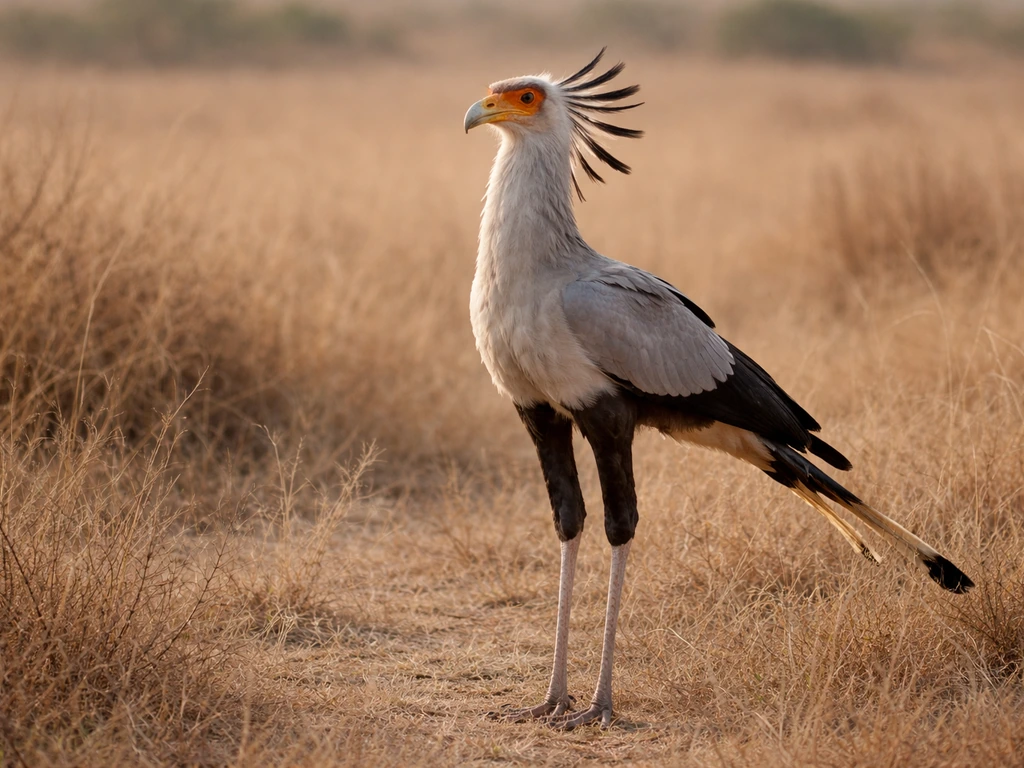
Why the secretary bird is called a secretary bird: its upright, long-legged look resembles a court clerk with a quill.