
There is no single scientific name for "a bird." Every bird species has its own unique binomial scientific name, so the answer depends entirely on which bird you mean. If you're asking about a robin, a penguin, a parrot, or a secretary bird, each one gets its own Latin-style two-part name. The moment you identify the specific species, finding its scientific name becomes straightforward. This guide walks you through exactly how to do that, explains the naming system so it actually makes sense, and points you to the best resources for getting it right.
What Is the Scientific Name for a Bird? How to Find It

Maya Castellanos
15 Apr 2026
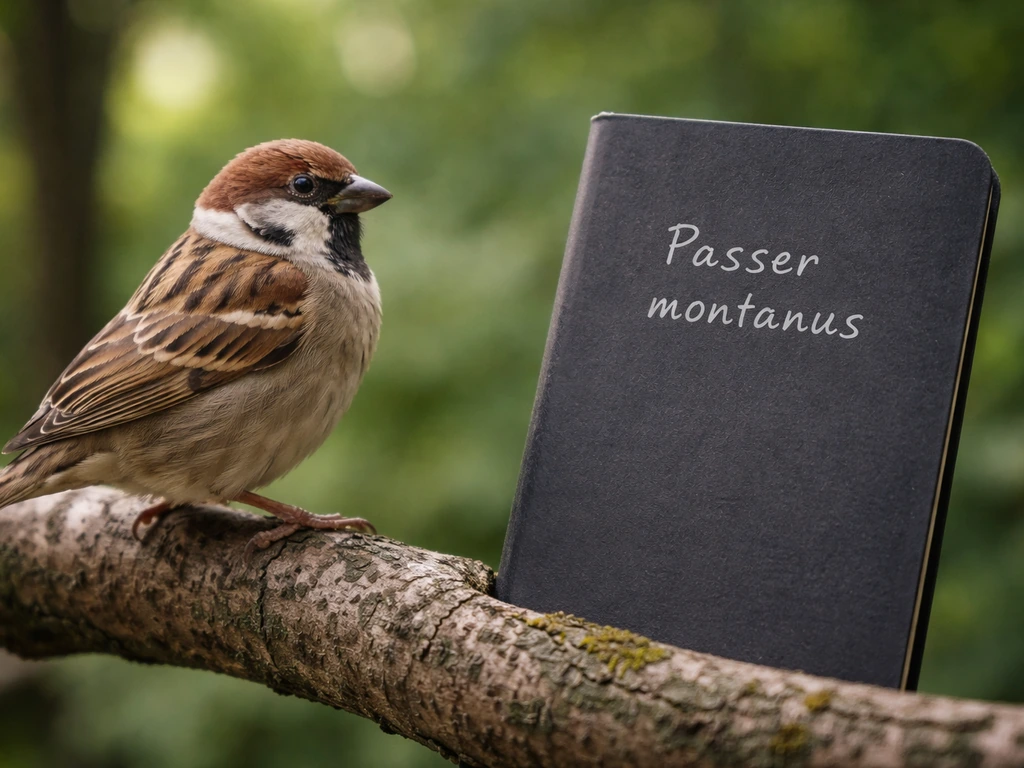
Common names vs. scientific names: what's the difference?
A common name is whatever people in a given place and language call a bird. A scientific name is the formal, internationally recognized name used by scientists, researchers, and taxonomists worldwide. ITIS (the Integrated Taxonomic Information System) defines vernacular or common names as "names other than scientific names that are commonly used to refer to a species or other taxon." The same bird can have dozens of common names across languages and regions, but ideally it has just one accepted scientific name at any given time.
The problem with common names is that they shift depending on where you are. eBird, for example, explicitly accounts for cases where different regional English names are used for the same bird. So if you're looking up a bird and hitting a wall because the name you know doesn't match what a database shows, the scientific name cuts through that confusion immediately. That's the whole point of it.
You might also wonder why a bird is called a bird in the first place, since the word itself has surprisingly murky origins in Old English. But on the scientific side, the naming is much more deliberate and structured, which is what we'll get into now.
How to find the scientific name for a specific bird

Here's the process I use, and it works whether you know the bird's common name, its rough location, or just what it looks like.
- Identify the bird as specifically as you can. A common name, a description, or even a photo all work as starting points. The more detail, the faster the lookup.
- Go to eBird (ebird.org) or the IOC World Bird List (worldbirdnames.org). Both are authoritative, actively maintained, and free. eBird's taxonomy is downloadable as a spreadsheet via the Clements Checklist page and includes both common name and scientific name fields for every species.
- Search by common name. eBird's species search is especially good at resolving regional name variants. The IOC World Bird List is updated twice a year and also includes multilingual versions, so it handles non-English common names better than most tools.
- Cross-reference with GBIF (gbif.org) if you want extra confirmation. GBIF's species search supports filtering for accepted names versus synonyms and has a dedicated species name-matching tool that normalizes spelling variants against its backbone taxonomy.
- Note the accepted name and its authority citation. The scientific name will look something like Turdus migratorius (American Robin). The authority and year following the name tell you who first formally described the species.
- Double-check against BirdLife DataZone if conservation status or range matters to you. BirdLife International's platform is widely used by conservation practitioners and links to detailed species factsheets.
One practical tip: for birds specifically, stick to IOC, eBird, Clements, or BirdLife rather than generic biodiversity portals. Generic portals vary widely in how well they curate bird names, and you can end up with outdated synonyms without realizing it.
The basics of scientific naming: binomials, Latin, and authority rules
Every bird species gets a two-part scientific name called a binomial. The first part is the genus name (always capitalized), and the second is the species epithet (always lowercase). Together they form the species name. So the common house sparrow is Passer domesticus, where Passer is the genus and domesticus is the species. By convention, both parts are italicized in print to distinguish them from surrounding text. This rule comes from the International Code of Zoological Nomenclature (ICZN), which governs the formal naming of all animals.
The names are described as "Latin-style" rather than purely Latin because many are derived from Greek, from the names of naturalists, or from geographic locations, all Latinized to fit the system. This is a big reason bird names can seem so weird at first glance: you're often reading a mash-up of Greek roots, honorary surnames, and place names dressed up in Latin grammar.
After the two-part name, you'll often see an author name and year, like Linnaeus, 1758. This tells you who formally described the species and when. If the species has been moved to a different genus since the original description, the original author's name appears in parentheses. The ICZN gives a classic example: the lion was originally described as Felis leo by Linnaeus and later moved to Panthera, becoming Panthera leo (Linnaeus, 1758). The parentheses signal the genus change. ITIS explains the same principle: the revising author is added outside the parentheses while the original author stays inside.
What counts as the "accepted" name?

A species can accumulate multiple scientific names over time as different researchers describe it independently or reclassify it. GBIF's backbone taxonomy marks all but one of these as synonyms, with only one name treated as "accepted" at any given time. According to GBIF's own training materials, only one species name can be accepted in the GBIF backbone, and other names for the same concept are treated as synonyms. Whether a name is a synonym or an accepted name can also depend on the taxonomic viewpoint, so two authorities may genuinely disagree, which is why checking a current, maintained source matters.
Where to look: the databases and checklists worth trusting
Not all sources are equal, and for birds specifically, a handful of resources consistently stand out. Here's how they compare:
| Resource | Best For | Update Frequency | Common Name Support |
|---|---|---|---|
| IOC World Bird List | Authoritative global taxonomy, multilingual names | Twice a year | Excellent, multilingual |
| eBird / Clements Checklist | Practical lookup, downloadable taxonomy spreadsheet | Annual | Strong, including regional variants |
| BirdLife DataZone | Conservation status, range, species factsheets | Periodic | Good |
| GBIF Species Search | Cross-database matching, synonym resolution | Continuous | Moderate, broad coverage |
| ITIS | North American taxonomy, authorship details | Periodic | Good for North America |
Cornell Lab's Clements Checklist notes that its taxonomy is updated to incorporate changes generally accepted by the appropriate scientific community, which makes it one of the most trustworthy day-to-day references for bird-specific lookups. The IOC Master Lists page offers downloadable spreadsheets including full multilingual versions, which is particularly helpful if you're working across languages.
For a quick sanity check on any name you find, GBIF's species name-matching tool is useful for catching spelling variants and flagging whether a name is currently accepted or a synonym. ITIS offers a similar tool called Taxamatch, which flags misspellings and database artifacts when a name can't be matched cleanly.
Scientific names for pet birds, and what those names actually mean
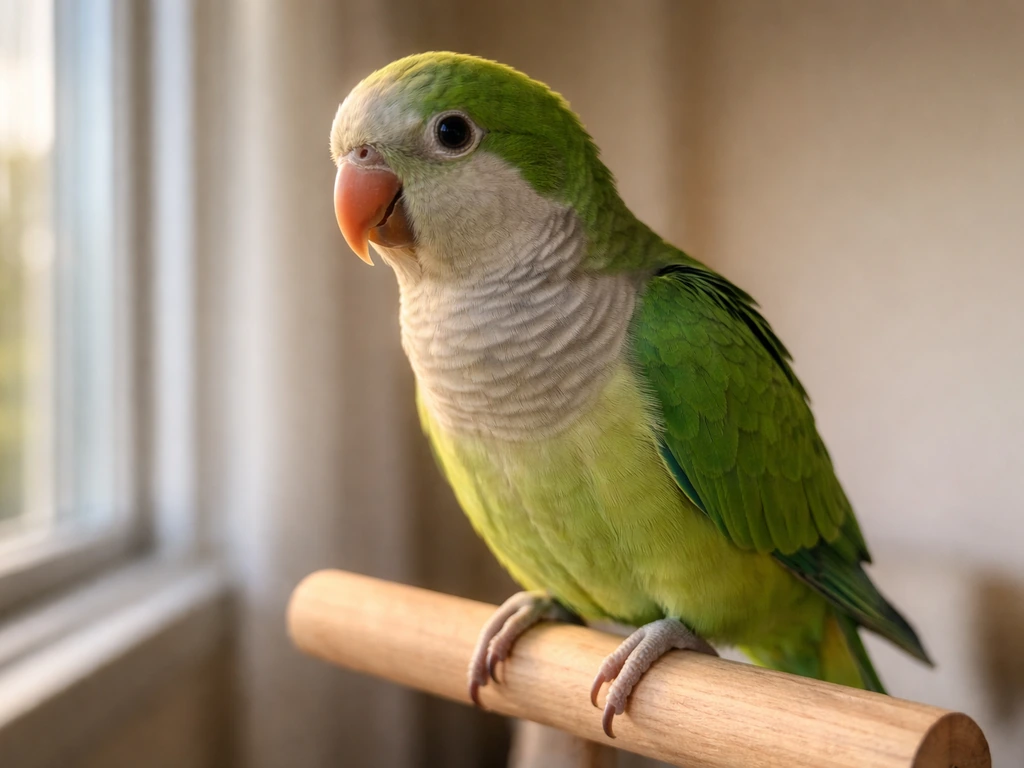
If you keep or are considering a pet bird, scientific names matter more than you might think. Common names for parrots in particular are notoriously inconsistent. A "green parrot" could refer to dozens of species with completely different care requirements, lifespans, and temperaments. Knowing the scientific name pins down exactly which species you're dealing with. For example, if someone sells you an "Alexandrine parakeet," the scientific name Psittacula eupatria immediately distinguishes it from the closely related but smaller ring-necked parakeet, Psittacula krameri.
Beyond practical identification, scientific names often carry their own etymology worth knowing. Many species epithets are descriptive: domesticus means "of the house," cristatus means "crested," and flavus means "yellow." Honorary names ending in -i or -ae honor a specific naturalist. If you're interested in how to identify and call birds by name in the field, understanding how you call a bird by its correct name (both common and scientific) is actually part of good birdwatching practice.
Some pet bird names have genuinely amusing backstories. Take the booby, a seabird in the genus Sula. If you've ever wondered whether there's really a bird called boobies, the answer is yes, and the name comes from the Spanish bobo, meaning fool or clown, earned by the bird's fearless and seemingly naive behavior around sailors. The masked booby's scientific name is Sula dactylatra, where dactylatra means "finger-black," referring to the dark wingtips. That kind of etymology makes the names memorable.
The secretary bird is another example where the common name is rich with naming history. If you're curious about how the secretary bird got its name, the bird's scientific name is Sagittarius serpentarius, which translates roughly as "the archer who hunts serpents." That name tells you far more about the bird's behavior than the common name does. There's even more debate about why the secretary bird is named as it is on the common-name side, with theories ranging from quill-pen-carrying secretaries to Arabic roots, none of them fully settled.
For anyone naming a pet bird, looking up the scientific name of the species and then exploring its etymology can actually be a creative jumping-off point for a pet name. A cockatiel, Nymphicus hollandicus, literally references the mythological nymphs and New Holland (old European name for Australia). That's a rich vein of inspiration if you want a name with meaning behind it.
Common mistakes people make with scientific bird names
- Assuming "bird" has a single scientific name. Birds (class Aves) contain roughly 10,000 species, each with its own binomial. There is no species-level scientific name for "bird" in general.
- Treating outdated names as current. Taxonomy changes over time. A name that was correct in a 1990 field guide may now be a synonym. Always check a currently maintained source like IOC or eBird.
- Confusing genus and species. The genus name alone (like Columba for pigeons and doves) doesn't identify a species. You need both parts: Columba livia for the rock pigeon, Columba palumbus for the wood pigeon.
- Forgetting that common names vary by region. What Australians call a "magpie" is a completely different species from what Europeans call one. The scientific name removes that ambiguity instantly.
- Using informal or hobbyist sites as primary sources. For authoritative scientific names, stick to ICZN-compliant sources like IOC, eBird/Clements, BirdLife, GBIF, or ITIS.
One last thing worth noting: if you've ever wondered why bird-related language gets strange in general, like why the middle finger is called "the bird", you're venturing into a completely different kind of etymology, one that has nothing to do with ornithology but is equally entertaining to unpack. Bird names, in both directions, tend to have more history behind them than you'd expect.
FAQ
If I only know a bird’s common name, how do I figure out the correct scientific name quickly?
Start by matching the common name to a single authoritative checklist (like IOC, Clements, eBird, or BirdLife), then confirm the species by location and, if possible, key field marks. Common names can refer to different species in different regions, so a location filter often prevents the wrong scientific name from being accepted.
What should I do if two reputable sources give different scientific names for the same bird?
Treat it as a taxonomic update or a differing species concept. Check which name each source lists as “accepted” and whether the other is shown as a synonym, then look at whether the disagreement is at the genus level or only the species level. The accepted name can also change over time, so note the checklist version or update date when you’re comparing.
How can I tell whether a scientific name I found is currently accepted or an outdated synonym?
Use a name-matching tool such as GBIF’s matcher or ITIS Taxamatch, and pay attention to status labels like accepted versus synonym. Also verify the spelling exactly, since one-letter differences can lead to “no match” or to a different taxon.
Do sub-species and subspecies names count as “scientific names for a bird”?
Yes, but they are a different rank than the species binomial. Subspecies are typically written with a third term (genus, species, subspecies), and not every bird is formally split into subspecies. If you see three-part formatting, confirm the rank so you do not treat it as a standard two-part species name.
What does it mean when the author name is in parentheses, and does that apply to birds?
Parentheses indicate the species was originally described under a different genus and later moved. This convention is used broadly under zoological nomenclature for animal names, including birds, so it is a quick clue that the current genus placement differs from the original publication.
How reliable are scientific names when I’m dealing with hybrids or color morphs (especially in pet birds)?
Scientific names usually apply to species, not morphs or individual variations. For hybrids, you may see special notation or different taxonomic treatment that is not captured by a simple species binomial. If the bird’s origin is known (breeding records), use that information, and be cautious about assuming a color-based common name maps cleanly to a single species.
If my bird’s scientific name is spelled correctly but the database says it is a synonym, is the spelling wrong?
Not necessarily. A database may recognize the name as valid historically but no longer accepted, or it may have been reclassified. In that case, the spelling can be fine, and the fix is to use the database’s “accepted name” field rather than trying to guess a new spelling.
Can I use the scientific name to identify the exact diet or care needs for a pet bird?
It often improves accuracy, especially for “common name” labels that cover multiple species. However, husbandry needs can still vary by species and sometimes by population or breeding line, so always cross-check species-specific care guidance rather than assuming all birds within the same common-name label have identical requirements.
Are genus and species names always Latin and do they always have meanings?
They are Latinized, but many come from Greek roots, personal names, or place names, and the meaning depends on the etymology origin. It helps to check the species epithet meaning separately from the genus, because the genus name may reflect a broader grouping while the epithet is often more descriptive.
What’s the best way to record the scientific name in my notes so I can look it up later?
Write the full binomial in italics if possible (or at least clearly separated), include the author and year if you have them, and record the source you used (for example, which checklist). This avoids confusion if taxonomic acceptance shifts and makes it easier to reconcile differences later.