The best bird species names are the ones that do real work: they help you identify the bird accurately, stick in your memory, and carry a meaning worth knowing. For most people searching this phrase, the goal is either to find a great name to give a pet bird (inspired by the species it belongs to) or to understand which common and scientific names are considered the most elegant, informative, or culturally resonant.
Best Bird Species Names: Pick Accurate, Beautiful Ideas

Maya Castellanos
1 Jun 2026
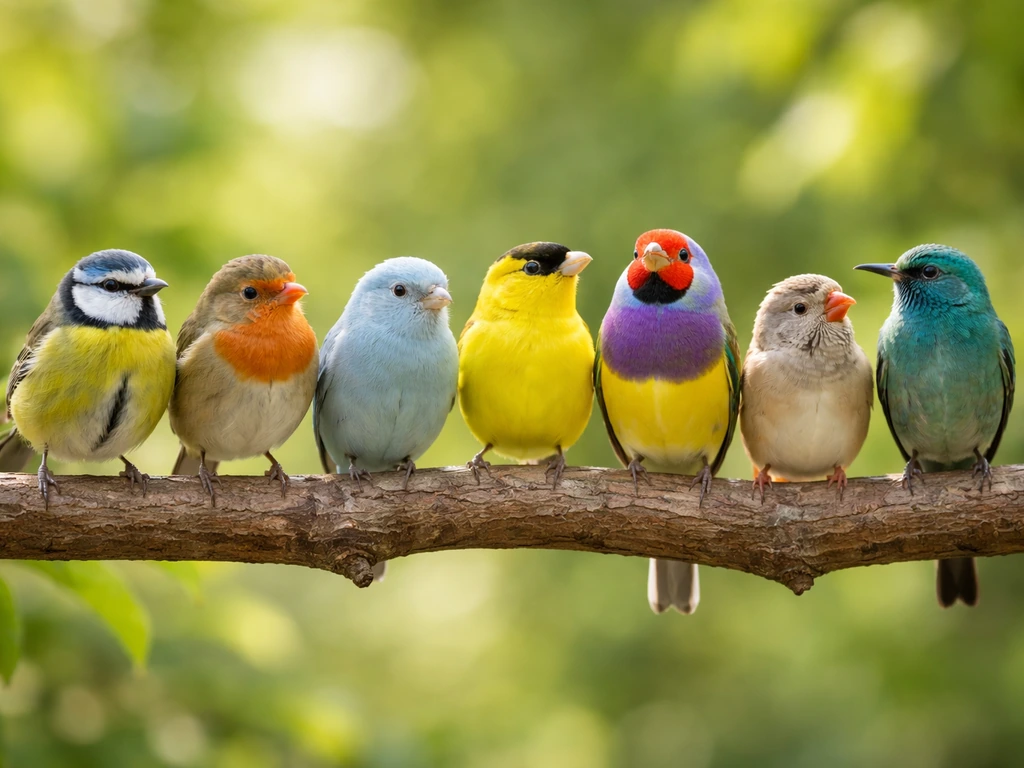
If you also want a funny twist, the best bird names are the ones that sound playful and match the bird's personality best bird names funny. Both goals are completely valid, and this guide covers both. Practically speaking, a few names consistently come up as favorites: Melopsittacus undulatus (budgerigar), Nymphicus hollandicus (cockatiel), Cardinalis cardinalis (northern cardinal), and Cyanocitta cristata (blue jay). They have wonderful stories behind them, and knowing those stories makes the names far more useful.
What 'best bird species names' actually means
When people search for the best bird species names, they usually mean one of two things. The first is: which common names are the most beautiful, interesting, or memorable? Think names like 'painted bunting,' 'magnificent frigatebird,' or 'resplendent quetzal.' The second is: what are the correct, accepted names I should use so I actually know which species I'm talking about? These two goals often converge, but it helps to know which one you're chasing.
Common names are the everyday English names we all know: blue jay, robin, budgie, canary. They're accessible and memorable, but they come with a serious limitation. Multiple unrelated species often share the same common name. 'Robin,' for example, is applied to dozens of species across completely different genera worldwide, from the European robin (Erithacus rubecula) to the American robin (Turdus migratorius). They're not closely related at all. Scientific names, on the other hand, are unique to one species, globally consistent, and governed by strict international rules. For identification purposes, the scientific name always wins.
How bird naming actually works
Every bird species gets a two-part scientific name called a binomen, as specified by the International Code of Zoological Nomenclature (ICZN). The first part is the genus name (always capitalized), and the second is the specific epithet (always lowercase). Together they form the species name, always written in italics: Cardinalis cardinalis, Cyanocitta cristata. That's it. Two words, one species, no ambiguity anywhere on Earth.
The ICZN also applies the Principle of Priority, which means the earliest validly published name for a species takes precedence over any later ones. If a species gets renamed or moved to a different genus, the original author's name appears in parentheses in the citation. The ICZN FAQ summarizes this rule from Article 51.2: besides brackets, there must be no other punctuation between the species name and the original author’s name there must be no other punctuation between the species name and the name of the original author. These aren't just bureaucratic details. They explain why some older field guides list names you won't find in modern databases, and why you should always verify against a current source.
For common names, the main governing references today are the IOC World Bird List and eBird's taxonomy (which aligns closely with AviList English names). Both are updated regularly. The IOC list even has explicit spelling rules, including guidance on when to hyphenate compound names. Common names change more often than you'd expect: taxonomy splits, lumps, and regional standardization efforts all push revisions through. Because of that, the specific bird names people use can change over time as taxonomy updates Common names change more often than you'd expect. If you're trying to use a name accurately, checking the current IOC list or eBird taxonomy is worth the two minutes it takes.
What makes a bird species name genuinely great
Not all bird names are created equal. Some are vague or dull; others are so perfectly crafted that once you learn them, you can't forget them. Here's what separates the memorable ones from the forgettable ones.
- Sound and rhythm: Names like 'whippoorwill' or 'bobwhite' are onomatopoeic, literally mimicking the bird's call. They're easy to remember because your ear does half the work.
- Descriptive accuracy: A good name tells you something real about the bird. 'Northern cardinal' tells you the range and gives you a color cue (the red vestments of Catholic cardinals). 'Blue jay' tells you exactly what you'll see.
- Linguistic beauty: Some scientific names are genuinely poetic. Melopsittacus ('melodious parrot') is a gift to anyone who's ever heard a budgie chatter.
- Memorability: Short, punchy names stick better than long compound ones. 'Robin,' 'finch,' 'wren' are thousands of years old for a reason.
- Identification value: The best names do double duty as ID cues. 'Cyanocitta cristata' literally translates to 'dark-blue crested jay.' You don't need a field guide if you know the Latin.
A curated look at species with standout names
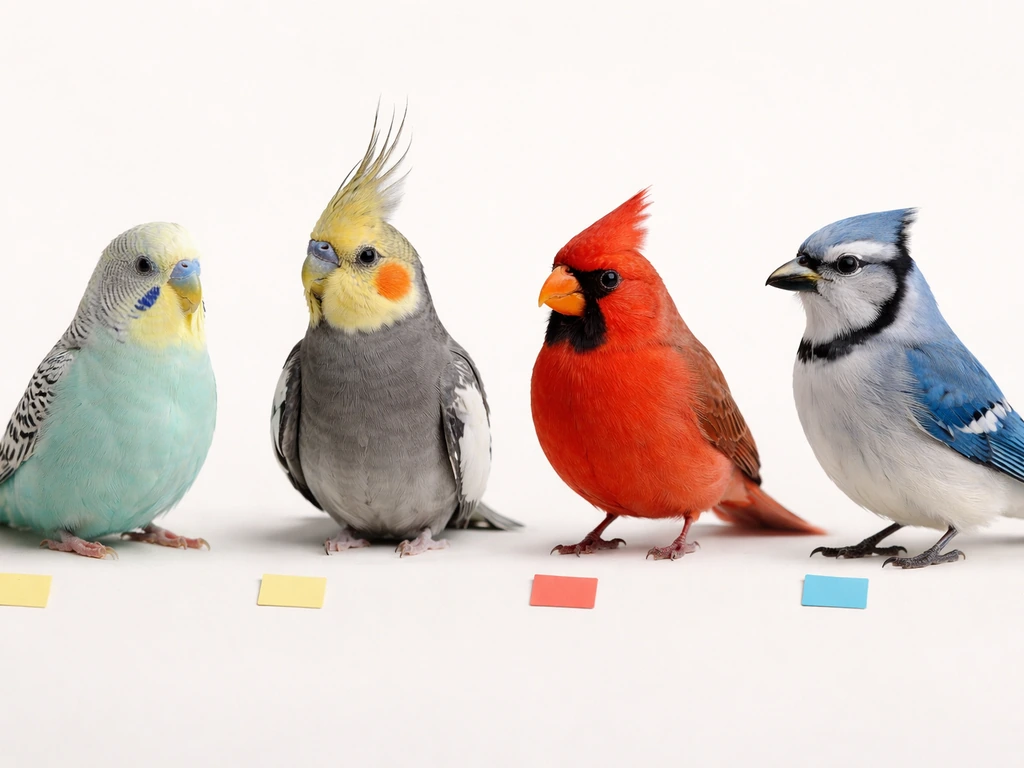
These are some of the most widely loved and linguistically interesting bird species names, along with exactly why they work so well.
Budgerigar (Melopsittacus undulatus)
The budgerigar's scientific name is arguably the best in pet bird world. Melopsittacus comes from Ancient Greek and means 'melodious parrot,' which is just perfect for a bird that never stops chattering. Undulatus refers to the undulating, wavy markings on its back feathers. So the full name essentially means 'wavy melodious parrot.' For a pet name, 'Budgie' or 'Mel' (nodding to that genus name) are popular choices for exactly this reason.
Cockatiel (Nymphicus hollandicus)
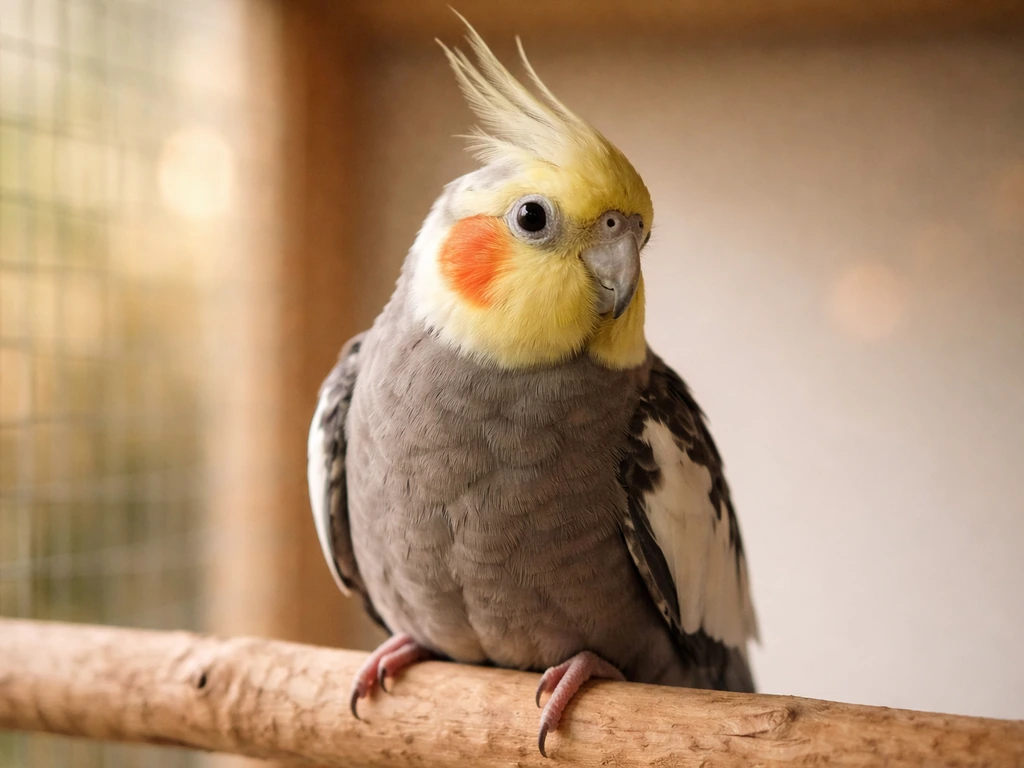
Nymphicus hollandicus translates roughly to 'little nymph of New Holland' (the old European name for Australia). The genus name Nymphicus was apparently coined because early European observers found cockatiels so beautiful they associated them with mythological nymphs. Hollandicus anchors the species to its homeland. As for the common name, 'cockatiel' is a Dutch diminutive, derived from the same root as 'cockatoo' (kaketielje in Dutch), meaning 'little cockatoo.' The first recorded use in English dates to around 1863.
Northern Cardinal (Cardinalis cardinalis)
Cardinalis cardinalis is a fun one: both the genus and species are identical, which is called a tautonym. The name comes directly from the brilliant red plumage that reminded European settlers of the scarlet robes worn by Roman Catholic cardinals. Even the collective noun for a group of cardinals plays on this: a 'conclave' or 'Vatican' of cardinals. It's one of the most culturally embedded bird names in North America, lending itself to sports teams and countless other references.
Blue Jay (Cyanocitta cristata)
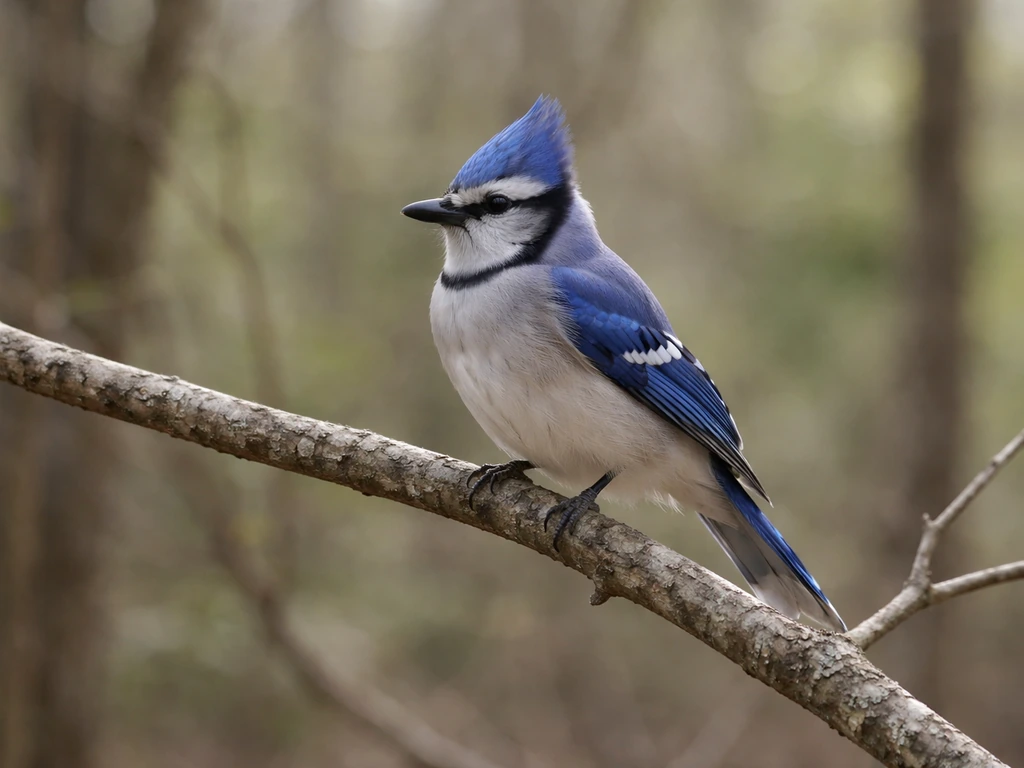
Cyanocitta breaks down from Greek as kuanos ('dark blue') and kitta ('jay'). Then cristata adds 'crested' or 'tufted,' referring to that unmistakable blue crest. So the scientific name literally means 'dark-blue crested jay,' which is basically a field guide entry compressed into two words. The common name works just as well: you see a blue bird with a crest and a loud personality, and 'blue jay' is exactly what your brain wants to call it.
| Species | Common Name | Scientific Name | What the Name Means |
|---|---|---|---|
| Budgerigar | Budgerigar / Budgie | Melopsittacus undulatus | Wavy melodious parrot |
| Cockatiel | Cockatiel | Nymphicus hollandicus | Little nymph of New Holland (Australia) |
| Northern Cardinal | Northern Cardinal | Cardinalis cardinalis | Cardinal (after Catholic cardinal's red vestments) |
| Blue Jay | Blue Jay | Cyanocitta cristata | Dark-blue crested jay |
| American Robin | American Robin | Turdus migratorius | Migratory thrush |
| Canary | Canary | Serinus canaria | From the Canary Islands (Canariae Insulae) |
Etymology and linguistic roots worth knowing
Bird names in English come from a surprisingly wide range of languages, and tracing them back often reveals something genuinely illuminating about the bird or its history. Here's a quick tour of some of the most interesting roots.
- Robin: A shortening of 'Robin Redbreast,' where Robin itself is a diminutive of the personal name Robert. The French diminutive form robinet appears in historical records. The name migrated from Europe to America with settlers, then got attached to an entirely different species (the American robin, a thrush).
- Finch: Traced back to Old English finc and Proto-Germanic *finkiz, which may be imitative of the bird's call. It's one of the oldest bird names in English.
- Parakeet: Comes through Spanish perquito and French paroquet, both meaning 'small parrot.' These forms eventually became the English 'parakeet,' used broadly for small, long-tailed parrots.
- Budgerigar: The exact origin of the common name is debated, but it's thought to derive from an Aboriginal Australian language. The shortened form 'budgie' is a uniquely English informalization.
- Cockatoo / Cockatiel: Both trace to Malay kakatua, probably imitative of the bird's call. The Dutch adapted this into their own forms, and the diminutive cockatiel ('little cockatoo') emerged in English by the mid-1800s.
- Canary: Named after the Canary Islands, which were themselves named for the large dogs (Latin canis) found there by Roman explorers, not for the birds. The bird was named after its island home, not the other way around.
If you're interested in cross-language naming, Avibase is an exceptional resource. It catalogs bird names across dozens of languages alongside taxonomy and synonyms, so you can look up what a northern cardinal is called in Spanish, French, German, or Portuguese and trace the naming logic in each. It's particularly useful when you want a pet name drawn from a foreign-language version of the species name.
Bird species names in pop culture and wordplay
Some bird species names have such strong cultural stickiness that they've traveled far beyond ornithology. The blue jay is a perfect example. The Toronto Blue Jays MLB team, the Beatles-connected 'Blue Jay Way' (a real street in Los Angeles that inspired a George Harrison song), and a 2014 indie film simply titled 'Blue Jay' all demonstrate how a bird name can carry emotional and cultural weight completely independent of the actual bird. The same is true for cardinals, which show up across the NFL, MLB, and Catholic institutional branding simultaneously.
The budgerigar has its own moment: the Welsh rock band Budgie, active since the early 1970s, took their name from the bird and became genuinely influential in hard rock. It's a small but fun example of how even an oddly spelled bird name can become iconic in the right context. If you're a fan of sports team naming conventions specifically, the question of how many MLB or NFL teams use bird names is a rabbit hole worth exploring separately. If you're curious about how many NFL teams have bird names, this kind of sports-name count is surprisingly tricky.
Wordplay with bird names is also common in puzzles and games. Tautonyms like Cardinalis cardinalis and Pica pica (the Eurasian magpie) are favorites in crosswords and trivia precisely because they're so unusual. And names like 'whimbrel,' 'gadwall,' 'dunlin,' and 'smew' show up in word games simply because they sound improbable for something that exists in real life.
How to pick the right name for your specific bird
If you want to name a pet bird using its species as a starting point, here's the process that actually works. Start by confirming the species, then explore the name's etymology, then build your shortlist from there. For a pet-inspired shortlist of top bird names, use the same approach of confirming the species first, then choosing a common name that is easy to remember and uniquely identifiable.
- Identify the species accurately. Use Merlin (Cornell's free app) or eBird to confirm what species you have. If you already know the common name, run it through the IOC World Bird List or eBird's taxonomy search to get the current accepted common name and the matching scientific name. This matters because common names change, and you want to start from the right place.
- Look up the scientific name's meaning. Once you have the binomen, break it apart. Most genus and species names are Latin or Greek, and a quick search will tell you what each part means. You're often sitting on a perfectly good pet name already: 'Mel' from Melopsittacus, 'Nymph' from Nymphicus, 'Cyan' from Cyanocitta.
- Check the etymology of the common name. Resources like Etymonline and Merriam-Webster both include etymology sections for many bird names. This is where you find out that 'cockatiel' is a Dutch diminutive or that 'robin' started as a nickname for a person.
- Explore cross-language versions. For international or unusual pet names, use Avibase to look up what the species is called in other languages. A Spanish, French, or Japanese name for the same bird can be a beautiful and distinctive pet name.
- Build a shortlist of 3 to 5 names. Draw from: the genus name or epithet (or a shortened form), the common name's etymological roots, a translated version from another language, or a cultural reference tied to the species. Then say them out loud. The one your bird looks up for wins.
- Verify one more time before committing. Run your final choice through eBird or the IOC list to confirm the species name is current and accurate. Taxonomy updates happen every year, so an old field guide might be pointing you to a name that has since changed.
One more practical note: if you're naming a bird for educational, competitive, or banding purposes rather than just as a pet, you need to use the current accepted scientific name from a recognized authority like the IOC World Bird List. For casual pet naming, you have much more freedom. Borrowing from the genus name, translating the species epithet, or using a cultural reference tied to the species are all perfectly legitimate approaches, and they tend to produce names with better stories behind them than just 'Tweety.'
The names that work best are the ones that connect to something real about the bird: its color, its sound, its homeland, or its personality. Golf uses bird names in a similar way by picking familiar, meaningful terms that make players and fans easily recognize what is being referenced. When you know that Melopsittacus means 'melodious parrot,' naming your budgie 'Melody' isn't just cute, it's accurate. That's the whole point.
FAQ
What’s the fastest way to confirm the “correct” species name if I only know the common name (like “robin” or “jay”)?
Start with a taxonomy check, not guesswork. Use the current IOC World Bird List or eBird taxonomy to see which species match the common name in your region, then pick the accepted scientific binomen (genus plus species epithet). This avoids traps where the same common name covers unrelated birds.
If a bird’s scientific name changed in newer databases, do I still need to use the older name I see in books?
For anything formal (education materials, competitions, banding records), use the current accepted name from a recognized authority. Older names are usually treated as synonyms, and the “author in parentheses” pattern helps you trace the rename back to the earlier usage.
Can I safely use a scientific name as a pet bird name without getting the Latin grammar wrong?
Yes, but keep it practical. Many pet names use shortened or “pet-form” versions (for example, Mel from Melopsittacus) rather than trying to use the full genus-species string. If you do use the full binomen, capitalize only the genus and keep the rest lowercase to preserve the standard spelling.
Are there cases where the same scientific name might refer to different birds?
In general, no. A properly accepted binomen should point to a single species globally, which is why the scientific name wins for identification. If you see conflict, it’s usually because one source is using an outdated synonym or an unofficial split/lump, not because the binomen itself is ambiguous.
How do I choose between multiple “accepted” common names for the same species?
Pick the common name that matches your reference system (IOC or eBird taxonomy) and your audience. Also check whether the spelling includes hyphens or spaces for compound names, since spelling conventions can differ and affect searchability and recognition.
What should I do if I want a “memorable” name but it might not be unique to one species?
If you want uniqueness, lean toward scientific-name-derived options (genus-based nicknames) or a common-name variation tied to a distinctive feature (like crested, wavy, or jeweled). Avoid generic labels that multiple birds share, unless you’re pairing the name with a clear identifier (species or region) in your notes.
Is it better to name a pet bird using etymology or using how the bird actually looks and acts?
Use a hybrid. Etymology gives you a ready-made story, but observation prevents mismatches, especially with birds that have multiple common names or regional variants. For example, if the bird’s markings don’t match what the name implies, prioritize the traits you can actually see.
Can I translate species names into other languages for pet naming, and how do I avoid odd results?
Yes, and it can work especially well when you translate from a trusted language variant rather than inventing your own. Use a multilingual bird name catalog to see how the species is commonly written in that language, then adapt the spelling only slightly for a pet-friendly nickname.
What are good “edge cases” to watch for in English bird names, like “dunlin” or “smew”?
Uncommon-sounding names are memorable, but they can also be hard to spell correctly. If you plan to share the name with others, test it for pronunciation and spelling, and consider pairing it with the scientific name internally so you do not lose the identity if the spelling varies.
If I’m naming birds for an educational or competitive purpose, what extra rules should I follow beyond “use the right species name”?
Keep consistent terminology across your whole set, including capitalization and spelling. Also decide on one reference standard (IOC or eBird taxonomy) and stick to it, because common-name revisions and taxonomy updates can otherwise make your project look inconsistent even if your species are correct.