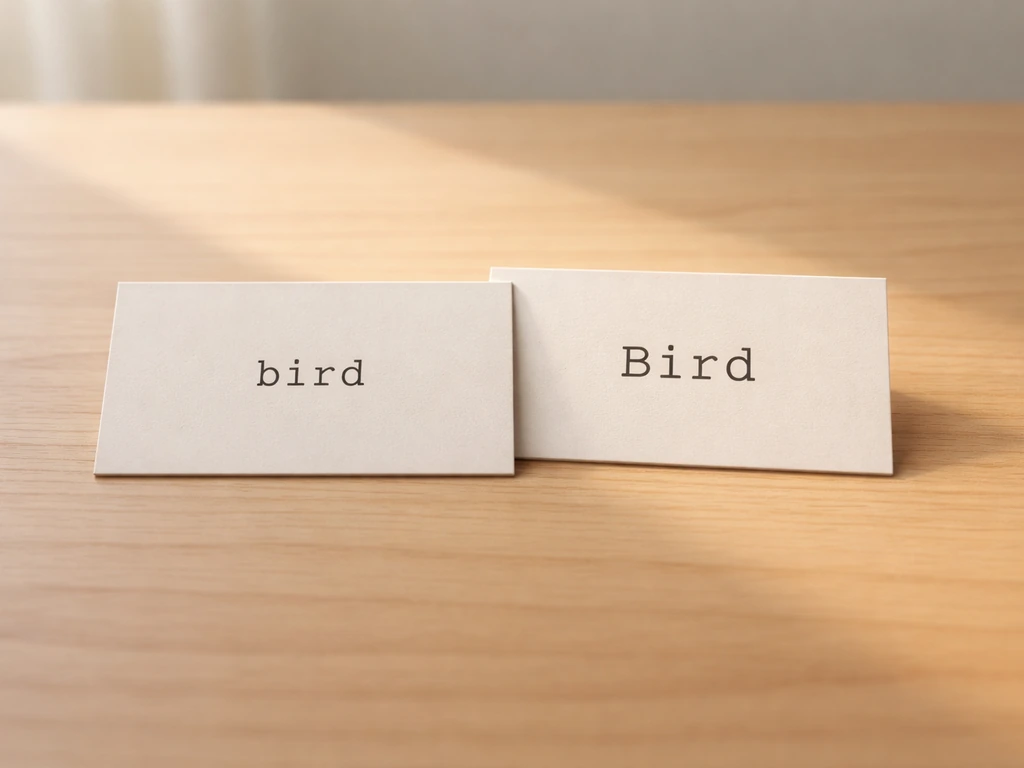
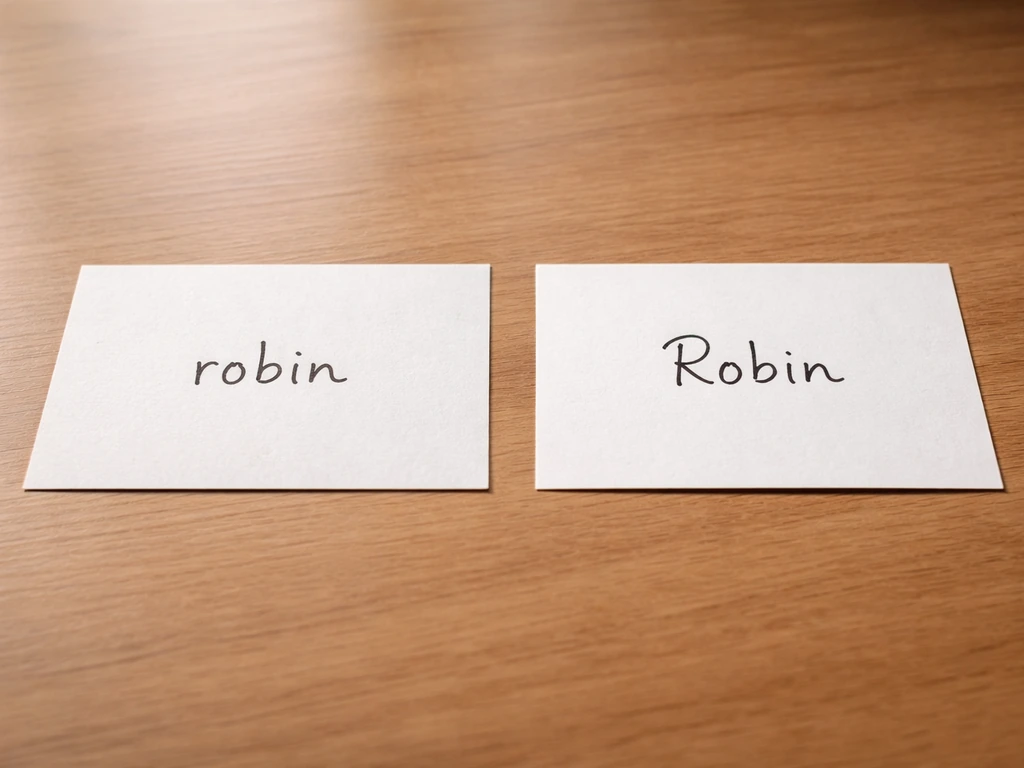
When you're writing about the bird, keep 'robin' lowercase: 'a robin,' 'the robin,' 'a robin in the yard.' It's a common noun, not a proper name, so it gets no capital. The only time you capitalize it is when it functions as a proper name, like a character named Robin, a brand, or a title such as 'Robin the Bird' used as the name of a book or show episode.
Do You Capitalize Robin the Bird? Simple Rules
Maya Castellanos
1 Jul 2026
The quick answer: what determines capitalization here
The question hiding inside 'do you capitalize robin the bird' is really about which role the word is playing in your sentence. In other words, the key is whether the word is functioning as part of a proper name which role the word is playing. Is 'Robin' a name for a specific character, pet, or titled work? Capitalize it. Is 'robin' just the name for a species of bird, used generically? Keep it lowercase. That single distinction drives every rule below.
Chicago Manual of Style, MLA, and AP all agree on the baseline: common bird names are not capitalized in ordinary prose. 'I saw a robin on the fence' is written exactly like that, with a lowercase r. There is no exception for robins, cardinals, sparrows, or any other bird whose common name doesn't contain a proper noun or adjective. The bird is not special enough grammatically to earn a capital, even if it's your favorite.
When 'Robin the Bird' is a proper name (character or brand)
If you're naming a specific, individual bird, a character in a story, an animated mascot, a pet, or a branded product, 'Robin' becomes a proper noun and gets capitalized. The phrase 'Robin the Bird' in this context works the same way as 'Alex the Parrot' or 'Tweety the Canary': Robin is the individual's name, and 'the bird' is a descriptor tagging along behind it.
A few practical examples of when the capital is correct: your pet robin named Robin, a children's book character called Robin the Bird, a classroom mascot, or a fictional character in a script. In all of these, 'Robin' is doing the work of a proper noun. It identifies a unique individual rather than a category of animal. Treat it accordingly.
The same logic applies if you're building a brand. If your birding blog, podcast, or plush toy line is officially called 'Robin the Bird,' every word in that name gets capitalized just as you've established it. The name belongs to a specific thing, so it's a proper noun by definition.
When it's just a generic robin (common noun territory)
Most of the time, when people write 'robin the bird,' they're simply trying to clarify which robin they mean, as opposed to Robin Hood or someone's name. In that context, both words stay lowercase: 'a robin, the bird with the orange-red breast.' You're describing a species, not naming an individual.
Chicago's guidance on bird names is clear on this: common names for birds are generally lowercased. 'Little blue heron,' 'blue-footed booby,' 'American robin,' 'European robin,' all lowercase except where a proper adjective appears (like 'American'). 'Robin' on its own, referring to the species Turdus migratorius in North America or Erithacus rubecula in Europe, stays lowercase in running text.
MLA makes a related point worth knowing: some bird names are eponymous, meaning they're built from a person's name (like Audubon's shearwater or Steller's jay). In those cases, the person's name retains its capital because it's still a proper noun. 'Robin' doesn't fall into that category; it's a common English word with Germanic roots meaning 'bright fame,' not a surname attached to the bird, so there's no inherited capital to preserve.
If 'Robin the Bird' is a title (books, episodes, artworks)
If the phrase is functioning as the title of a creative work, the capitalization rules shift to title-case conventions rather than everyday grammar. Headlinecapitalization.com’s AP headline-case rules explainer lays out AP’s approach to capitalization of title words, which you can use as a non-authoritative implementation reference but should cross-check against the official AP Stylebook AP style title-case conventions. Under Chicago's headline-style capitalization, you'd write 'Robin the Bird' with capitals on Robin and Bird, and lowercase on 'the' because it's an article sitting in the middle of the title. Under AP style, you'd do the same for a book or show title, but you'd put the whole thing in quotation marks rather than italics, since AP doesn't use italics.
Chicago title case: capitalize the first word, the last word, and all major words; lowercase articles (the, a, an), coordinating conjunctions, and short prepositions unless they open or close the title. So 'Robin the Bird' checks out perfectly under Chicago: Robin (first word, capitalized), the (article, lowercase), Bird (major word, capitalized).
For formatting the title itself: Chicago would italicize a book, film, or album title (Robin the Bird), while shorter works like episodes or chapters go in quotation marks ('Robin the Bird'). AP would use quotation marks for nearly all creative work titles and skip the italics entirely, since AP style has no italics.
AP vs Chicago: where they agree and where they differ
For everyday prose about the bird species, AP and Chicago agree completely: lowercase 'robin.' No argument there. The divergence shows up mostly in how you format a title and what punctuation you use around it.
| Situation | Chicago Style | AP Style |
|---|---|---|
| Generic bird species in a sentence | robin (lowercase) | robin (lowercase) |
| Proper name for a specific bird or character | Robin (capitalized) | Robin (capitalized) |
| Title of a book or film | Italicized: Robin the Bird | Quoted: "Robin the Bird" |
| Title of an episode or chapter | Quoted: "Robin the Bird" | Quoted: "Robin the Bird" |
| Title case rule for 'the' mid-title | Lowercase (article) | Lowercase (article) |
| Italics used? | Yes, for major works | No italics in AP |
The practical takeaway: if you're writing for a newspaper or news-style outlet, go AP (quotation marks, no italics). If you're writing a book, academic paper, or anything following Chicago or MLA, italicize major works and quote shorter ones. Either way, 'robin' stays lowercase unless it's part of a proper name or title.
How to decide for your exact sentence: a quick checklist
Run through these questions in order and you'll know what to do before you finish reading them.
- Is 'robin' the name of a specific individual (pet, character, mascot, brand)? If yes, capitalize: Robin.
- Is 'robin the bird' the title of a creative work (book, episode, product)? If yes, apply title case: Robin the Bird (and format it with italics or quotation marks depending on your style guide and the type of work).
- Are you just describing the bird species in a sentence? If yes, keep it lowercase: robin, the bird.
- Does your bird's common name include a proper noun or adjective (like American, Steller's, or Audubon's)? If yes, capitalize only that element: American robin.
- Are you writing in a scientific context and need the binomial name? Use Turdus migratorius: genus capitalized, species epithet lowercase, both italicized.
Bird-name capitalization basics worth knowing
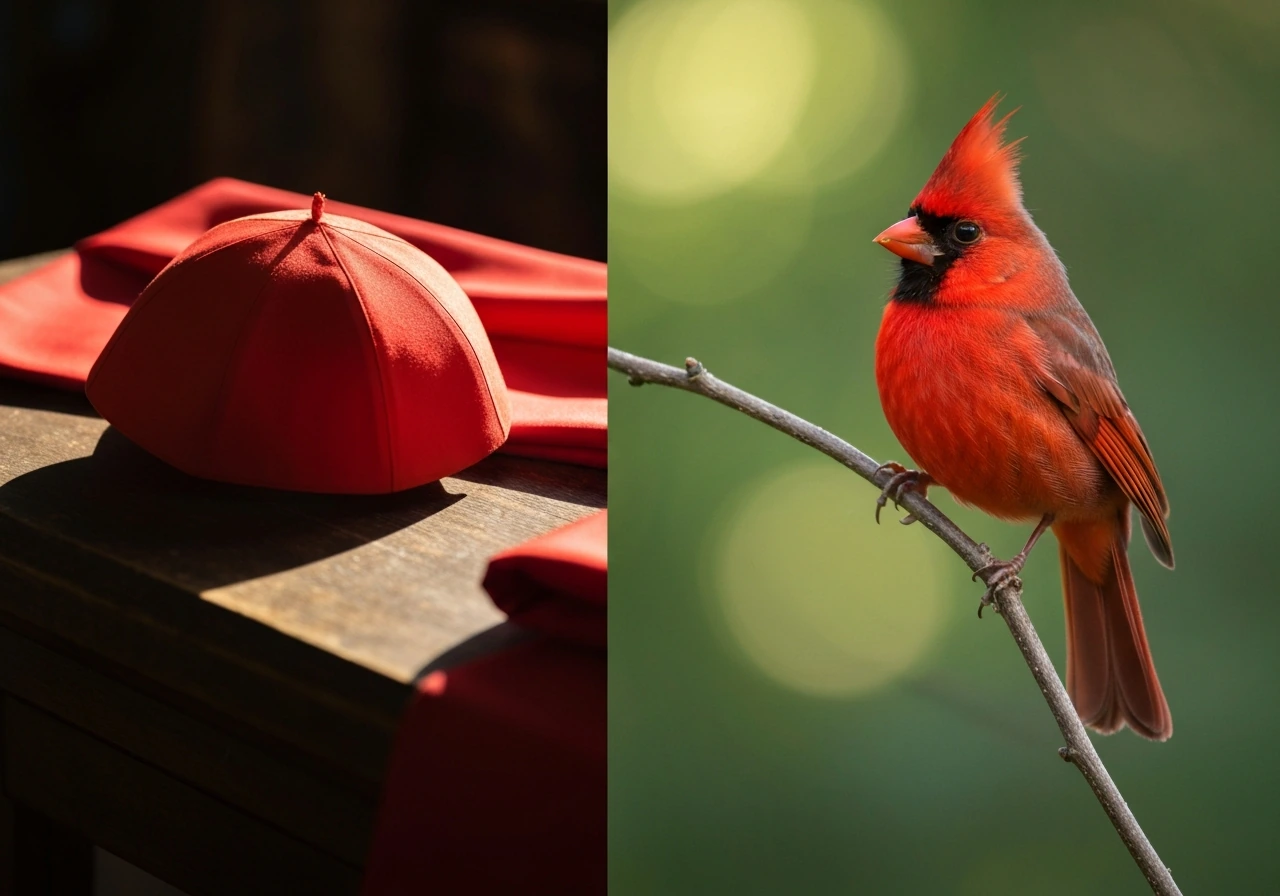
Robins aren't alone here. The same lowercase-by-default rule applies across bird common names: cardinal, blue jay, house sparrow, barn owl. You might also wonder about cardinals specifically, like whether are cardinals named after the bird, but the capitalization rules still depend on whether the word is being used as a common noun or part of a proper name. None of these get a capital in a regular sentence. The rule bends only when a proper noun is baked into the name (American crow, Wilson's warbler, Ross's goose) or when the name is being used as or inside a proper name.
One area where capitalization works differently is scientific names. This bird naming convention is different from whether a bird is treated as a common noun or a proper noun scientific names. The genus is always capitalized and the species epithet is always lowercase, and the whole binomial gets italicized: Turdus migratorius for the American robin, Erithacus rubecula for the European robin. This is a convention of binomial nomenclature and applies regardless of which style guide you follow for everything else.
If you're naming a pet bird and want to give it 'Robin' as a proper name, go ahead and capitalize it every time you use it as their name. 'My robin is named Robin' is grammatically fine and actually a little charming. The first 'robin' is the common noun (the species); the second 'Robin' is the proper noun (your bird's individual name). The same principle applies to any bird you name: whether it's a parrot, a canary, or a backyard cardinal, once you've given it a personal name, that name gets a capital.
This topic connects to a broader question worth exploring on this site: whether bird names in general should be treated as proper nouns or common nouns. If you're wondering whether bird names count as proper nouns in your sentence, use the same common-noun vs proper-name logic whether bird names in general should be treated as proper nouns or common nouns. The short version is that common bird names are common nouns, but the line gets interesting with eponymous names, ornithological society style guides (some birding organizations prefer to capitalize all common bird names as a standardizing convention), and of course any time a bird name crosses into pop culture, sports teams, or character names.
FAQ
Do you capitalize robin the bird at the start of a sentence?
No. If you mean the bird species, keep it lowercase even in sentence-initial position, for example, "A robin landed on the fence." Capitalize only if you are using Robin as part of a proper name or an established title.
What if I’m writing “Robin the Bird” but it is not an official book or show title, just my way of referring to a character?
If Robin is acting as the character’s name (even informally), capitalize Robin and keep the rest in the normal title-like pattern you intend, for example, "Robin the Bird returns in the next episode." If you mean the species plus a descriptor, use lowercase: "a robin, the bird with the orange-red breast."
How should I write “Robin” when I mean the species but I’m using it like a nickname?
If you are genuinely treating it as an individual’s nickname (your pet bird named Robin), capitalize it. If you just mean the species and you happen to call it “Robin” in conversation without giving it an actual name, keep it lowercase in formal writing.
Do I capitalize Robin when it’s followed by a scientific name or Latin binomial?
Yes for the common name only if it is being used as a proper name, otherwise keep it lowercase. The scientific names follow their own convention (genus capitalized, species lowercase, italicized), but they do not automatically justify capitalizing the English common name.
Should I capitalize “American robin” or “European robin” every time?
Capitalize only the proper-adjective part. Write "American robin" and "European robin" with a capital A or E because American and European are adjectives. Keep robin lowercase.
What happens if the proper name is inside a longer sentence, like “I met Robin the Bird yesterday”?
Capitalize exactly what belongs to the proper name. In that example, Robin and Bird are part of the character or brand name, so both are capitalized, even though the phrase sits in the middle of a sentence.
Do quotation marks or italics change whether I capitalize Robin?
No. Punctuation style changes how the title is formatted, not the capitalization logic. Even in a quoted or italicized title, "Robin" stays capitalized only because it is part of a proper name or title, not because it appears in quotes or italics.
Is “Robin” capitalized in headlines differently from normal prose?
Headline rules affect formatting of the title words, such as which small words stay lowercase. The underlying decision is still whether you are using Robin as a proper name or as part of a title. If it’s just the bird species, keep robin lowercase even in a headline-like context.
How should I write plural forms, like “robins” versus “the Robins”?
Use lowercase "robins" when referring to the species in general. Use capitals if you are referring to a named group, team, or proper label like "The Robins" (for a sports team), or if you are naming a collection by a proper name.
What about “Robin” in a possessive, like “Robin’s cage”?
Capitalize "Robin" in possessives when Robin is the proper name of the individual bird. If you mean the cage belonging to the species in general (an awkward phrasing in most cases), you would treat it as common: "a robin’s nest" would keep robin lowercase.